




CNC H Beam Drilling Machine Price Factors That Affect Total Investment
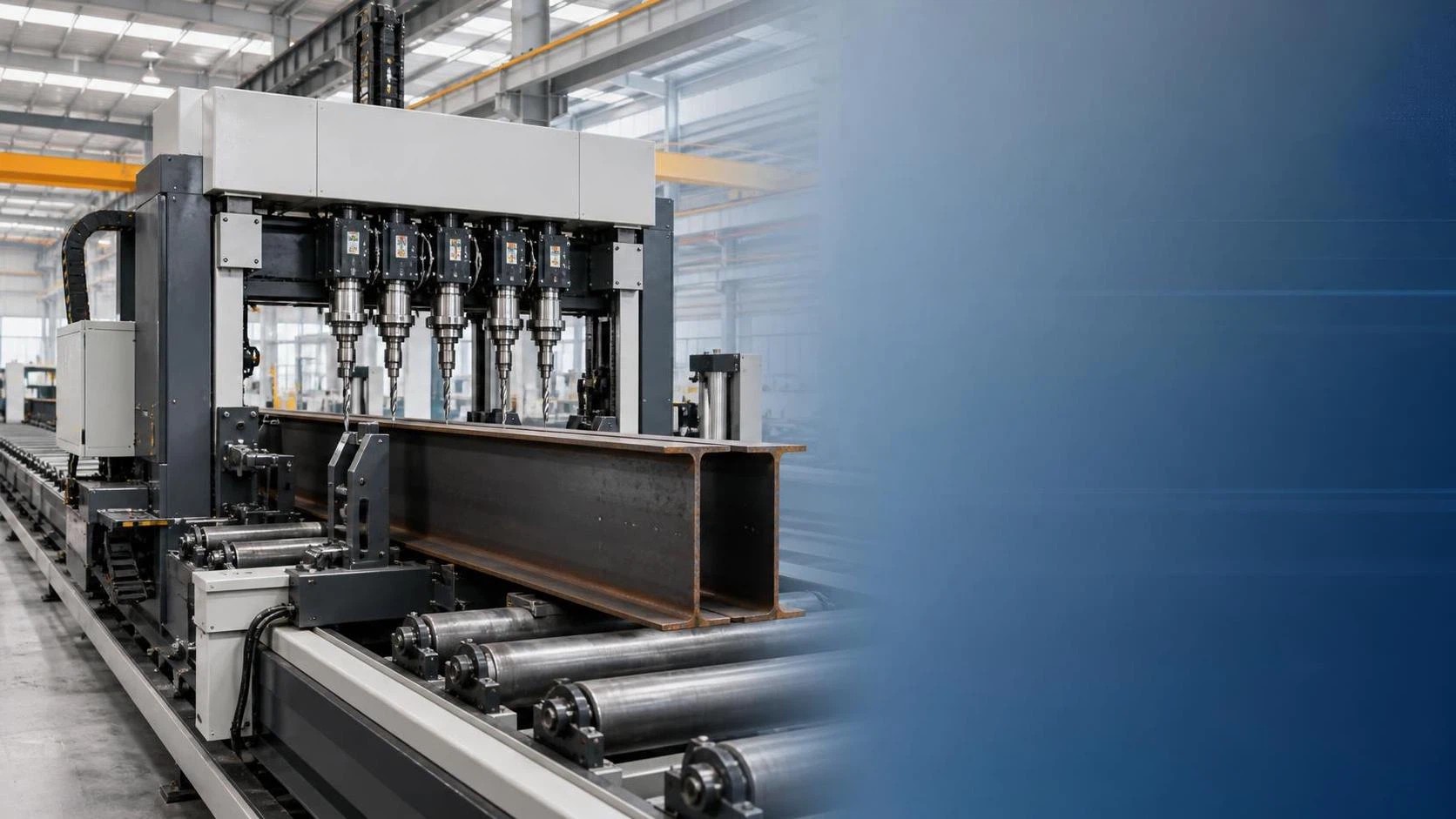
Meta Title: CNC H Beam Drilling Machine Price Factors That Affect Total Investment
If you are comparing a CNC H beam drilling machine, the quoted machine price is only the starting point. In actual procurement, the bigger cost differences usually come from drilling range, spindle setup, feeding system, software, installation conditions, operator training, spare parts, and after-sales response. Two machines can look similar on a quotation sheet and still create very different long-term costs. That is why experienced buyers do not ask only, “How much is the machine?” They ask, “What will this machine cost us to run, maintain, and depend on for the next five to ten years?”
A simple way to look at it: the lowest quotation may reduce upfront pressure, but it can become the more expensive option if it slows production, struggles with beam accuracy, or needs frequent downtime support. For procurement teams, the real job is not chasing the cheapest number. It is controlling total investment risk.
What usually changes the price the most
When suppliers quote a CNC drilling line for H-beams, they are rarely quoting the exact same thing. This is where many purchasing discussions go off track. One supplier may include a heavier frame, automatic positioning, branded electrical components, and remote support. Another may give a lower number based on a simpler feeding structure, a lighter spindle arrangement, or fewer included services.
The biggest price drivers are usually these:
- Beam size range and maximum workpiece weight
- Number of drilling spindles and drilling efficiency
- Hole diameter range and material thickness capability
- Automation level for feeding, clamping, measuring, and unloading
- CNC control system and software compatibility
- Electrical and hydraulic component brands
- Required precision and repeatability
- Included installation, commissioning, and training
This sounds straightforward, but the practical issue is that each of these factors affects both purchase price and production cost. A higher-spec machine is not automatically the better buy. It only makes sense if your order mix can use that capacity.
CNC H beam drilling machine capacity: pay for what you will actually use
A common mistake is buying based on maximum possible capacity instead of normal production reality. If your shop mainly processes standard structural beams in a stable size range, overspending on a very wide processing envelope may not improve output enough to justify the extra cost. On the other hand, if you handle mixed projects, non-standard beam sections, or frequent changeovers, limited machine range can become expensive very quickly.
Procurement should ask for a match between the machine and the actual workpiece profile:
- Typical beam height and flange width
- Common material grades and thicknesses
- Usual hole diameters
- Daily or monthly output target
- Batch size and frequency of drawing changes
If suppliers are not asking these questions, their quotation may be too generic to support a reliable decision.
In real workshops, production rhythm matters as much as technical limits. A machine that can technically drill a certain beam size but slows down sharply at that range is not the same as a machine designed to process it efficiently every day. Buyers should request cycle-time expectations under typical conditions, not only maximum capacity claims.
Automation level affects labor cost more than many buyers expect
There is a visible price difference between basic and higher-automation models, so some teams hesitate here first. That is understandable. Still, labor cost, setup time, and operator dependency often end up costing more than the initial automation upgrade.
A more automated CNC H beam drilling machine may include automatic infeed measurement, servo positioning, material handling assistance, automatic clamping, and smoother data transfer from design files. These functions reduce manual intervention, but the bigger benefit is consistency. When production depends too heavily on operator judgment, output becomes uneven and scrap risk rises.
This matters even more in factories where skilled operators are hard to retain. In that situation, a cheaper machine that relies on experienced hands can become a fragile investment.
That same logic appears across structural steel equipment. For example, when companies evaluate truss fabrication equipment, they often look beyond the purchase price and focus on how automation shortens training time and stabilizes output. A related example is the Space frame welding machine used for welding of truss structures. Its dual-side welding capability, PLC-based control, and relatively low maintenance design are relevant not because it replaces beam drilling, but because it shows the same procurement principle: automation pays off when labor consistency and throughput matter more than the lowest initial quote.
Software and data compatibility are easy to ignore until they create delays
Many buyers focus on mechanics first, then discover later that programming workflow is inefficient. That is an expensive lesson.
If your engineering team already uses steel detailing or CNC data workflows, the machine should fit that process with minimal manual conversion. Otherwise, every drawing revision can add office time, operator confusion, and avoidable mistakes on the shop floor. Even small software mismatches can slow production in a way that never appears in the machine quotation.
Ask suppliers very direct questions:
- What file formats can the system accept?
- Is post-processing required?
- How easy is it to modify hole patterns at the machine?
- Is remote diagnostics available for software issues?
- Are software updates included, paid, or limited?
For procurement, this is not an IT detail. It is part of cost control.
Installation costs are often underestimated
Some of the most avoidable budget surprises happen after the purchase order is signed. A CNC H beam drilling machine may require more site preparation than expected: foundation work, power supply upgrades, air supply, material flow clearance, lifting access, and commissioning time.
Imported equipment can add another layer of cost if customs handling, inland transport, local rigging, or third-party electrician work is not clearly defined. If the quotation only says “installation included,” that is not enough. Included by whom, for how many days, and under what site conditions?
Good procurement practice is to request a scope list that separates:
- Machine price
- Shipping terms
- Installation responsibility
- Foundation and utility requirements
- Commissioning duration
- Operator training content
- Acceptance standards
This is one of the simplest ways to compare suppliers fairly.
The cheap parts problem
Not every cost-saving design is bad. But certain cost reductions show up later as downtime.
Spindles, servo systems, linear guides, hydraulic units, and electrical components have a direct relationship with reliability. Buyers do not need to insist on the most expensive brand in every position, but they should know what is being used and why. A supplier that can explain component selection clearly is usually easier to work with than one that hides behind vague wording.
Pay attention to wear parts and replacement access as well. It is not enough to ask whether spare parts are available. Ask how quickly they are available, whether standard items can be sourced locally, and which parts typically need replacement in the first one to three years.
Downtime cost is often larger than spare part cost. That is the real issue.
After-sales support should be priced into the decision
Procurement teams sometimes treat service as a secondary topic, then discover that response speed becomes critical once production starts. A machine that fails for two days during a delivery-critical project can erase the savings from a lower purchase price.
This is where supplier background matters. Companies with broader experience in metal fabrication equipment often understand the production chain better and can support customers more practically. Wuxi Samgins International Trade Co., Ltd., based in Wuxi near Shanghai, works across a range of machinery including CNC cutting machines, welding robots, machine tools, and H-beam production line equipment. That wider equipment exposure is useful when buyers are not purchasing one standalone machine, but planning a more complete fabrication workflow. ISO9001-based production management and CE-oriented design are also reasonable checkpoints when you are comparing equipment for export-oriented or compliance-sensitive operations, though final certification scope should always be verified model by model.
What matters here is not branding language. It is whether the supplier can support commissioning, parts, troubleshooting, and future line coordination in a timely way.
How experienced buyers compare quotations
When several offers are on the table, the cleanest method is to normalize them. Put every supplier into the same comparison sheet and force hidden differences into the open.
- Processing range
- Spindle quantity and power
- Positioning method
- Software and data interface
- Main component brands
- Tooling included or excluded
- Installation and training scope
- Warranty terms
- Recommended spare parts package
- Lead time
- Acceptance test conditions
One more point: ask each supplier what is not included. That single question often saves more time than a long technical presentation.
When a higher price is justified, and when it is not
A more expensive CNC H beam drilling machine is usually worth it when you have high output demands, tight delivery schedules, mixed beam sizes, or limited tolerance for downtime. It can also make sense when labor skill levels are inconsistent and you need a machine that is easier to standardize across shifts.
It may not be worth paying for top-level automation if your production volume is low, your beam specifications are narrow and stable, and the machine will run intermittently rather than continuously. In that case, a simpler configuration with solid core components may deliver better value.
This is the judgment line many buyers need: buy enough machine for your production reality, not for an ideal future scenario that may never arrive.
Before you ask for the final quote
Before procurement moves to final commercial negotiation, confirm these points internally:
- Your true beam size and hole pattern mix
- Expected output per shift
- Available installation space and utilities
- Whether the machine must connect with existing cutting or welding stations
- Your acceptable downtime risk
- Whether local service support is necessary or remote support is acceptable
Once those points are clear, supplier comparison becomes much more accurate. It also reduces the chance of buying a machine that looks cost-effective on paper but creates friction in daily use.
Near the end of any evaluation, the key question remains the same: which CNC H beam drilling machine gives you the most predictable production cost over time, not just the lowest purchase price today? That is the number procurement should really be defending.
FAQ
Is the lowest CNC H beam drilling machine quote usually the best deal?
Usually not. A low quote can exclude software, tooling, installation support, or higher-grade components. Comparison only works when the scope is normalized.
Should procurement focus more on machine speed or machine reliability?
If production is continuous, reliability often has the bigger financial impact. Fast equipment that stops often is expensive in practice.
Do all factories need a highly automated model?
No. High automation makes more sense for higher volume, mixed workpieces, or labor-sensitive operations. Stable, low-volume work may not justify it.
What is the most overlooked cost after purchase?
Installation and downtime. Site preparation, training, and slow after-sales response are common budget gaps.
Internal Link Anchor Text Suggestions
- H-beam production line equipment: category page for structural steel processing systems
- CNC drilling machine buying guide: educational article or resource page
- automatic welding equipment for steel fabrication: product category page
- how to compare CNC machine quotations: blog or knowledge base article
- structural steel fabrication machinery supplier: company or solutions page
External Authority Source Suggestions
- Industry association reports on structural steel fabrication equipment and production standards
- Official technical documentation from major CNC control or servo component brands
- Government or recognized certification body pages covering CE compliance and industrial safety requirements
search
Products Navigation
Send Us A Message