




Do Welding Robots Reduce Rework in Structural Steel Welding?
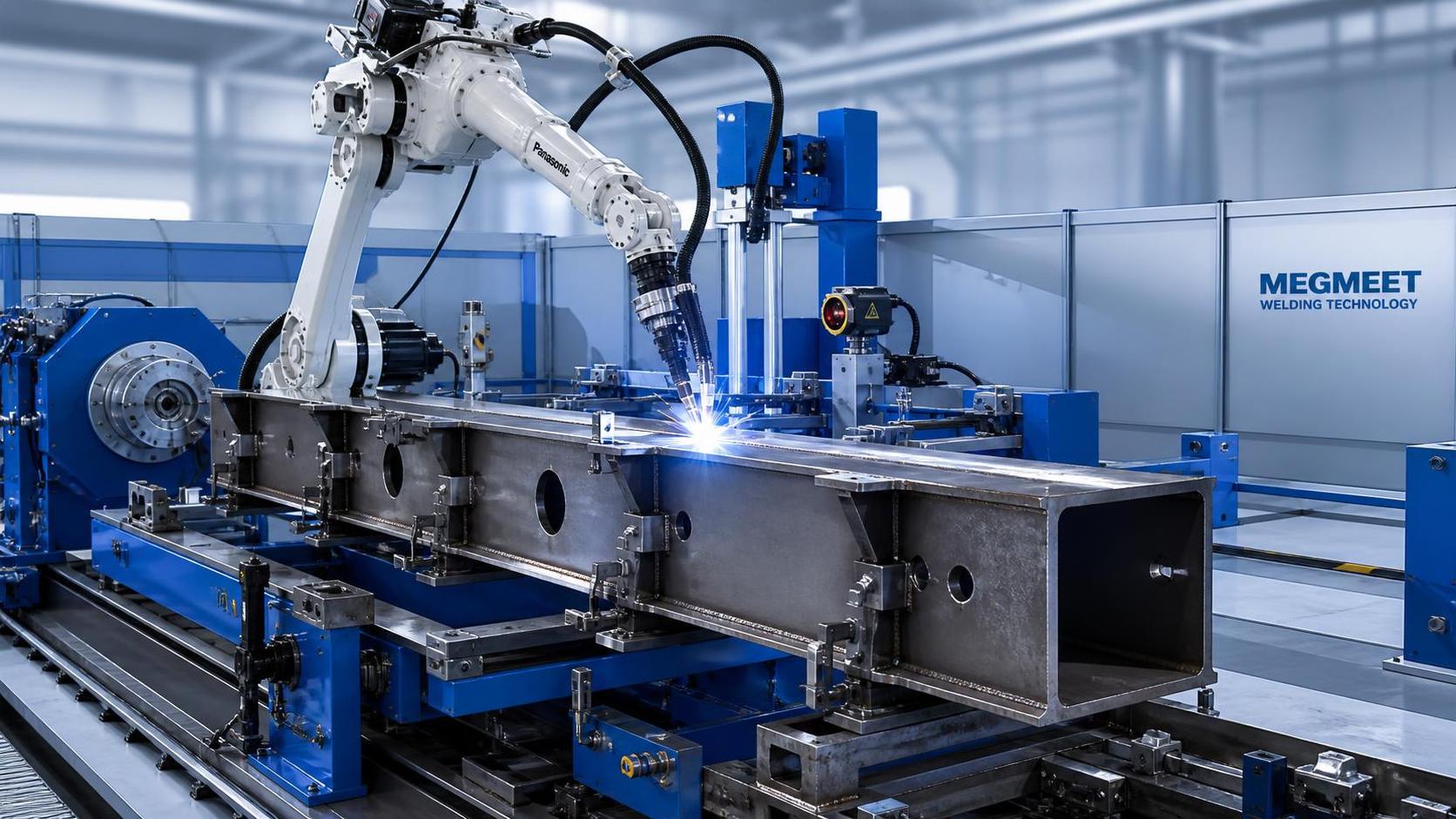
Structural steel fabricators rarely ask whether robots can make welds. That part is already proven. The harder and more practical question is whether welding robots actually reduce rework rates in structural steel welding, where long seams, heavy sections, variable fit-up, and strict inspection requirements make quality losses expensive. The short answer is yes—but only under the right production conditions.
Robotic welding can reduce rework in a measurable way when the fabrication process is stable enough for automation to repeat good results. In structural steel, rework usually comes from a small group of recurring problems: inconsistent root opening, poor joint preparation, dimensional variation in incoming material, incorrect parameter settings, arc start-stop defects, weld size inconsistency, spatter cleanup, and distortion that pushes assemblies out of tolerance. Robots help strongly with some of these problems, but not all of them.
That distinction matters for buyers, plant managers, engineers, and sourcing teams. A robot does not remove process instability by itself. What it does remove is a large portion of operator-to-operator variation. If human inconsistency is a major source of defects in your shop, robotic welding can cut rework significantly. If the real problem is poor upstream preparation, robotic welding may expose the problem more clearly rather than solve it.
Where rework really comes from in structural steel welding
Before judging automation, it helps to define rework correctly. In structural steel fabrication, rework is not limited to weld repair after non-destructive testing. It often includes grinding, gouging, re-welding, straightening, additional fit-up work, cleanup around spatter, correction of weld size, and even downstream assembly delay caused by welding distortion.
In many shops, the major causes are operational rather than purely welding-related:
- Variable joint gaps caused by cutting or fit-up inconsistency
- Misalignment of web, flange, stiffener, or connection plates
- Incorrect welding sequence that increases distortion
- Manual parameter drift across shifts or operators
- Fatigue-related inconsistency in long repetitive welds
- Poor consumable handling or shielding gas instability
- Inadequate fixture design
This is why a shop can have excellent welders and still suffer from rework. Structural steel is less forgiving than many expect, especially on repetitive beam, column, box section, or stiffener work where small variation accumulates over length.
How robots reduce rework in the right application
The strongest case for robotic welding is repeatability. A robot does not get tired midway through a long fillet weld, does not change travel speed based on comfort, and does not vary torch angle from one shift to another. Once a qualified process is set and the part presentation is controlled, the system can produce more consistent weld geometry and heat input.
That affects rework in several direct ways.
More consistent weld size. Overwelding is common in manual structural work. Many shops focus on underweld risk, but overwelding is also a hidden quality and cost issue. Larger-than-required welds increase filler consumption, arc time, heat input, and distortion. Robots are better at holding target weld size consistently, which reduces both repair risk and unnecessary downstream correction.
Reduced start-stop defects. In repetitive beam and plate structures, arc starts and stops can become defect zones if handled inconsistently. Automated programs can standardize run-on, crater fill, and segment transitions more reliably than manual work.
Lower spatter and more stable process control. When parameter windows are optimized, robotic systems can maintain steady arc behavior for long production runs. That reduces cleanup labor and surface preparation needed before painting or further assembly.
Better bead placement on repeat parts. Structural steel components with recurring geometries—stiffeners, brackets, connection assemblies, H-beam lines, box members—benefit most. The more repeatable the part family, the more a robot can reduce missed locations, uneven throat size, and weld profile variation.
Improved traceability. Many automated systems make it easier to record program settings, welding procedures, and production data. This does not eliminate defects, but it shortens root-cause analysis when rework happens.
Where the expectation often goes wrong
A common misunderstanding in the market is that robots reduce rework simply because they are more advanced. In reality, automation reduces variation, not chaos. If the part arriving at the welding station is inconsistent, the robot may produce very consistent defects.
This is especially true in structural steel, where upstream variation is often underestimated. Thermal cutting quality, bevel consistency, plate flatness, tack accuracy, clamping rigidity, and fixture access all influence weld outcome. Skilled manual welders can adapt in real time to some of this variation. A robot is less forgiving unless the cell includes seam tracking, touch sensing, adaptive programming, or other compensation tools.
That is why some first-time robot projects disappoint. The business case is prepared around labor savings, while the actual success factors are process engineering and part standardization.
Which structural steel applications benefit most
Robotic welding does not deliver equal value across all steel fabrication work. The rework reduction is usually strongest in applications with three features: repeatable joint design, manageable part variation, and sufficient production volume.
Typical high-fit applications include:
- H-beam and box-beam repetitive welding lines
- Stiffener-to-plate welding
- Bracket and connection plate assemblies
- Base frames and equipment supports
- Standardized modules for industrial buildings or machinery structures
- Batch production of similar columns, girders, and subassemblies
Applications that are harder to automate effectively include highly customized one-off heavy fabrications, assemblies with poor dimensional control, and projects where welding positions and access change constantly. In these environments, rework may still be reduced, but not enough to justify a full robotic investment unless the process is redesigned.
How to judge whether rework is robot-solvable or process-solvable
For decision-makers, the most useful question is not “Should we automate?” but “What percentage of our rework comes from variation a robot can realistically control?”
A simple assessment often reveals the answer. Review recent nonconformance records and classify rework into two buckets.
Robot-addressable causes:
- Inconsistent bead profile
- Travel speed variation
- Uneven weld size across operators
- Arc instability caused by manual technique variation
- High spatter from inconsistent parameter execution
- Repeat defects on recurring joints
Non-robot-addressable without upstream improvement:
- Poor fit-up and gap variation
- Incorrect part geometry from cutting or forming
- Fixture weakness
- Material contamination
- Design changes issued late
- Distortion driven mainly by product design or sequence errors
If most of the cost sits in the first bucket, robotic welding can be a strong rework-reduction tool. If the second bucket dominates, management should expect limited benefit unless the upstream process is corrected first.
What technologies matter more than the robot arm itself
When companies evaluate robotic welding, they often focus on payload, reach, or brand. Those are important, but rework reduction depends more on the surrounding process package.
Fixtures and part positioning. In structural steel, fixture design often determines whether the robot can repeat accurately. A high-quality robot on a weak fixture will not hold quality.
Seam tracking and sensing. If part variation cannot be eliminated economically, adaptive tools become critical. Touch sensing, laser seam tracking, and through-arc sensing can compensate for real-world variability, though performance depends on joint type and operating conditions.
Welding process selection. Depending on the application, GMAW/MIG-MAG variants, tandem systems, or submerged arc solutions in dedicated lines may change the quality and throughput balance. The best process is not always the fastest one; it is the one that meets code, minimizes defects, and fits the part family.
Offline programming and job standardization. If engineering spends too much time adjusting programs for every order, the quality gain may be offset by setup inefficiency. The economics improve when product families are standardized enough for program reuse.
Positioners and manipulators. Keeping the weld in an optimal position often affects defect rates more than the robot alone. Good part orientation improves penetration consistency, bead shape, and overall cycle stability.
Quality standards still apply exactly the same
Some buyers assume robotic welding automatically means compliance. It does not. Structural steel welding remains governed by applicable codes, procedures, and inspection requirements. Depending on project type and destination market, this may involve standards such as AWS, ISO, or EN-based requirements, but the exact framework depends on customer specification and jurisdiction. Companies should verify the relevant code and qualification route for each project rather than assume automation changes the requirement.
In practice, robotic welding must still be supported by qualified welding procedures, appropriate operator and technician competence, calibration discipline, and inspection control. If a fabricator exports structural components, customer audits may pay close attention to whether automated welding is integrated into the quality system correctly. “Robot-made” is not a substitute for documented process control.
The financial case: rework savings are real, but not automatic
From a management perspective, rework reduction is one of the most credible reasons to invest in welding automation because it affects several cost layers at once. It lowers direct repair labor, reduces consumable waste, decreases inspection failure cost, shortens lead time disruption, and often improves downstream painting and assembly flow.
Still, return on investment should not be modeled on labor replacement alone. A more realistic business case includes:
- Current scrap and rework cost by product family
- Hidden cost of schedule delay from weld repair
- Consumable overuse from overwelding
- Fixture and tooling investment
- Programming and commissioning cost
- Training needs for operators, technicians, and maintenance staff
- Expected utilization rate of the robotic cell
The utilization point is especially important. A robot that runs steadily on a standardized beam or frame family can reduce rework and cost very effectively. A robot that waits for irregular jobs and frequent engineering changes will struggle to justify itself.
What buyers and sourcing teams should verify before committing
For procurement teams and cross-border buyers evaluating equipment suppliers, the key risk is buying a technically capable system that does not match production reality. Rework performance depends on the whole cell, not just catalog specifications.
Useful questions include:
- What part families is the system designed to handle?
- How much variation in joint fit-up can it tolerate?
- What sensing or seam tracking options are included?
- What is the expected changeover time between jobs?
- What welding procedures have been validated on similar steel structures?
- What local service, spare parts, and remote support are available?
- How will acceptance testing be tied to weld quality, not just dry cycle movement?
For international procurement, after-sales capability matters more than many first-time buyers expect. A robotic cell that reduces rework on paper but cannot be tuned, maintained, or reprogrammed quickly after installation can become an underused asset.
The practical answer
So, do welding robots reduce rework in structural steel welding? Yes, often substantially—but only when the fabrication process is ready for automation. They are most effective where the product mix includes repeatable assemblies, the joint preparation is controlled, fixtures are stable, and quality losses are driven by execution inconsistency rather than chaotic part variation.
For companies deciding whether to invest, the right approach is not to ask whether robots are better than welders. It is to ask where the current rework originates, which defects are repeatable, and whether the shop can standardize enough of the workflow for automation to lock in good practice. In structural steel fabrication, that is the line between a robot that genuinely improves quality and one that simply makes existing process problems more visible.
When evaluated with that level of discipline, robotic welding is not just a labor strategy. It is a quality-control strategy, a throughput strategy, and increasingly a competitiveness strategy in steel fabrication markets where delivery reliability matters as much as weld appearance.
search
Products Navigation
Send Us A Message