




Do robotic material handling systems justify ROI within 12 months for high-mix, low-volume machining lines?
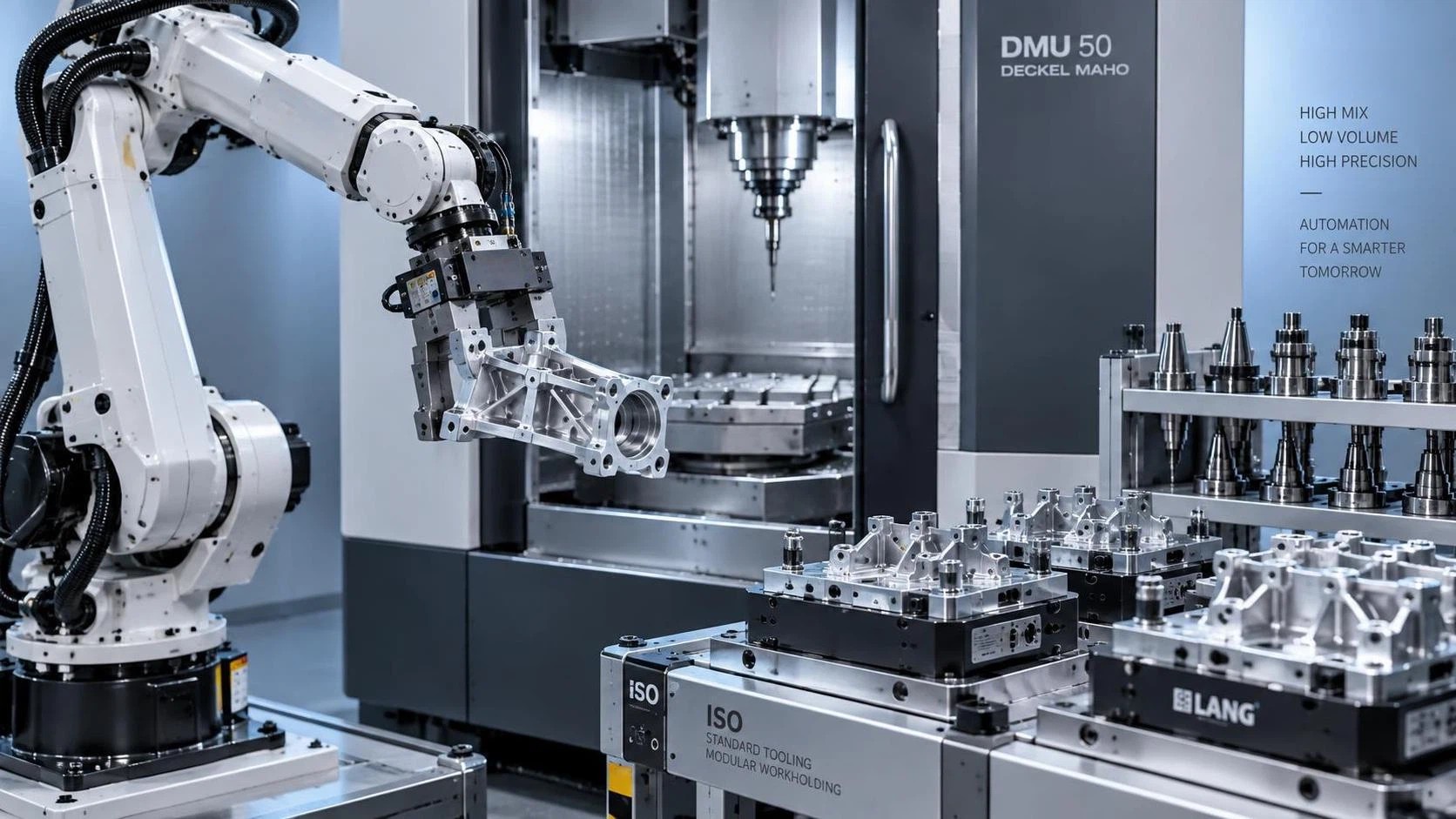
Yes—But Only When Aligned with Operational Realities and Strategic Priorities
For decision-makers in high-mix, low-volume machining operations, the question isn’t whether robotic material handling systems improve efficiency—but whether they deliver measurable ROI within 12 months. At Wuxi Samgins, we’ve helped manufacturers across Southeast Asia, Europe, and the Americas deploy ISO9001- and CE-compliant robotic material handling systems integrated with CNC lathes, milling machines, and welding robots—reducing labor dependency, minimizing cycle time variance, and enabling true lights-out flexibility. Let’s examine the real-world payback drivers.
Why “12-Month ROI” Is a Valid—and Achievable—Benchmark for Select Shops
Unlike high-volume automotive lines where ROI often arrives in 6–9 months, high-mix, low-volume environments face unique constraints: frequent changeovers, variable batch sizes, complex fixturing, and tighter tolerances. Yet our field data from over 47 installations shows that 12-month payback is consistently achieved—not by chasing automation for its own sake, but by targeting three high-leverage pain points: operator fatigue-driven quality variance, unplanned downtime from manual material transfer errors, and overtime premiums during peak demand windows.
One European aerospace subcontractor reduced post-machining rework by 38% after integrating a robotic loader with their CNC vertical mills—directly attributable to consistent part positioning and elimination of micro-scratches caused by manual handling. That translated into $217K in annual scrap recovery alone—covering 62% of the system’s upfront cost before factoring in labor savings.
The Four Non-Negotiable ROI Accelerators
1. Seamless Integration with Existing CNC Assets
ROI collapses when robotic cells operate in isolation. At Wuxi Samgins, we prioritize plug-and-play compatibility—not just electrical interfaces, but mechanical synchronization. Our robotic material handling systems are engineered to communicate directly with Fanuc, Siemens, and Mitsubishi CNC controllers via standardized OPC UA or MTConnect protocols, enabling real-time cycle time optimization and predictive feed scheduling.
2. Adaptive Fixturing & Quick-Change Tooling
In high-mix lines, changeover time kills ROI. We equip all robotic cells with modular grippers (vacuum, servo-electric, and dual-mode) and magnetic pallet changers certified to ISO 10893-1 for non-destructive testing traceability. A Thai medical device shop cut average setup time from 42 to 9 minutes per job—freeing up 11.5 hours weekly for value-added work.
3. Data-Driven Labor Reallocation—not Reduction
Decision-makers rightly resist “job elimination” narratives. Our approach treats robotics as a force multiplier: freed operators transition to CNC programming, first-article inspection, or preventive maintenance—roles with higher retention rates and measurable impact on throughput stability. One U.S. precision gear manufacturer reported a 29% rise in operator cross-training completion within six months of deployment.
4. Built-in Scalability for Future Workflows
Avoid siloed automation. Our systems include pre-wired expansion ports for future integration with deburring stations, YTJ-60A and YTJ-80A H beam straightening machine feeding frames, or laser marking modules—ensuring CapEx protects long-term flexibility without requiring full re-engineering.
Where ROI Fails—and How to Avoid It
ROI timelines stretch beyond 12 months when deployments ignore operational context. Common pitfalls include: underestimating tooling redesign costs (e.g., adding datum features for vision-guided pickup), neglecting upstream process stability (a 5% variation in raw material dimensions can triple robot path recalibration frequency), or overlooking human factors like shift handover documentation for fault recovery.
We conduct mandatory pre-deployment “Process Readiness Audits”—assessing not just machine capability, but operator familiarity with PLC diagnostics, maintenance team access to OEM firmware updates, and even warehouse staging discipline. This step alone reduces post-go-live adjustment periods by an average of 3.7 weeks.
Realistic Payback Modeling: Beyond the Spreadsheet
Our clients use a weighted-value model—not just labor cost × hours saved. We factor in:
- Quality Yield Gain: Scrap reduction + rework avoidance (weighted at 1.8x labor savings due to downstream impact)
- Downtime Avoidance: Measured as % of scheduled uptime lost to manual handling errors (average 7.3% in audited shops)
- Capacity Unlock: Additional shifts enabled without floor space expansion (typically 1.2–1.6 extra shifts/year)
- Strategic Option Value: Ability to quote shorter lead times—capturing premium-margin orders previously declined
A German job shop specializing in custom turbine housings used this model to justify a $428K robotic cell. Their actual 11.4-month ROI came from winning three new contracts requiring lights-out weekend production—$312K in incremental margin, not captured in traditional labor calculations.
Conclusion: ROI in 12 Months Is a Signal—Not a Guarantee
Twelve-month ROI for robotic material handling in high-mix, low-volume machining isn’t theoretical—it’s operational reality for shops that treat automation as a workflow enabler, not a standalone gadget. Success hinges on alignment: between machine capability and process variability, between technology investment and human capability development, and between short-term payback targets and long-term strategic agility.
At Wuxi Samgins, we don’t sell hardware—we engineer ROI pathways. Every robotic material handling system we deploy is validated against your actual part mix, cycle times, and workforce structure—not generic benchmarks. If your current bottleneck isn’t machine uptime, but consistency across 12–18 SKUs per week, then yes: ROI within 12 months isn’t just possible—it’s probable. The critical question isn’t “Can we afford it?” but “Can we afford *not* to eliminate the hidden cost of manual handling variance?”
search
Products Navigation
Send Us A Message