




Fiber Laser vs CO2: Key Advantages for Metal Cutting
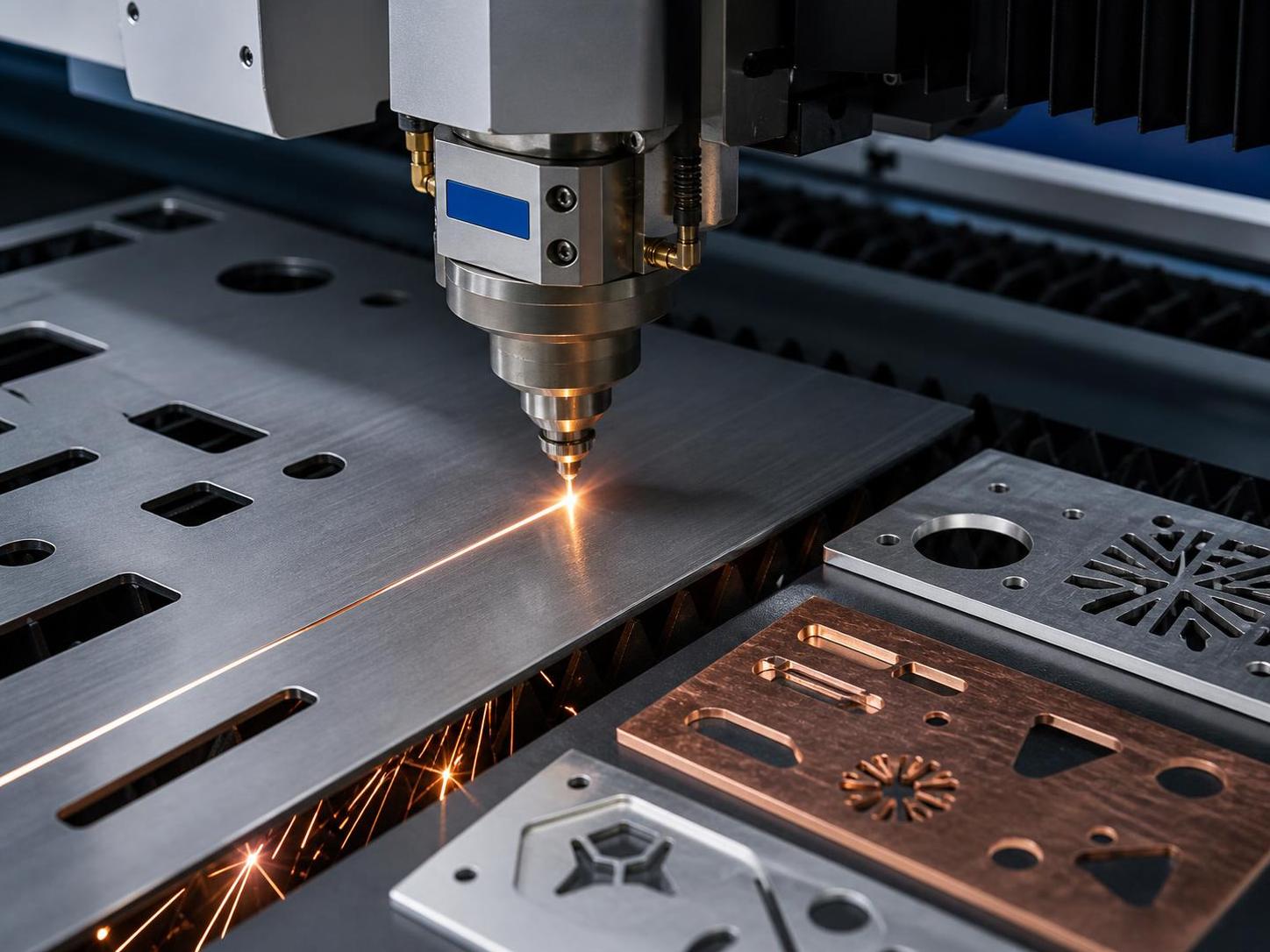
What are the main advantages of fiber laser over CO2 for metal cutting? For most metal fabrication businesses, the short answer is clear: fiber laser systems usually deliver faster cutting speeds, lower operating costs, higher electrical efficiency, and better results on reflective metals. That is why many manufacturers now treat fiber laser as the practical standard for competitive sheet metal production rather than an emerging alternative.
The real decision, however, is not based on one technical feature. Buyers typically need to know whether the investment will improve throughput, reduce downtime, support the materials they actually process, and create a better return over several years of use. Those are the questions that matter in production planning, equipment selection, and cost control.
For decision-makers comparing laser technologies, the core search intent behind “What are the main advantages of fiber laser over CO2 for metal cutting?” is commercial and evaluative. They are not looking for a textbook definition. They want a reliable basis for selecting the right cutting technology for metal-focused work, especially when productivity, maintenance burden, and total operating cost directly affect margins.
In practice, the most useful comparison focuses on where fiber laser creates measurable business value. That includes speed on thin and medium-gauge metals, reduced consumables, easier maintenance, improved automation compatibility, and safer processing of reflective materials such as aluminum, brass, and copper. General background on laser principles matters far less than application-specific performance.
Why fiber laser has become the preferred choice for metal cutting
CO2 laser cutting has a long history and still has use in certain non-metal or mixed-material applications. But for dedicated metal cutting, the market has shifted because fiber laser technology aligns better with current production priorities. Manufacturers need higher output per shift, lower energy consumption, and equipment that supports flexible, repeatable fabrication workflows.
Fiber laser systems generate the beam through a solid-state source and deliver it through optical fiber. This architecture is simpler than the mirror-based beam path used in CO2 systems. In daily production, that difference translates into fewer alignment issues, less maintenance intervention, and more stable cutting performance over time.
For companies handling stainless steel, carbon steel, galvanized sheet, aluminum, brass, or copper, fiber laser often offers a more direct route to efficiency. It is especially attractive for job shops and industrial plants that need fast changeovers, short lead times, and dependable output across varied part batches.
How much faster is fiber laser in real production?
One of the most important advantages of fiber laser over CO2 for metal cutting is speed. On thin and medium-thickness sheet, fiber laser machines commonly cut much faster than CO2 machines. This speed advantage becomes highly visible in high-volume work where even modest time savings per part add up quickly across a full shift.
Faster cutting does not only mean shorter cycle times. It also means more quoting flexibility, the ability to accept urgent orders, and better machine utilization. For subcontract fabrication businesses, this can improve on-time delivery and expand production capacity without immediately adding labor or floor space.
The strongest speed gains usually appear on thinner materials, where fiber laser can maintain rapid, precise movement with excellent edge quality. For many manufacturers, this covers a large share of everyday work, including enclosures, brackets, panels, cabinets, frames, and structural components made from common sheet metals.
When buyers compare systems, they should not rely only on headline power ratings. They should ask for cutting samples, material-specific speed data, pierce time figures, and performance results on the thicknesses they process most often. A realistic production comparison is more valuable than a generic specification sheet.
Why operating cost is usually lower with fiber laser
Another major reason buyers move from CO2 to fiber laser is cost. Fiber laser systems are far more energy efficient, converting electrical power into useful laser output more effectively than CO2 equipment. Lower electricity consumption can produce a meaningful savings over time, especially in facilities running multiple shifts.
Operating cost also depends on maintenance, optics, consumables, and downtime. CO2 systems typically involve more complex optical paths, mirrors, gas handling requirements, and regular alignment work. Fiber laser machines simplify much of this. Fewer service-intensive components generally mean less planned maintenance and fewer interruptions to production.
That matters financially because machine downtime is often more expensive than spare parts alone. When a cutting machine stops, delivery schedules slip, labor utilization drops, and downstream processes such as bending, welding, and assembly may be delayed. A technology that reduces downtime has a direct impact on production economics.
For managers building a return-on-investment case, the relevant metric is not purchase price alone. It is total cost of ownership across several years, including power use, maintenance frequency, repair exposure, consumable replacement, and output per hour. In many metal cutting environments, fiber laser performs better on that full-cost calculation.
What makes fiber laser better for reflective metals?
Reflective metals are a major decision point in laser selection. Materials such as aluminum, brass, and copper can be difficult for older CO2 systems because reflected energy may affect cutting stability and, in some cases, create risk for sensitive optical components. Fiber laser technology is generally better suited to these materials.
This advantage is important for manufacturers serving electrical, HVAC, automotive, architectural, kitchen equipment, and precision fabrication sectors. Many of these industries increasingly use aluminum and copper-based materials, so equipment flexibility is no longer a minor benefit. It is a practical requirement for taking on a wider range of jobs.
Fiber laser’s ability to process reflective metals more effectively can open new revenue opportunities. A shop that previously avoided certain materials due to technical limitations may be able to quote more confidently and reduce subcontracting. That improves margin control and gives the business more independence in scheduling and quality assurance.
Even so, buyers should verify machine configuration, power level, assist gas setup, and cutting parameter support for the exact alloys and thicknesses they handle. “Can cut reflective metal” is not the same as “can cut it efficiently and consistently in daily production.” That distinction should be confirmed before purchase.
Does fiber laser also improve cut quality and precision?
In many applications, yes. Fiber laser systems are known for a highly concentrated beam that supports fine cutting detail, narrow kerf widths, and precise feature production. This is especially valuable for parts with small holes, intricate contours, tight nesting layouts, or dimensional requirements that affect fit-up in later fabrication stages.
Better precision can reduce secondary processing. When cut edges are cleaner and dimensions are more consistent, manufacturers may spend less time on grinding, deburring, manual correction, or rework. Over time, these small efficiency gains improve overall process flow and reduce hidden production costs that are often underestimated.
Part quality also affects downstream automation. Components that arrive from the cutting stage with stable geometry and predictable edge conditions are easier to bend, weld, and assemble. For companies investing in more automated production lines, consistency from the cutting machine becomes strategically important, not merely a quality preference.
That said, actual results depend on material thickness, machine structure, software, motion control, operator training, and process optimization. The technology provides a strong foundation, but the full benefit comes from matching machine capability to real manufacturing conditions and disciplined operating practice.
How maintenance and reliability affect long-term productivity
Maintenance is often discussed as a service issue, but in reality it is a production issue. CO2 systems generally require more routine attention because of mirrors, optics alignment, resonator-related components, and a more complex beam delivery path. Fiber laser machines reduce many of those maintenance demands through a more integrated design.
For the end user, this means simpler daily operation and more predictable uptime. Shops with limited in-house maintenance capacity often prefer equipment that reduces specialist intervention. Even larger factories benefit, because maintenance teams can focus on broader production support rather than frequent laser-specific adjustments.
Reliability also matters when production schedules are tight. A cutting machine is often upstream of several later processes. If it becomes unstable, the problem spreads across the workshop. Fiber laser’s lower maintenance profile helps support steadier workflow, which is particularly valuable for just-in-time manufacturing and export-oriented production.
When evaluating suppliers, buyers should look beyond the source technology itself. They should ask about local service response, spare parts availability, training support, software updates, and installation quality. A good fiber laser machine backed by weak service can still become a poor investment.
In which situations might CO2 still be considered?
A balanced comparison should acknowledge that CO2 is not obsolete in every case. Some users processing non-metal materials or mixed material portfolios may still find value in CO2 systems. In certain thicker-section applications or specialized production environments, existing workflows may also continue to justify CO2 equipment for a period of time.
However, that does not change the broader trend in metal fabrication. If the main requirement is efficient cutting of sheet metal with strong productivity and manageable operating cost, fiber laser is usually the more future-aligned solution. Most buyers searching this topic are evaluating metal-focused capacity, and for that use case fiber laser has the stronger position.
This is why decision-makers should define the comparison around their actual job structure. What percentage of work is thin stainless steel? How often are aluminum and copper requested? What are the energy costs per shift? How much does downtime affect order flow? These questions produce better decisions than abstract technology debates.
How to decide whether fiber laser is the right investment for your factory
The best purchasing decision starts with production data. Buyers should review the last six to twelve months of orders and identify the metals, thickness ranges, batch sizes, tolerance expectations, and bottlenecks that most affect profitability. This reveals whether fiber laser’s advantages match the real operating profile of the business.
They should then compare candidate machines on practical criteria: cutting speed on common materials, edge quality, software usability, automation options, power consumption, maintenance requirements, training support, and expected spare parts access. A lower-priced machine is not necessarily the better value if it creates slower output or unstable quality.
It is also wise to request sample processing using your own drawings and materials. Test parts show far more than brochures can. They reveal cut consistency, dross levels, corner quality, hole performance, and overall readiness for downstream work. This is one of the clearest ways to reduce investment risk.
For companies sourcing equipment internationally, supplier experience matters as much as machine specification. A supplier with broad mechanical equipment knowledge, stable quality management, and practical export support can help reduce commissioning problems and improve long-term equipment performance.
Conclusion: the main advantages of fiber laser over CO2 for metal cutting
So, what are the main advantages of fiber laser over CO2 for metal cutting? The most important benefits are faster cutting speeds, lower energy use, reduced maintenance, stronger capability on reflective metals, and better suitability for modern automated fabrication. These are not minor technical differences. They directly influence cost, output, and competitiveness.
For most manufacturers focused on metal processing, fiber laser is the more practical and economically attractive choice. It supports higher productivity, more stable operations, and broader material flexibility in an industry where efficiency and precision increasingly determine market position.
CO2 technology still has niche relevance, but for companies comparing equipment for mainstream metal cutting applications, fiber laser usually offers the clearer long-term advantage. The right way to confirm that decision is to evaluate it against your own parts, materials, production targets, and service expectations rather than relying on general claims alone.
When that evaluation is done carefully, the answer is often straightforward: fiber laser is not simply newer technology. For metal cutting, it is usually the more capable business tool.
search
Products Navigation
Send Us A Message