




Can Overseas CNC Cutting Machine Failures Be Solved Remotely?
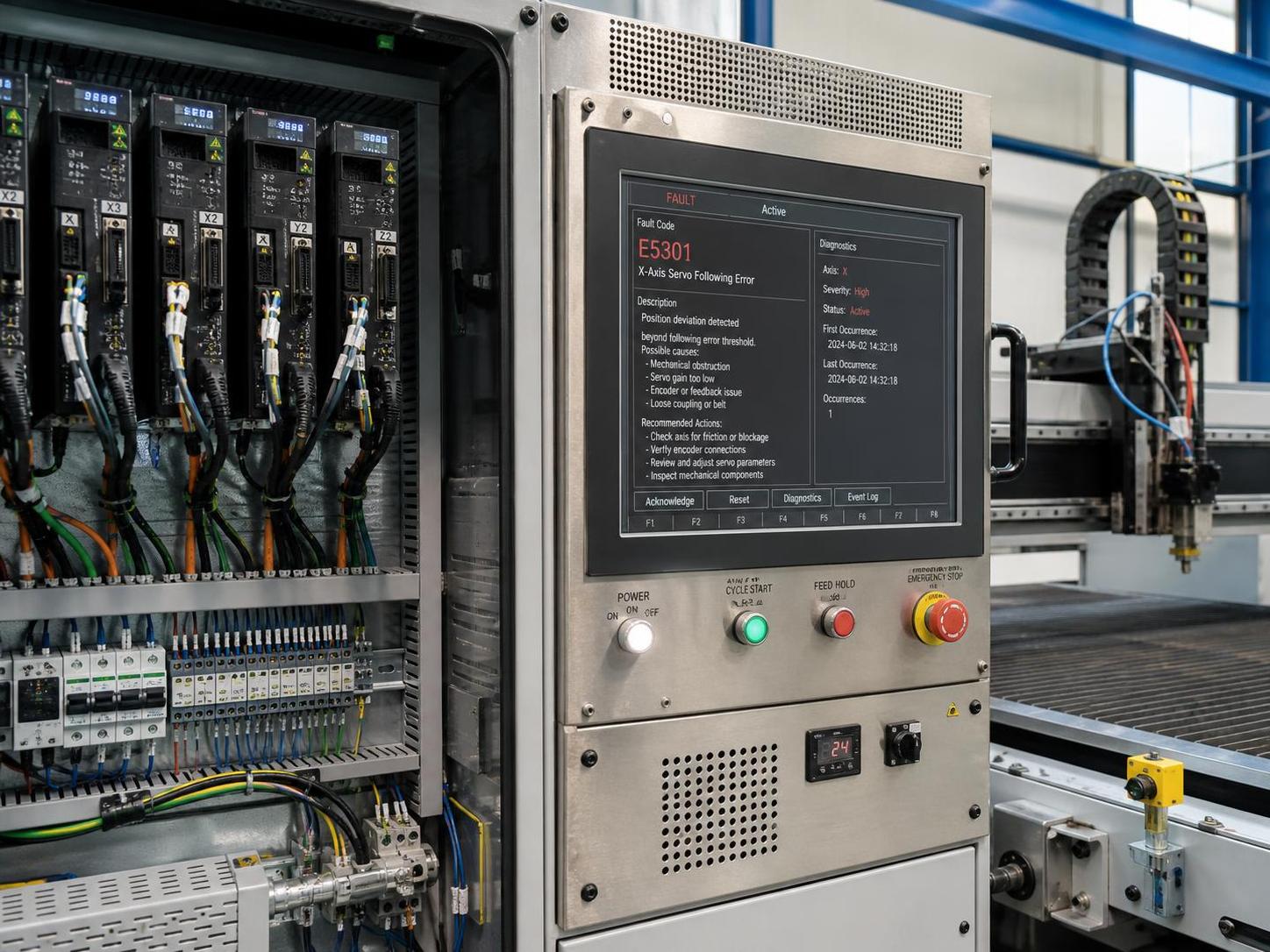
When a CNC cutting machine stops on a factory floor thousands of miles from its supplier, the first concern is rarely theoretical. Production is waiting, operators are standing by, delivery promises are still on the calendar, and every hour of downtime becomes visible in labor cost, missed output, and customer pressure. That is why buyers often ask a very practical question: can overseas CNC cutting machine failures really be solved remotely, or does the machine ultimately need an engineer on site?
The short answer is that many failures can be diagnosed, and a meaningful share can be resolved, through remote technical support. But not every problem should be treated that way, and not every supplier is equally prepared to support overseas equipment once it is installed. The real issue is not whether remote support exists in principle. It is whether the machine, the control system, the documentation, the local team, and the supplier’s service process are all set up well enough for remote support to work under production pressure.
What remote support can actually solve
In the CNC cutting segment, “breakdown” covers a wide range of situations. Some are true hardware failures. Others are parameter drift, operation errors, consumable wear, gas supply issues, unstable power, or communication faults between the CNC controller, drive system, height controller, nesting software, or servo components. These categories matter because remote support is strongest when the machine can still provide usable information.
In practice, remote troubleshooting is often effective for faults such as alarm code analysis, software setting errors, nesting or post-processing problems, torch height control anomalies, servo parameter recovery, limit switch logic issues, I/O signal checks, and certain plasma or flame cutting process abnormalities. If the machine can power on, display alarms, expose PLC or CNC diagnostics, and allow an operator to run guided tests, a remote engineer has a reasonable chance of narrowing the fault quickly.
For example, a machine that suddenly loses cutting accuracy may not have a failed structure at all. It may be suffering from loose gear meshing, incorrect acceleration parameters after a reset, sensor contamination, grounding interference, or consumables that have reached end of life. These are not minor details. They are exactly the sort of issues that can look serious on the shop floor but can often be isolated remotely within a structured support session.
What remote support usually cannot solve on its own
There is still a hard boundary. Remote support cannot physically replace a damaged servo drive, rewire a burned electrical cabinet, correct major installation errors, machine a deformed rail seat, or fix mechanical collision damage after an impact. It also cannot compensate for the absence of local capability. If nobody at the site can open the cabinet safely, use a multimeter correctly, inspect gas lines, check backlash, or upload and download machine parameters under instruction, even a capable supplier will be limited.
Some overseas buyers discover this too late. They assume “remote support” means the supplier will somehow fix everything online. In reality, remote service is a method of diagnosis and guided action. It works best when paired with either a trained in-house maintenance person, a local integrator, or an electrician/mechanical technician who can perform the physical checks.
That distinction is important in procurement. A supplier promising 24/7 online service sounds reassuring, but the practical question is narrower: what percentage of likely faults can be resolved remotely in your actual operating environment?
The real determinants of remote troubleshooting success
Whether an overseas failure can be solved remotely depends less on the sales promise and more on a small group of operational conditions.
1. Control system transparency
Machines built with mainstream CNC, drive, and electrical components are usually easier to support remotely because alarms, wiring logic, and parameter structures are more standardized. When controllers, servo systems, THC units, or HMIs are based on widely used platforms, technicians can interpret alarms faster and customers can source replacement parts more easily. If the machine uses heavily customized or undocumented subsystems, remote diagnosis becomes slower and more dependent on the original factory team.
2. Documentation quality
A complete electrical schematic, PLC I/O list, parts list, parameter backup, lubrication plan, consumables guide, and commissioning record make an enormous difference. Without these, remote support often starts by reconstructing information that should have shipped with the machine. Buyers tend to focus on machine configuration and overlook service documentation, but in overseas use it is part of the machine’s real value.
3. Connectivity and digital access
Some faults can be handled through photos, video calls, alarm screenshots, and file transfer. Others benefit from secure remote access to the CNC system, industrial PC, or nesting software environment, assuming the customer’s IT policy allows it. Where remote login is possible, software and parameter issues can sometimes be corrected much faster. Where cybersecurity rules prohibit this, the support process must rely on local operators to carry out each step manually, which increases time and error risk.
4. Local technical competence
The strongest remote support model is “expert at the supplier side, hands at the customer side.” If the user has only machine operators and no maintenance technician, even simple checks can turn into delays. B2B buyers should therefore treat training as part of after-sales readiness, not as an optional extra.
5. Spare parts strategy
Remote diagnosis is only half the problem. If the root cause is a failed relay, sensor, torch lifter motor, drive, proximity switch, or solenoid valve, the repair speed depends on whether the part is stocked locally or can be sourced quickly. Remote service without a spare parts plan often stops at “we found the problem.” For export machines, that is not enough.
Questions buyers should ask before placing an overseas order
Many service disputes begin because these questions were not asked during quotation or technical clarification.
- Which faults are typically resolved remotely, and which usually require site intervention?
- What software, controller, drive, and electrical brands are used on the machine?
- Will the supplier provide full English-language electrical drawings, PLC address lists, and parameter backups?
- Is remote login supported? If yes, through what method, and under what cybersecurity constraints?
- What is the standard response window across time zones?
- Is there a documented escalation path from operator guidance to engineer diagnosis to spare-parts dispatch to on-site service?
- Which wear parts and critical electrical parts should be stocked at the customer site from day one?
- Can the supplier train local technicians during commissioning on alarm reading, parameter backup, and routine fault isolation?
These questions are more useful than broad promises about global service. They reveal whether the supplier has an export-ready support system or simply intends to improvise when something goes wrong.
Common causes of overseas service failure that are not machine defects
It is easy to blame the equipment when support becomes difficult, but a notable share of overseas downtime is linked to surrounding conditions rather than manufacturing defects.
This is why remote support should be evaluated as part of a broader reliability system. A good supplier can help identify these risks early, but the user still needs installation discipline and maintenance ownership on site.
How to structure a remote diagnosis when a machine stops
When a fault occurs overseas, the fastest path is usually a disciplined information package rather than repeated messages saying the machine “does not work.” A structured remote support process often reduces diagnosis time dramatically.
At minimum, the service team should receive the machine model and serial number, controller type, alarm code, photos or video of the fault state, a description of what happened immediately before the failure, recent maintenance history, any changes to consumables or parameters, and the local power and gas conditions. It also helps to know whether the machine can jog, home, ignite, pierce, read program files, and communicate with the height controller or nesting computer.
From there, a competent supplier will usually separate the problem into one of several paths: motion/control fault, process fault, electrical input/output fault, software/file fault, or mechanical fault. That triage step matters because it prevents wasted time. For instance, poor cut quality may have little to do with CNC logic and much more to do with torch consumables, gas pressure, plate condition, or standoff control.
Where remote support is strongest in modern CNC cutting
Remote capability has improved because today’s cutting systems are more digital than many buyers assume. Controllers record alarms, HMIs expose parameter layers, drives carry diagnostic history, and nesting software environments can be checked without traveling. For machines used in plasma cutting, flame cutting, and some integrated plate-processing lines, remote engineers can often identify whether the issue sits in software, the electrical control chain, or the process setup before any parts are shipped.
This has particular value for overseas users in Southeast Asia, Europe, the Americas, and Oceania, where travel time, visa arrangements, and field-service cost can make immediate on-site dispatch inefficient. For these users, strong remote support is not a convenience feature. It is a core element of total equipment ownership.
That said, buyers should avoid overstating the technology. Remote support shortens diagnosis and resolves many operational issues, but it does not eliminate the need for machine commissioning quality, local maintenance skill, and spare parts planning.
What a credible supplier setup looks like
For export-oriented mechanical equipment suppliers, credibility in remote support usually shows up in operational details rather than slogans. A supplier with real overseas service discipline will typically have standardized drawings, English manuals, parameter archives, fault code libraries, commissioning checklists, and a defined process for online troubleshooting. It will also tend to design around internationally familiar components where practical and organize production under recognized quality systems such as ISO9001, while export models may also align with applicable CE-related requirements for target markets where relevant.
Those factors do not guarantee that every machine failure can be solved from afar. They do indicate that the supplier has built a service model around repeatability rather than dependency on one engineer’s memory.
Companies active in welding, CNC cutting, laser processing, milling, lathes, plate preparation, and structural steel fabrication equipment often see this firsthand. The broader and more international their installed base becomes, the more they are forced to standardize service logic. In that sense, remote troubleshooting capability is also a sign of a maturing machinery exporter.
How buyers should make the decision
If your factory is evaluating an overseas CNC cutting machine, the decision is not simply “Does the supplier offer remote technical support?” Almost every exporter now says yes. The more useful question is: “Under what conditions will remote support restore production fast enough for our risk tolerance?”
If your site has trained maintenance staff, stable utilities, access to common spare parts, and a machine built on documented and recognizable control architecture, remote support can handle a large share of real-world issues and sharply reduce downtime. If your site lacks those conditions, online support may still help diagnosis, but recovery time will remain exposed.
So the answer to whether overseas CNC cutting machine failures can be solved remotely is neither a blanket yes nor a reflexive no. Many can. Some cannot. The difference lies in preparation: machine standardization, service documentation, local technical capability, and the discipline to treat after-sales support as part of procurement, not as an afterthought once the first alarm appears.
search
Products Navigation
Send Us A Message