




What Is the Minimum Order Quantity for Wuxi Samgins Pipe Benders?
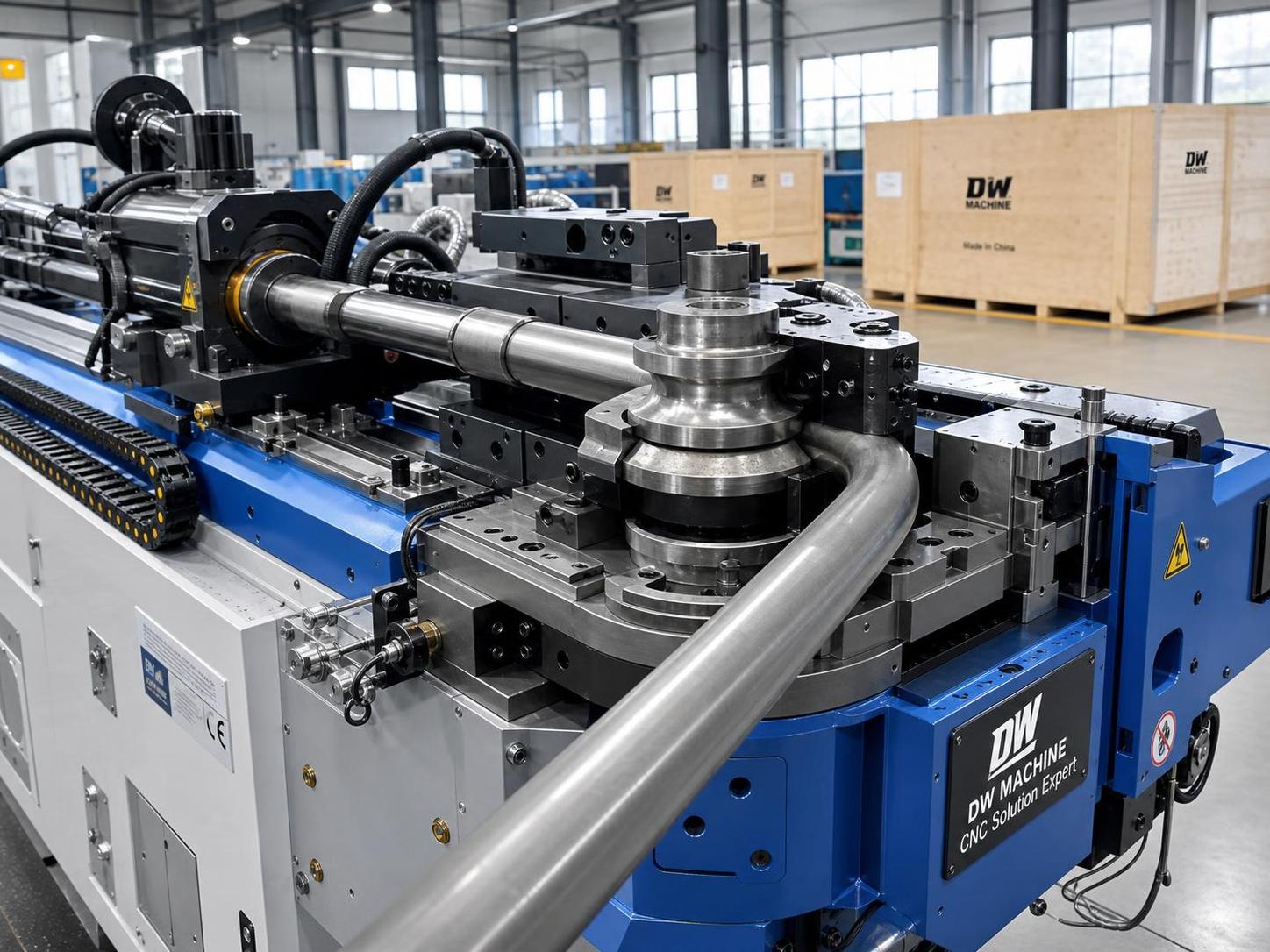
What is the minimum order quantity for Wuxi Samgins pipe bending machines? In most cases, the minimum order quantity is flexible and often starts from one machine, especially for standard models. For customized configurations, integrated production lines, or special voltage and tooling requests, the MOQ may depend on technical requirements, sourcing complexity, and shipping efficiency.
For procurement managers, factory owners, and equipment distributors, MOQ is not just a pricing detail. It affects total investment, project timing, inventory pressure, after-sales coordination, and the practicality of testing a supplier before placing larger orders.
Wuxi Samgins International Trade Co., Ltd. serves global buyers in manufacturing and metalworking, offering pipe benders and other industrial machinery with solutions tailored to machine type, production goals, and export needs. That means buyers should view MOQ as part of a broader purchasing decision rather than as a fixed number alone.
What Is the Minimum Order Quantity for Wuxi Samgins Pipe Benders?
If you are searching for the minimum order quantity for Wuxi Samgins pipe bending machines, the practical answer is that many orders can begin with one unit. This is common when the machine is a standard specification, production-ready, and does not require extensive custom engineering.
However, MOQ can change when the order includes non-standard bending capacity, special mold sets, automation integration, unique control systems, branding requirements, or bundled line equipment. In those situations, the supplier may assess the order based on production feasibility and component allocation rather than a simple unit count.
For many industrial buyers, this is good news. It means Wuxi Samgins can often support both first-time equipment purchases and larger distribution or factory expansion projects without forcing unnecessary volume commitments at the start.
Why MOQ Matters More Than Buyers First Expect
When buyers ask, “What is the minimum order quantity for Wuxi Samgins pipe bending machines?” they are usually trying to solve several business questions at once. They want to know how much capital they need now, how quickly they can move, and whether the supplier is suitable for long-term cooperation.
MOQ influences cash flow because one machine purchase is very different from ordering several units at once. A lower MOQ can reduce financial pressure, especially for smaller workshops, regional distributors testing demand, or manufacturers adding a new product line.
It also affects risk management. Ordering one machine first allows a buyer to evaluate actual bending precision, machine stability, ease of programming, operator training needs, and after-sales response before expanding the relationship.
From a logistics perspective, MOQ can shape container planning, freight cost per unit, customs preparation, and installation schedules. In industrial machinery procurement, these operational details matter just as much as the machine’s list price.
What Usually Determines MOQ for Pipe Bending Machines?
MOQ for industrial equipment is rarely arbitrary. For Wuxi Samgins pipe benders, it typically depends on a combination of machine standardization, customization depth, manufacturing complexity, and export arrangement.
The first factor is machine type. A standard pipe bending machine with common parameters is easier to produce or allocate, so a single-unit order is often realistic. A highly specialized machine with unusual material requirements or bending geometry may require a more customized quotation structure.
The second factor is configuration. If the buyer needs servo control, CNC programming, multiple bending radii, automatic feeding, special clamping, or compatibility with a specific production line, the order becomes more engineered. That can affect both lead time and minimum commercial terms.
The third factor is tooling. Many pipe bending projects require custom molds or dies based on tube diameter, wall thickness, material type, and target bend radius. A buyer may still purchase one machine, but the tooling package can influence the supplier’s quotation and production planning.
The fourth factor is export specification. Voltage, certification expectations, packaging method, manuals, and spare parts preparation all shape the order structure. Buyers in Europe, Southeast Asia, North America, or Oceania may require different details, and these can influence what the supplier considers commercially efficient.
Standard Orders vs. Customized Orders: The MOQ Difference
One of the most useful ways to understand MOQ is to separate standard orders from customized ones. This distinction helps buyers set realistic expectations before they request pricing.
For standard orders, MOQ is often one machine. This works well for factories replacing older equipment, pilot purchases, sample production validation, or buyers who want to compare a new supplier with their current source.
For customized orders, the situation is more nuanced. The supplier may still accept a one-unit order, but the total commercial threshold may be shaped by design labor, dedicated tooling, electrical modifications, testing requirements, or outsourced component sourcing.
In other words, a customized pipe bending machine does not always require multiple units. But it may require a more detailed technical review, and the total order value may be higher than a basic standalone machine.
What Buyers Should Ask Before Confirming MOQ
Serious buyers should avoid asking only for the minimum order quantity. That question is important, but it does not provide enough information to make a safe purchasing decision. A better approach is to combine MOQ questions with technical, commercial, and service-related questions.
Start by confirming whether the machine you need is standard or customized. Then ask what specifications are necessary to quote accurately, such as pipe diameter range, wall thickness, material grade, bending radius, production volume, and automation level.
You should also ask whether the quoted MOQ includes molds, spare parts, software, operator training support, and commissioning guidance. Sometimes a one-machine MOQ sounds attractive, but the total delivered solution may vary significantly depending on what is included.
Next, ask about lead time and shipment method. A supplier may accept a one-unit order, but if the machine requires special assembly or testing, the delivery schedule may be different from an in-stock standard unit.
Finally, ask about after-sales support. For many overseas buyers, service response, parts availability, and technical communication are just as important as MOQ. A low minimum order quantity is valuable only if the supplier can also support the machine properly after delivery.
How MOQ Connects to Price, Freight, and Total Procurement Cost
Many buyers assume a lower MOQ always means a better deal. In reality, MOQ and cost efficiency are related, but they are not the same. A one-unit order reduces entry risk, yet the per-unit cost may be higher than a larger purchase.
For example, packaging, export handling, inland transport, and ocean freight can weigh heavily on a single machine shipment. If a buyer plans to purchase multiple machines over a short period, consolidating orders may improve overall economics.
At the same time, ordering more units than necessary can create its own problems. Idle equipment ties up cash, increases storage demands, and may delay return on investment. The right MOQ is the one that matches actual production planning and market demand.
This is especially relevant for distributors. A distributor may want to test a specific Wuxi Samgins pipe bender model in a local market before placing a larger stocking order. In that case, a one-unit MOQ provides commercial flexibility even if the initial unit cost is slightly higher.
Who Benefits Most from a Flexible MOQ?
Flexible MOQ terms are particularly useful for small and mid-sized manufacturers, job shops, project-based fabricators, and new market distributors. These buyers often need access to industrial-grade equipment without overcommitting capital too early.
Factories expanding into new applications also benefit. If a company currently handles straight tube processing and wants to add pipe bending capacity, starting with one machine allows the team to test workflow integration before scaling.
Engineering contractors and specialized fabricators can also gain value from lower MOQ options. Their demand may depend on contract cycles, so purchasing one well-matched machine can be more practical than committing to fleet-level volume immediately.
Even large buyers sometimes prefer flexible MOQ. A major manufacturer may use a one-unit purchase to validate technical performance at one site before standardizing the same model across several facilities.
Why Wuxi Samgins Can Offer Practical MOQ Flexibility
Wuxi Samgins operates in the manufacturing and industrial equipment sector with broad experience across pipe benders, bending machines, CNC machine tools, welding equipment, cutting machines, rolling machines, and related systems. That product familiarity supports more practical procurement discussions.
Because the company serves international markets and works with varied machinery categories, it can align solutions according to application needs rather than forcing a one-size-fits-all volume rule. For buyers, this matters because industrial procurement often depends on technical fit more than on mass-volume purchasing.
The company also emphasizes production organization under ISO9001 quality system certification and EU CE standards. For overseas customers, this signals that order discussions are not only about quantity but also about compliance, repeatability, and export readiness.
In practical terms, that means MOQ conversations can be tied to real project requirements: what the machine needs to do, how it will be installed, what standards it must meet, and how quickly it must go into production.
How to Decide Whether One Machine Is Enough
Not every buyer should automatically choose the lowest possible MOQ. Sometimes one machine is the right starting point, and sometimes it is more efficient to purchase a broader package from the beginning.
If your production volume is still uncertain, one machine is usually the safer decision. It lets you verify output quality, cycle time, maintenance needs, and operator adaptation without carrying extra asset burden.
If your project has a confirmed ramp-up schedule, predictable product mix, and clear customer orders, a larger purchase may make more sense. In that case, the focus should shift from minimum order quantity to line balancing, spare coverage, and total cost efficiency.
Buyers should also consider whether the machine will be used as a standalone workstation or part of a broader automated process. If automation integration is planned, the initial order should be evaluated from a systems perspective rather than only a unit perspective.
Best Practice When Requesting a Quote from Wuxi Samgins
To get a clear answer on MOQ, buyers should send a structured inquiry instead of a short generic question. This improves quote accuracy and reduces delays in technical clarification.
A strong inquiry should include pipe material, outside diameter, wall thickness, minimum and maximum bending radius, drawing or sample information, annual output target, required control level, destination country, and any certification expectations.
It is also useful to state whether the purchase is for end use, resale, project tendering, or technical evaluation. That context helps the supplier recommend whether one machine is suitable or whether a broader package would be more efficient.
When possible, ask for both a standard option and a customized option. This gives your team a clearer view of pricing differences, lead time implications, and the commercial impact of requesting non-standard features.
Conclusion
So, what is the minimum order quantity for Wuxi Samgins pipe bending machines? In many cases, the answer is one machine, especially for standard models. For customized solutions, MOQ is better understood as a flexible commercial condition shaped by technical scope, tooling, export requirements, and project complexity.
For buyers, the real decision is not just about the smallest possible order. It is about choosing the right purchasing structure for your production goals, budget, risk tolerance, and timeline. A flexible MOQ is valuable because it gives you room to verify performance and control investment.
When evaluating Wuxi Samgins pipe benders, treat MOQ as one part of a larger procurement picture that includes machine capability, customization level, freight, service support, and long-term operating value. That approach leads to a more reliable buying decision and a better return on your equipment investment.
search
Products Navigation
Send Us A Message