




How to Judge Whether a Bending Machine Supplier Can Deliver a Full Line
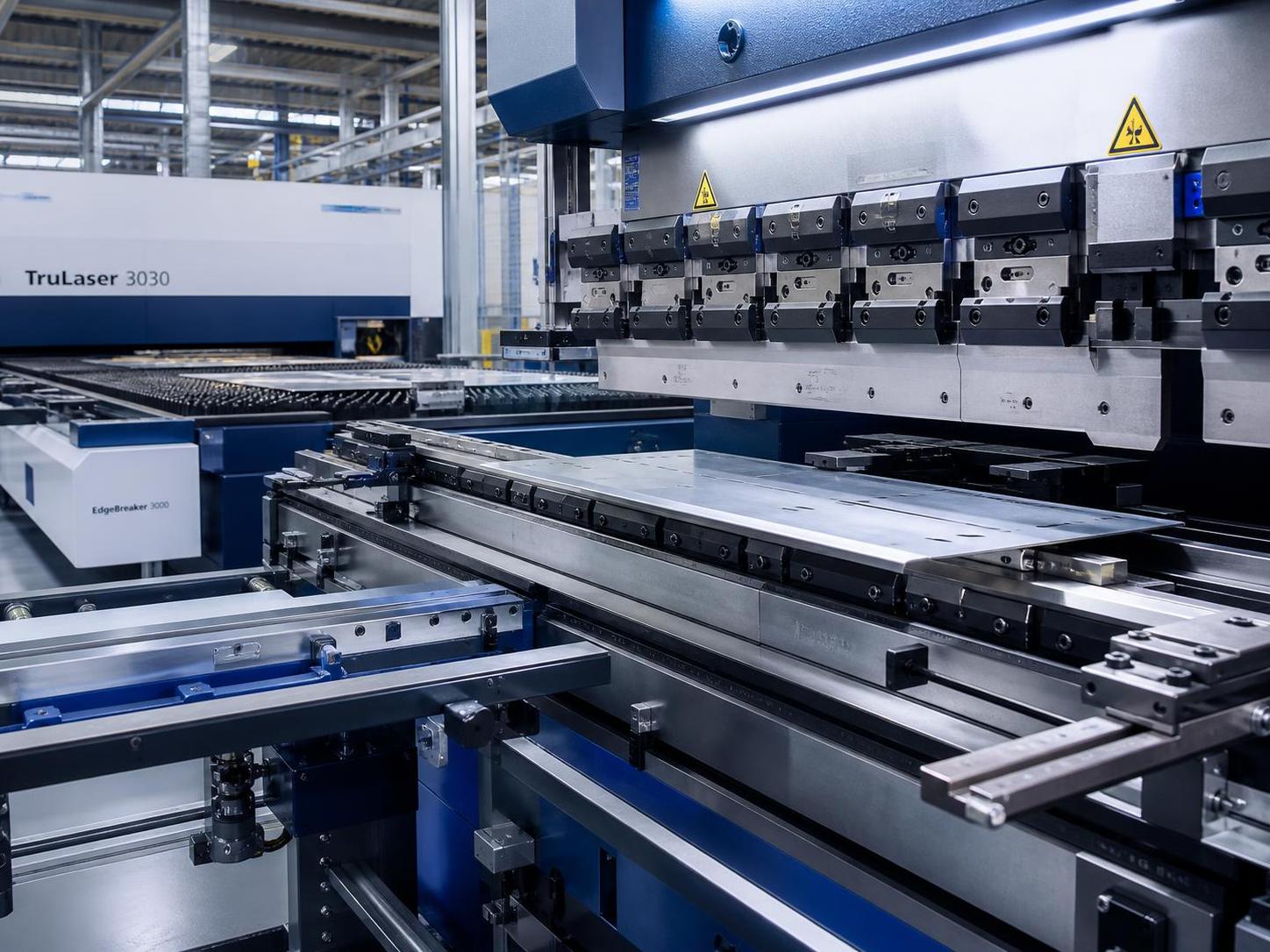
When buyers ask about a press brake or plate bending solution, they are often asking the wrong first question. The conversation usually starts with tonnage, working length, controller brand, or price. But in real production, a bending machine rarely works alone. It sits in the middle of a much larger process that may include cutting, leveling, deburring, edge preparation, welding, handling, inspection, and downstream assembly. That is why many purchasing teams eventually arrive at a more important question: How to evaluate if a bending machine supplier can provide a complete production line?
The answer is not hidden in a brochure. A supplier may sell a reliable bending machine and still be unable to support a full line. A true line-capable supplier understands workflow logic, machine compatibility, material behavior, operator safety, software coordination, installation planning, and after-sales continuity. If your goal is stable output rather than a single equipment transaction, you need to judge the supplier through a wider lens.
Start from the production flow, not from the machine list
A complete line is not simply several machines placed in one workshop. It is a connected manufacturing system designed around your product, material thickness range, batch size, tolerance target, and labor structure. Before assessing any supplier, map your actual production route. For example, sheet metal fabrication may begin with laser cutting, continue through deburring and leveling, then move to bending, welding, grinding, and final handling. Structural steel production may involve cutting, edge milling, end face milling, H-beam processing, welding, and straightening before bending-related forming steps are integrated where needed.
Once this route is clear, you can judge whether the supplier speaks in terms of process sequence or only in terms of isolated equipment. A supplier capable of delivering a full line will ask detailed questions: What materials are you processing? Stainless steel, carbon steel, aluminum? What are the common thicknesses? How often do you change part types? Where are your bottlenecks today? How many operators are available per shift? If the discussion stays shallow and quickly returns to one machine model, that is a warning sign.
Look for integration capability across upstream and downstream equipment
If you want to know whether a bending machine supplier can support a complete production line, examine their surrounding product portfolio and, more importantly, their integration logic. A supplier serving the manufacturing and metal processing industry should be able to discuss how bending connects with CNC cutting machines, laser cutting machines, shearing machines, plate rolling machines, leveling machines, deburring machines, pipe benders, welding robots, and other related equipment.
This does not mean the supplier must manufacture every single machine in-house. In many industrial projects, the real value lies in system matching, technical coordination, and unified delivery management. What matters is whether they can configure equipment with compatible capacities, synchronized production rhythm, and practical handling routes between stations.
For instance, a bending machine with strong performance may still create line imbalance if the upstream cutting section feeds parts too slowly, or if deburring quality is inconsistent and affects bend accuracy. A capable supplier will not ignore these links. They will talk about loading and unloading methods, material transfer, tooling selection, bending sequence, and whether operators need to rework parts between stages.
Can they design around your factory reality?
A full-line supplier should be able to move beyond catalog recommendations and adapt the solution to your plant conditions. This includes workshop dimensions, crane capacity, power supply, ventilation, foundation requirements, and logistics paths for raw material and finished parts. Even a technically strong machine can become a problem if installation access is poor or if the line interrupts existing production flow.
Ask whether the supplier can help with layout planning. A serious partner will usually provide a preliminary line concept based on your site conditions and product mix. They should think about more than where the machines stand. They should also consider operator movement, maintenance access, safety zones, scrap collection, and future expansion space.
In practice, many buyers underestimate this point. They compare equipment item by item but only discover too late that their workshop cannot support efficient movement between stations. A supplier that understands full-line delivery will treat layout as part of productivity, not just part of installation.
Technical depth matters more than broad claims
Some suppliers present themselves as “one-stop” providers, but the phrase means little unless it is backed by engineering depth. To judge this properly, ask technical questions that connect several machines in one process. How will they maintain part accuracy after cutting and before bending? What measures are taken when processing materials prone to springback? How is tooling selected for mixed-batch production? Can they advise on automation level based on order volatility rather than simply pushing the highest-spec option?
The quality of their answers tells you whether they truly understand manufacturing scenarios. A supplier with real experience will explain trade-offs. They will not pretend every process should be fully automated. In some factories, semi-automatic handling is more practical than robotic loading because product variation is high. In others, welding robots and CNC bending cells make sense because consistency and throughput are critical. Good suppliers do not sell complexity for its own sake; they design around the economics of your production.
Evaluate quality control and standards across the line
One machine can perform well in a demo and still fail in a line environment if manufacturing consistency is weak. That is why quality control should be assessed at system level. Ask how the supplier manages production, inspection, and component selection. If they organize manufacturing according to recognized quality systems such as ISO9001 and build equipment in line with relevant standards such as EU CE requirements, that is a useful indicator of process discipline. Still, certifications alone are not enough.
You should also ask practical questions: Are critical parts traceable? How are machines tested before shipment? Do they run trial processing? How do they verify controller stability, axis accuracy, and hydraulic or servo performance? When multiple machines are delivered as one line, is there a joint acceptance plan to check coordination rather than inspecting each machine separately?
A supplier ready for full-line responsibility will be comfortable discussing these details. They know that a complete line is judged by overall output stability, not by individual machine appearance.
Software, controls, and communication are often the hidden dividing line
Many line problems are not mechanical. They are digital. A bending machine supplier that can deliver a complete production line should understand how data moves from programming to execution. This includes nesting data from cutting, part identification, bending programs, tooling libraries, robot interfaces, and production tracking where needed.
You do not need a highly complex smart factory project to care about this. Even a modest line benefits when operators spend less time manually re-entering dimensions, searching for programs, or correcting avoidable errors. Ask what control systems are used, how programs are managed, and whether software integration is possible with your existing workflow. If the supplier can only talk about the machine screen and not about process data continuity, their line capability may be limited.
Service ability is part of line delivery, not an afterthought
When buyers think about after-sales service, they often picture emergency repair. For a complete line, service starts much earlier. It includes pre-sales technical consultation, process planning, installation coordination, commissioning, training, spare parts preparation, remote support, and troubleshooting after the line begins real production.
This is especially important for export projects. If your factory is in Southeast Asia, Europe, North America, South America, or Oceania, the supplier should have a realistic approach to cross-border support. Ask how they handle commissioning overseas, what documents are provided, whether English technical communication is smooth, and how spare parts are managed. Response promises sound reassuring, but structure matters more. You want to know whether the supplier has a clear service process, not just a confident sales tone.
Training is another good test. A supplier focused only on machine delivery may provide minimal instruction. A supplier capable of full-line support will think about operators, programmers, maintenance staff, and production managers separately, because each role interacts with the line differently.
Request evidence in the form of solution thinking
If you are seriously comparing suppliers, one of the best ways to assess them is to give each the same production scenario and see how they respond. Share a representative product range, material types, thicknesses, expected monthly output, labor conditions, and workshop constraints. Then ask them to propose a line concept.
The strongest supplier will usually show several qualities at once: they identify possible bottlenecks, explain machine matching logic, flag risks, and suggest phased implementation if necessary. They may recommend a line that includes bending machines together with laser cutting, shearing, leveling, deburring, welding, or rolling equipment depending on your actual needs. Their proposal should feel grounded in production reality rather than built from whatever is easiest for them to sell.
This is where companies with broad equipment familiarity often stand out. A supplier that works across metal fabrication equipment categories is generally better positioned to understand how one process decision affects the next.
Watch for common red flags
Buyers are sometimes impressed by scale or low pricing and miss operational risks. A few warning signs deserve attention.
- They avoid process questions. If the supplier is not interested in your product flow, they are probably not evaluating the line properly.
- Everything sounds easy. Real projects involve compromises. Overly smooth answers often hide weak technical preparation.
- No clear boundary of responsibility. In a full line, someone must coordinate interfaces, acceptance, and problem ownership.
- Documentation is thin. Missing layout guidance, utility requirements, testing plans, or training scope often leads to delays later.
- After-sales support is vague. If service details are unclear before purchase, they rarely become clearer after shipment.
A practical checklist before you decide
To answer the question “How to evaluate if a bending machine supplier can provide a complete production line?” in a practical way, use a checklist that combines engineering, quality, and service:
- Do they understand your full manufacturing route, not just the bending step?
- Can they match upstream and downstream equipment capacities logically?
- Are they able to provide layout and line planning based on your workshop conditions?
- Can they discuss tooling, material behavior, and process risks in detail?
- Do they follow structured quality management and recognized standards?
- Can they explain software, controls, and data continuity between machines?
- Is their commissioning, training, and service plan realistic for your region?
- Do their proposals reflect your production needs rather than a standard package?
A supplier that performs well on these points is far more likely to support long-term production success.
The real benchmark is whether they reduce your operating uncertainty
In the end, a full-line supplier should make your production more predictable. That means fewer mismatches between machines, fewer surprises during installation, clearer process responsibility, and a better path from investment to stable output. The goal is not just to buy equipment. It is to build a manufacturing system that can grow with your business.
For companies sourcing from China, this is one reason experienced industrial suppliers in manufacturing hubs such as Wuxi are often evaluated not only by product range but by coordination ability. A company familiar with bending machines, shearing machines, plate rolling machines, leveling machines, deburring equipment, CNC cutting machines, laser cutting systems, welding robots, machine tools, and structural fabrication equipment is in a stronger position to think in terms of production lines rather than isolated units. When that broader equipment knowledge is combined with disciplined quality management, standards awareness, and honest technical communication, buyers gain a much clearer basis for decision-making.
So before signing for a bending machine, pause and widen the frame. The best supplier is not always the one with the most attractive single-machine offer. It is the one that understands how that machine must work with everything around it, day after day, part after part, under the real conditions of your factory.
search
Products Navigation
Send Us A Message