




How CNC Punching and Marking Machines Improve Steel Fabrication Workflow
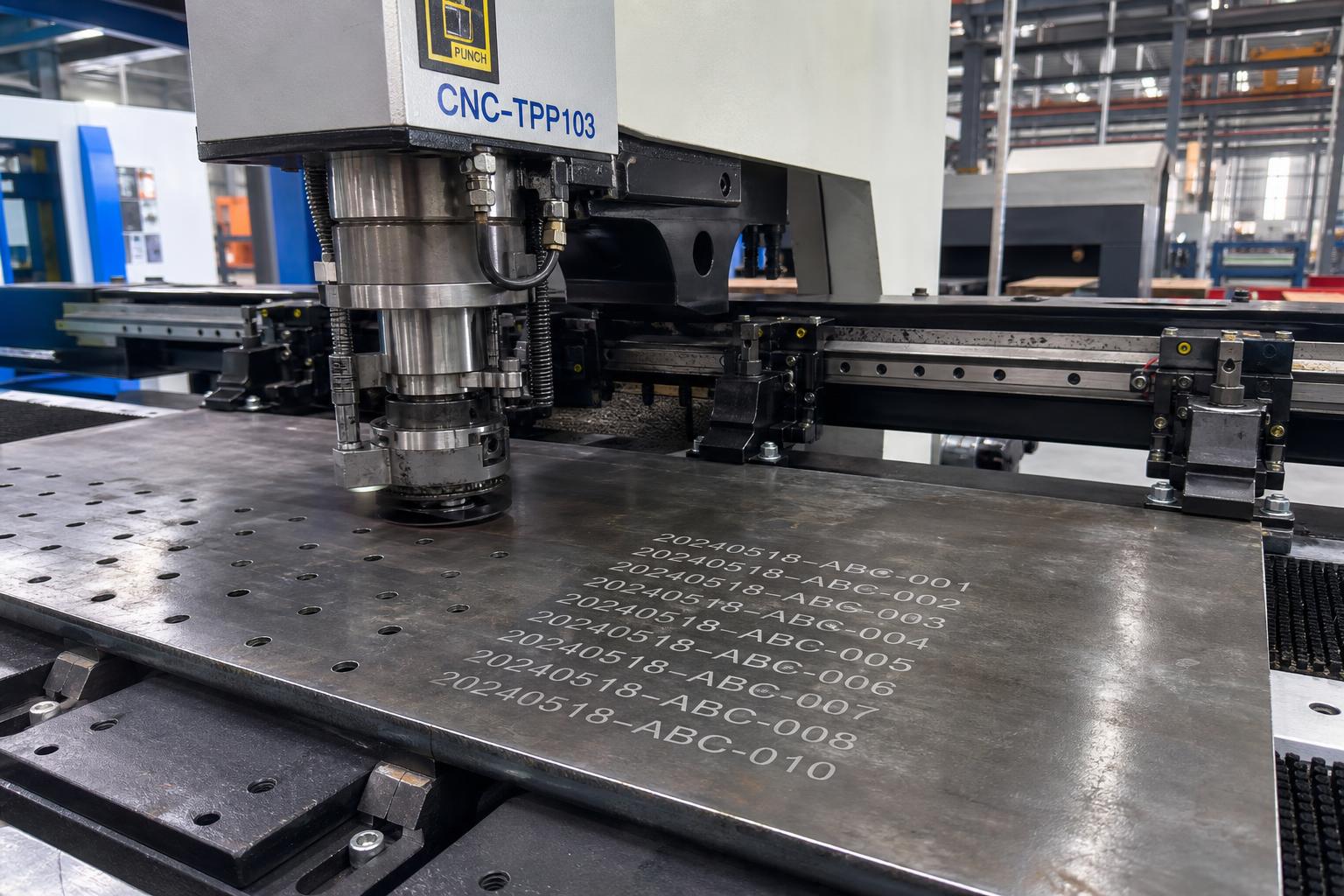
For steel fabrication businesses seeking higher throughput, better traceability, and lower labor costs, a CNC punching and marking machine can significantly streamline production. By combining precise punching and clear part identification in one automated process, it helps reduce manual handling, minimize errors, and improve overall workflow efficiency. This article explores how the right equipment can support faster, more consistent fabrication performance.
Why Steel Fabricators Are Investing in CNC Punching and Marking Machines
The core search intent behind CNC punching and marking machine is practical evaluation. Decision-makers want to know whether this equipment can improve output, reduce cost, and solve common workflow bottlenecks.
For most steel fabrication businesses, the answer is yes when production includes repeated hole patterns, identification marks, structural parts, and traceable assemblies. These machines improve both speed and consistency in areas where manual work often creates delays.
Instead of moving steel components across separate punching, layout, and marking stations, fabricators can complete multiple steps in one controlled cycle. That reduces unnecessary handling and makes production planning easier across busy workshops.
What Problems in Steel Fabrication Workflow Do These Machines Solve?
In many fabrication plants, delays do not come from one major issue. They come from repeated small inefficiencies such as manual measurement, marking mistakes, idle handling time, and inconsistent hole positioning.
A CNC punching and marking machine addresses these problems by automating two critical operations that affect downstream quality. Accurate punching ensures reliable fit-up, while clean marking improves part identification for welding, assembly, and inspection.
When marks are unclear or applied late, parts are often mixed, rechecked, or reworked. That creates avoidable downtime between cutting, drilling, welding, and final assembly, especially on projects with large part volumes.
Automation also reduces dependence on highly manual layout work. Skilled operators remain important, but their time can be used for supervision, setup, and quality control instead of repetitive hand marking and hole location tasks.
How a CNC Punching and Marking Machine Improves Throughput
Throughput improves because the machine shortens total processing time per part. Punching and marking happen in one sequence, so operators no longer need to transfer workpieces between separate stations for each step.
Programming also plays a major role. Once part data is loaded, the machine can execute repeatable operations with minimal variation. This is particularly valuable for batch production of steel plates, channels, angles, and connection components.
Setup time is lower than many managers expect when the workload includes similar parts or repeat orders. Saved minutes on each part become significant gains when production schedules are tight and output targets are aggressive.
More importantly, throughput becomes more predictable. Managers can schedule jobs based on stable machine cycle times rather than variable manual performance, which supports more accurate delivery commitments to customers.
Why Accuracy and Traceability Matter More Than Ever
Many buyers first focus on speed, but accuracy often creates the larger business impact. Incorrect hole positions or poor identification can disrupt assembly, delay inspections, and increase welding corrections across the entire production chain.
A CNC punching and marking machine improves dimensional consistency because the machine follows programmed coordinates instead of manual layout lines. That reduces part variation and helps keep assemblies aligned during fit-up.
Traceability is equally important for fabricators serving infrastructure, construction, energy, and heavy equipment sectors. Clear, permanent marking helps teams identify each component correctly during storage, transport, welding, and final installation.
For enterprise decision-makers, this means fewer production interruptions and better documentation support. It also lowers the risk of using the wrong part in a critical assembly, which can become expensive very quickly.
Where the Real Labor Savings Come From
Labor savings do not only come from replacing headcount. In well-run factories, the bigger advantage is using available labor more efficiently across the full fabrication workflow.
Manual layout, repeated measuring, stamp marking, and repositioning consume time that adds little strategic value. Automation transfers those repetitive tasks to the machine, allowing workers to focus on setup control, material flow, and final quality checks.
This also helps fabricators manage labor shortages. If experienced workers are difficult to recruit or retain, automated punching and marking can reduce dependence on a narrow group of highly experienced layout personnel.
Over time, fewer manual touchpoints also mean fewer opportunities for error. That lowers indirect labor costs linked to rework, part re-identification, production confusion, and schedule recovery after mistakes.
How It Supports Better Workflow Between Upstream and Downstream Processes
The value of this equipment is not limited to one workstation. Its real strength appears when the entire production flow is considered, from material preparation to welding and final assembly.
When parts leave the punching and marking stage with accurate holes and clear identification, downstream teams work faster. Welders spend less time checking part orientation, assemblers reduce mismatch issues, and inspectors can verify items more efficiently.
This improves internal coordination across departments. Production planning becomes smoother because each team receives parts in a more usable condition, reducing waiting time and preventing avoidable clarification loops between operators.
In operations handling thick plates and complex welded structures, supporting equipment also matters. For example, edge preparation quality can directly affect later welding speed and consistency.
In such cases, manufacturers may pair punching and marking capability with specialized plate-processing solutions such as Beveling & Milling Edge For Heavy Tank, which is designed for large storage tanks, pressure vessels, and heavy structural components.
What Decision-Makers Should Evaluate Before Buying
Not every factory needs the same machine configuration. The right purchase decision depends on product mix, production volume, material type, thickness range, and how often parts require standardized hole and marking patterns.
Decision-makers should begin with actual workflow data. Review where delays happen, how often marking errors occur, how much time is lost in handling, and how much rework comes from inaccurate hole location.
Machine speed matters, but it should not be the only selection criterion. Reliability, programming ease, service support, tooling availability, and integration with current fabrication processes often affect return on investment more directly.
It is also important to consider future production plans. If the business expects to take on more structural steel, utility, or industrial fabrication work, buying for near-term needs alone may create another bottleneck later.
How to Judge Return on Investment Realistically
ROI should be measured beyond simple labor replacement. A stronger evaluation includes throughput gains, lower rework rates, improved delivery reliability, and reduced risk of part misidentification.
One useful approach is to compare current manual cycle time against projected automated cycle time for representative jobs. Then add the cost of rework, production delays, and quality issues that automation can help prevent.
Managers should also consider the value of schedule confidence. Delivering on time more consistently can strengthen customer trust, improve capacity planning, and support higher-margin project acquisition.
In many plants, the payback case becomes convincing when indirect savings are included. Reduced workflow interruptions often generate more value than the visible labor reduction alone.
What Features Often Make the Biggest Difference in Daily Production
Buyers sometimes focus heavily on maximum specifications while overlooking features that affect everyday usability. In practice, programming convenience, clamping stability, marking clarity, and maintenance access have major operational impact.
Consistent feeding and positioning are essential for repeatable results. Good machine design should support stable processing, simple setup changes, and reliable operation during long production runs.
For companies handling broader plate-processing work, adjacent equipment capabilities can also indicate a supplier’s engineering depth. For example, edge-processing systems used in heavy fabrication may offer adjustable bevel angles, automatic feed, and support for carbon steel, stainless steel, and aluminum plates.
Some advanced solutions can form straight, inclined, U-shaped, V-shaped, and K-shaped bevels in one pass while reducing secondary grinding. That kind of process efficiency is relevant when evaluating a supplier’s overall fabrication equipment portfolio.
Why Supplier Capability Matters as Much as Machine Capability
For enterprise buyers, the machine is only one part of the decision. Supplier experience, engineering support, quality control, and after-sales response can have a major effect on long-term operating value.
Wuxi Samgins International Trade Co.,Ltd focuses on mechanical equipment and related products for fabrication and processing industries. Its product range covers welding equipment, CNC cutting machines, CNC machine tools, laser cutting machines, plate processing equipment, and other workshop solutions.
For buyers with diverse fabrication needs, this broader equipment background can be useful because workflow improvements often require coordinated thinking across multiple process steps, not just one standalone machine purchase.
Companies that follow structured production standards and international quality expectations are generally better positioned to support export-oriented manufacturers and industrial users seeking consistent equipment performance.
When a CNC Punching and Marking Machine Is the Right Choice
This machine is usually the right investment when a factory processes repeated steel parts, faces frequent identification errors, struggles with labor efficiency, or needs more predictable throughput without sacrificing accuracy.
It is especially valuable in structural steel, tower manufacturing, equipment frames, connection plates, and other applications where part consistency and traceability directly influence downstream productivity.
However, buyers should still assess fit carefully. If production is highly irregular, extremely low volume, or dependent on processes outside punching-based workflows, the business case may be weaker.
The most effective investment decisions come from matching equipment capability to actual production pain points, not from buying automation simply because it is available.
Conclusion
A CNC punching and marking machine improves steel fabrication workflow by combining speed, consistency, and traceability in one automated step. For decision-makers, its value lies in measurable operational gains rather than technical novelty.
When selected against real production needs, it can reduce manual handling, lower error rates, improve part flow, and help downstream teams work more efficiently. That makes it a practical investment for fabricators seeking stronger output and better control.
The best purchasing decisions come from evaluating total workflow impact, supplier capability, and long-term production goals together. With that approach, the machine becomes more than a tool. It becomes a way to build a more reliable fabrication operation.
search
Products Navigation
Send Us A Message