




What Equipment Fits 6-400mm Heavy Duty Pipe Processing Projects Best?
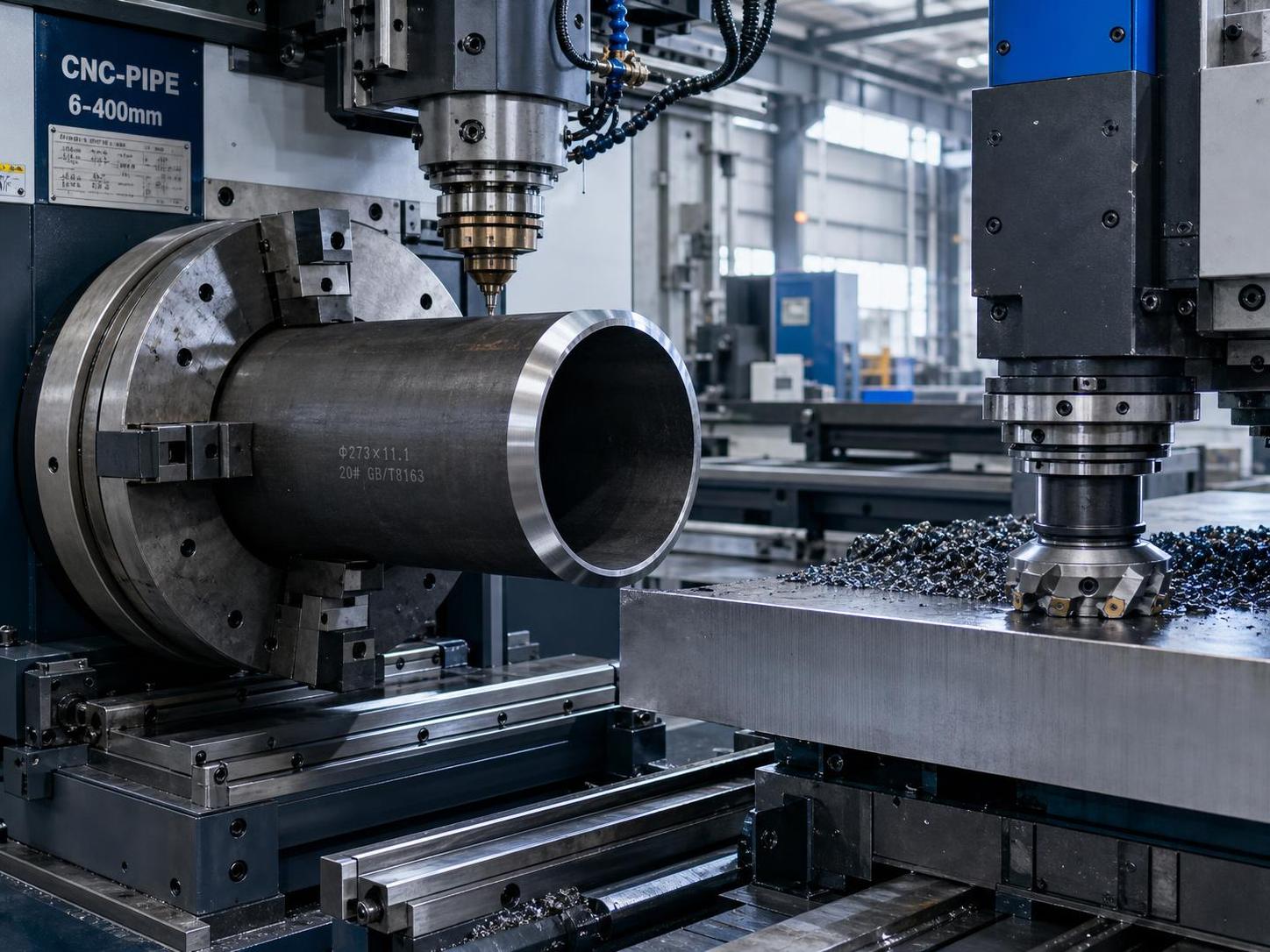
Meta Title: What Equipment Fits 6-400mm Heavy Duty Pipe Processing Projects Best?
If you are selecting equipment for 6-400mm heavy duty pipe processing, the right answer is usually not one machine. Most successful projects rely on a matched process chain: pipe cutting, end preparation or beveling, fit-up, welding, handling, inspection, and sometimes bending or plate edge preparation for related vessel and spool work. The real decision is which machines remove bottlenecks without adding alignment problems, rework, or unnecessary labor.
Many buyers start by looking at diameter range alone. That is understandable, but it is also where expensive mistakes begin. A machine that can physically handle 6 mm to 400 mm pipe is not automatically the best choice for your job mix. Project managers usually care about three things first: whether the line can keep schedule, whether weld prep stays consistent across batches, and whether the equipment can support real site conditions instead of only working well in a showroom.
What actually matters in 6-400mm heavy duty pipe processing
For heavy-duty pipe fabrication, the key variables are not only pipe size. Wall thickness, material grade, bevel geometry, weld procedure, batch size, and traceability requirements matter just as much. A carbon steel water line, a stainless chemical pipe, and a heavy-wall pressure spool can all sit inside the same nominal diameter range, but they should not be processed with the same equipment strategy.
A short answer, if you need one: the best equipment setup for 6-400mm heavy duty pipe processing is a coordinated combination of high-accuracy cutting, stable beveling, controlled fit-up, welding automation where volume justifies it, and handling systems sized to the heaviest real workpiece rather than the average one.
That sounds obvious, but many projects still fail at the transition points between machines. Pipe gets cut accurately, then loses alignment during beveling. Or welding is automated, but upstream prep is inconsistent, so the robot spends time compensating for bad geometry. In practice, the best equipment choice is the one that keeps dimensional variation under control from first cut to final weld.
Start with process flow, not catalog size
When reviewing suppliers, I would first map the actual fabrication route. For example:
- Raw pipe receiving and identification
- Cutting to length
- End beveling or end facing
- Fit-up and tack welding
- Main welding
- NDT, correction, and finishing
- Handling, marking, and dispatch
If your project also includes supports, headers, pressure-vessel sections, or heavy fabricated structures around the pipe package, then plate preparation equipment becomes part of the same decision. This is where some buyers think too narrowly. They ask, “Which pipe machine do I need?” when the better question is, “Which equipment set keeps the whole fabrication package moving?”
That broader view matters because many heavy pipe jobs involve both round and flat stock preparation. For example, boilers, power projects, shipbuilding blocks, and chemical skids often include plate beveling for associated assemblies, not only pipe end prep.
The core equipment categories that usually fit best
1. CNC pipe cutting equipment
For high-volume or mixed-spec work, CNC cutting is usually the anchor machine. It improves repeatability, especially where cut length, squareness, and downstream fit-up affect weld quality. If your workload includes multiple diameters and frequent changeovers, CNC systems save more time in setup reduction than many teams expect.
Choose this carefully if you process alloy materials or need tight weld root consistency. Poor cutting accuracy creates a problem that no welding operator wants to inherit.
2. Pipe beveling and end-preparation machines
This is the equipment category most often underestimated. In heavy-duty work, bevel consistency is not a cosmetic issue. It affects penetration, filler consumption, arc stability, and repair rate. For thick-wall pipe or high-spec welding procedures, stable bevel geometry can have a bigger effect on overall productivity than adding another welding station.
If your projects involve different bevel types, confirm whether the machine can hold the required profile repeatedly, not just produce it once in a test piece. Tooling availability, tool life, and accessibility for maintenance deserve attention here.
3. Automatic or semi-automatic welding equipment
For repeated spool work, circumferential welding systems, positioners, and welding manipulators usually make sense before jumping straight to a full robotic cell. Robotics are powerful, but only if upstream part preparation is disciplined and your volume supports the investment. In many fabrication shops, semi-automatic stations with good fixtures deliver better payback than an overcomplicated automation package.
4. Pipe fit-up, turning rolls, and handling systems
This category rarely gets attention early enough. Yet in real production, moving and positioning heavy pipe sections safely and repeatedly is where labor time disappears. If operators need to improvise lifting or manual repositioning, your fancy cutting and welding equipment will not rescue schedule performance.
5. Pipe bending, if the job mix truly requires it
Do not buy a heavy pipe bender because a future project might need it. Buy it when your actual work mix includes repeat bends, controlled radii, and enough volume to justify tooling and setup. For many shops, outsourced bending remains the better decision unless bending is a regular part of the contract base.
Where project managers usually make the wrong call
One common mistake is buying for the maximum diameter only. A line designed around the biggest occasional pipe can become inefficient for everyday work. Another mistake is focusing too much on machine power and not enough on tolerance stability, clamping quality, and operator workflow.
I also see confusion between “can process” and “can process efficiently.” A supplier may state a broad working range, but you still need to ask how performance changes at the low and high ends of that range. Setup time, vibration, cutter wear, and surface finish may vary sharply.
There is also a commercial mistake: treating every machine as a standalone purchase. In heavy-duty pipe fabrication, integration matters. Controls, fixtures, consumables, spare parts access, and after-sales response often decide whether the investment performs in month twelve the same way it did on day one.
When plate edge preparation belongs in the same equipment plan
This point is easy to miss if you are managing a mixed fabrication package. Heavy pipe projects in sectors like pressure vessels, boilers, shipbuilding, electric power, and chemical engineering often involve plate components that need accurate bevels before welding. In those cases, plate edge preparation is not a side issue. It directly affects weld quality and fitting time for connected assemblies.
For that kind of work, a dedicated Edge milling machine can be a practical addition. XBJ Series models are used for straight edges, beveled edges, and U-, V-, or K-type groove preparation on carbon steel, stainless steel, and aluminum plates. The heavy-duty configuration covers 6-400 mm thickness, with bevel angle adjustment up to 0° to 90°. That makes it relevant when your pipe project also includes thick plate fabrication and you want more consistent prep than traditional edge planing usually delivers. It is not a replacement for pipe-end machinery, but it can remove a major bottleneck in related fabrication work.
The useful detail here is not just the thickness range. It is the combination of automatic clamping, controlled feed speed, and structural rigidity. On thick sections, vibration control and positioning stability matter more than brochure language about speed. If your assemblies are long or heavy, support design and guide rail stability deserve inspection before purchase.
How to judge whether a supplier is actually suitable
Project leaders do not need the biggest supplier list. They need a supplier that understands the fabrication sequence and can size equipment around it. That is a different conversation.
Ask practical questions:
- What is the proven working range under production conditions, not only nominal capacity?
- Which materials has the machine processed regularly?
- How is bevel accuracy maintained as thickness increases?
- What consumables and wear parts need frequent replacement?
- What training is needed before operators reach stable output?
- How are installation, commissioning, and after-sales support handled?
Companies with a broad mechanical equipment portfolio can be useful here because they can look at the line as a system rather than pushing a single machine. Wuxi Samgins International Trade Co., Ltd, based in Wuxi near Shanghai, works across welding equipment, CNC cutting machines, milling machines, pipe benders, laser cutting systems, lathes, and other fabrication equipment. For buyers managing mixed fabrication scopes, that kind of range can help when comparing process-chain solutions instead of one isolated machine at a time. Claims around certification, export experience, and compliance still need to be checked against your project requirements and local standards, but breadth of equipment offering can be a real advantage during selection.
Suitable and unsuitable setups
If your project involves repeatable batches, thick-wall prep, controlled weld procedures, and schedule pressure, automation in cutting, beveling, and positioning usually pays off. If the work is highly variable, low volume, or split across many custom one-off parts, flexible semi-automatic equipment may be the smarter purchase.
A fully automated line is not always the best fit for 6-400mm heavy duty pipe processing. It can be the wrong answer when part mix changes constantly, operator skill is uneven, or plant layout cannot support smooth material flow. In those cases, well-chosen standalone machines with consistent fixturing often outperform a flashy but underutilized automated cell.
On the other hand, very heavy wall sections, repeated groove requirements, and strict weld documentation are exactly where underbuying becomes expensive. If the process demands repeatable edge quality, do not rely on manual methods just because the initial purchase price looks lower.
Before you sign the PO
Try to validate six things with your own production data:
- Real pipe diameter and wall-thickness distribution
- Material mix by percentage
- Required bevel forms and weld procedures
- Daily or weekly throughput target
- Available operator skill level
- Floor space, power, lifting, and maintenance support
That last point matters more than many teams admit. A machine can be technically correct and still be a poor investment if your workshop cannot feed, lift, support, or maintain it properly.
For most project managers, the best decision is not about finding the single strongest machine. It is about building a dependable chain that keeps prep quality stable, minimizes rework, and matches the actual job mix. That is the equipment strategy that usually wins in 6-400mm heavy duty pipe processing.
FAQ
Is one machine enough for 6-400mm heavy duty pipe processing?
Usually no. Most projects need at least cutting, beveling, fit-up, welding, and handling equipment working together.
Should I prioritize CNC cutting or welding automation first?
If your upstream accuracy is inconsistent, start with cutting and beveling. Welding automation performs best when part prep is already stable.
When does heavy-duty beveling equipment become necessary?
When wall thickness increases, bevel geometry becomes stricter, or repair costs start rising due to inconsistent prep.
Is a broad supplier portfolio actually useful?
Yes, when your project includes multiple fabrication stages. It helps compare complete process solutions instead of disconnected machines.
Internal Link Anchor Text Suggestions
- pipe beveling machine selection guide: pipe end preparation or beveling equipment page
- CNC pipe cutting machine for heavy fabrication: CNC cutting product or category page
- automatic welding equipment for spool production: welding automation page
- plate beveling equipment for pressure vessel fabrication: plate edge preparation page
- pipe bender buying considerations for industrial projects: pipe bending equipment page
External Authoritative Source Suggestions
- ASME or equivalent pressure vessel and piping code documentation
- official technical documentation from major welding or cutting equipment manufacturers
- industry association materials for shipbuilding, boiler, or process piping fabrication
search
Products Navigation
Send Us A Message