




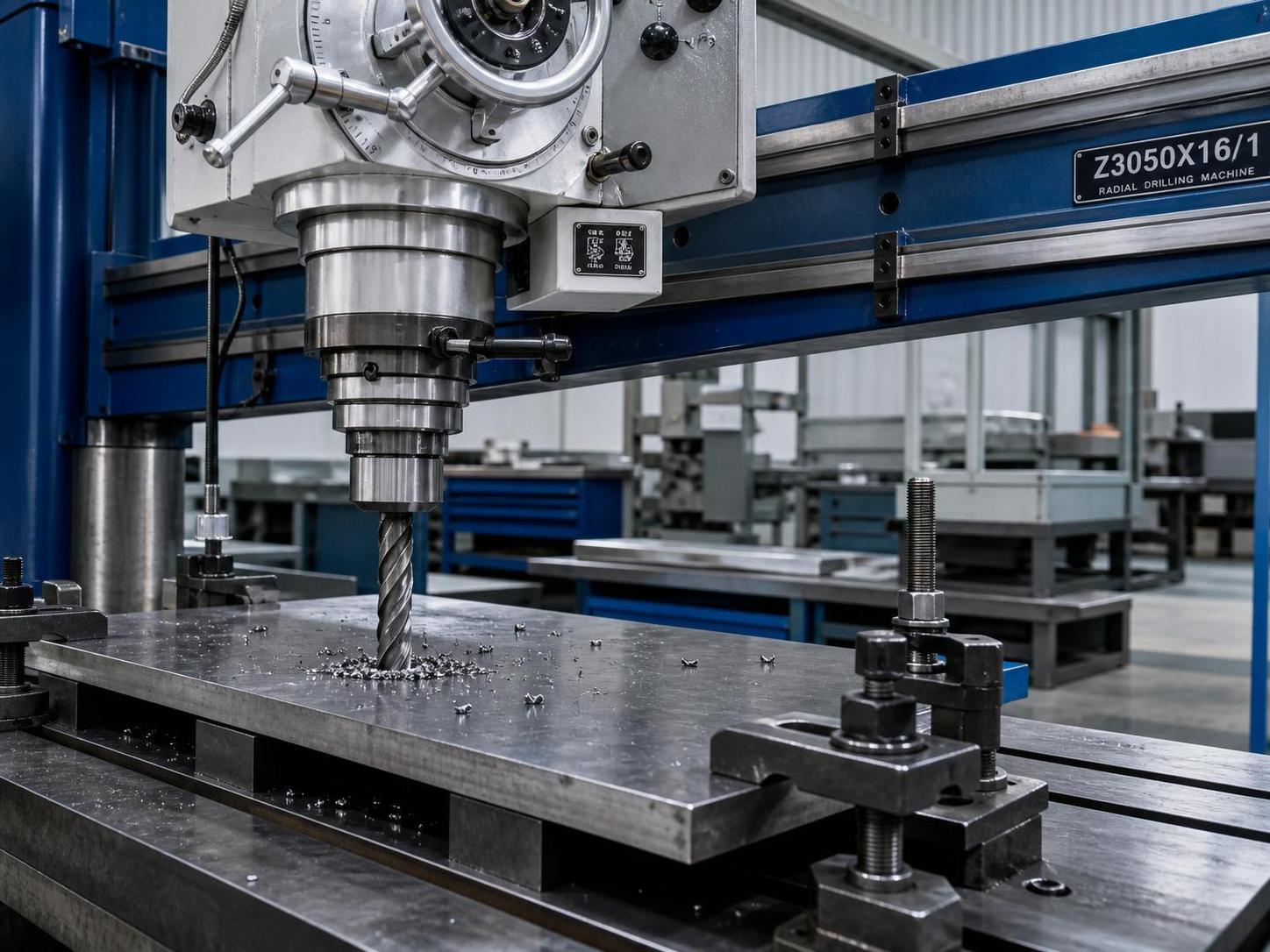
Radial Drilling Machine Buying Guide: Key Capacity and Accuracy Checks
A radial drilling machine often looks straightforward on a quotation sheet, but the buying decision rarely is. Many procurement teams only realize the gap between catalog specifications and real workshop needs after installation, when the machine struggles with part size, hole position consistency, or cycle time expectations.
If you are comparing models for metal fabrication, machining, or general manufacturing, the main challenge is not just finding a machine that can drill. It is choosing one with the right reach, rigidity, spindle behavior, and accuracy control so you do not inherit avoidable operating costs later. The checks below are the ones that usually matter most when purchase decisions are tied to cost, production fit, and long-term reliability.
Why the wrong radial drilling machine becomes expensive quickly
In purchasing discussions, the first comparison often centers on table size, spindle motor power, and price. Those are useful starting points, but they do not tell you how the machine will behave when real parts arrive. A radial drilling machine that is undersized or poorly matched to the workpiece mix can create repeated setup changes, unstable clamping, poor hole alignment, and operator hesitation when moving between different diameters and materials.
The cost impact is usually indirect rather than dramatic. You may see slower throughput because the arm travel does not comfortably cover the work envelope. You may see more rechecking because spindle runout or column rigidity is not good enough for tolerance-sensitive holes. In some shops, the issue is not accuracy alone but fatigue in routine operation: if repositioning the head or adjusting the arm is awkward, every batch takes longer than expected.
This is why a buying guide should begin with use conditions instead of brochure highlights. Before looking at brands or optional features, it helps to define what the machine needs to do every day, under what material conditions, and with what quality expectations.
Start with capacity checks before you compare accuracy claims
One common mistake is to discuss precision too early, before confirming that the machine’s physical capacity matches the work. For a radial drilling machine, capacity is not only maximum drilling diameter. It also includes spindle reach, arm swing, column height range, distance from spindle nose to base or table, and the practical room available for clamping large or irregular parts.
A machine may list an acceptable drilling diameter for steel, yet still be a poor fit if your parts require awkward positioning or repeated re-clamping. In fabrication environments, that can become a bigger problem than raw cutting power. If you process structural parts, welded assemblies, plates, or machine bases, the radial arm movement and head positioning flexibility often matter more than one extra step of spindle speed.
At this stage, it is worth building a simple internal checklist around your largest workpiece, your heaviest workpiece, your most frequent hole pattern, and your most demanding tolerance. That list will narrow the field faster than broad catalog comparison.
- Confirm the maximum and typical drilling diameters by material, not in general terms.
- Check whether the arm length supports your largest parts without awkward overhang.
- Review vertical travel and spindle stroke against part thickness and tooling length.
- Consider base and table layout for clamping fixtures, not just open area.
- Verify whether the machine can support future work, not only current jobs.
How to judge real accuracy in a radial drilling machine
Accuracy is easy to mention and harder to evaluate. Many buyers focus on whether the machine can produce a hole of the right diameter, but for procurement the better question is whether it can do so repeatedly across different setups. That depends on a combination of spindle quality, structural rigidity, feed stability, and how much deflection enters the system during drilling.
The first point to review is spindle runout and bearing condition. Even if the machine is new, the quality of spindle assembly determines how consistently it will cut, especially when smaller drills, reamers, or finishing passes are involved. Poor spindle behavior tends to show up as inconsistent hole geometry, chatter, or accelerated tool wear.
The second point is column and arm rigidity. A radial drilling machine is designed for flexible positioning, but that flexibility should not come at the expense of stability once locked. Buyers should pay attention to how the arm, head, and column locking mechanisms hold position under load. If these points are weak, the machine may appear acceptable during idle movement but lose confidence once drilling begins.
The third point is feed control. Smooth and predictable feed is important for hole finish, drill life, and repeatability. Machines with poorly controlled feed behavior can still drill holes, but they are harder to standardize across operators and materials.
When reviewing specifications or discussing with a supplier, accuracy should be treated as a system characteristic rather than one number on a sheet.
Common buying mistakes that lead to poor fit
Several buying errors appear repeatedly in manufacturing and metalworking environments. The first is choosing by maximum drilling diameter alone. A machine might satisfy the largest occasional hole, yet be inefficient for the daily mix of medium-size parts and frequent setups.
The second is ignoring the condition of incoming material and upstream process stability. Shops sometimes expect the radial drilling machine to compensate for distortion in plates, welded parts, or structural sections. In reality, unstable or uneven material support can reduce hole positioning confidence and increase setup time. For operations where flatness of metal material affects clamping and drilling consistency, upstream preparation matters. In some production flows, using equipment such as a Plate leveling machine before drilling can make the workpiece easier to fixture by progressively eliminating residual stress within the material and achieving the desired flatness. That is not a substitute for drilling accuracy, but it can remove one source of variation before the part reaches the machine.
The third mistake is underestimating operator workflow. If a machine is technically capable but slow to adjust, difficult to lock, or awkward to access with fixtures, the efficiency penalty stays with every batch. Procurement should look at the full handling sequence, not only the cutting specification.
A practical checklist for comparing models
When quotes begin to look similar, a structured comparison helps. The following checklist is useful because it focuses on conditions that affect production cost after purchase.
- Match drilling range to actual materials. Ask how the stated drilling capacity relates to mild steel, alloy steel, stainless steel, or other materials you use. Capacity without material context is too vague for procurement.
- Check spindle speed range and feed options. A broad and usable range is more valuable than a headline top speed if your work includes varied diameters and materials.
- Review spindle stroke and quill behavior. Sufficient stroke reduces repeated repositioning and improves handling of thicker parts or multi-step drilling.
- Evaluate locking strength of arm, head, and column. This directly affects confidence in repetitive work and tolerance stability.
- Look at machine base, table, and fixture compatibility. A large part is only manageable if it can be supported and clamped properly.
- Ask about ease of maintenance. Lubrication access, adjustment points, and replacement parts availability all affect long-term cost.
- Clarify electrical and control configuration. Even on conventional equipment, practical control layout influences safety and ease of training.
- Consider the surrounding process. If your line includes forming, welding, or plate preparation, machine selection should fit the whole route rather than a single station.
When higher capacity is worth paying for and when it is not
Buyers often face a familiar dilemma: pay more for a larger radial drilling machine now, or buy closer to current production needs. There is no universal answer, but there is a useful way to think about it.
Higher capacity is usually justified when your workpiece sizes vary widely, when larger parts are difficult to re-clamp, or when production planning suggests future jobs will exceed the comfortable working range of a smaller model. In these cases, paying for better reach, stronger rigidity, and more forgiving setup space can protect you from operational limits later.
Higher capacity is less justified when the majority of your work is stable, repetitive, and well within a smaller machine’s comfort zone. Oversizing can increase footprint, energy use, and acquisition cost without solving a real production problem. A larger machine also does not automatically mean better hole quality. If the work is moderate but tolerance-sensitive, it may be smarter to prioritize rigidity, spindle quality, and feed behavior rather than chasing maximum size.
The right purchase usually comes from identifying your dominant job type, then checking where flexibility truly creates value.
How upstream material condition can affect drilling quality
Procurement teams sometimes review the drilling station in isolation, but hole quality often depends on what happened before the part reached the machine. Sheet and plate components that carry residual stress, waviness, or inconsistent flatness can be harder to position consistently. That leads to unstable support, more shimming, and less predictable hole alignment.
For production lines handling plates before machining, flattening or leveling steps may deserve attention during equipment planning. Different flattening machine types, including mechanical, hydraulic, and electric-hydraulic configurations, are used depending on thickness, control preference, and required adjustment precision. In applications where thin plate processing needs careful roller gap control or medium-to-thick plates require stable pressure, these upstream decisions can reduce variability before drilling starts.
This matters because buying decisions are stronger when they reflect the complete process. A good radial drilling machine performs better in a stable process than in one where the part itself introduces avoidable error.
Questions to ask suppliers before finalizing the order
Supplier conversations are often where unclear assumptions become visible. A strong purchasing discussion should move beyond generic promises and focus on application fit.
- What workpiece types is this model most commonly used for?
- How is rigidity maintained when the arm and head are fully positioned for larger parts?
- What spindle speed and feed combinations are recommended for the materials we process most often?
- What routine maintenance items should be expected in normal workshop use?
- How are installation, operator familiarization, and spare parts support handled?
- Which options are genuinely useful for our production mix, and which are usually unnecessary?
For international buyers, support depth also matters. Companies such as Wuxi Samgins International Trade Co.,Ltd, which focus on mechanical equipment and related products across fabrication and machining categories, can sometimes help procurement teams compare not only standalone machines but also how one machine choice interacts with nearby processes. That broader view is often more useful than a narrow feature list.
Frequently Asked Questions
Is maximum drilling diameter the most important factor when buying a radial drilling machine?
No. It is important, but it should be reviewed together with reach, spindle stroke, rigidity, feed control, and fixture access. A machine can meet the diameter requirement and still be inefficient in actual production.
How can I tell whether a model is suitable for large fabricated parts?
Look at arm length, vertical travel, base layout, and how easily the head can be positioned over the full work envelope. Also consider whether the part can be clamped safely without repeated repositioning.
Does better accuracy always require a more complex machine?
Not necessarily. In many cases, stable structure, good spindle quality, reliable locking, and proper upstream part preparation matter more than extra complexity. The best choice depends on your tolerance expectations and workflow.
Why should procurement care about plate flatness before drilling?
If the workpiece is uneven or carries residual stress, setup can become inconsistent and support points may shift. That can affect drilling stability and make repeatability harder to control.
Where does a leveling process fit into a drilling-related purchasing decision?
It fits when the quality of incoming plate or formed material influences clamping and alignment. In those cases, reviewing process equipment such as a leveling machine alongside the drilling station can lead to a more realistic equipment plan.
Final thought
The best radial drilling machine purchase is usually the one that fits the actual workpiece range, holds stability during drilling, and supports routine operation without extra adjustment burden. Capacity matters, but only when it is tied to your part geometry and handling needs. Accuracy matters, but only when it is supported by rigidity, spindle behavior, feed control, and a stable upstream process.
If you are comparing options, start with your real parts, real materials, and real setup conditions. That approach makes quotations easier to judge and reduces the risk of paying for either too little machine or the wrong kind of machine.