




How are welding robot prices trending in 2024 for OEM integrators sourcing from Asia-based suppliers?
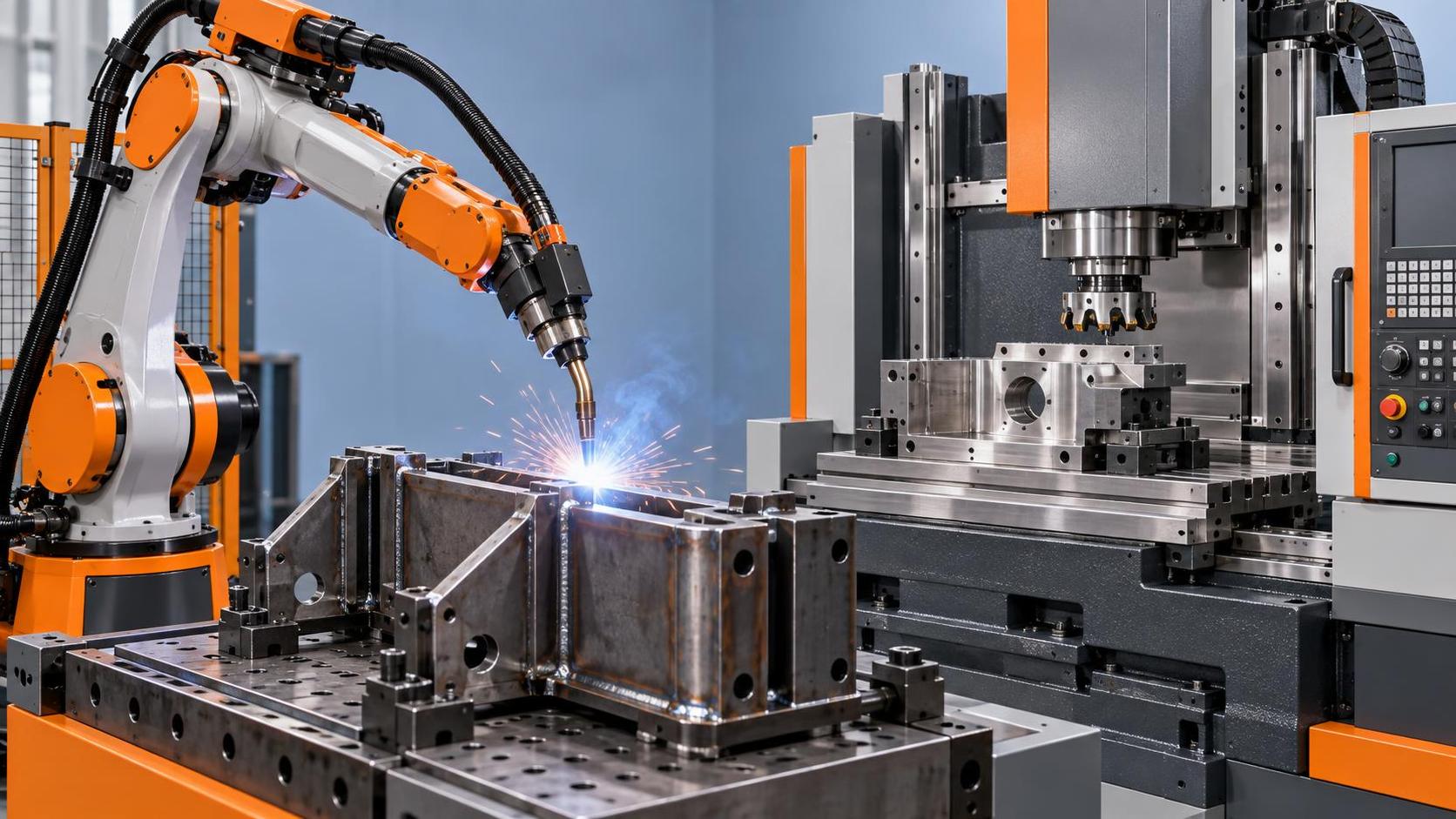
Welding robot price trends in 2024 are not moving in a single direction — they’re diverging. For OEM integrators sourcing from Asia-based suppliers, the real story isn’t about “cheaper” or “more expensive” robots overall. It’s about *which type* of welding robot — and under *which conditions* — delivers predictable cost behavior, integration readiness, and long-term value. That distinction matters because misreading the trend leads to one of two costly outcomes: overpaying for features that won’t be used, or under-specifying a system that fails during ramp-up.
What’s Actually Driving Price Behavior — Not Just Inflation
Raw material costs (e.g., servo motors, gearboxes, encoders) have stabilized after 2022–2023 volatility, but component-level pricing is now secondary to three structural factors:- Certification readiness: Robots shipped without CE or ISO9001-aligned documentation — even if functionally identical — require costly third-party validation before integration into EU or North American production lines. Many low-cost suppliers still treat this as an “optional add-on,” not baseline compliance. That creates hidden project delays and engineering overhead — effectively inflating total cost of ownership by 12–18% in practice.
- Software integration depth: A robot priced at $45,000 with proprietary offline programming software that doesn’t export standard CAD/CAM formats (e.g., STEP, IGES, or AP242) forces integrators to rebuild paths manually — adding 3–5 days per cell. Conversely, a $52,000 unit with open API support, ROS-2 compatibility, and native PLC communication (e.g., EtherNet/IP, Profinet) reduces commissioning time by 40%. The price delta isn’t arbitrary; it reflects real engineering investment.
- Local technical support model: “Asia-sourced” doesn’t mean “Asia-only supported.” Suppliers with regional application engineers — not just sales reps — located within 8 hours of your main facility can resolve sensor calibration drift, teach-pendant logic errors, or I/O mapping conflicts in under 48 hours. Those without onsite capability often rely on email-based troubleshooting across 12+ time zones, turning a 2-hour fix into a 5-day bottleneck. That difference rarely shows up on the quote — but it hits ROI hard.
Where You’ll See Real Price Discipline (and Where You Won’t)
The market has split into two clear tiers — not by brand, but by how the supplier approaches scalability and integration fidelity.In Tier 1 — represented by manufacturers like Wuxi Samgins — pricing remains competitive *because* volume, process control, and certification are built-in, not bolted on. With over a decade of exporting automated welding systems under ISO9001 and CE, their quoting reflects consistent manufacturing discipline: standardized base models, modular options (e.g., torch positioners, fume extraction interfaces), and documented repeatability specs (±0.15 mm arc start positioning, ±0.3° joint tracking tolerance). This consistency allows buyers to compare apples-to-apples — and forecast maintenance, spare parts, and training costs reliably.
In contrast, Tier 2 suppliers — often smaller workshops or trading companies acting as intermediaries — may offer lower headline prices, but those quotes frequently exclude essential items: certified robot arms (not just controllers), calibrated payload testing reports, or even basic safety interlock schematics. Worse, their “standard” configuration may use non-industrial-grade servo drives or omit encoder feedback redundancy — acceptable for light-duty applications, but risky when scaling to multi-shift, high-mix structural fabrication.
The Structural Fabrication Context Changes Everything
Welding robot price decisions become especially nuanced when integrated into structural steel workflows — where part geometry, fit-up quality, and upstream machining directly determine robotic welding success. A robot programmed for perfect seam tracking will still fail repeatedly if beam ends aren’t flat or square. That’s why forward-thinking integrators no longer evaluate welding robots in isolation. They assess them as part of a *process chain* — and increasingly pair them with precision pre-weld preparation equipment.For example, beam and column manufacturers routinely use end face milling to ensure tight fit-up before robotic welding. A Standard NC Face milling machine capable of milling beam ends up to 2500mm × 2000mm (max.) — with quenched guide rails and advanced CNC systems like GSK or Huachuan — delivers the geometric accuracy needed for stable arc initiation and consistent penetration. Its rigid structure (built from high-strength cast iron, e.g., C250 Hanas iron) maintains long-term accuracy under heavy cutting loads, while its multi-functional expansion options (drilling, chamfering, T-slot processing) reduce secondary handling. When this level of upstream consistency is in place, welding robot uptime increases — and the effective cost per weld drops, regardless of the robot’s initial price tag.
Three Practical Filters for Evaluating 2024 Quotes
Don’t benchmark welding robot price alone. Use these filters to separate tactical cost savings from strategic value:- Ask for the full BOM — not just the robot arm: Does the quote include certified robot controller firmware version, teach pendant model, and documented I/O capacity? Are safety-rated motion limits pre-configured per ISO 10218-1? If not, budget 15–20% extra for engineering labor to close those gaps.
- Verify traceability of critical components: Request batch numbers and test reports for servo motors, reducers, and encoders — not just the robot serial number. Reputable Asian suppliers maintain full traceability; others cannot provide it without delay.
- Test the handover protocol — before signing: Ask for a sample FAT (Factory Acceptance Test) checklist covering path accuracy, repeatability, and emergency stop response. If the supplier hesitates or offers only a generic document, treat it as a red flag for integration risk.
Bottom Line for Business Evaluators
In 2024, welding robot price is less about absolute dollar figures and more about *predictability*. The most competitively priced robot for your application is the one whose quoted cost aligns with your actual integration timeline, certification requirements, and upstream process stability — not the lowest number on the first page of the quotation. That means looking past the robot itself and evaluating the supplier’s ability to deliver verified performance, documented compliance, and responsive technical partnership. For OEM integrators working with structural fabricators — where beam end geometry directly impacts weld quality — pairing robotic welding with precision pre-processing equipment like the Standard NC Face milling machine isn’t an upsell. It’s risk mitigation — and the quiet driver behind real, measurable cost discipline in today’s market.search
Products Navigation
Send Us A Message