




How to Choose a Face Milling Machine: Spindle Power, Table Size, and Accuracy
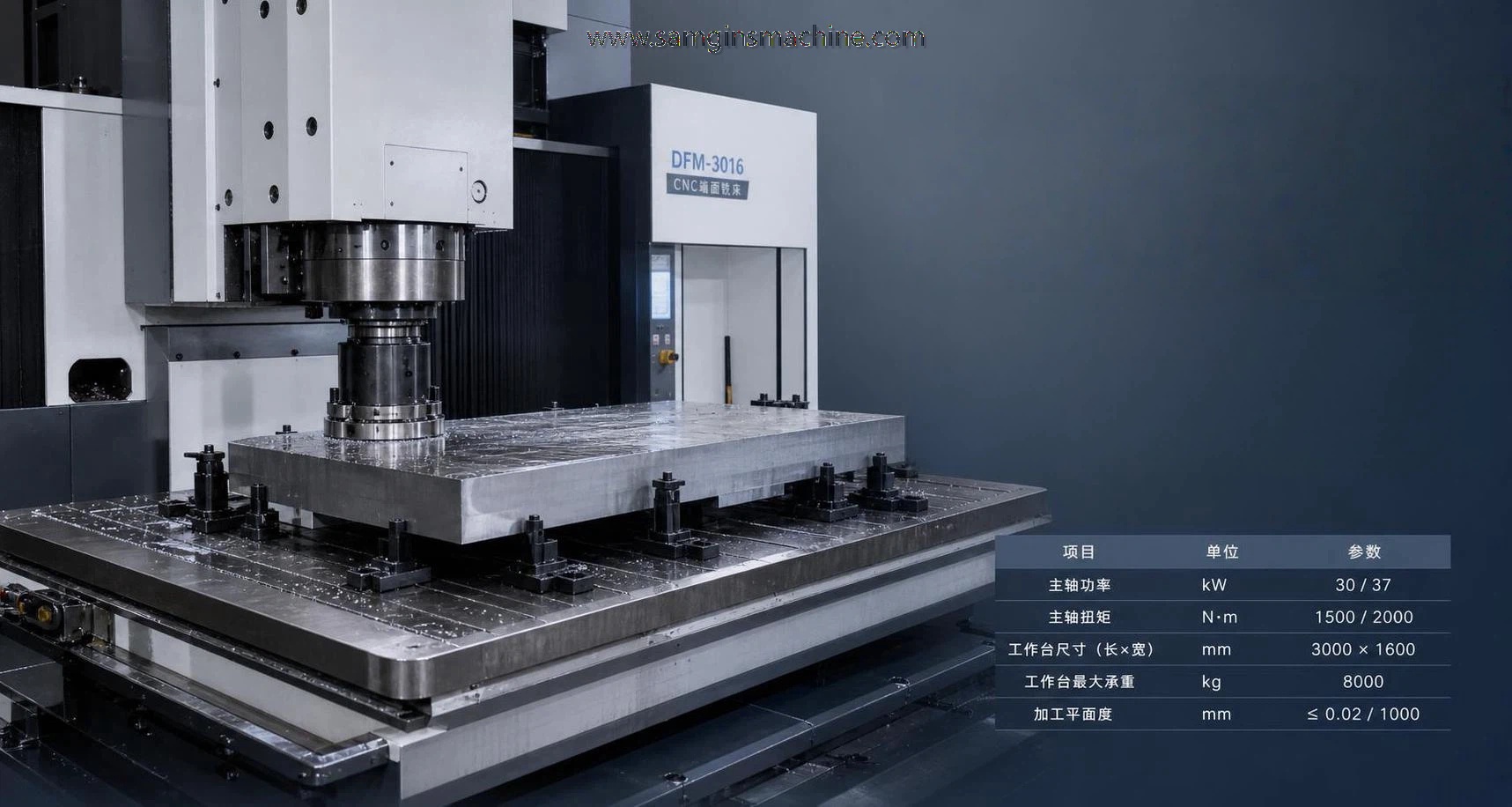
Choosing a Face Milling machine is rarely a simple price comparison. Spindle power, table size, and machining accuracy shape cutting stability, surface finish, and long-run output. In fabrication and machining environments, the right match depends on workpiece size, material removal demands, fixture layout, and the tolerance level expected downstream.
That is why a technical review should look beyond catalog headlines. A Face Milling machine that seems oversized may waste energy and floor space, while one that looks economical may struggle with vibration, poor flatness, or limited capacity once production volume rises.
What a Face Milling machine is really expected to do
A Face Milling machine is used to machine flat end surfaces, reference faces, and large connecting planes on metal workpieces. In practice, it often supports welding preparation, assembly accuracy, and dimensional consistency across later operations.
For heavy fabricated parts, end-face quality affects fit-up and structural reliability. For machined components, a poor first reference surface can introduce alignment errors into drilling, boring, or finishing steps.
This makes machine selection a process decision, not only an equipment decision. The chosen model should fit the actual route of production, including loading, clamping, cutting, inspection, and post-processing.
Why spindle power deserves close attention
Spindle power determines how confidently the machine can maintain torque under load. When face milling larger sections or harder materials, insufficient power usually appears as chatter, slower feed, reduced tool life, and uneven surface quality.
More power, however, is not automatically better. The useful question is whether the spindle can sustain the required material removal rate without forcing operators to reduce depth of cut too often.
Power should follow the cutting task
If the workload is mainly light finishing on medium carbon steel, extreme spindle output may bring little operational benefit. If the process includes large weldments, stainless steel, or interrupted cuts, the margin becomes more important.
- Check the largest planned cutter diameter, not just the current tool.
- Match power to both roughing and finishing cycles.
- Review torque behavior at low and medium speeds.
- Confirm whether continuous duty is realistic for the target load.
In many workshops, the best result comes from balanced capability. A stable spindle with proper rigidity often delivers more usable performance than a higher nominal rating paired with weak structure or poor damping.
Table size affects more than workpiece dimensions
Table size is often treated as a simple pass or fail parameter. In reality, it influences fixture design, loading speed, access for tool movement, and whether future jobs can be absorbed without replacing the machine.
A table that only matches the workpiece outline may still be too small. Clamps, supports, locating blocks, and safety clearance all consume space. Complex welded parts need even more allowance because they rarely sit as neatly as machined blanks.
Useful sizing questions
For operations serving varied industries, a moderate reserve in table size is usually justified. It supports broader part handling without turning the machine into an underutilized oversized asset.
Accuracy is not only a specification sheet number
When evaluating a Face Milling machine, accuracy should be viewed in layers. Positioning precision matters, but so do repeatability, spindle runout, guideway stability, thermal behavior, and the machine’s ability to keep flatness across the full cut.
A machine may meet nominal positioning claims yet still produce inconsistent end faces if the bed lacks rigidity or if backlash grows under production use. This is especially relevant when machining structural parts that become datum surfaces for later assembly.
Where accuracy creates business value
Better accuracy reduces rework, improves interchangeability, and shortens inspection loops. It also protects downstream stations, because drilling, welding, fitting, and final assembly rely on reliable reference geometry.
This is one reason many buyers now compare total process quality instead of machine purchase cost alone. A lower scrap rate and steadier cycle time usually offset a higher initial equipment price.
How application context changes the best choice
The ideal Face Milling machine for heavy fabrication is not always the right one for precision batch work. Selection improves when the machine is tied to real part families and production rhythm.
- Large welded frames usually need stronger spindle reserve and more generous table support.
- Precision machined components often require tighter repeatability and smoother feed control.
- Mixed job shops benefit from flexible travel, easier setup, and broad process compatibility.
- Export-oriented production should also verify electrical standards, documentation, and compliance readiness.
Wuxi Samgins International Trade Co.,Ltd has built its equipment offering around that broader production view. Since 2012, the company has supplied milling, cutting, welding, deburring, and forming equipment to multiple overseas markets, with manufacturing organized around ISO9001 and EU CE expectations.
That matters because a Face Milling machine rarely works alone. It usually sits inside a chain that may include CNC cutting, welding, edge preparation, deburring, and final dimensional inspection.
Do not ignore the surface finishing stage
Machine selection should also consider what happens after milling. Face milling can create accurate flat surfaces, but burr removal, cleaning, and brightness improvement may still be necessary for smaller machined parts or precision metal components.
In lines processing stampings, springs, CNC lathe parts, die-castings, or stainless steel pieces, a secondary finishing step can protect the value created by the milling operation.
For that reason, some facilities pair milling capacity with equipment such as Standard Magnetic polishing machine. This type of system can handle deburring, polishing, cleaning, and grinding in one cycle.
Typical configurations support forward and reverse rotation, 0-60HZ speed adjustment, and batch separation of workpieces from steel needles after processing. For precision parts, that helps improve finish without deforming the original geometry.
A short cycle of roughly 3 to 20 minutes can also fit well beside a Face Milling machine when the goal is smoother internal holes, cleaner edges, and less manual finishing labor.
Practical checkpoints before comparing quotations
A useful evaluation process starts with parts and process data, not brochures. Before shortlisting any Face Milling machine, clarify the operating window the equipment must hold day after day.
- Record workpiece material, dimensions, weight, and expected annual volume.
- Define roughing allowance, finish requirement, and tolerance class.
- Map clamping method, loading direction, and crane or forklift access.
- Check spindle power against cutter size and removal rate targets.
- Review table size with fixtures installed, not as an empty surface.
- Ask for accuracy evidence under realistic cutting conditions.
- Confirm service support, spare parts response, and electrical compatibility.
It is also worth asking how the machine behaves after long shifts. Thermal drift, lubrication quality, and guideway wear are less visible during a basic demonstration, yet they strongly affect lifetime accuracy.
A better way to make the final decision
The best Face Milling machine is the one that fits the real job mix with enough reserve for stable output, but without unnecessary excess. Spindle power should support the planned cut. Table size should support the actual setup. Accuracy should hold under production conditions, not only in theory.
A structured comparison usually leads to a stronger choice than relying on one headline parameter. When the machine is evaluated together with upstream cutting, downstream finishing, and quality targets, the investment becomes easier to justify and easier to scale.
The next step is to build a requirement list from current parts, likely future parts, and process bottlenecks. With that baseline, quotations, test cuts, and technical proposals become much more meaningful.
search
Products Navigation
Send Us A Message