




What Is a Face Milling Machine Used For in Modern Metalworking?
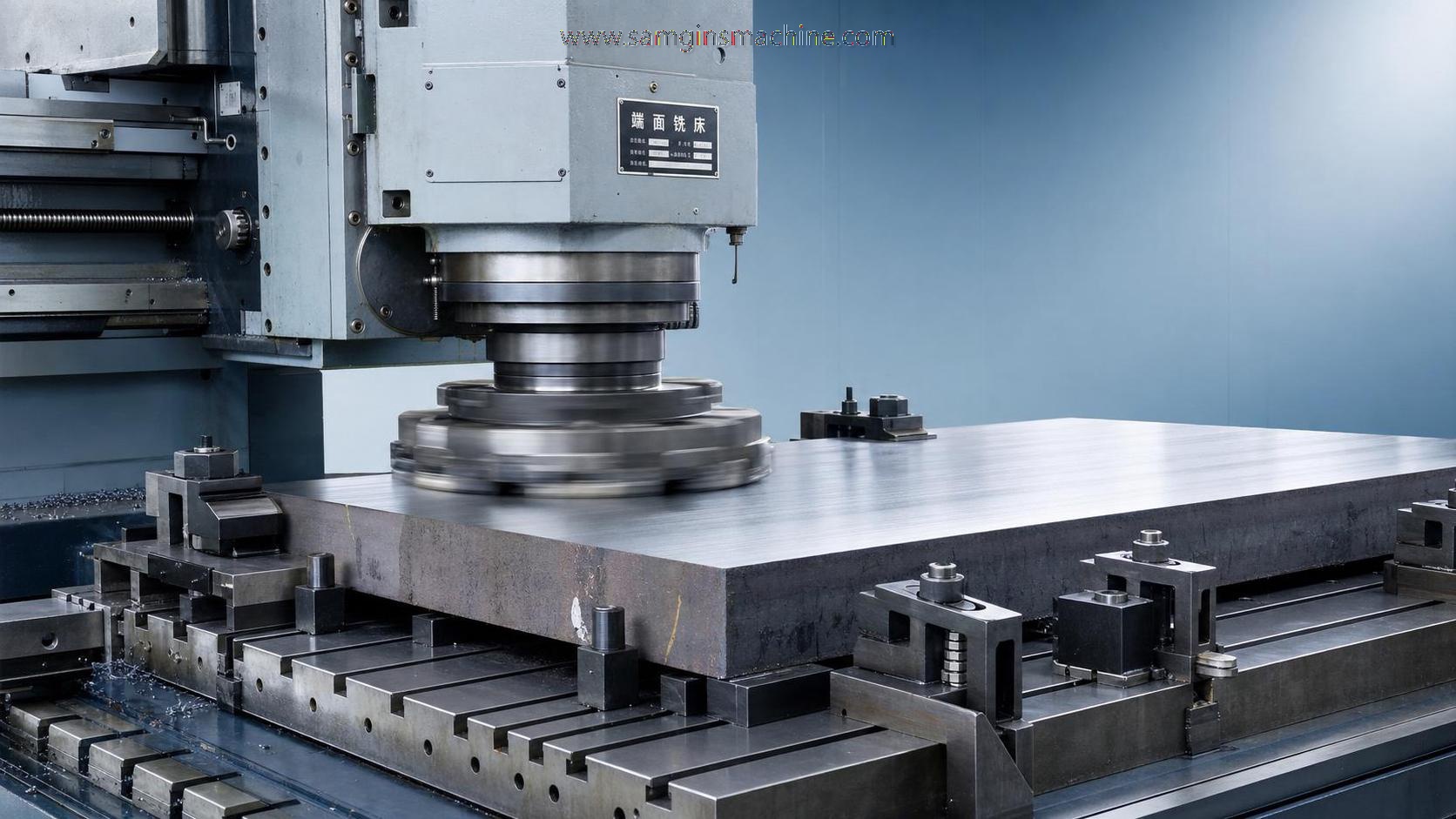
Why does a Face Milling machine matter in modern workshops?
A Face Milling machine is widely used to create flat, clean, and dimensionally accurate surfaces on metal parts.
That sounds simple, but it affects almost every downstream process.
When a surface is flat and consistent, welding fit-up improves, assembly becomes easier, and later machining takes less correction.
In practical metalworking, this machine is often chosen for heavy plates, fabricated structures, mold bases, machine frames, and structural components.
It removes material from the face of a workpiece using a rotating cutter, usually across a broad area.
The result is not only a smoother surface, but also better parallelism, squareness, and process repeatability.
For anyone comparing metalworking equipment, understanding what a Face Milling machine is used for helps clarify where it fits in a production line.
It is especially relevant when production quality depends on accurate mating surfaces rather than rough stock removal alone.
What jobs is a Face Milling machine actually used for?
The most common use is machining large flat faces on steel, stainless steel, cast iron, and non-ferrous metals.
This includes preparing reference surfaces before drilling, boring, welding, or final assembly.
A Face Milling machine is also used to correct distortion, remove scale, and improve surface finish after cutting or fabrication.
Typical applications include:
- machining beam ends and structural steel connection faces
- flattening welded frames before alignment or assembly
- processing base plates for machinery and fixtures
- improving contact surfaces on molds, dies, and tooling blocks
- preparing surfaces that require tight tolerance before CNC finishing
In heavier fabrication environments, end face milling is particularly important because torch-cut or plasma-cut surfaces are rarely ready for direct assembly.
A well-matched Face Milling machine reduces rework and shortens the time spent on manual fitting.
How is face milling different from edge milling, surface grinding, or deburring?
This is where confusion often happens.
Face milling is designed to machine a broad flat face with a cutter head.
Edge milling focuses on the side or edge of a plate, usually for beveling or weld preparation.
Surface grinding removes smaller amounts of material for finer finishes and tighter flatness control.
Deburring removes sharp edges, slag, and small burrs rather than reshaping a full face.
A quick comparison makes the distinction clearer.
In actual production, these processes often work together rather than compete.
For example, plates may be cut first, then deburred, then face milled only where critical contact surfaces matter.
For sheet-based workflows, a machine such as RNS1000 Sheet metal deburring machine fits a different need.
It handles burr removal, hole deburring, polishing, slag cleaning, and small R-edge finishing on metal sheets.
That matters after stamping, shearing, laser cutting, plasma cutting, or flame cutting, especially when parts must be safe to handle before assembly.
Which materials and production scenarios benefit most?
A Face Milling machine is useful across many material types, but the strongest value appears where stock surfaces are uneven or fabricated parts need accurate alignment.
Carbon steel and cast iron are common because they appear in frames, machine beds, and structural parts.
Stainless steel can also benefit, although tool selection and cutting parameters need closer attention.
Aluminum responds well when flatness and surface consistency are required without excessive secondary finishing.
More often, the key question is not the material alone.
It is whether the part needs a reliable reference face.
- If parts will be bolted together, face quality affects contact stability.
- If parts will be welded, flatness affects fit-up and gap control.
- If later CNC operations depend on datums, face milling improves consistency.
- If fabrication distortion is visible, the process can restore usable surfaces.
Companies serving mixed fabrication and machining work often value this flexibility most.
That is one reason suppliers with a broader equipment range tend to understand the process chain better.
Wuxi Samgins International Trade Co.,Ltd has been supplying mechanical equipment since 2012, including milling machines, cutting systems, deburring equipment, and fabrication line machinery.
That background matters because face milling decisions are rarely isolated from upstream cutting and downstream finishing requirements.
What should be checked before choosing a Face Milling machine?
The right machine depends on part geometry, material flow, tolerance expectations, and production rhythm.
A basic selection discussion usually starts with these points:
- maximum workpiece size and weight
- required flatness and finish level
- material type and hardness variation
- manual loading or integrated line operation
- tooling cost, maintenance access, and operator safety
It also helps to distinguish between heavy stock removal and finish-oriented machining.
Some users assume a larger cutter automatically means better productivity.
In reality, spindle rigidity, feed stability, and fixture quality often decide results.
Where sheet metal preparation is part of the same workflow, secondary finishing equipment should be checked too.
For example, the linked deburring solution above supports workpiece widths up to 1000mm, thicknesses from 0.5mm to 40mm, and vacuum-assisted conveying for stable handling.
Those details are relevant when comparing whether a surface problem belongs to milling, deburring, or both.
What mistakes are common when people evaluate this equipment?
One common mistake is treating face milling as a universal fix for all surface defects.
It is excellent for flat face machining, but it is not the most efficient answer for burrs, oxide edges, or fine cosmetic finishing on thin sheets.
Another mistake is ignoring upstream process quality.
If thermal cutting leaves excessive slag or deformation, the Face Milling machine may spend time correcting avoidable problems.
There is also a cost misunderstanding.
Some focus only on purchase price and overlook tooling wear, setup time, power use, dust management, and operator skill.
A more reliable approach is to ask where value is created:
- less manual fitting
- fewer rejected assemblies
- better repeatability between batches
- reduced correction work before welding or CNC finishing
Suppliers working under ISO9001 systems and CE-oriented design practices often bring more discipline to these discussions, especially when applications are exported across different markets.
So, when is a Face Milling machine the right investment?
The answer is usually yes when flatness, mating accuracy, and repeatable reference surfaces affect product quality.
It becomes even more valuable when parts are large, fabricated, or inconsistent after cutting and welding.
If the real issue is edge burrs, hole finishing, or sheet surface cleanup, a deburring process may solve the problem more directly.
That is why the best evaluation starts with the workpiece route, not the machine name.
Map the part from cutting to fitting, machining, and final assembly.
Then check which surfaces truly need face milling, which edges need deburring, and where tolerance actually drives cost.
A Face Milling machine remains one of the most useful tools in modern metalworking because it solves a practical production problem: making metal parts fit, align, and perform as intended.
The next sensible step is to compare your materials, part sizes, finish targets, and process bottlenecks before narrowing down machine options.
search
Products Navigation
Send Us A Message