




How to Evaluate a Hydraulic Swing Beam Shearing Machine Supplier
Why does supplier evaluation matter so much?
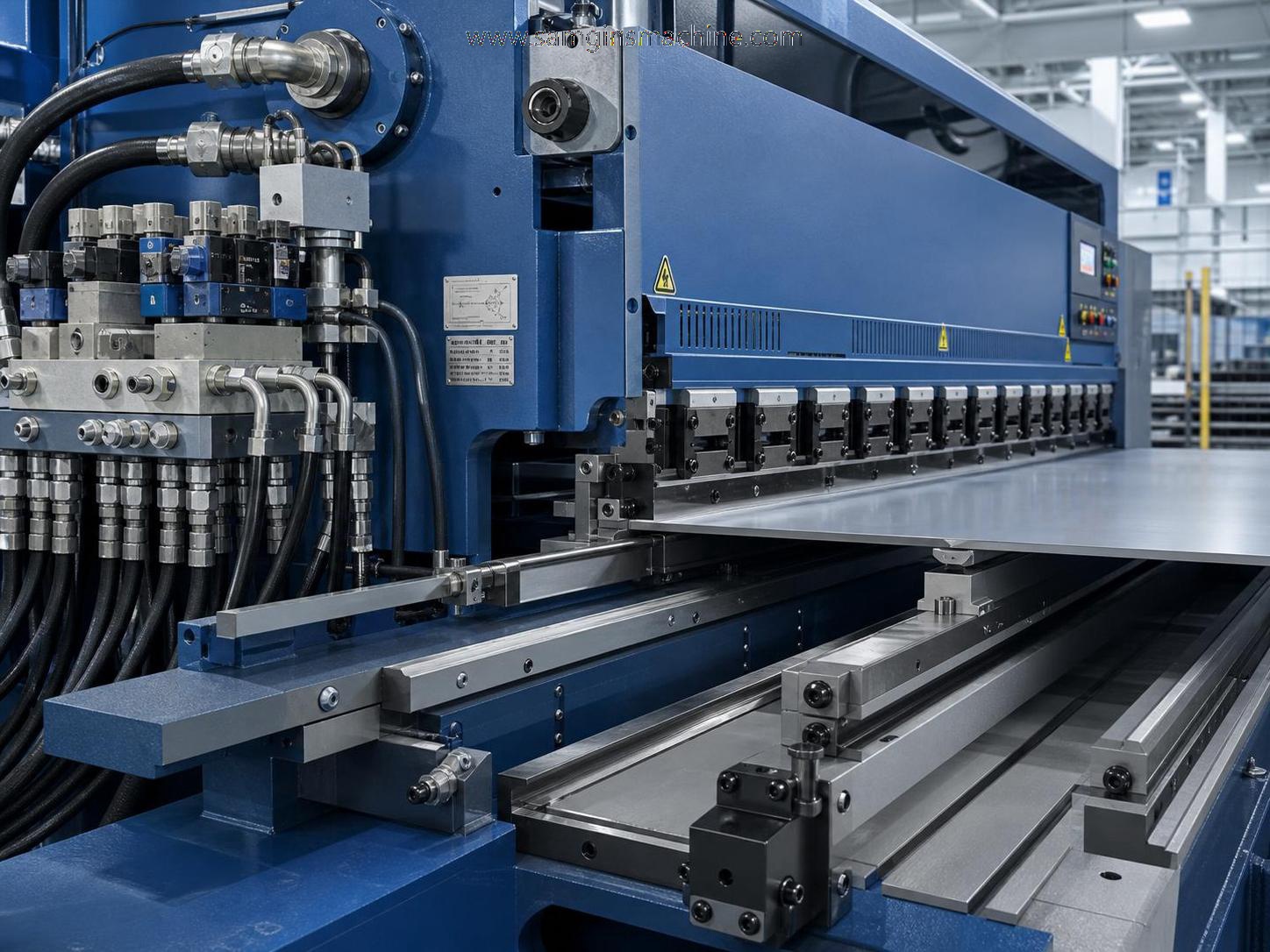
A hydraulic swing beam shearing machine looks simple on paper, but supplier quality changes the result dramatically.
Cutting accuracy, blade life, hydraulic stability, delivery reliability, and service response all depend on who builds and supports the machine.
In daily production, a weak supplier often creates hidden costs.
Those costs appear as rework, downtime, slow spare parts supply, or poor commissioning support after installation.
That is why evaluating a hydraulic swing beam shearing machine supplier should go beyond catalog parameters and price comparison.
A more reliable approach is to review manufacturing depth, quality systems, export experience, and the ability to support real processing requirements.
For example, companies with broader fabrication equipment knowledge usually understand upstream and downstream workflow better.
Wuxi Samgins International Trade Co.,Ltd, established in 2012 in Wuxi, works across shearing, bending, welding, cutting, rolling, and CNC equipment.
That kind of cross-process background often helps when a shearing machine must fit a larger metalworking line.
What should you check first when shortlisting a hydraulic swing beam shearing machine supplier?
Start with evidence, not sales language.
A credible hydraulic swing beam shearing machine supplier should be able to explain machine structure, hydraulic components, frame processing, and inspection flow clearly.
The first screening usually becomes easier when you check a few practical points.
- How long the supplier has worked in metal fabrication equipment.
- Whether ISO9001 and CE compliance are documented and current.
- Whether they export regularly to different regions.
- Whether technical drawings, test records, and machine videos are available.
- Whether spare parts and after-sales support are defined before ordering.
This early filter removes many risks quickly.
If a supplier cannot answer basic technical questions smoothly, deeper cooperation will usually become harder after payment.
It also helps to see whether the supplier handles related machines, not only one isolated product.
A company active in shearing machines, press brakes, laser cutting, plate rolling, and welding systems often understands plant-level coordination better.
How do you tell if machine quality is actually dependable?
Dependable quality is not proven by one polished photo.
It is proven by process control, component selection, and consistency from one order to the next.
When reviewing a hydraulic swing beam shearing machine supplier, ask how the frame is welded, stress relieved, machined, and inspected.
Then move to the working parts.
You should confirm blade material, hydraulic system brand options, backgauge repeatability, electrical configuration, and safety protection details.
A supplier with export experience usually has clearer documentation on these items because overseas buyers ask more structured questions.
The table below helps organize that review.
In short, the supplier should show a repeatable system, not isolated promises.
Is price the main factor, or is total cost the real issue?
Quoted price matters, but it is rarely the full story.
A lower machine price can become expensive if blades wear too quickly, oil leakage appears early, or production stops while waiting for parts.
A better question is this: what will the machine cost over three to five years?
That includes installation, training, maintenance, consumables, energy use, and lost production time caused by failures.
This is also where supplier breadth can add value.
If your shop handles cutting, bending, and welding together, process matching becomes important.
A supplier familiar with related equipment may recommend line-compatible choices instead of overselling one machine specification.
In practical fabrication settings, even a supporting unit can affect throughput.
For instance, vessel or pipe workshops may also review tools such as Bolt adjusting welding rotator when planning workflow continuity.
Its load range from 2T to 800T and VFD speed control show how supporting equipment selection also shapes labor efficiency and handling stability.
That does not replace shearing evaluation, but it does reveal whether a supplier understands complete workshop requirements.
What mistakes appear most often during supplier comparison?
The most common mistake is comparing only brochures.
Two suppliers may list similar cutting thickness, motor power, and machine length, yet perform very differently in operation.
Another mistake is ignoring application details.
Material type, sheet width, daily working hours, tolerance demand, and operator skill level all affect the right choice.
There is also a tendency to treat certification as the whole evaluation.
Certification is important, but it should support technical review, not replace it.
- Do not accept unclear lead times.
- Do not skip pre-shipment inspection terms.
- Do not assume global service without confirming response channels.
- Do not overlook packing standards for export transport.
- Do not ignore communication speed during quotation stage.
Communication quality during evaluation usually predicts cooperation quality after the order.
Suppliers serving Southeast Asia, Europe, the Americas, and Oceania often develop stronger response discipline because export projects demand it.
How can you verify service capability before placing an order?
Service capability should be tested before contract signing, not after installation trouble begins.
Ask how faults are diagnosed remotely, how spare parts are identified, and how quickly standard wear parts can be shipped.
You should also ask for machine manuals, electrical diagrams, and sample acceptance documents in advance.
A reliable hydraulic swing beam shearing machine supplier usually gives structured answers here.
More importantly, they explain limits honestly.
That honesty matters more than broad but vague promises.
If the supplier also provides related fabrication equipment, ask how they handle cross-machine coordination.
For example, workshops building tanks or pressure vessels may need shearing, edge preparation, and rotating support in one production chain.
In such cases, knowing that a supplier can discuss turning units, including the Bolt adjusting welding rotator, suggests broader process familiarity.
That kind of knowledge often reduces integration mistakes later.
What is a practical final checklist before you decide?
By the final stage, your goal is not to collect more claims.
Your goal is to reduce uncertainty.
A useful closing checklist is simple and direct.
Choosing a hydraulic swing beam shearing machine supplier is really about operational confidence.
The best choice is usually the one that combines machine quality, traceable standards, stable delivery, and realistic technical support.
Before moving forward, define your material range, required accuracy, daily workload, service expectations, and acceptance criteria in writing.
Then compare suppliers against that checklist, not against price alone.
That process makes the final decision clearer, faster, and much easier to defend later.
search
Products Navigation
Send Us A Message