




How to Select a Reliable Profile Bender Machine Supplier for Long-Term Projects?
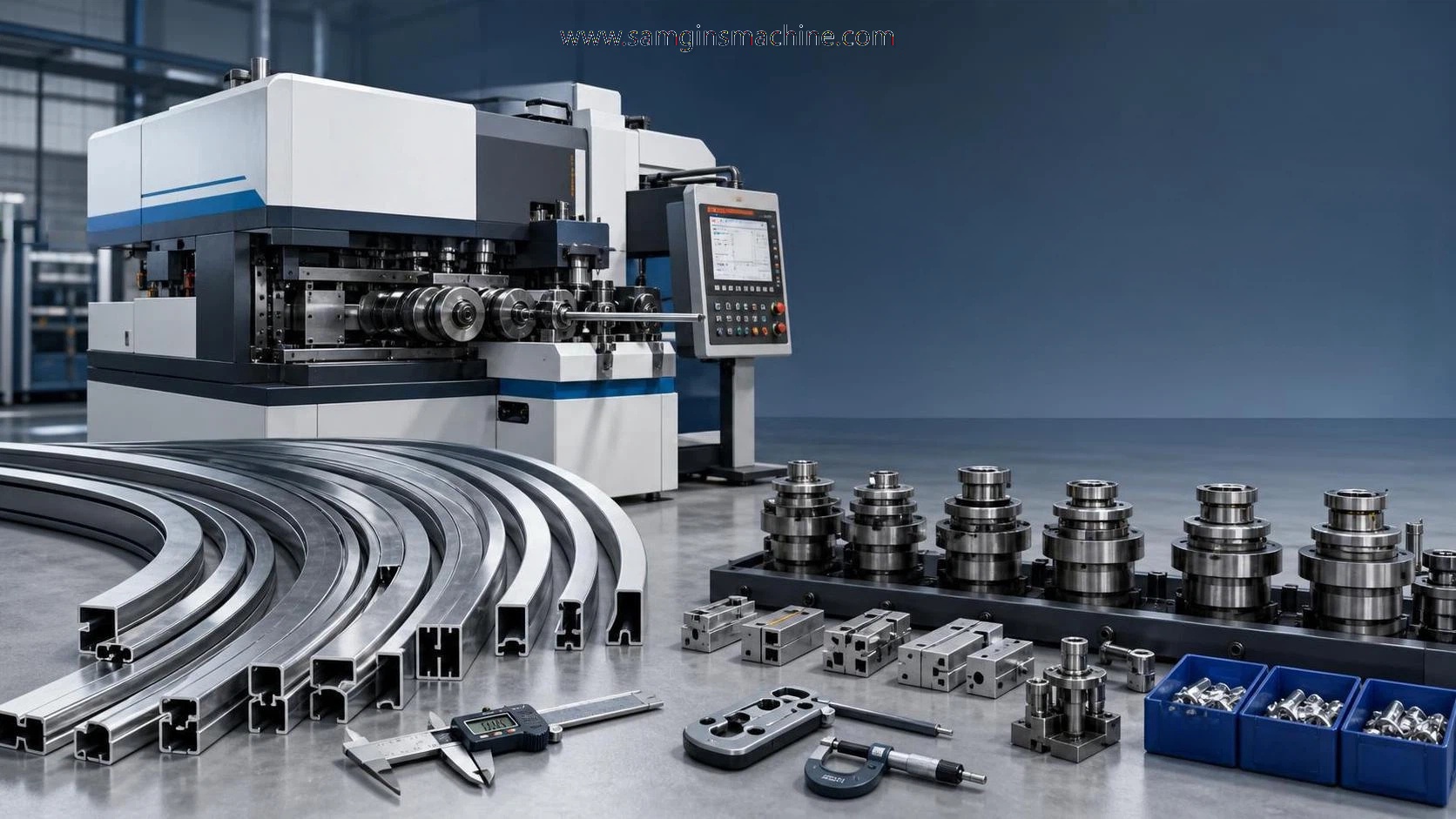
How to Select a Reliable Profile Bender Machine Supplier for Long-Term Projects?
Choosing a reliable profile bender machine supplier is critical for long-term manufacturing projects.
Price matters, but it rarely tells the full story.
A weak supplier can delay installation, disrupt output, and raise service costs later.
A strong supplier supports quality consistency, spare parts planning, and future expansion.
This guide explains how to evaluate a profile bender machine supplier with a practical procurement lens.
Start With Project Fit, Not Catalog Size
Many buyers begin by comparing machine lists.
That is useful, but long-term procurement starts with production fit.
The right profile bender machine supplier should understand your sections, tolerances, output targets, and material range.
If the supplier only talks about price, that is an early warning sign.
Reliable suppliers ask about bending radius, profile deformation risk, tooling change frequency, and downstream assembly requirements.
Before requesting a quotation, prepare a short technical brief covering:
- Material type and thickness
- Profile dimensions and bending shapes
- Expected monthly production volume
- Required accuracy and repeatability
- Factory power, layout, and operator conditions
This makes profile bender machine supplier comparisons much more realistic.
Check Manufacturing Depth and Quality Control
For long-term projects, supply stability matters as much as machine performance.
You need to know whether the profile bender machine supplier controls production or mainly resells equipment.
A supplier with deeper manufacturing involvement usually responds faster to technical changes.
That becomes important when drawings evolve after pilot runs.
Ask direct questions about inspection points, welding standards, component sourcing, and assembly testing.
ISO9001 and CE alignment are useful signals, but they should be supported by real process control.
For example, Wuxi Samgins International Trade Co.,Ltd organizes production and design under ISO9001 quality systems and EU CE standards.
That matters because certified routines often reduce variation across repeated orders.
When reviewing a supplier, verify these quality signals:
- Incoming material inspection records
- Assembly and test procedures
- Calibration routines for critical parts
- Traceability for motors, hydraulics, and controls
- Factory acceptance testing before shipment
Evaluate Technical Support Before You Need It
A dependable profile bender machine supplier is also a support partner.
This becomes more obvious after commissioning, when small issues can slow output for weeks.
Ask how the supplier handles installation guidance, operator training, remote diagnosis, and spare parts response.
Response speed is often more valuable than an extra discount.
In practice, strong suppliers document common failure points and preventive maintenance intervals.
They also explain tooling wear patterns and acceptable operating ranges.
That reduces disputes later and gives procurement teams a clearer total cost picture.
A useful supplier support checklist includes:
- Commissioning documents in clear English
- Electrical and hydraulic diagrams
- Wear parts list with replacement lead times
- Remote service availability across time zones
- Defined warranty scope and exclusions
Look Beyond Unit Price to Total Procurement Cost
A low initial quote can make a profile bender machine supplier look attractive.
But long-term projects fail when hidden costs are ignored.
Procurement teams should compare freight, tooling life, downtime risk, energy demand, and spare parts pricing.
That gives a more accurate decision basis.
Suppliers with broad machinery experience can sometimes add useful production insight.
For instance, companies serving welding, cutting, milling, deburring, and forming lines usually understand upstream and downstream coordination better.
That can help when a profile bender machine must fit a larger plant workflow.
Use a cost review table during supplier comparison:
Review Export Experience and Delivery Reliability
A profile bender machine supplier may perform well locally yet struggle with export execution.
That gap usually appears in packaging, documentation, customs handling, or after-sales communication.
For multi-year projects, this is a major procurement risk.
A supplier with shipments to Southeast Asia, Europe, North America, South America, and Oceania has likely handled varied compliance and logistics demands.
That international experience often improves packing discipline and schedule control.
It also suggests the supplier can support expanding procurement footprints.
Ask for evidence in these areas:
- Recent export destinations
- Typical lead times by machine category
- Packing methods for sea transport
- Document accuracy for customs clearance
- Incoterm flexibility and shipment coordination
Ask for Proof Through Comparable Equipment Cases
Good supplier evaluation relies on evidence, not only presentation slides.
Ask each profile bender machine supplier for machine cases with similar materials, dimensions, and output needs.
Comparable references are more valuable than large customer logos.
This is also where cross-category expertise can be revealing.
A supplier offering forming and metalworking equipment beyond profile bending may better understand process integration.
One example is ZC28-12.5 thread rolling machine, which shows how cold forming equipment can be evaluated through application range, material limits, and output stability.
It supports precision external thread rolling for anchor bolts, T-screws, and high-strength standard parts.
Its technical data is specific, including 200KN rolling pressure and support for carbon steels, alloy steels, and non-ferrous metals.
That level of detail is exactly what buyers should expect when judging any industrial machine supplier.
Use a Simple Supplier Scoring Method
Procurement decisions become clearer when evaluation is structured.
Instead of debating impressions, assign weighted scores to each profile bender machine supplier.
This keeps long-term risk visible during commercial negotiation.
A practical scoring model can include:
- Technical fit: 30%
- Quality system and testing: 20%
- Service and spare parts: 20%
- Commercial terms and total cost: 15%
- Export execution and delivery history: 15%
This framework also helps explain decisions internally.
That is useful when approval requires both technical and financial sign-off.
Final Decision: Choose the Supplier You Can Scale With
The best profile bender machine supplier is rarely the one with the lowest offer.
It is the one that reduces operational uncertainty over the full project cycle.
Look for proven production control, honest technical communication, responsive service, and reliable export capability.
In real purchasing work, those factors protect schedule, budget, and output continuity.
A disciplined review process also makes supplier negotiations stronger and more objective.
Before placing an order, request drawings review, testing evidence, parts commitments, and a clear delivery plan.
That is the practical way to choose a profile bender machine supplier for long-term manufacturing success.
search
Products Navigation
Send Us A Message