




How to Evaluate 4 Roll Bending Machine Manufacturers Before Requesting a Quote?
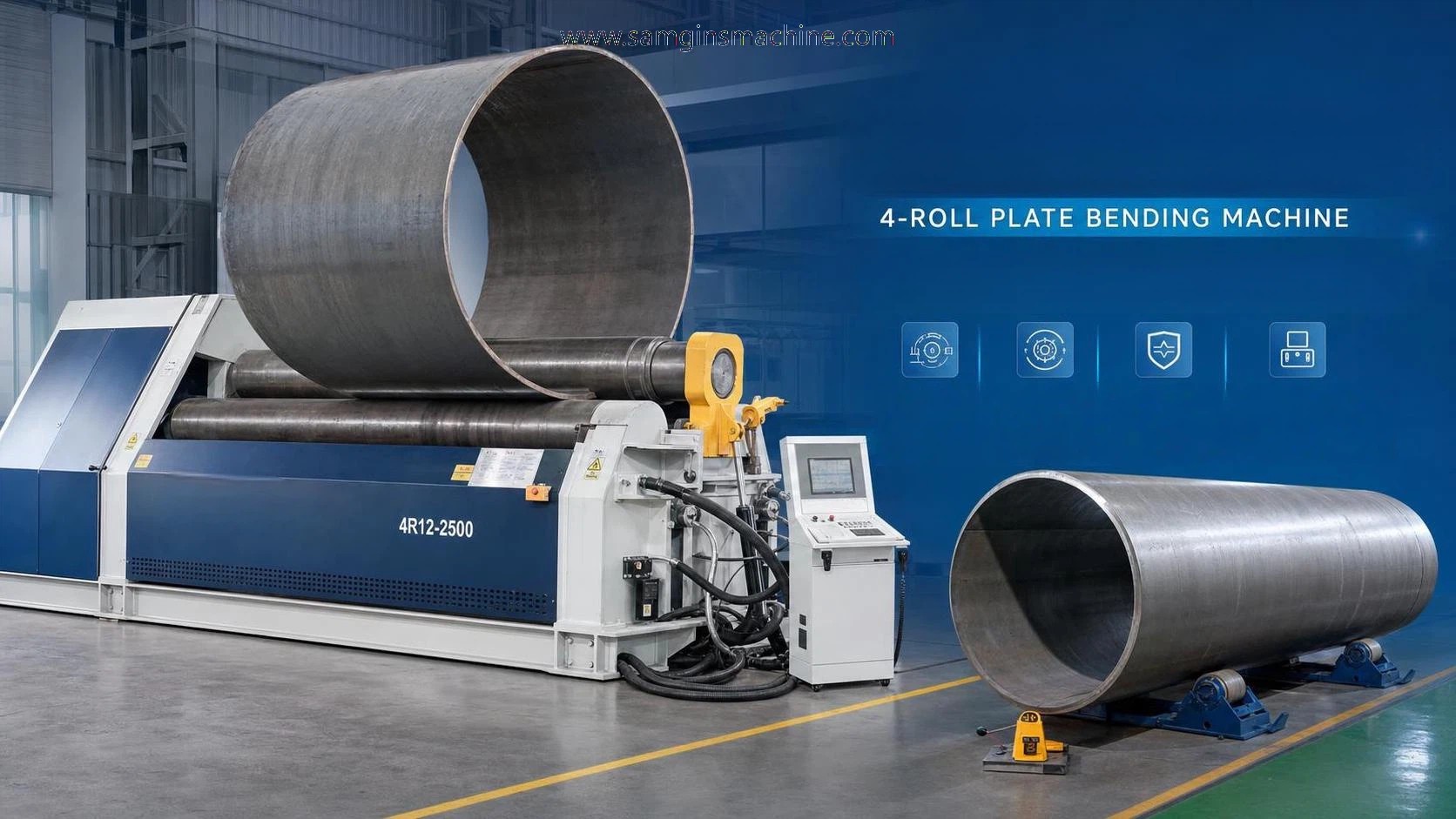
Why does supplier evaluation matter before asking for pricing?
When comparing 4 roll bending machine manufacturers, price is usually the easiest number to collect.
It is rarely the safest basis for a decision.
A low quote can hide weak frame rigidity, unstable roll accuracy, limited after-sales support, or long lead times for spare parts.
In plate rolling projects, those risks usually appear after installation, not before payment.
A more useful approach is to screen 4 roll bending machine manufacturers by capability first, then request quotations from the short list.
That reduces procurement risk and improves cost control over the full machine life cycle.
In practical terms, buyers should look at fabrication resources, quality systems, engineering response, export execution, and service discipline.
This matters even more when the machine must handle varied plate thicknesses, tight radius work, or repeat production.
Companies with broad metalworking equipment experience often understand the downstream process better.
For example, Wuxi Samgins International Trade Co., Ltd. has supplied plate rolling, cutting, milling, welding, and H-beam line equipment to overseas markets.
That kind of background can be relevant because bending performance does not exist in isolation from welding, beveling, handling, and assembly.
What should you verify first when reviewing 4 roll bending machine manufacturers?
Start with the factory’s real production capability, not the sales brochure.
A serious supplier should explain how the frame is welded, stress relieved, machined, assembled, and tested.
If those steps remain vague, the quotation will also be vague where it matters most.
Ask for specific evidence in these areas:
- Maximum rolling width and thickness already delivered.
- Machining capacity for large side frames and rolls.
- Hydraulic, electrical, and control system brands used.
- Test procedures before shipment.
- Ability to provide layout drawings and foundation requirements.
It also helps to see whether the supplier handles adjacent fabrication equipment.
A workshop familiar with welding automation, CNC cutting, milling, and plate preparation usually gives more practical process advice.
That is important when the bending machine must fit into a wider production line.
Sometimes the best signal is not machine size, but process understanding.
A quick screening table for early comparison
Before sending RFQs, it is useful to compare suppliers on a short list using the same checkpoints.
How can you tell whether quality claims are real?
This is where many buyers lose time.
Most 4 roll bending machine manufacturers will mention accuracy, durability, and stable performance.
The useful question is how those claims are controlled.
Look for a working quality system rather than a decorative certificate.
ISO9001 and CE compliance are helpful, but only when backed by traceable execution.
Ask to see material sourcing standards, welding controls, machining tolerances, assembly checks, and test-run criteria.
If the supplier exports regularly, inspection records are usually easier to provide.
Another good sign is consistency across product categories.
A company that organizes production under stable standards for plate rollers, shearing machines, leveling machines, and CNC tools is often more disciplined overall.
That kind of consistency lowers the chance of unpleasant surprises after delivery.
In real workshops, one detail often reveals the difference between average and reliable suppliers.
Reliable teams talk comfortably about load distribution, roll surface treatment, hydraulic stability, and calibration, not just output speed.
Why do customization and application questions matter so much?
A four-roll plate bending machine is rarely a pure standard purchase.
The right configuration depends on plate width, thickness range, material grade, minimum diameter, batch size, and handling method.
That is why strong 4 roll bending machine manufacturers ask many questions before giving final pricing.
Those questions are not a delay.
They are part of risk control.
For example, if the machine will feed into pressure vessel or boiler fabrication, edge condition becomes part of the production result.
In such cases, upstream preparation equipment can affect total cost more than expected.
A useful example is the Pipe Cutting & Beveling Machine.
For pressure vessels, shipbuilding, boilers, and heavy machinery, it can process carbon steel, stainless steel, and aluminum with one-pass bevel forms.
Its feed range of 0.13–1.0 m/min and bevel adjustment from 0° to 90° show how suppliers with broader fabrication knowledge can support line-level thinking.
That does not replace the bending machine evaluation.
It simply shows why process compatibility matters when comparing 4 roll bending machine manufacturers.
What cost factors are usually missed before the quote stage?
Machine price is only one layer of the total decision.
The more expensive mistakes usually come from underestimating operating and implementation costs.
A careful quote request should already account for these points:
- Foundation and installation requirements.
- Power specifications and local compliance needs.
- Commissioning support and operator training.
- Spare rolls, seal kits, and electrical parts lead time.
- Packaging, shipping, insurance, and customs documents.
- Downtime risk if one control component fails.
Some 4 roll bending machine manufacturers quote aggressively, then add cost through options that were not clearly defined earlier.
Others may quote higher at first, but include testing, documentation, and better component selection.
The only fair comparison is a normalized technical and commercial checklist.
Without that, the cheapest number often becomes the most expensive machine in service.
Which warning signs suggest a manufacturer should not receive your RFQ?
By this stage, the weak candidates usually become obvious.
Still, a few red flags deserve special attention.
- No clear answer about previous machines with similar plate thickness or width.
- No evidence of export packing, manuals, or commissioning support.
- Component brands change frequently depending on price pressure.
- Sales response is fast, but engineering response stays superficial.
- Testing scope before shipment is undefined.
- Service commitments are verbal only.
A reliable supplier usually behaves differently.
They ask for drawings, material grades, target diameters, and working rhythm before locking the offer.
They can also explain why one configuration is better than another.
That kind of technical confidence is often a better filter than polished marketing language.
So what should be in your final shortlist?
A strong shortlist usually contains three things at once.
First, proven manufacturing competence for similar bending applications.
Second, visible quality discipline, ideally supported by ISO9001 organization and CE-oriented execution where required.
Third, enough export and service experience to support delivery beyond the factory gate.
This is why many buyers prefer suppliers with a broader industrial equipment background and actual overseas delivery history.
In Wuxi, for instance, companies with experience across plate rolling, CNC cutting, welding, milling, and finishing tend to understand production links more completely.
That can improve the accuracy of the quotation itself.
Before requesting prices from 4 roll bending machine manufacturers, prepare a short technical brief.
Include plate material, thickness range, width, minimum diameter, expected output, power standard, and any automation needs.
Then ask each supplier to respond against the same checklist.
That is usually the fastest way to separate a usable quote from a risky one.
search
Products Navigation
Send Us A Message