




How to Reduce Misalignment and Slippage on a 4 Roller Bending Machine?
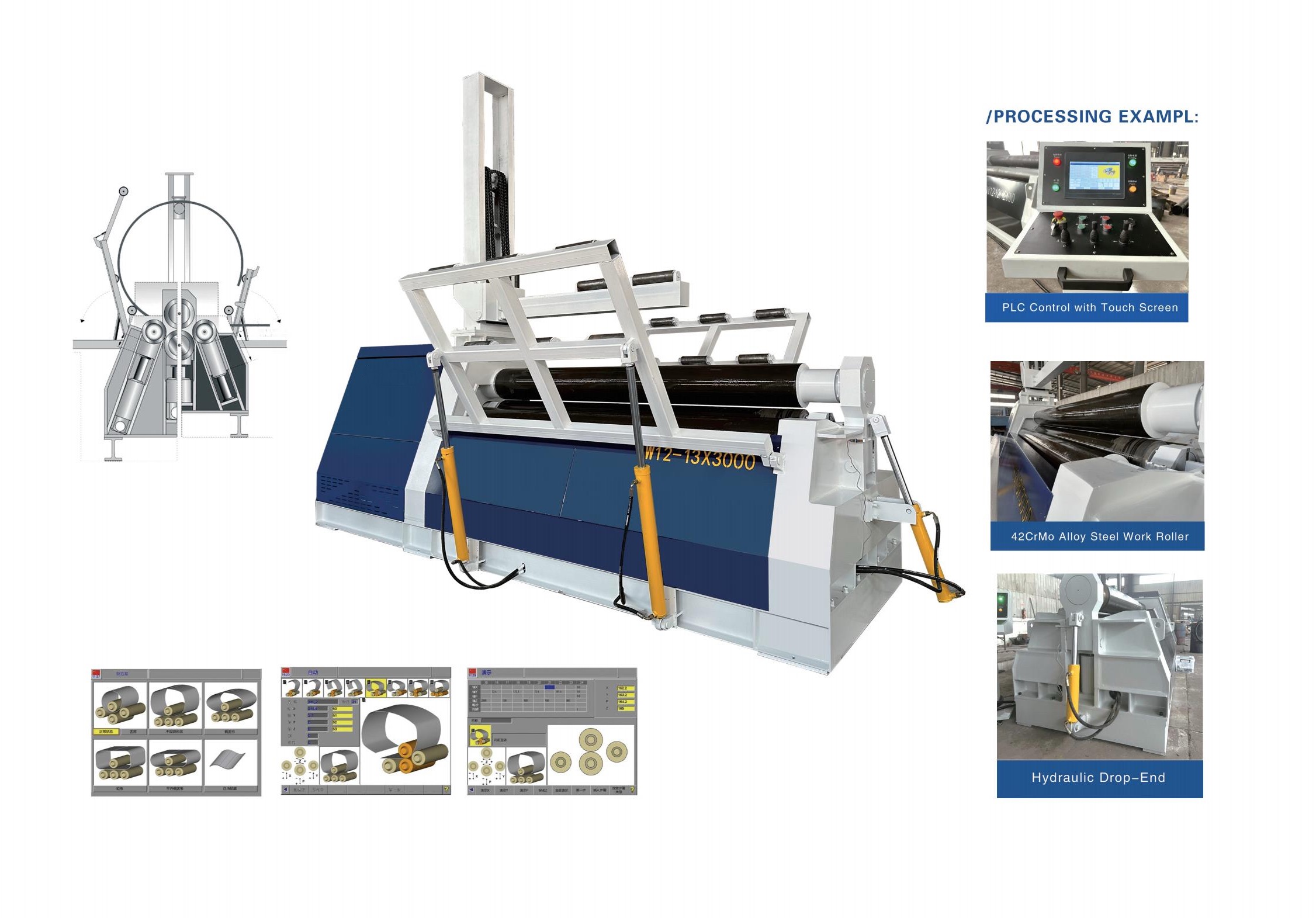
How to Reduce Misalignment and Slippage on a 4 Roller Bending Machine?
Misalignment and slippage can quickly affect accuracy, surface quality, and production efficiency on a 4 roller bending machine.
Once the plate shifts, the bend radius changes, edge straightness suffers, and rework becomes more likely.
In daily production, these problems usually come from setup details rather than one major machine fault.
That means better results often come from disciplined checks, correct roller settings, and stable feeding methods.
This guide explains practical ways to improve consistency on a 4 roller bending machine and reduce avoidable forming errors.
Why misalignment and slippage happen
A 4 roller bending machine depends on balanced pressure, correct plate entry, and steady friction between rollers and material.
If one factor changes, the plate may skew to one side or move unevenly during rolling.
Common causes include worn rollers, oil contamination, poor side support, uneven material thickness, and incorrect pinch pressure.
Improper pre-bending can also create a bad starting position, making later passes harder to control.
When operators recognize these root causes early, the 4 roller bending machine becomes much easier to stabilize.
Early warning signs to watch
- The plate enters square but exits with one edge leading.
- The rolling radius differs from one side to the other.
- Surface marks appear where the plate slips against the roller.
- Repeated passes are needed to reach the same forming result.
- The machine shows unstable movement under the same program.
Start with the plate before adjusting the machine
Many operators adjust the machine first, but the plate condition often deserves attention before any setting change.
A bent edge, scale buildup, heavy oil film, or thickness variation can disturb feeding on a 4 roller bending machine.
Even a small burr can influence contact balance, especially on thinner material and narrow plates.
Plate preparation checklist
- Confirm thickness consistency across the full plate width and length.
- Remove excessive oil, rust, dust, and scale from contact areas.
- Deburr the entry edge if sharp irregularities are visible.
- Check flatness before loading, especially after cutting or transport.
- Match plate width and thickness to the machine capacity chart.
These simple checks improve grip and help the 4 roller bending machine start each pass from a stable condition.
Set the rollers correctly for stable feeding
Roller adjustment is the core factor in reducing slippage on a 4 roller bending machine.
The top and bottom rollers must provide enough pinch force to move the plate without crushing the surface.
The side rollers must then guide the curve gradually rather than forcing one side too aggressively.
Key adjustment points
- Set pinch pressure according to material grade and thickness.
- Verify both side rollers move symmetrically when required by the job.
- Avoid large side roller jumps between passes.
- Use smaller incremental adjustments for thin or polished sheets.
- Confirm roller parallelism during maintenance checks.
If the lower roller pressure is too light, the plate loses traction and slides instead of feeding smoothly.
If pressure is too high, edge marks and local distortion become more likely.
Improve alignment during loading and pre-bending
Misalignment often starts at loading, not during full rolling.
If the plate enters at a slight angle, the 4 roller bending machine may continue that error through every pass.
A careful pre-bending step creates a more reliable starting reference for the remaining rolling cycle.
Best practices for entry alignment
- Use clear edge reference marks before feeding the plate.
- Support long or heavy sheets to prevent sagging at entry.
- Feed the plate slowly during the first contact.
- Stop immediately if one side advances earlier than the other.
- Recheck squareness after pre-bending the first end.
This step matters even more when handling stainless steel, coated sheet, or thin material with low surface friction.
In related thin-sheet applications, some shops also use Electro-hydraulic synchronize cnc press brakes for controlled forming before rolling operations.
Control speed, support, and operator rhythm
A 4 roller bending machine performs better when feed speed stays predictable.
Sudden acceleration can reduce stable contact, especially on long plates or parts with uneven weight distribution.
External support is equally important when the plate extends far beyond the machine frame.
Operational habits that reduce slip
- Use moderate rolling speed during the first and final passes.
- Keep infeed and outfeed supports level with the machine bed.
- Coordinate lifting devices carefully on heavy plates.
- Avoid abrupt direction changes without checking plate position.
- Document proven settings for repeat jobs.
Consistency matters. When the same job is run with the same rhythm, a 4 roller bending machine usually delivers more repeatable geometry.
Do not ignore maintenance and machine condition
Persistent slippage can point to machine wear rather than setup error.
A 4 roller bending machine needs regular inspection to maintain traction, alignment accuracy, and hydraulic stability.
Worn roller surfaces, loose guides, sensor drift, or hydraulic imbalance can all affect forming results.
Maintenance areas to prioritize
For shops using several forming systems, equipment built with full steel welding and reliable compensation mechanisms can support better long-term precision across bending workflows.
Match the process to the material
Different materials behave differently on a 4 roller bending machine.
Mild steel, stainless steel, aluminum, and coated sheet each respond to pressure and friction in their own way.
Trying to use one standard setting for all materials often leads to unstable feeding or inaccurate radius control.
Typical adjustments by material
- Stainless steel may need careful pressure control to prevent marking.
- Aluminum usually needs cleaner contact surfaces and gentler roller action.
- High-strength plate may require slower passes and tighter monitoring.
- Thin sheet benefits from smaller adjustment increments and better support.
This is where saved job parameters become useful. They shorten setup time and improve repeatability on the next order.
A simple troubleshooting sequence that works
When a 4 roller bending machine shows misalignment or slippage, random adjustment usually wastes time.
A short troubleshooting sequence gives clearer results and prevents overcorrection.
- Check plate condition and thickness consistency.
- Clean roller contact surfaces.
- Verify entry alignment and support height.
- Adjust pinch force in small steps.
- Review side roller symmetry and pass sequence.
- Inspect machine wear if the issue remains.
This order helps isolate the true cause and keeps the 4 roller bending machine closer to stable production conditions.
For manufacturers managing broader sheet metal processes, Wuxi Samgins International Trade Co.,Ltd supplies rolling, bending, cutting, welding, and CNC equipment built around ISO9001 and CE-oriented production standards.
Reducing misalignment and slippage is rarely about one adjustment alone.
It comes from better plate preparation, controlled loading, correct roller pressure, stable support, and routine maintenance.
When these details are handled well, a 4 roller bending machine can deliver cleaner surfaces, tighter radii, and more dependable output.
Use this checklist in daily work, track successful settings, and refine the process job by job to keep bending performance consistent.
search
Products Navigation
Send Us A Message