




Four Roller Bending Machine vs Three Roll: Which Delivers Better Forming Control?
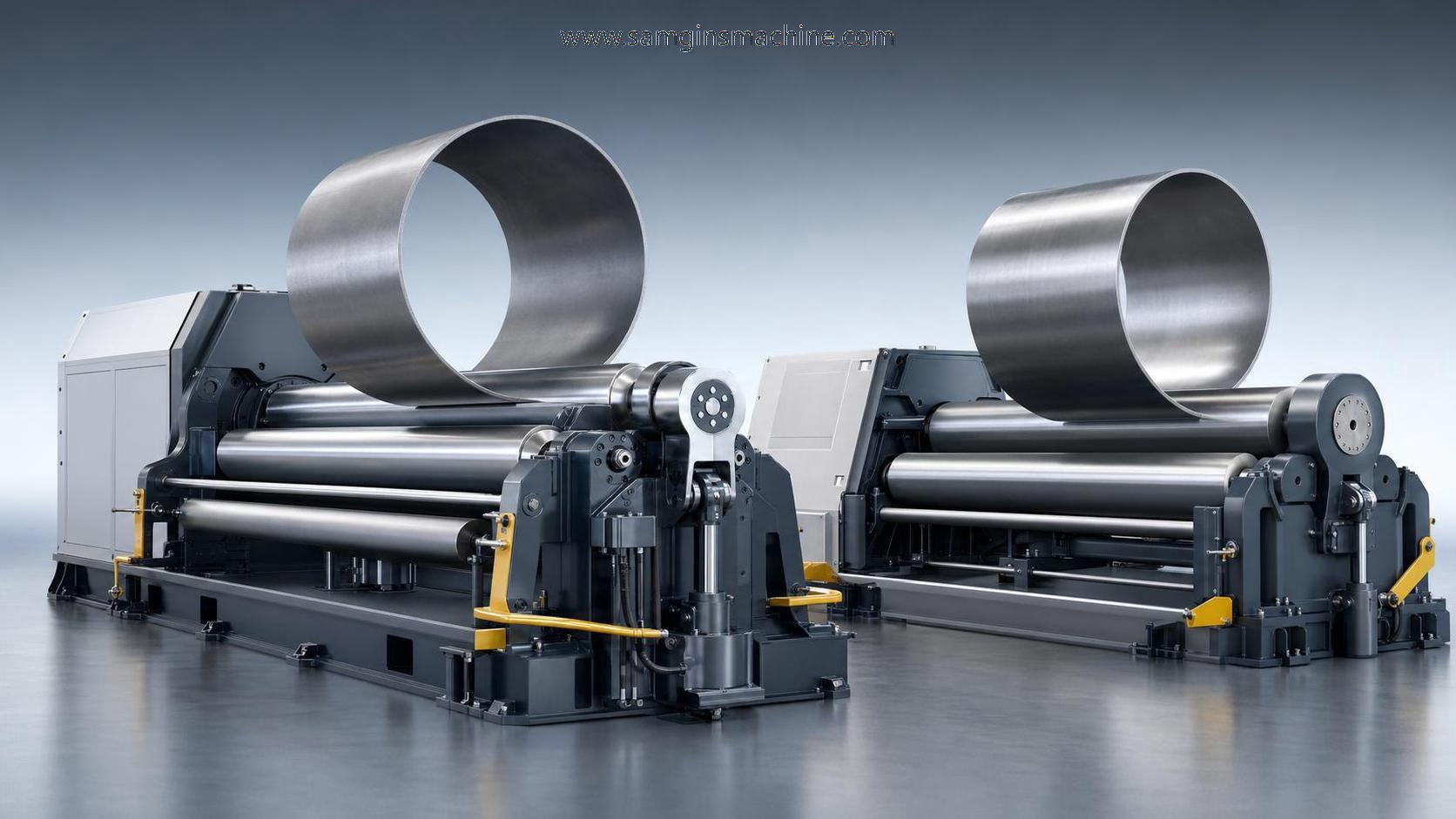
Four Roller Bending Machine vs Three Roll: Which Delivers Better Forming Control?
When comparing a four roller bending machine with a three-roll model, forming control is often the deciding factor for technical evaluators.
From pre-bending accuracy to repeatability, plate handling, and setup efficiency, the right choice affects production quality and downstream fit-up.
That matters even more in pressure vessels, structural fabrication, tank production, and pipe section manufacturing.
The core question is simple: which machine gives operators tighter control over the forming process with fewer corrections later?
In most precision-driven cases, the four roller bending machine has a clear advantage. Still, the three-roll machine remains useful in specific production environments.
A sound decision depends on plate thickness, batch size, operator skill, tolerance targets, and how much rework your shop can accept.
How the Two Machine Types Differ
A three-roll plate rolling machine usually uses one top roll and two lower rolls. The plate is pinched and bent through sequential adjustment.
Some versions are pyramid type. Others are variable geometry designs with more flexibility. Their control level varies widely by configuration.
A four roller bending machine adds a side roll and a bottom pinch roll. This changes how the plate is clamped, guided, and bent.
The extra roll improves plate stability during feeding. It also reduces the need to remove and reinsert the plate during pre-bending and rolling.
That structural difference is the main reason forming control feels more predictable on a four-roll system.
Why Forming Control Matters More Than Rated Capacity Alone
Capacity figures look important on a datasheet, but they do not tell the full story. Forming control determines whether the finished shell meets downstream requirements.
Poor control creates larger flat ends, out-of-round shells, mismatch at seams, and more fitting work before welding.
These issues consume time in tack welding, alignment, grinding, and dimensional correction. They also increase scrap risk on high-value materials.
For technical evaluation, the better machine is usually the one that lowers process variation, not simply the one that bends thicker plate.
Pre-Bending Accuracy: A Strong Point for the Four Roller Bending Machine
Pre-bending performance often decides shell quality. Flat ends are unavoidable to some extent, but their length should be minimized.
A four roller bending machine clamps the plate securely between the top and bottom rolls. This helps maintain a stable reference point.
Because the plate stays pinched, the side roll can move into position more accurately for pre-bending at each edge.
By contrast, many three-roll machines require more operator judgment when positioning the leading and trailing edges. That introduces variation.
On thin or medium plate, that difference becomes obvious. Edge quality can shift depending on friction, slip, or inconsistent manual alignment.
If your process needs short straight edges before seam joining, the four-roll option usually delivers better control from the first pass.
Plate Handling and Operator Dependence
Forming control is not only about mechanics. It is also about how much the final result depends on operator experience.
A four roller bending machine generally allows single-direction feeding with fewer handling steps. The plate stays more stable throughout the cycle.
That reduces the chance of skewing, offset feeding, or accidental marking. It also shortens learning time for newer operators.
Three-roll machines can still perform well, especially in skilled hands. But consistency often depends more heavily on operator judgment and sequence control.
In production terms, lower operator dependence usually means more stable quality across shifts and batches.
Repeatability in Batch Production
Repeatability matters when the same diameter is rolled repeatedly. This is common in tanks, ducts, shells, cones, and welded cylindrical sections.
A four roller bending machine is typically easier to program and repeat. Once roll positions are verified, the process is more straightforward to reproduce.
This is especially useful where CNC control, digital readout, or stored recipes are part of the machine configuration.
Three-roll machines can also be automated, but the workflow usually leaves more room for variation during loading and pre-bending.
For repeat work with tight tolerance windows, four-roll equipment often reduces trial pieces and post-roll checking time.
Shape Quality, Roundness, and Seam Fit-Up
Better forming control shows up clearly in roundness and seam alignment. These two results influence welding speed and final dimensional acceptance.
When a shell is out of round, the seam gap changes along the joint. That makes welding more difficult and increases distortion risk.
A four roller bending machine usually gives steadier curvature because the plate remains under better control during feeding and bending.
That can be valuable before submerged arc welding, MIG welding, or automated circumferential seam welding.
In many fabrication lines, shell handling continues with support equipment such as an Self aligning welding rotator.
That type of rotator supports cylindrical workpieces during butt welding, vessel fabrication, and longitudinal or circumferential seam welding.
Typical models range from HGZ-5 to HZG-200, with rated loads from 5T to 200T and speed control by electromagnetic drive or frequency conversion.
That connection matters because better rolled shells are easier to rotate, align, and weld with stable bead formation.
Where Three-Roll Machines Still Make Sense
The comparison is not one-sided. Three-roll machines still have practical value in many workshops.
They may offer lower initial cost, simpler maintenance, and acceptable performance for general rolling work with moderate tolerance requirements.
They are often suitable for job shops handling varied orders where part precision is important but not critical.
For heavy plate and large diameters, some variable geometry three-roll systems also provide strong forming flexibility.
So the real issue is not whether three-roll machines are outdated. It is whether their control level matches your production targets.
Evaluation Checklist for Machine Selection
When comparing options, focus on process outcomes rather than headline specifications alone.
- Check minimum achievable straight edge length after pre-bending.
- Review roundness consistency across different plate widths and thicknesses.
- Measure setup time for repeat jobs and diameter changes.
- Assess whether one operator can load and roll safely.
- Confirm control system support for recipe storage or digital position feedback.
- Study how much seam correction is needed before welding.
- Match machine behavior to your actual material mix, not ideal test coupons.
A Practical Decision Standard
If the priority is better forming control, the four roller bending machine usually wins. Its pinch-and-guide structure supports higher accuracy and easier repeatability.
That advantage becomes more visible when shell roundness, seam fit-up, and downstream welding efficiency directly affect cost.
If the workload is mixed, tolerances are broader, and budget pressure is high, a well-selected three-roll machine can still be the right answer.
For most technical evaluations, the best choice comes from comparing total process control, not isolated machine price.
Wuxi Samgins International Trade Co., Ltd supplies forming, welding, cutting, and machine tool equipment built under ISO9001 management and CE-oriented production standards.
In actual projects, that broader equipment perspective matters because rolling accuracy only creates value when the next fabrication stages remain equally controlled.
A final review should therefore combine rolling performance, welding preparation efficiency, material behavior, and long-term production consistency.
Use that standard, and the comparison between a four roller bending machine and a three-roll system becomes much clearer and more defensible.
search
Products Navigation
Send Us A Message