




Hydraulic Guillotine Shear vs Swing Beam Shear: Which Fits Plate Cutting Better?
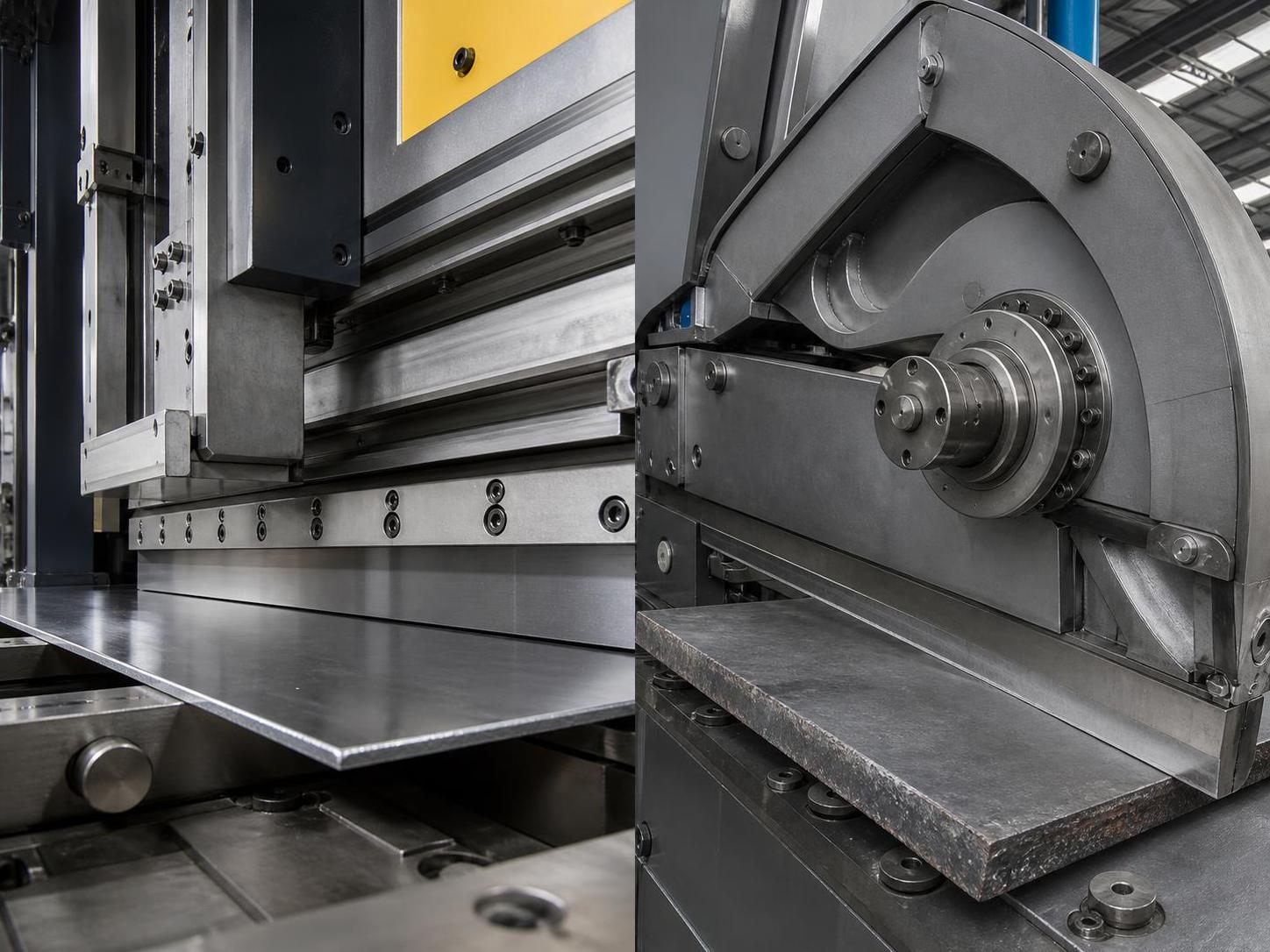
When choosing between a hydraulic guillotine shear and a swing beam shear, technical evaluators are rarely comparing two abstract machine categories. They are deciding how much cutting stability is required, how broad the plate mix will be, how sensitive the line is to burr and distortion, and whether the machine must stay accurate under changing production conditions. In many sheet metal shops, the wrong choice does not fail immediately; it simply introduces small quality losses, extra rework, tighter operator dependence, or faster wear than expected.
That is why the comparison matters. A swing beam shear may be entirely sufficient for routine mild steel cutting in moderate thickness ranges. A hydraulic guillotine shear, however, is usually the stronger option when the plant needs higher consistency across material types, tighter dimensional control, or better performance on thicker plate and more demanding workloads. The better fit depends less on brochure specifications than on how the machine’s cutting geometry behaves in real production.
The real difference is in the cutting motion, not the hydraulic system alone
Both machines are hydraulic in many modern configurations, so the practical distinction is not simply “hydraulic versus non-hydraulic.” The critical difference is the blade path.
In a swing beam design, the upper beam pivots through an arc. This movement is mechanically simpler and often more economical, but the blade does not travel in a straight vertical line. As the beam swings, the cutting angle changes through the stroke, and the blade clearance relationship is less uniform along the cut than in a true guillotine structure.
In a hydraulic guillotine shear, the upper blade moves in a more linear, guided vertical path. That structural arrangement gives the machine a better basis for maintaining consistent blade clearance and reducing geometric variation during cutting. For technical teams, this difference affects four things immediately: edge quality, repeatability, thickness capability, and sensitivity to setup error.
This is the reason guillotine machines are often preferred in fabrication environments where the shear is not just a rough blanking tool but a quality-critical upstream process.
Where swing beam shears still make sense
It would be a mistake to treat swing beam shears as obsolete or inferior in every case. Many workshops continue to use them effectively because the application does not demand the higher structural precision of a guillotine design.
A swing beam shear is often a practical fit when:
- the material range is relatively stable, especially carbon steel in common gauges;
- the cut edge is not a final functional edge and will be welded, machined, or otherwise processed later;
- the budget is constrained and the shop prioritizes initial capital cost;
- the production team values simpler operation and less complex adjustment logic;
- cutting volumes are moderate rather than continuously heavy-duty.
For these conditions, a swing beam machine can deliver acceptable productivity and a reasonable cost-performance ratio. In some smaller fabrication businesses, it is the more rational purchase because the quality gain from a guillotine machine would not materially change downstream performance.
The problem appears when buyers assume “acceptable” for one plate mix will remain acceptable as the business expands into stainless steel, thicker materials, tighter tolerances, or outsourced cutting contracts with stricter inspection standards.
Why technical evaluators often lean toward a hydraulic guillotine shear
A hydraulic guillotine shear generally becomes the stronger candidate when evaluation criteria move from basic cut capability to process capability.
Its straight-line blade motion tends to support:
- better cut squareness;
- more stable blade clearance control;
- improved repeatability across different sheet widths and thicknesses;
- reduced twist and distortion risk on certain workpieces;
- better suitability for thicker plate and higher-duty usage.
These advantages matter most when the production environment includes mixed materials, frequent batch changes, or parts that feed directly into bending, welding, or precision assembly. If the cut edge influences fit-up quality, then variation introduced at the shearing stage is rarely isolated; it propagates into the next operation.
That is especially true in contract manufacturing, heavy equipment, electrical enclosures, structural fabrication, and pressure-related applications where plate consistency affects downstream alignment. In those settings, buying a cheaper shear that requires more operator correction is often a false economy.
Cutting accuracy: what should actually be evaluated
Many comparisons focus too heavily on nominal cutting thickness and table length, while underweighting accuracy behavior. For a technical evaluator, the more useful questions are narrower and more operational.
How stable is blade clearance over time? How easily can the machine hold repeatable cut quality after maintenance? How much edge rollover, burr, bow, or angular deviation appears across the material range actually used in the factory? How sensitive is the result to operator judgment?
In practice, a hydraulic guillotine shear usually offers an advantage where consistent edge condition is required from shift to shift. This is not only a machine-frame issue. It also relates to the guidance structure, blade adjustment mechanism, and hydraulic synchronization quality.
If the evaluation includes stainless steel, aluminum, and carbon steel in alternating batches, the need for controlled clearance becomes more important. Materials with different tensile behavior expose machine weaknesses quickly. A shear that performs acceptably on mild steel may show more burr, edge deformation, or dimensional inconsistency when the material mix broadens.
That is why sample cutting trials should use the actual material portfolio, not only standard carbon steel coupons.
Thickness range and duty cycle are often underestimated
One common selection error is matching the machine only to current nominal thickness, without accounting for duty cycle, plate width, grade variation, and overload margin.
A machine cutting 8 mm plate occasionally is facing a very different real-world demand than one cutting 8 mm plate continuously at high utilization. The frame rigidity, hydraulic response, hold-down stability, and blade wear pattern all become more critical as workload intensifies.
Under heavier usage, the hydraulic guillotine shear often holds its value better because its structure is usually more suitable for sustained precision cutting. Swing beam machines may still handle the nominal thickness, but the consistency of the cut can deteriorate faster when production intensity rises or plate widths increase.
Technical teams should also look beyond maximum thickness and ask whether the supplier defines capacity based on mild steel only, at what tensile strength, and under what blade condition. Those details are not always presented clearly. If they are not, mark them as 【待核实】 during evaluation rather than assuming cross-material equivalence.
Maintenance is not just about complexity; it is about quality recovery
Some buyers assume the simpler machine is automatically better for maintenance. That is only partly true. Simplicity reduces some service demands, but what matters more in a production environment is how predictably the machine returns to its original cutting quality after wear adjustments, blade replacement, or hydraulic servicing.
Swing beam shears can be attractive because they are mechanically straightforward. Yet if the machine depends more heavily on operator compensation or manual setup experience to maintain acceptable results, the hidden maintenance burden shifts from parts to process control.
A hydraulic guillotine shear may involve more precise adjustment expectations, but it often offers better repeatability once correctly set. For larger shops or export-oriented fabricators with documented quality procedures, that is usually more valuable than basic mechanical simplicity.
Evaluators should review:
- blade clearance adjustment method;
- guide rail wear behavior;
- hydraulic component accessibility;
- backgauge repeatability after extended use;
- availability of service documentation and spare parts;
- whether calibration depends heavily on one experienced operator.
The best machine is not the one that needs the least attention on paper; it is the one that can maintain production-grade output with controllable intervention.
Downstream process impact often decides the better machine
In technical evaluation, the shear should not be assessed as an isolated asset. The real cost sits in what happens after cutting.
If sheared blanks go into CNC bending, robotic welding, seam preparation, or assembly jigs, edge straightness and dimensional repeatability become more valuable than the initial machine price difference. Small inconsistencies can reduce bend accuracy, increase tack-up time, or create cumulative fit-up issues in welded structures.
Many manufacturers have already recognized this in adjacent plate-processing steps. For example, where edge preparation quality directly affects weld efficiency, shops often replace rougher preparation methods with more stable milling-based systems such as the Pipe Cutting & Beveling Machine, particularly in pressure vessels, boilers, shipbuilding, and heavy machinery. The reason is similar to the shear selection logic: upstream edge quality influences downstream productivity more than many buyers initially expect.
This broader processing view matters. If the cutting stage feeds a quality-sensitive production chain, a hydraulic guillotine shear is often easier to justify because it reduces variation before it accumulates.
Common misunderstandings in shear selection
The first misunderstanding is treating both machines as interchangeable because both can cut plate. They are interchangeable only when the application tolerance is loose enough to tolerate the difference in cutting behavior.
The second is overvaluing maximum specification and undervaluing process stability. A machine advertised for a certain thickness may still be the weaker choice if the actual production mix includes wider sheets, harder materials, or frequent shift changes.
The third is ignoring operator dependence. If acceptable cutting quality relies on experienced manual compensation, the machine may perform well in demonstration conditions and underperform in ordinary factory conditions.
The fourth is underestimating lifecycle cost. A lower purchase price can be offset by more blade wear sensitivity, more rework, slower setup changes, or lower confidence in cutting mixed material batches.
The fifth is evaluating only present demand. Shearing equipment often remains in service for years, while the product mix changes faster than expected. If the business may move into thicker plate, export fabrication, stainless projects, or tighter inspection standards, the more robust platform usually ages better.
How to make the decision in a technically defensible way
For technical evaluators, the best approach is not to ask which design is “better” in general, but which one is less likely to become the process bottleneck over the machine’s operating life.
A swing beam shear is often the right answer when the plant cuts routine materials, tolerances are moderate, budget discipline is strict, and the shear is not a quality-critical node.
A hydraulic guillotine shear is usually the better fit when:
- the shop cuts a wider range of materials and thicknesses;
- cut quality affects downstream bending, welding, or assembly;
- repeatability matters more than operator compensation skill;
- future product mix may become heavier or more demanding;
- the factory wants a stronger process control basis rather than only nominal capacity.
Before approval, insist on production-relevant trials. Test real materials, real widths, and real part lengths. Measure burr, edge straightness, angular deviation, and backgauge repeatability. Review adjustment procedures with maintenance staff, not only sales staff. Confirm what thickness ratings refer to, especially by material strength. If the supplier cannot define those conditions clearly, that uncertainty should be part of the decision.
In most technically demanding plate-cutting environments, the hydraulic guillotine shear earns its higher standing because it provides a more controlled cutting geometry and a stronger foundation for repeatable production. The swing beam design still has a place, but mainly where process tolerance is forgiving and cost pressure outweighs the benefits of tighter cutting control. For evaluators tasked with reducing long-term production risk rather than just securing a purchase approval, that distinction is usually the one that matters.
search
Products Navigation
Send Us A Message