




Is a Chinese Laser Cutting Machine Reliable for High-Volume Production?
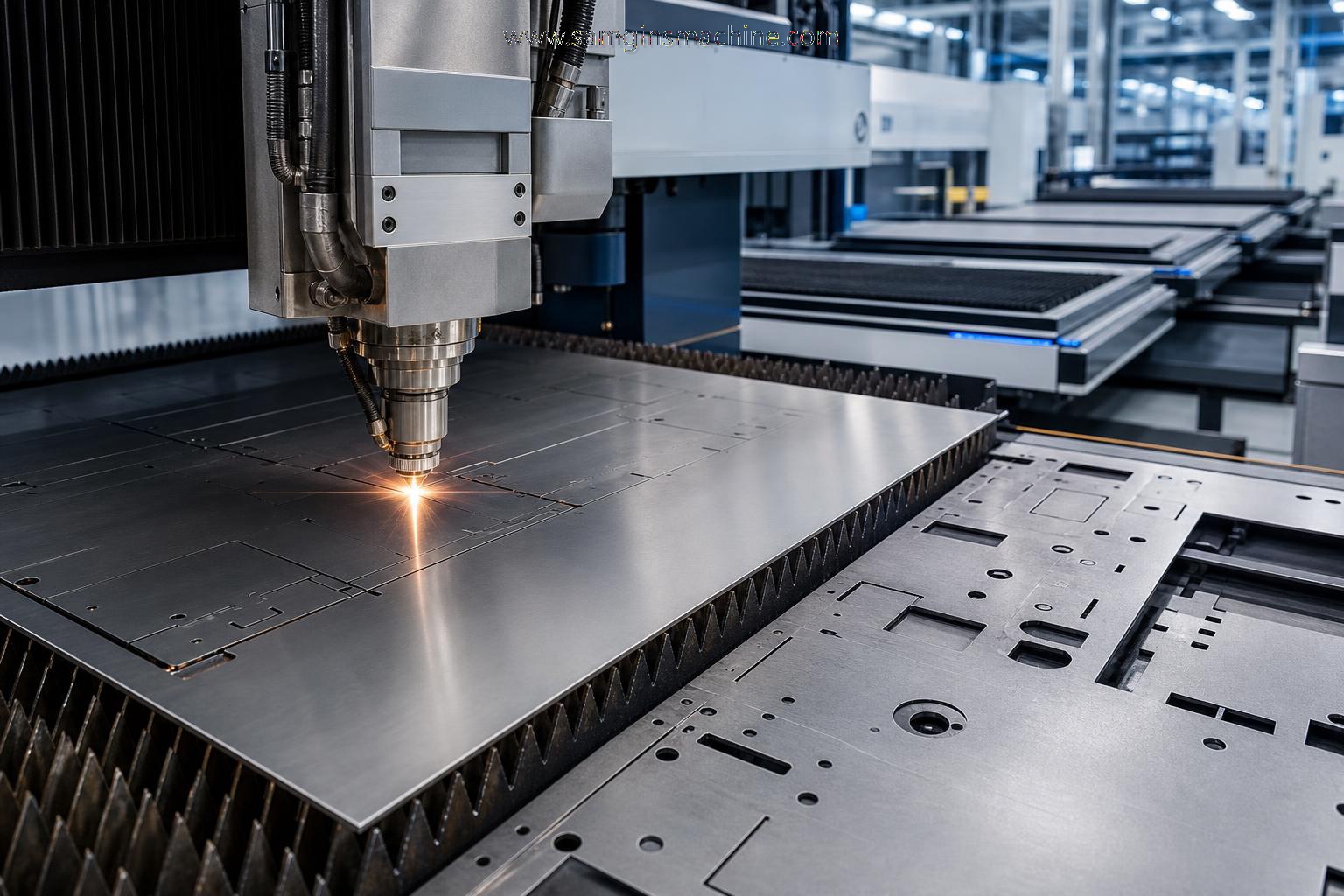
Is a Chinese laser cutting machine reliable for high-volume production? For manufacturers seeking speed, precision, and cost control, this is a critical question. With advances in CNC automation, laser technology, and international quality standards, many Chinese suppliers now offer equipment built for demanding industrial output. This article explores reliability, performance consistency, and what buyers should evaluate before choosing a machine for large-scale production.
For sheet metal processors, fabrication workshops, heavy equipment manufacturers, and export-oriented production plants, reliability is not measured by brochure claims alone. It is measured by uptime over 8 to 16 operating hours per day, cut quality across hundreds of parts, operator stability across shifts, and service response when a machine cannot stop.
Chinese laser cutting equipment has changed significantly in the last 10 years. Buyers who still judge the market by outdated assumptions may miss competitive options. Today, many machines from established suppliers are designed around globally recognized electrical components, CNC control systems, standardized production processes, and practical automation features suited to high-volume manufacturing.
What Reliability Means in High-Volume Laser Cutting
When asking, “Is a Chinese laser cutting machine reliable for high-volume production?”, buyers should first define reliability in operational terms. In industrial cutting, reliability is a combination of mechanical durability, beam stability, control accuracy, thermal management, consumable life, and predictable maintenance intervals.
A machine can produce acceptable samples during inspection and still fail under real production pressure. High-volume output often means 2 or 3 shifts, repeated material loading, continuous nesting programs, and tight delivery deadlines. Under these conditions, stable performance matters more than peak speed shown in a demonstration.
Core indicators buyers should track
- Daily operating duration, often 8–20 hours depending on production load
- Positioning and repeatability consistency over long production cycles
- Cut edge quality on carbon steel, stainless steel, and aluminum in different thickness ranges
- Frequency of nozzle replacement, lens cleaning, and protective window inspection
- Time required to recover from alarms, software faults, or gas pressure issues
- Availability of spare parts within 24–72 hours for critical components
Why uptime matters more than headline speed
In many factories, a difference of 10% in nominal cutting speed may be less important than a difference of 3% to 5% in unplanned downtime. If one machine runs smoothly for 26 days per month while another requires repeated adjustments, the slower but more stable unit may deliver more finished parts by the end of the quarter.
For batch production, repeatability also affects downstream processes. If hole accuracy, edge cleanliness, or burr control drift over time, operators lose time in deburring, fitting, welding, or rework. Reliability therefore affects the entire manufacturing chain, not only the cutting station.
The table below highlights how buyers can distinguish basic machine performance from true production reliability in manufacturing and processing environments.
The key takeaway is simple: a reliable laser cutter for mass production must perform consistently over time, not just impress during acceptance testing. This is especially important for companies running nested sheet programs, mixed material orders, or time-sensitive export contracts.
Why Many Chinese Machines Now Meet Industrial Production Demands
A realistic answer to “Is a Chinese laser cutting machine reliable for high-volume production?” is that reliability depends heavily on supplier capability, component selection, production control, and service discipline. The country of origin alone is no longer enough to predict actual performance.
Established suppliers in China now serve buyers in Southeast Asia, Europe, North America, South America, and Oceania. Export experience matters because it usually requires stronger documentation, safer electrical design, better packaging standards, and greater familiarity with different factory operating conditions.
Manufacturing factors that improve reliability
In the manufacturing and processing machinery sector, reliability often starts with machine structure. A rigid bed, proper stress relief, accurate guide rail installation, and clean cable routing all influence long-term precision. Even a powerful 6kW or 12kW laser source cannot compensate for weak mechanical integration.
Another important factor is standardization. Suppliers that organize production according to ISO9001 systems and design in line with CE-related requirements generally show stronger process control. This does not automatically guarantee perfect machines, but it reduces variation in assembly, inspection, and documentation.
Component integration matters
For high-volume factories, the practical question is not whether every component is made locally or internationally. The real issue is whether the supplier integrates the motion system, cutting head, chiller, control software, extraction setup, and gas path into one stable platform. Poor integration is a common source of downtime.
A well-configured machine should maintain smooth acceleration, stable pierce control, and predictable edge results across material thickness ranges such as 1–6 mm stainless steel or 6–20 mm carbon steel. Buyers should ask to review sample cuts from the thicknesses they actually process, not only thin-sheet demonstrations.
The table below outlines the main factors that separate dependable Chinese laser machines from entry-level systems that may struggle in large-scale production.
This comparison shows why some Chinese machines perform very well in continuous production while others do not. Reliability is usually the result of disciplined engineering, practical configuration, and responsive support rather than the lowest purchase price.
How Buyers Should Evaluate a Machine Before Purchase
If your factory plans to cut hundreds of sheets per week, evaluation should go beyond catalog specifications. A disciplined buying process can reduce risk significantly. In most projects, 4 areas deserve the closest attention: machine configuration, sample validation, service capability, and total operating cost over 3 to 5 years.
1. Match power and table size to real production
A 3015 table may suit many sheet metal shops, while larger formats such as 4020 or 6025 are often preferred for heavier workloads or wider sheet utilization. Power selection should reflect your dominant thickness range. Choosing a 20kW system for mostly thin sheets may raise cost unnecessarily, while underpowering a machine can reduce throughput and edge quality.
2. Test the materials you actually process
Ask for sample cutting on your own material grades and thicknesses. A buyer processing 3 mm stainless steel, 10 mm carbon steel, and occasional aluminum should evaluate all three. It is also wise to review inner holes, sharp corners, small features, and heat-sensitive geometries because these reveal tuning quality better than simple straight cuts.
3. Review automation options realistically
For high-volume production, auto exchange tables, loading systems, and software nesting can save substantial labor. However, automation should fit your order pattern. A factory with repeat batch jobs may benefit more from exchange tables and barcode-linked file management than from a fully automatic storage tower in the first phase.
A practical 6-point inspection checklist
- Confirm machine bed size, power range, and intended material thickness window.
- Review motion components, cutting head compatibility, and chiller specification.
- Check software usability for nesting, common line cutting, and batch file handling.
- Request sample cuts from at least 3 typical part designs.
- Clarify installation timeline, operator training hours, and spare part recommendations.
- Define remote service response time and fault escalation procedure before order confirmation.
In many factories, installation and commissioning may take several days, while operator familiarity often improves noticeably after 1 to 2 weeks of use. Buyers should plan for this ramp-up period rather than expecting full production speed on day one.
Common Risks in High-Volume Use and How to Control Them
Even a good machine can underperform if factory conditions are not prepared correctly. When evaluating whether a Chinese laser cutting machine is reliable for high-volume production, buyers should also examine the production environment, maintenance discipline, and operator management inside their own plant.
Frequent operational risk points
- Unstable input power affecting control electronics and laser source stability
- Insufficient assist gas purity or pressure, especially for stainless steel cutting
- Dust accumulation reducing optics life and increasing alarm frequency
- Irregular cleaning and inspection intervals during heavy production weeks
- Operator parameter changes without process control or version tracking
Preventive maintenance reduces downtime
A basic preventive schedule often includes daily visual checks, weekly cleaning tasks, monthly alignment or wear inspections, and quarterly review of critical consumables. For plants running 2 shifts, these intervals may need to be adjusted. Maintenance should be linked to operating hours, not only calendar dates.
It is also useful to stock a small set of essential consumables and wear parts. Waiting 7 to 10 days for a simple protective component can be more expensive than carrying reasonable inventory. This is particularly true for factories serving construction, agricultural machinery, pressure vessel, or steel structure projects.
The table below summarizes practical risk-control points for large-scale laser cutting operations.
Most high-volume reliability problems are manageable when the machine, process, and site conditions are treated as one system. This is why professional pre-sales communication is just as important as the equipment itself.
Why Supplier Experience and Service Support Matter
In B2B machinery procurement, the machine is only one part of the investment. The supplier’s experience with welding equipment, CNC cutting machines, machine tools, and broader fabrication workflows can improve solution accuracy. A supplier that understands upstream and downstream operations is more likely to recommend a workable production setup.
Wuxi Samgins International Trade Co., Ltd, based in Wuxi City, Jiangsu Province, benefits from its location near Shanghai and its focus on mechanical equipment and related products since 2012. Its product range covers laser cutting machines, automatic welding equipment, CNC cutting machines, machine tools, H-beam production line equipment, bending machines, shearing machines, plate rolling machines, deburring equipment, pipe benders, and other fabrication machinery.
This broader industry understanding is valuable for buyers who need more than a single standalone machine. In many production lines, laser cutting performance affects bending, welding, milling, deburring, and assembly efficiency. A supplier familiar with these links can provide more practical recommendations on material flow, part quality, and auxiliary equipment matching.
Questions buyers should ask service teams
- What training is included for operators, programmers, and maintenance staff?
- What spare parts should be stocked for the first 6–12 months?
- How is remote diagnosis handled during production stoppage?
- What documents are provided for installation, maintenance, and electrical safety?
- How are acceptance criteria defined for cut quality and machine function?
A supplier with structured answers to these questions generally offers lower project risk. For export customers, this is especially important because every extra day of installation delay or unresolved fault may affect labor planning, customer deliveries, and production cost recovery.
Final Buying Perspective for Manufacturers
So, is a Chinese laser cutting machine reliable for high-volume production? In many cases, yes—provided the buyer selects a capable supplier, validates the configuration carefully, and prepares the production environment properly. The best results usually come from matching machine power, automation level, material range, and service support to real factory conditions rather than buying on price alone.
For manufacturers in sheet metal fabrication, structural steel processing, machinery production, and custom metal parts manufacturing, a well-selected Chinese laser cutting system can offer a strong balance of output, precision, and investment control. Reliability is no longer a simple question of origin; it is a question of engineering quality, process discipline, and after-sales capability.
If you are evaluating laser cutting machines for continuous production, Wuxi Samgins International Trade Co., Ltd can help you compare configurations, review application needs, and build a practical equipment plan around your production targets. Contact us now to get a customized solution, discuss product details, or explore more fabrication machinery options for your factory.
search
Products Navigation
Send Us A Message