




Should You Choose a Laser Cutting Machine with Overseas Spare Parts Support?
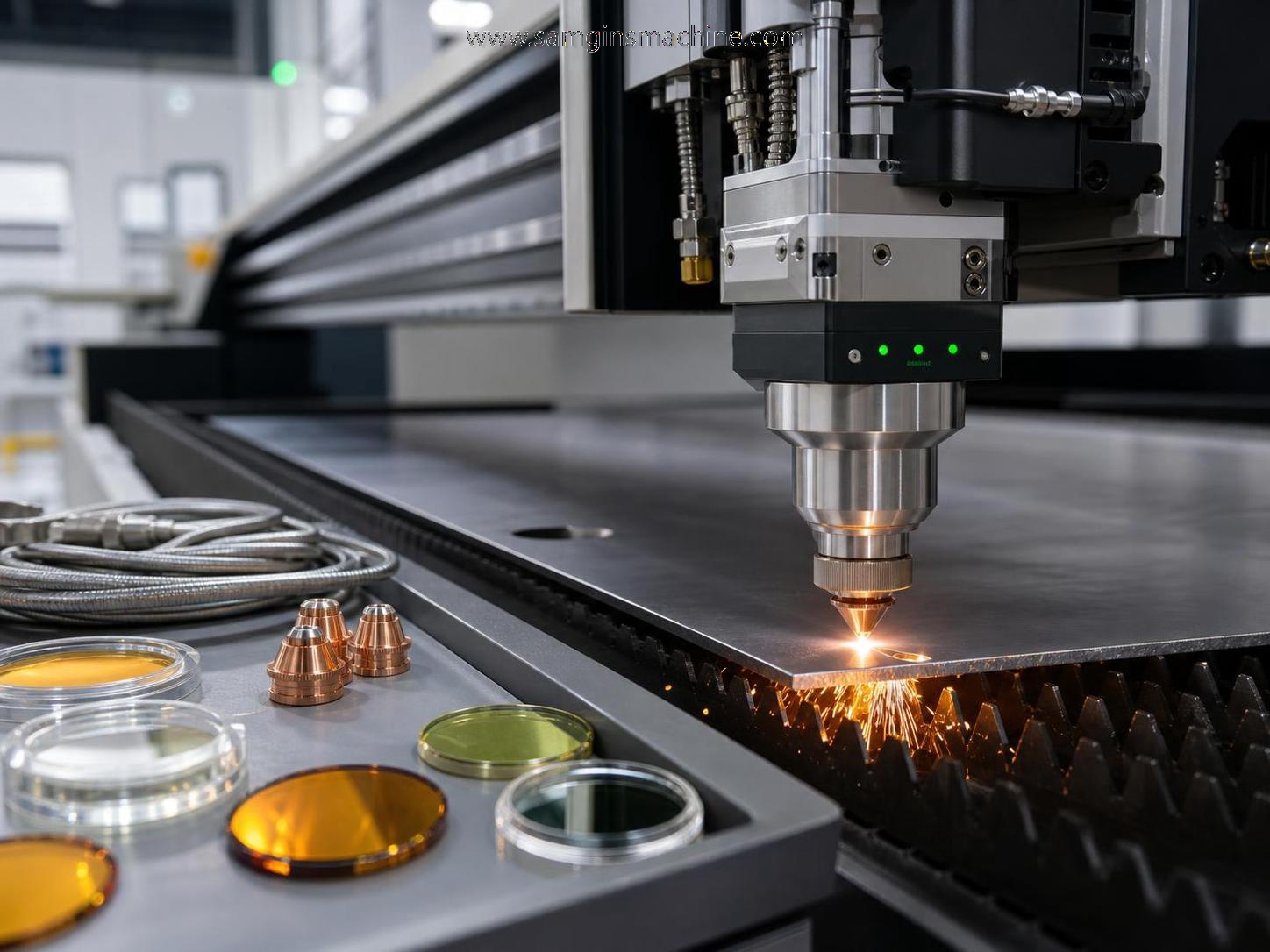
When investing in industrial equipment, many buyers ask: Should I choose a laser cutting machine with full after-sales spare parts support overseas? The answer often affects production stability, maintenance cost, and long-term ROI. For manufacturers and metal fabricators, choosing a supplier with reliable global spare parts service can reduce downtime, protect efficiency, and ensure your laser cutting machine keeps performing in demanding production environments.
For B2B buyers, the machine itself is only one part of the investment. The real decision also includes service response speed, spare parts availability, installation guidance, operator training, and the supplier’s ability to support equipment after 12, 24, or even 60 months of operation.
In metal fabrication, a 1-day production stop can delay multiple orders, increase subcontracting cost, and affect delivery credibility. That is why the question, “Should I choose a laser cutting machine with full after-sales spare parts support overseas?” matters far more than many first-time buyers expect.
For companies importing fiber laser cutting equipment from China or other manufacturing hubs, overseas spare parts support is especially important when serving industries such as sheet metal processing, steel structure fabrication, machinery manufacturing, cabinet production, and general industrial contracting.
Why Overseas Spare Parts Support Matters in Laser Cutting Projects
A laser cutting machine is a high-value production asset, not a simple standalone tool. Typical configurations include the laser source, cutting head, chiller, CNC control system, servo motors, guide rails, gas path components, dust removal units, and electrical parts. If even 1 critical component fails, the full line may stop.
For users running 1 shift, 2 shifts, or near-continuous 24-hour production, downtime cost often exceeds the price of the part itself. A nozzle, lens, sensor cable, proportional valve, or cutting head consumable may be inexpensive, but waiting 7 to 21 days for delivery can create a much larger loss.
Direct impact on production continuity
In fabrication plants processing carbon steel, stainless steel, aluminum, or galvanized sheet, order schedules are usually tied to daily machine utilization. If a 6kW to 20kW laser cutter stops unexpectedly, the workshop may lose dozens or even hundreds of parts per shift, depending on sheet thickness and nesting complexity.
This is why buyers should not evaluate only initial machine price. A lower quotation without overseas spare parts support may lead to higher total ownership cost within the first 6 to 18 months.
Service support reduces hidden risk
Reliable after-sales service overseas usually means more than shipping parts. It often includes remote diagnostics within 24 hours, standard consumables lists, recommended stock for 3 to 6 months, electrical drawings, troubleshooting videos, and bilingual technical communication for maintenance teams.
The table below shows how spare parts support changes operational risk in real production environments.
The key conclusion is simple: the machine purchase decision should be linked to service logistics. If production deadlines are strict, overseas spare parts support is not an optional extra. It is part of the production assurance strategy.
Should I Choose a Laser Cutting Machine with Full After-Sales Spare Parts Support Overseas?
In many cases, yes. If your factory depends on continuous cutting performance, exports finished products, or handles custom orders with short lead times, the answer to “Should I choose a laser cutting machine with full after-sales spare parts support overseas?” is usually yes. However, the right decision depends on your order volume, technical team strength, and risk tolerance.
When full support is strongly recommended
- You run 2 or 3 shifts and cannot accept more than 8 to 12 hours of unplanned downtime.
- Your machine power is 6kW, 12kW, 20kW, or higher, where replacement parts and setup errors are more costly.
- Your factory is far from major import hubs, making urgent international shipment slower and more expensive.
- You do not have an experienced in-house electrical or CNC troubleshooting team.
- You supply automotive parts, construction steel, agricultural equipment, or OEM products with fixed delivery schedules.
When partial support may be enough
If you operate one machine at low utilization, maintain backup equipment, and have strong local engineers, you may not need a fully localized spare parts package. In that case, a supplier with clear parts documentation, remote commissioning support, and 48-hour technical response may be sufficient.
The point is not to buy the most service, but to buy the right service level for your production model.
A practical 4-point decision test
- Calculate the hourly value of machine uptime.
- Identify 5 to 10 critical components with the highest failure impact.
- Estimate acceptable downtime: 8 hours, 24 hours, 3 days, or longer.
- Compare that risk cost against the supplier’s spare parts and support plan.
This approach helps buyers move from price comparison to operational cost comparison, which is a better method for industrial equipment procurement.
What Spare Parts and Service Items Should Buyers Check?
Not all support packages are equal. Some suppliers say they provide spare parts, but only for common consumables. Others can support electrical and motion components, but only after factory inspection. Buyers should request a detailed list before signing the contract.
Critical categories to review
For a standard fiber laser cutting machine, important parts usually fall into 6 categories: optical consumables, cutting head components, drive and motion parts, electrical parts, gas control parts, and auxiliary systems such as chillers and dust extraction interfaces.
The following table can be used as a supplier evaluation checklist during procurement discussions.
A complete support system should also define which parts are consumables, which are covered under warranty conditions, and which should be stored by the buyer on site. That distinction can prevent disputes later.
Ask these 6 procurement questions
- Which spare parts are recommended for the first 12 months?
- What is the normal delivery time for urgent and non-urgent parts?
- Can the supplier provide exploded drawings and maintenance manuals?
- What are the standard response times for remote support?
- Are local service partners available in your region?
- Which components require engineer calibration after replacement?
How to Evaluate a Supplier Beyond Machine Specifications
Many buyers compare cutting area, laser power, acceleration, and bed structure, but overlook long-term support capability. A better procurement process includes technical, logistical, and service evaluation in parallel.
Look at manufacturing and export readiness
Wuxi Samgins International Trade Co., Ltd, based in Wuxi, Jiangsu Province, benefits from a location about 30 minutes from Shanghai by high-speed rail, which supports logistics coordination and international business communication. Established in October 2012, the company focuses on mechanical equipment and related products for industrial users worldwide.
Its portfolio includes automatic welding equipment, CNC cutting machines, milling machines, CNC machine tools, lathes, welding robots, laser cutting machines, H-beam production line equipment, bending machines, shearing machines, plate rolling machines, leveling machines, deburring machines, pipe benders, thread rolling machines, end face milling machines, and edge milling machines.
For buyers, that range matters because suppliers with broader machinery experience often understand workshop integration better. They can more effectively discuss upstream and downstream processes such as cutting, deburring, welding, bending, and beam fabrication instead of treating the laser cutter as an isolated machine.
Check compliance and documentation discipline
A supplier that organizes production and design according to ISO9001 quality system requirements and EU CE standards generally shows stronger process control. This does not remove all risk, but it often improves consistency in manufacturing documents, inspection routines, and delivery preparation.
For overseas buyers, documentation quality is practical, not theoretical. Clear wiring diagrams, user manuals, maintenance schedules, and spare parts lists can shorten fault analysis time from several hours to much less, especially when local technicians must act before remote engineers join.
Four supplier signals worth checking
- How many machinery categories the supplier supports in real export business.
- Whether manuals, drawings, and parts lists are complete before shipment.
- Whether training covers operation, daily inspection, and first-level maintenance.
- Whether service communication is structured, with named contacts and response windows.
Implementation Strategy: How Buyers Can Reduce Downtime from Day One
Choosing a laser cutting machine with overseas spare parts support works best when paired with a simple implementation plan. Spare parts support is most effective when the buyer prepares inventory, training, and maintenance routines before production begins.
Recommended first-stage setup
During commissioning, buyers should create a basic spare parts map covering daily, monthly, and emergency items. For many workshops, a 90-day consumables stock is reasonable, while higher-value electrical and motion components can be stocked selectively based on failure probability and import lead time.
It is also wise to define 3 maintenance levels: operator checks per shift, technician checks weekly, and deeper inspection every 1 to 3 months. This structure improves fault prevention and makes supplier support more efficient because the machine history is easier to trace.
A practical 5-step support workflow
- Record the alarm code, cutting symptom, material type, thickness, and recent parameter changes.
- Send photos, video, and machine serial information to the supplier within the same shift.
- Use the supplier’s troubleshooting checklist to separate consumable issues from electrical or control issues.
- Replace stocked parts first when diagnosis points to standard wear items.
- Escalate to remote engineer support or local service if calibration or advanced repair is required.
This process often saves time because many common cutting faults are linked to lens contamination, nozzle wear, gas instability, or parameter drift rather than major machine failure.
Common Buying Mistakes and Better Procurement Decisions
One common mistake is choosing a machine based only on power and price. A 12kW machine with weak support can be more expensive to own than a 6kW or 8kW machine backed by fast parts supply and stable technical service.
Another mistake is assuming all spare parts can be sourced locally. In reality, some branded equivalents may differ in firmware, interface, or calibration requirements. Using unmatched parts can affect cutting stability, edge quality, or machine safety.
What experienced buyers usually do differently
- They compare service scope line by line, not just machine quotations.
- They request a recommended spare parts package before final payment.
- They verify warranty terms for major components and consumables separately.
- They prepare operators and maintenance staff before production ramp-up.
Final procurement perspective
If your business depends on stable throughput, reliable delivery, and controlled maintenance risk, the answer to “Should I choose a laser cutting machine with full after-sales spare parts support overseas?” is often yes. It is a decision that protects output, not just equipment.
For manufacturers, metal fabricators, and industrial contractors, a supplier should be evaluated by machine quality, support depth, export experience, and service coordination together. That combination creates stronger long-term value than machine price alone.
Wuxi Samgins International Trade Co., Ltd supports global industrial customers with a broad machinery portfolio, practical manufacturing experience, and a service approach built around honest cooperation, design support, and dependable product quality. If you are comparing laser cutting machines for export use, now is the right time to review your spare parts strategy together with your equipment plan.
Contact us today to discuss your application, request a customized solution, or get detailed information on laser cutting machines, spare parts planning, and after-sales support for overseas projects.
search
Products Navigation
Send Us A Message