




Multi Spindle Drilling Machine Explained: Best Uses, Limits, and Output Advantages
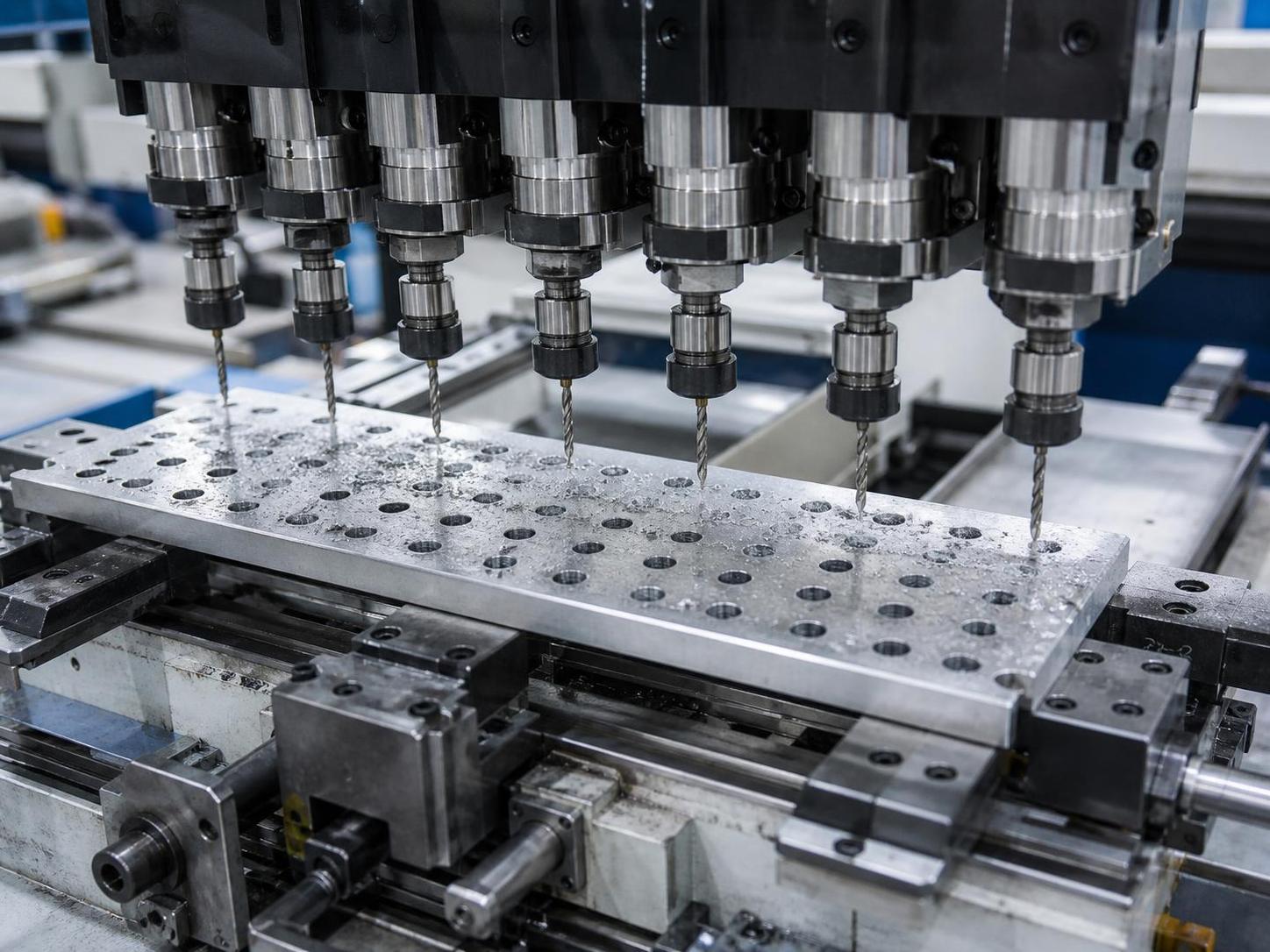
If you are researching a multi spindle drilling machine, the real question is usually simple: does it actually increase output in your kind of production, or does it just add complexity? In the right job, it can cut cycle time sharply, improve hole-to-hole consistency, and reduce operator dependence. In the wrong job, it becomes an expensive shortcut that limits flexibility. The difference comes down to part repeatability, hole pattern stability, and how often your setup changes.
A lot of people first encounter this machine category when they are trying to speed up plate work, brackets, flanges, fixtures, or other parts with repeated hole patterns. The attraction is obvious. Instead of drilling one hole at a time, the machine drives multiple spindles at once, so several holes are completed in the same cycle. That sounds straightforward, but there is more to the decision than raw speed.
What a multi spindle drilling machine really does
At its core, a multi spindle drilling machine is built to drill multiple holes simultaneously or in a closely synchronized sequence. The head is arranged with several spindles, and those spindles are positioned to match a target hole pattern. In production, this matters because the machine is not just making holes faster. It is making the same hole pattern repeatedly with less variation from part to part.
That is why these machines are common in batch production and dedicated manufacturing lines. If a factory runs the same component all day or all week, a multi spindle setup can remove a lot of wasted motion. The operator does not need to locate, drill, reposition, and repeat for every single hole. Once the fixture and spindle arrangement are dialed in, the process becomes much more stable.
Here is the short answer many buyers are looking for: a multi spindle drilling machine makes sense when your hole layout repeats often enough that setup time can be spread across a large number of parts. If your work is highly mixed, with changing patterns and low batch sizes, a standard CNC drilling or machining center may be the better fit.
Where it performs best
The best applications are not random. They usually share three traits: repeated geometry, moderate to high volumes, and a strong need for consistent spacing.
Typical examples include base plates, connection plates, hinges, mounting brackets, motor housings, automotive subcomponents, furniture hardware parts, and fabricated steel parts that need the same drilling pattern over and over. In these situations, the output gain is very real because drilling time is only one part of the equation. You also save on repositioning time, handling time, and inspection corrections caused by inconsistent hole locations.
For metal fabrication shops, this can be especially useful when downstream assembly depends on accurate alignment. If a component has six, eight, or twelve holes that must match another part cleanly, drilling them in one cycle often gives more predictable assembly results than producing them one at a time across repeated manual steps.
There is also a labor angle that gets overlooked. A process that depends heavily on operator consistency tends to drift over long runs. A multi spindle arrangement reduces that dependence. It does not remove the need for skill, but it narrows the number of variables that can go wrong once production starts.
The output advantages are real, but they are specific
People often describe these machines as “high efficiency,” which is true but too vague to be useful. The better way to think about the output advantage is this: they compress several drilling actions into one controlled event.
That gives you a few practical benefits:
- Shorter cycle time per part when the pattern is fixed
- More uniform hole spacing across a batch
- Less repeated positioning and clamping work
- Lower risk of cumulative alignment error
- Better repeatability in semi-automatic or dedicated line production
In a real workshop, these gains matter most when drilling is the bottleneck. If your overall production is actually limited by loading, deburring, welding, or material flow, the machine may still help, but the improvement will not be as dramatic as the brochure language suggests. This is a common purchasing mistake: buyers focus on spindle count and forget to check what is really slowing the line down.
Another point worth making is that output is not only about speed. Repeatable output means fewer rejected parts, less rework, and more predictable scheduling. For manufacturers supplying assemblies, that kind of stability often has more value than shaving a few seconds off one operation.
Where the limits show up
This is the part many introductory articles skip, and it is usually the part that matters most before a purchase.
A multi spindle drilling machine is less attractive when the hole pattern changes frequently. Every time you need a different spindle layout, different fixture, or different setup condition, the efficiency advantage starts to shrink. If your factory handles custom orders, prototype work, or short runs with many design variations, flexibility becomes more valuable than simultaneous drilling.
It can also be a poor fit for parts with complex 3D geometry, irregular surfaces, or tight feature changes that are easier to manage on a machining center. Not every drilling job benefits from a dedicated multi spindle head. Some jobs need adaptability more than they need repetition.
Material variation is another practical limit. Different thicknesses, hardness levels, or stack-up conditions can affect tool load and drilling quality across all spindles. That does not mean the machine cannot handle metal parts well. It means process balancing becomes important. If one spindle sees a different cutting condition from the others, tool wear and hole quality may stop matching as closely as expected.
Maintenance and tooling should also be part of the conversation. More spindles mean more components to monitor, more opportunities for runout issues, and more attention needed for synchronization and tool condition. Shops that underestimate upkeep sometimes end up blaming the machine for problems that are really process-discipline problems.
Common misconceptions buyers have
One misconception is that more spindles always mean better productivity. Not necessarily. If the part geometry only supports four meaningful holes per cycle, forcing an eight-spindle solution may increase cost without increasing usable output.
Another is that these machines replace CNC flexibility. They usually do not. A multi spindle drilling machine is strongest when the process is already stable and repetitive. It is not a universal substitute for programmable multi-operation machining.
The third mistake is assuming drilling speed tells the whole story. Setup time, fixturing accuracy, chip evacuation, tool life, and part loading all affect final throughput. Buyers who only compare spindle count often miss the bigger production picture.
How to judge whether it fits your shop
Before comparing models, start with your parts, not the machine. Ask a few blunt questions.
- How often does the hole pattern repeat without change?
- What is your normal batch size?
- Is drilling the actual bottleneck, or just one visible step?
- How tight are your hole location tolerances?
- Will you need frequent fixture changes?
- Can your operators and maintenance team support a more dedicated setup?
If the answers point toward stable, repeated work, the case gets stronger. If the answers point toward mixed production, frequent part changes, and broad process variation, keep your expectations in check.
It also helps to look one step before and one step after drilling. In fabricated metal production, drilling is often tied to edge prep, fit-up, welding, and finishing. A faster drilling cycle does not fully solve the problem if the part then waits in a queue for beveling or weld preparation. In some workflows, improving the entire prep sequence brings more value than optimizing one station in isolation.
That is where adjacent equipment matters. For example, if a shop is handling carbon steel, stainless steel, or aluminum plates for welding preparation, a dedicated beveling solution such as Through CNC Milling machine may be relevant alongside drilling, especially when both-side beveling in a single feed pass, high-speed milling, and reduced manual intervention are important to the line. It is not a substitute for drilling, but it is a good example of how throughput decisions often make more sense when viewed across the whole fabrication process rather than one machine category at a time.
What experienced buyers usually check
People new to this equipment often focus on the machine frame and spindle quantity first. Experienced buyers usually dig into fixturing, hole pattern repeatability, ease of adjustment, and support after installation.
They also ask whether the supplier understands the production environment, not just the equipment spec. A machine that looks fine on paper can still be awkward in a real line if loading direction, chip management, tool access, or maintenance clearance were not thought through early.
This is one reason established machinery suppliers tend to be more useful when the discussion moves from product category to actual process matching. Companies working across fabrication and machining equipment can often spot when the issue is upstream preparation, downstream assembly, or workflow balance rather than drilling capacity alone. Wuxi Samgins International Trade Co.,Ltd, established in 2012 in Wuxi, supplies a broad range of fabrication and machine tool equipment, from CNC cutting systems and milling machines to welding-related production equipment, which is the kind of portfolio context that can help when a buyer is comparing isolated machine performance against line-level needs.
So, is a multi spindle drilling machine worth it?
For repetitive production with stable hole patterns, yes, it can be a very effective way to improve throughput and consistency. For low-volume, high-mix work, the answer is far less certain. That is the simplest honest view.
The strongest results usually come when the machine is selected for a narrow, well-understood production need: the same parts, the same fixtures, the same hole geometry, repeated enough times to justify dedicated capacity. In that environment, a multi spindle drilling machine is not just faster. It can make planning easier, reduce avoidable variation, and support cleaner downstream assembly.
If you are still in the research phase, do not start by asking which model is “best.” Start by mapping your part family, repeat rate, fixture requirements, and the true bottleneck in your process. That will tell you much more than a spindle-count comparison ever will.
FAQ
Is a multi spindle drilling machine only for large factories?
No. Smaller shops can benefit too, but usually only when they run repeated parts in steady batches. If the job mix changes constantly, the machine may sit underused.
Can it replace a CNC machining center?
Usually not. It is better viewed as a productivity tool for repeated drilling patterns, not a full replacement for flexible multi-operation machining.
Does it always improve accuracy?
It often improves consistency in repeated hole patterns, but final accuracy still depends on fixturing, tooling condition, setup quality, and machine maintenance.
What materials can it handle?
That depends on the machine design, tooling, feed strategy, and part thickness. Material suitability should always be checked against the supplier’s technical data and your actual production requirements.
What should I confirm before requesting a quotation?
Prepare your part drawings, batch size, material type, thickness range, hole pattern details, tolerance expectations, and target output. Those details determine whether the machine is truly suitable.
Internal Link Anchor Text Suggestions
- multi spindle drilling machine vs CNC drilling center: comparison page
- plate beveling equipment for welding preparation: product category page
- how to improve output in metal fabrication lines: knowledge article
- fixture design basics for drilling accuracy: technical guide
- welding and cutting equipment for steel processing: solutions page
External Authority Source Suggestions
- machine tool manufacturer official technical documentation
- industry association materials on drilling, machining, and fabrication processes
- academic or technical institute research on hole quality, tooling, and production efficiency
search
Products Navigation
Send Us A Message