




Plate Straightening Machine Trends in 2026: Automation, Precision, and Energy Use
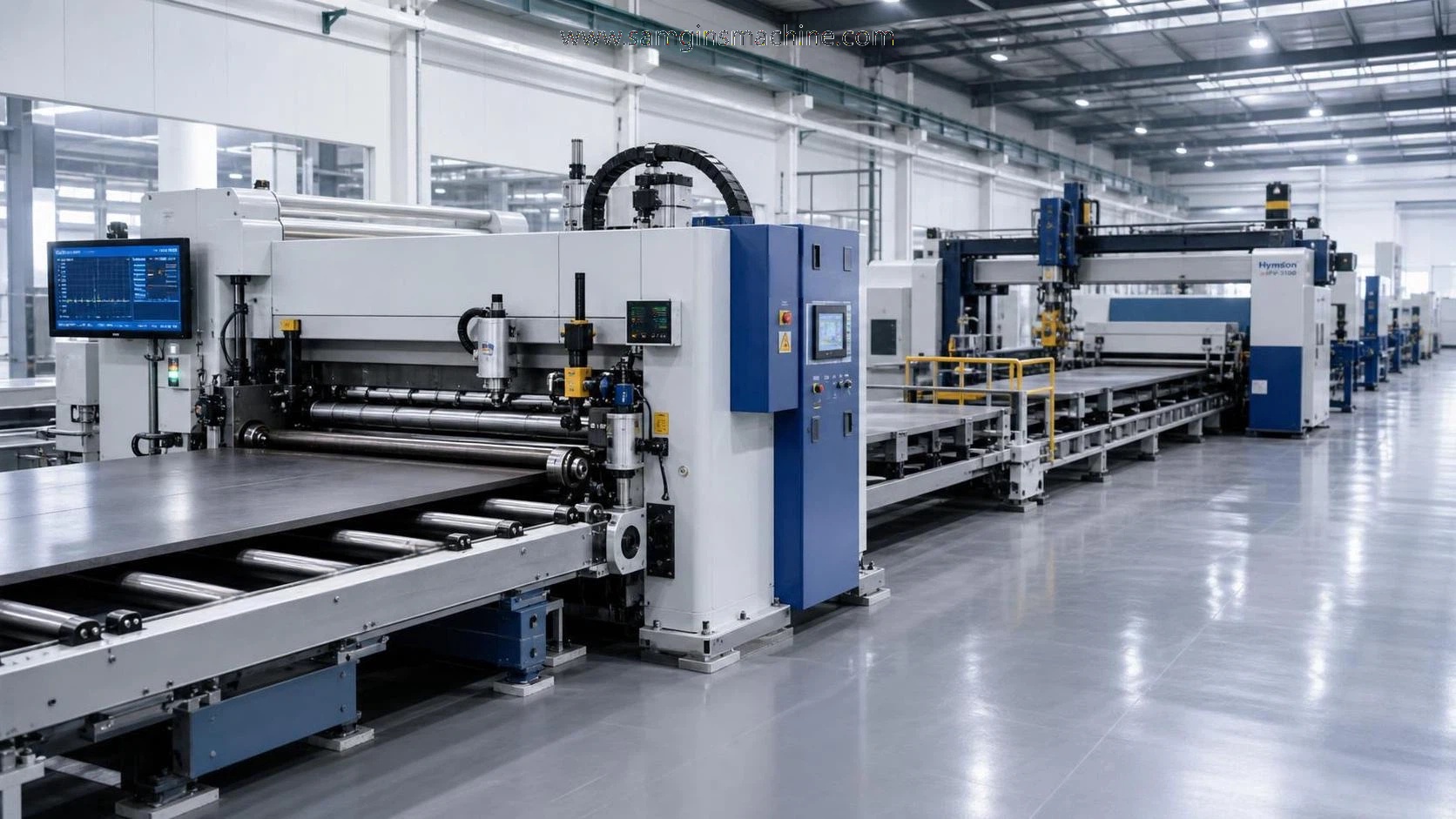
Plate straightening machine decisions are becoming more strategic in 2026
Metal fabrication is entering a more selective investment cycle.
Capacity still matters, but output quality, labor stability, and energy control now shape equipment decisions much more directly.
That is why the Plate straightening machine is no longer viewed as a basic correction tool.
It is increasingly treated as a production asset tied to downstream welding quality, fit-up efficiency, and material utilization.
In 2026, the strongest signals point to three linked priorities.
Automation is moving deeper into feeding, sensing, and parameter adjustment.
Precision expectations are tightening because rework costs are rising across fabrication lines.
At the same time, energy use is becoming a practical evaluation item rather than a secondary concern.
This shift is especially visible in operations serving shipbuilding, structural steel, pressure equipment, and heavy machinery.
Across these sectors, plate flatness affects much more than appearance.
It influences cutting accuracy, bevel preparation, robotic welding consistency, and final assembly rhythm.
What has changed in the market is easier to see on the shop floor
Recent demand patterns show a clear move away from isolated machine buying.
A Plate straightening machine is now evaluated as part of a connected processing route.
That route often includes CNC cutting, beveling, welding automation, and inspection steps.
When flatness variation enters the line too early, later machines compensate at a higher cost.
This is one reason buyers are asking harder questions about repeatability and setup stability.
Another signal is the growing preference for machines that reduce operator dependency.
Labor shortages are not uniform across regions, yet the pattern is broad enough to affect equipment design.
Manual judgment is still valuable, but fewer businesses want process outcomes to depend on individual experience alone.
This is where automation features gain weight.
Automatic feeding, load adaptation, and data-based parameter recall shorten changeover time and lower inconsistency risk.
The most visible 2026 signals
- More projects require traceable process data, not only finished part quality.
- Tolerance demands are spreading from high-end sectors into general fabrication.
- Energy efficiency is being compared over lifecycle cost, not only rated motor power.
- Machine compatibility with upstream and downstream equipment is becoming a selection filter.
Why automation is gaining ground faster than expected
The push toward automation is not driven by one factor.
It comes from cost pressure, labor variability, stricter delivery schedules, and the spread of digital production management.
For the Plate straightening machine, this means automation is becoming practical rather than aspirational.
Sensors can now support plate thickness recognition, pressure coordination, and more stable correction routines.
In actual operations, the value appears in reduced trial runs and fewer interruptions between batches.
Businesses with mixed material flows feel this most clearly.
Carbon steel, stainless steel, and aluminum behave differently under straightening loads.
Automated settings help narrow the gap between theoretical capacity and stable daily output.
Precision is no longer a premium feature in plate processing
A more subtle shift is happening around precision expectations.
Many projects that once accepted broad straightening tolerances now require tighter dimensional consistency.
Part of this comes from automation downstream.
Robotic welding and CNC preparation systems work best when input geometry is predictable.
The Plate straightening machine therefore influences more than the straightening stage itself.
It helps determine whether subsequent equipment performs at its designed level.
This is also why adjacent edge preparation equipment is receiving more attention.
For example, an Edge milling machine integrated into a fabrication route can support cleaner bevel preparation after stable plate correction.
That matters in pressure vessels, boilers, shipbuilding, electric power, and chemical engineering applications.
The XBJ Series is notable here because it covers standard thicknesses from 6 to 80 mm and heavy-duty ranges up to 400 mm.
Its adjustable bevel angle from 0 degrees to 90 degrees reflects how flexible edge preparation is becoming across mixed production needs.
Energy use is becoming a sharper filter in equipment evaluation
Energy discussions used to stay at the level of utility cost.
Now they are connected to equipment uptime, thermal load, maintenance rhythm, and sustainability reporting.
For the Plate straightening machine, efficient energy use depends on system design more than simple power reduction.
Well-matched drives, smoother feed control, and reduced vibration all influence actual consumption.
More evaluators are asking whether a machine saves energy while preserving correction quality under continuous load.
That question is more useful than asking for a low headline number alone.
This broader view is visible across suppliers with experience in integrated metalworking lines.
Wuxi Samgins International Trade Co., Ltd, established in 2012 in Wuxi near Shanghai, operates across welding, cutting, milling, forming, and leveling equipment categories.
That kind of portfolio context matters because energy performance is often shaped by line coordination rather than one machine in isolation.
ISO9001-based production organization and CE-oriented design expectations also indicate why consistency and operating efficiency are increasingly linked.
Where energy judgment is becoming more practical
- Comparing idle energy behavior across production shifts
- Checking whether feed systems maintain efficiency at variable speeds
- Reviewing vibration control because instability often wastes both power and tool life
- Evaluating maintenance access, since poor serviceability can hide energy losses over time
The impact is spreading across more than one process step
A 2026 buying decision around a Plate straightening machine has wider operational consequences than before.
If the machine delivers stable flatness, cutting paths become more reliable and bevel geometry is easier to control.
If it does not, every later station carries part of the burden.
That burden usually appears as slower alignment, more manual correction, and inconsistent weld preparation.
This is especially relevant in long workpieces and thicker plates.
Support structure, frame rigidity, and feed smoothness become critical under those conditions.
The same logic can be seen in edge preparation systems that use stress-relieved welded frames, vibration-reducing guide structures, and VFD-controlled feeding from 0.13 to 1.0 m/min.
Those design choices are increasingly valued because they protect process stability over long production cycles.
What deserves closer attention before the next investment cycle
The main question is no longer whether automation, precision, and energy use matter.
The better question is how to compare them without losing sight of application fit.
A Plate straightening machine should be reviewed against material range, batch variation, downstream process sensitivity, and maintenance conditions.
In many cases, specification sheets look similar while operating results differ noticeably.
That difference often comes from structural design, control logic, and integration readiness.
- Review correction consistency across thin, medium, and thicker plate ranges.
- Ask how settings are stored, recalled, and adjusted between materials.
- Check whether power use remains stable during partial-load operation.
- Map the machine’s role in the full process, not only in a standalone test.
- Compare serviceability, spare part access, and long-term parameter stability.
A practical reading of the 2026 outlook
The 2026 direction is clear enough to guide action.
The Plate straightening machine is moving closer to the center of production planning.
Automation will continue to expand because it supports stable output under real labor and scheduling pressure.
Precision will keep gaining importance because downstream automation leaves less room for geometric variation.
Energy performance will matter more because total operating cost is being measured with greater discipline.
The most useful next step is to review current plate processing bottlenecks against these three shifts.
Then compare equipment options by lifecycle fit, process compatibility, and stability under actual production conditions.
That approach gives a stronger basis for judging where the next round of value will really come from.
search
Products Navigation
Send Us A Message