




How to Choose Pipe Turning Rolls for Heavy Vessel Welding
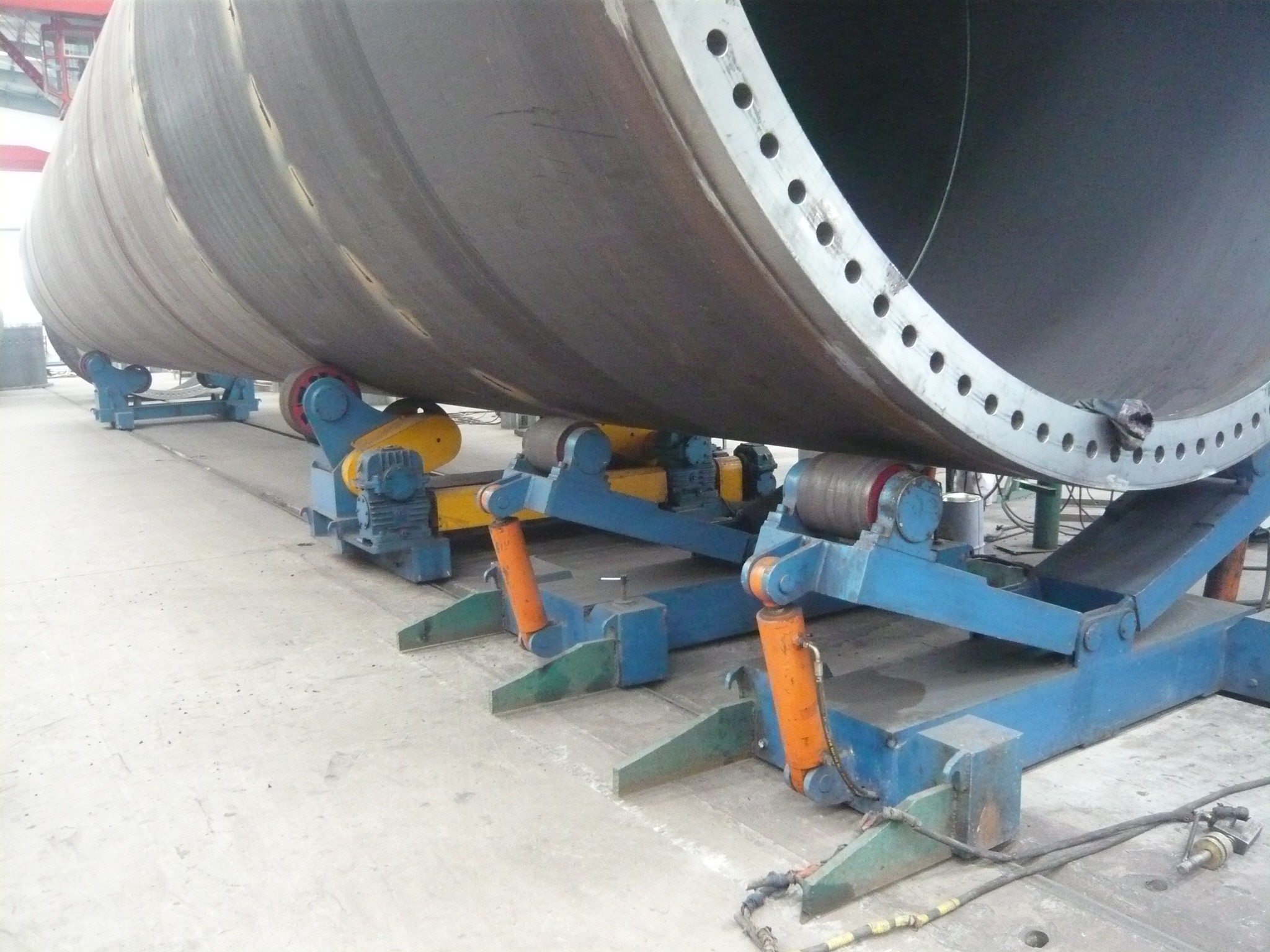
How to Choose Pipe Turning Rolls for Heavy Vessel Welding
Choosing the right Pipe turning rolls is critical for heavy vessel welding.
Load capacity, rotation stability, and fit-up accuracy all affect weld quality and workshop productivity.
A poor match can create slipping, uneven rotation, difficult seam tracking, and higher rework costs.
That is why selection should go beyond a simple tonnage comparison.
In practice, Pipe turning rolls must fit the vessel diameter, welding procedure, floor layout, and control expectations.
They also need enough adjustment range for current jobs and future product changes.
This guide breaks down the main factors that matter when evaluating Pipe turning rolls for heavy vessel welding.
Start with Load Capacity, But Do Not Stop There
The first screening item is rated load.
For heavy vessel welding, the rating must cover the real workpiece weight, not just the drawing estimate.
Include shell sections, fixtures, temporary attachments, and any imbalance during fit-up or tack welding.
A practical rule is to keep a safety margin above the maximum working load.
That margin becomes more important when the vessel wall is thick or the center of gravity shifts.
Questions to check early
- What is the maximum finished weight of the vessel?
- Will there be eccentric loading during assembly?
- Does the process involve long seam welding or circumferential welding?
- Will the same Pipe turning rolls serve multiple vessel families?
Load capacity alone does not guarantee stable rotation.
The support geometry must also match the vessel size and contact conditions.
Match the Roll Type to Vessel Diameter and Adjustment Needs
Heavy vessel shops often handle several diameters in the same production area.
That makes adjustment range a major selection factor for Pipe turning rolls.
If diameter changes are frequent, manual repositioning can become a hidden efficiency loss.
Lead screw designs are useful when repeatable center distance changes are required.
They allow controlled roller spacing and help maintain alignment during setup.
One example is the Lead screw welding rotator, often used for large-diameter pipes, pressure vessels, and cylindrical assemblies.
Its available models range from CHGK-2 to CHGK-60, covering different workshop load requirements.
For buyers comparing Pipe turning rolls, that kind of model spread can simplify future capacity planning.
Why adjustment range matters
- It reduces setup time between different vessel diameters.
- It improves repeatability for batch fabrication.
- It lowers the risk of poor wheel contact and slipping.
- It supports better fit-up before arc start.
When comparing specifications, check the roller center distance range against your smallest and largest vessel diameters.
This step is often overlooked, yet it directly affects whether Pipe turning rolls stay useful as orders change.
Focus on Rotation Stability and Speed Control
Heavy vessel welding demands smooth and predictable rotation.
Any speed fluctuation can affect bead consistency, torch positioning, and operator confidence.
For that reason, drive control deserves close attention during technical evaluation.
Stepless frequency conversion is widely preferred because it gives finer speed adjustment.
It also helps match rotation speed to root pass work, fill passes, and final surface requirements.
A typical reference range is 100 to 1000 mm/min.
That covers many vessel welding tasks without forcing compromise on positioning control.
Forward and reverse rotation are also important for seam access and correction during setup.
Remote hand control can further improve convenience near the work zone.
What stable control helps you avoid
- Weld seam wandering caused by uneven turning speed
- Surface marking from jerky starts or stops
- More frequent manual correction during long welds
- Reduced repeatability between operators or shifts
In short, the best Pipe turning rolls are not simply strong.
They also rotate heavy vessels with clean, controlled motion.
Choose Wheel Material Based on Contact, Traction, and Surface Risk
Wheel material has a direct effect on traction and workpiece protection.
This becomes especially important with heavy vessels, polished shells, or coated surfaces.
Rubber wheels generally provide better friction and gentler contact.
Metal wheels can be suitable where higher durability or specific load behavior is needed.
The right answer depends on weight, temperature exposure, and shell surface expectations.
For example, some configurations use rubber wheel diameters from 200 mm to 450 mm.
Matching metal wheel diameters may range from 190 mm to 440 mm.
Wheel width also matters because it changes contact pressure and stability.
A practical selection view
This is one area where low purchase price can create higher lifecycle cost.
Reliable Pipe turning rolls should protect both welding efficiency and the workpiece itself.
Review Layout, Power, and Operator Use in the Real Workshop
Selection should always reflect the actual production floor.
Even well-specified Pipe turning rolls can underperform if the layout is tight or workflow is awkward.
Check the active and passive frame dimensions against aisle width, crane access, and welding station spacing.
Motor power should also match the expected workload and duty cycle.
In some model ranges, drive power may span from 2 x 0.18 kW up to 2 x 2.2 kW.
That difference matters when vessels are long, heavy, or frequently repositioned.
Do a workshop fit check
- Map the largest vessel length and turning path.
- Verify crane clearance during loading and unloading.
- Check cable routing and control box access.
- Confirm the operator can see the seam while adjusting speed.
- Review maintenance access around the drive side.
These details sound basic, but they often decide whether equipment is used efficiently every day.
Compare Supplier Capability, Compliance, and Long-Term Support
The equipment itself is only part of the decision.
Supplier capability affects delivery quality, documentation, spare parts, and after-sales response.
For export-oriented manufacturing, certification and process control are especially important.
Wuxi Samgins International Trade Co.,Ltd supplies mechanical equipment for fabrication and metalworking applications.
Its product portfolio includes automatic welding equipment, CNC cutting machines, welding robots, laser cutting machines, rolling machines, and other workshop systems.
The company states that production and design follow ISO9001 quality system requirements and EU CE standards.
That matters when evaluating Pipe turning rolls for projects with tighter compliance expectations.
Supplier review points
- Can the supplier explain model selection with real application logic?
- Are CE-related documents available where required?
- Is spare part support clear for motors, wheels, and controls?
- Can the supplier support future matching with welding automation?
A strong supplier reduces selection risk long after the purchase order is issued.
A Simple Decision Framework for Pipe Turning Rolls
When several options look similar, a structured comparison helps.
Use a checklist that reflects actual welding conditions rather than brochure claims.
- Confirm maximum load with safety margin.
- Match vessel diameter range to roller center adjustment.
- Review speed control smoothness and operating range.
- Select wheel material for traction and surface protection.
- Check frame dimensions, power, and workshop fit.
- Verify compliance documents and support capability.
If your workload includes frequent diameter changes, repeat jobs, and long cylindrical weldments, the Lead screw welding rotator category deserves attention.
Its combination of adjustable support, controlled rotation, and model flexibility aligns well with many heavy fabrication environments.
The best Pipe turning rolls are the ones that keep welding stable, setup predictable, and future expansion realistic.
A careful evaluation now will usually save more time and cost than any short-term purchase discount later.
search
Products Navigation
Send Us A Message