




Space Frame Assembly Machine: Key Factors for Stable Output
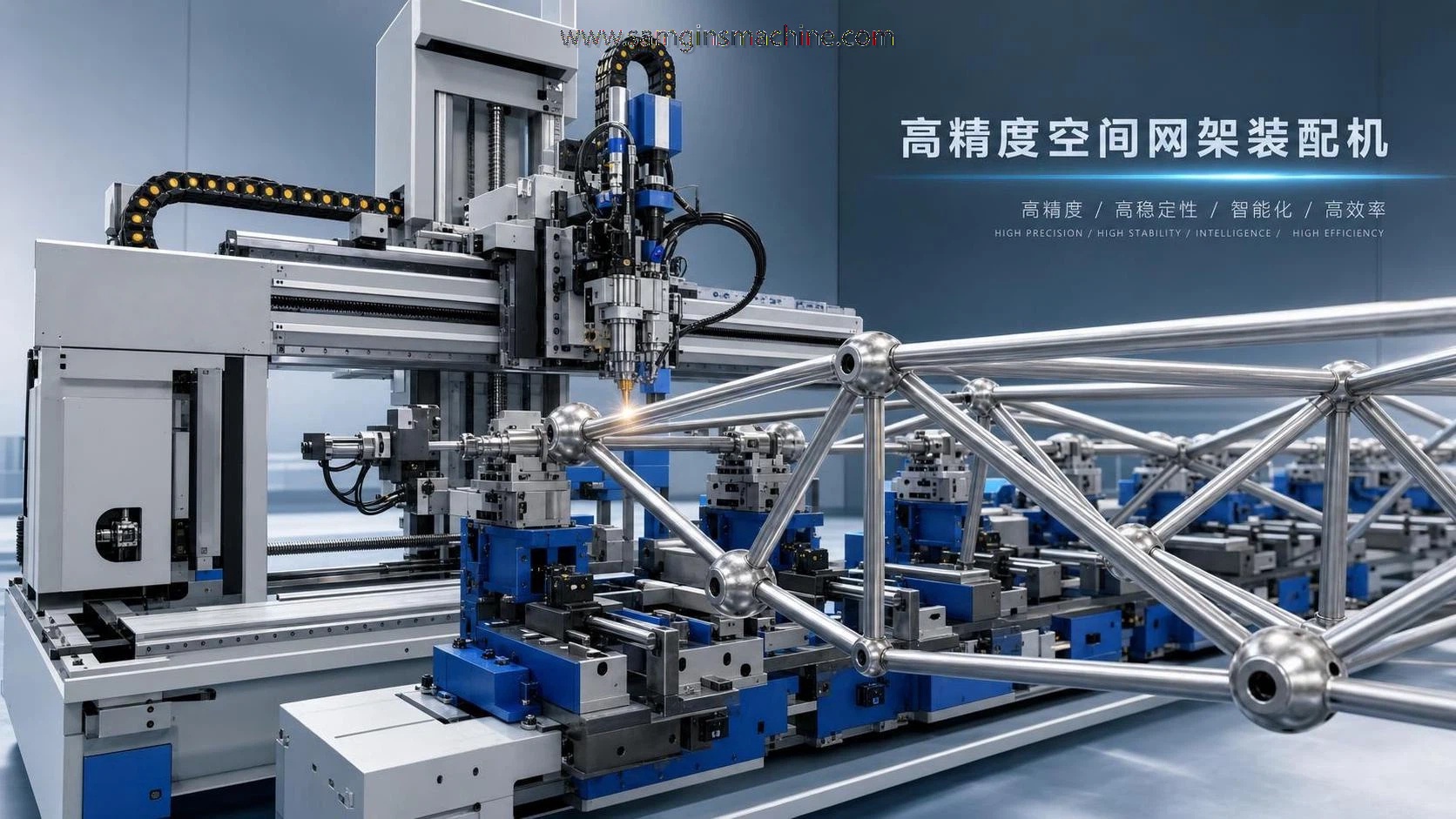
Space Frame Assembly Machine: Key Factors for Stable Output
For project managers and engineering leaders, choosing a reliable Space frame assembly machine is essential to maintaining stable output, consistent quality, and on-schedule delivery.
From structural precision and automation level to equipment durability and compliance standards, the right machine directly shapes production efficiency and project results.
A poor selection creates hidden delays, rework, and unstable welding quality. A well-matched system supports repeatability, smoother workflow, and better cost control.
This article breaks down the main factors that matter when evaluating a Space frame assembly machine for technical and standard-driven manufacturing environments.
Why Stable Output Matters in Space Frame Production
Stable output is not just about speed. It is about producing the same quality result across every shift, batch, and project phase.
In space frame fabrication, minor alignment errors can expand quickly. Small deviations in angle, joint position, or weld path often create major fit-up problems later.
This is why a Space frame assembly machine must deliver more than basic motion. It must support dimensional control, welding consistency, and predictable throughput.
When output remains stable, scheduling becomes more realistic. Procurement, labor planning, quality inspection, and site delivery all become easier to manage.
Structural Accuracy Comes First
The first evaluation point is mechanical accuracy. A Space frame assembly machine must hold alignment under continuous production pressure.
Look closely at frame rigidity, guide rail stability, positioning repeatability, and clamping precision. These features affect both assembly quality and downstream welding behavior.
Stable fixtures reduce movement during tack welding. Accurate locating devices also shorten adjustment time between different workpiece sizes.
A reliable machine should support:
- repeatable joint positioning
- minimal deformation during assembly
- smooth transfer between stations
- fast setup for different frame layouts
- consistent fit-up before final welding
If structural precision is weak, no software upgrade will fully fix the process. Mechanical stability remains the foundation of stable output.
Automation Level Should Match Real Production Needs
Higher automation does not always mean better results. The right Space frame assembly machine should fit the production mix, labor structure, and project volume.
For repetitive frame sizes, a higher level of automation often improves pace and reduces operator dependency. For mixed orders, flexibility matters just as much.
In practical terms, evaluate how the system handles loading, clamping, indexing, welding coordination, and parameter switching.
A useful benchmark is whether the machine reduces manual correction steps. If operators still need frequent intervention, the automation value is limited.
Better systems also provide a clear control interface. Operators should quickly view process status, alarms, and production parameters without wasting time.
Welding Integration Drives Consistency
For many applications, the real value of a Space frame assembly machine appears in how well it works with the welding process.
That includes torch positioning, seam tracking, travel speed control, and weld monitoring. Stable assembly without stable welding still leads to uneven quality.
This is where proven automation ideas from related equipment are useful. For example, some pipe welding systems show how monitoring and motion control improve repeatability.
A relevant example is the 12 meter Pipe inside and outside seam welding machine, designed for batch production of small diameter pipe.
Its adjustable VFD trolley movement, monitoring system, and screen-based operation reflect the same priorities needed in space frame assembly lines.
When a Space frame assembly machine offers similar process visibility, it becomes easier to control welding quality before defects grow into expensive rework.
Durability and Maintenance Affect Long-Term Output
Stable output depends on uptime. A machine that performs well during trials but breaks down under daily load creates serious project risk.
Check the quality of motors, reducers, control components, sensors, and hydraulic or pneumatic parts. Wear resistance matters in high-cycle manufacturing.
Maintenance access is also important. Technicians should be able to inspect, adjust, and replace key components without long shutdown periods.
Ask suppliers for realistic service intervals, spare parts availability, and remote support capability. These details strongly affect lifecycle cost.
A dependable Space frame assembly machine should remain stable over time, not only during acceptance testing.
Standard Compliance Is a Practical Requirement
In technical procurement, compliance should never be treated as a formality. It affects safety, documentation quality, and customer confidence.
A qualified Space frame assembly machine should align with applicable electrical, mechanical, and welding-related standards for the target market.
Suppliers that organize production under ISO9001 and design around CE expectations usually provide more disciplined quality control.
Wuxi Samgins International Trade Co.,Ltd follows ISO9001 quality system certification and EU CE standards across a broad range of metalworking equipment.
That matters because documentation, inspection routines, and design consistency often influence machine reliability as much as hardware selection.
Capacity Must Fit the Project Envelope
A common purchasing mistake is choosing a machine based only on maximum capability. Real efficiency comes from matching equipment to actual production demand.
Review your frame dimensions, material grades, joint complexity, and target daily output. Then compare them against cycle time and machine configuration.
This comparison should include loading time, alignment time, welding time, and inspection time. Nameplate speed alone rarely tells the full story.
The same sizing logic appears in pipe equipment. For instance, the second use of the 12 meter Pipe inside and outside seam welding machine is relevant here.
Its defined range covers pipes up to 12 m, diameters of 400-1500 mm, thickness from 6-20 mm, and welding speed of 0.4-1.2 m/min.
That level of specification clarity is exactly what buyers should expect when assessing any Space frame assembly machine for stable output.
What to Ask Before You Buy
A supplier presentation can look strong on paper. The better approach is to ask direct technical questions linked to production risk.
- What is the positioning repeatability under full production load?
- How does the machine handle different frame sizes and joint patterns?
- Which welding processes can be integrated?
- What alarms, sensors, and monitoring functions are included?
- How long does changeover take between product types?
- What spare parts are stocked, and where?
- What acceptance tests prove stable output?
The answers will quickly show whether a Space frame assembly machine is engineered for sustained industrial use or only for basic demonstration.
A Simple Evaluation Framework
To make comparisons easier, use a weighted evaluation method. This keeps decisions grounded in operational needs instead of supplier claims.
Using this structure helps keep the Space frame assembly machine selection process objective, faster, and easier to defend internally.
Final Takeaway
A Space frame assembly machine should be judged by its ability to deliver repeatable results under real production conditions.
Mechanical precision, suitable automation, welding coordination, serviceability, and standard compliance all contribute to stable output.
When these factors are verified early, projects face fewer delays, lower rework costs, and more predictable quality performance.
Before making a purchase, compare technical data, request real operating evidence, and review how the machine fits your actual workflow.
That approach leads to a Space frame assembly machine investment that supports long-term manufacturing stability, not just short-term output targets.
search
Products Navigation
Send Us A Message