




CNC vs Manual Shearing Machine for Export Steel Fabrication Projects
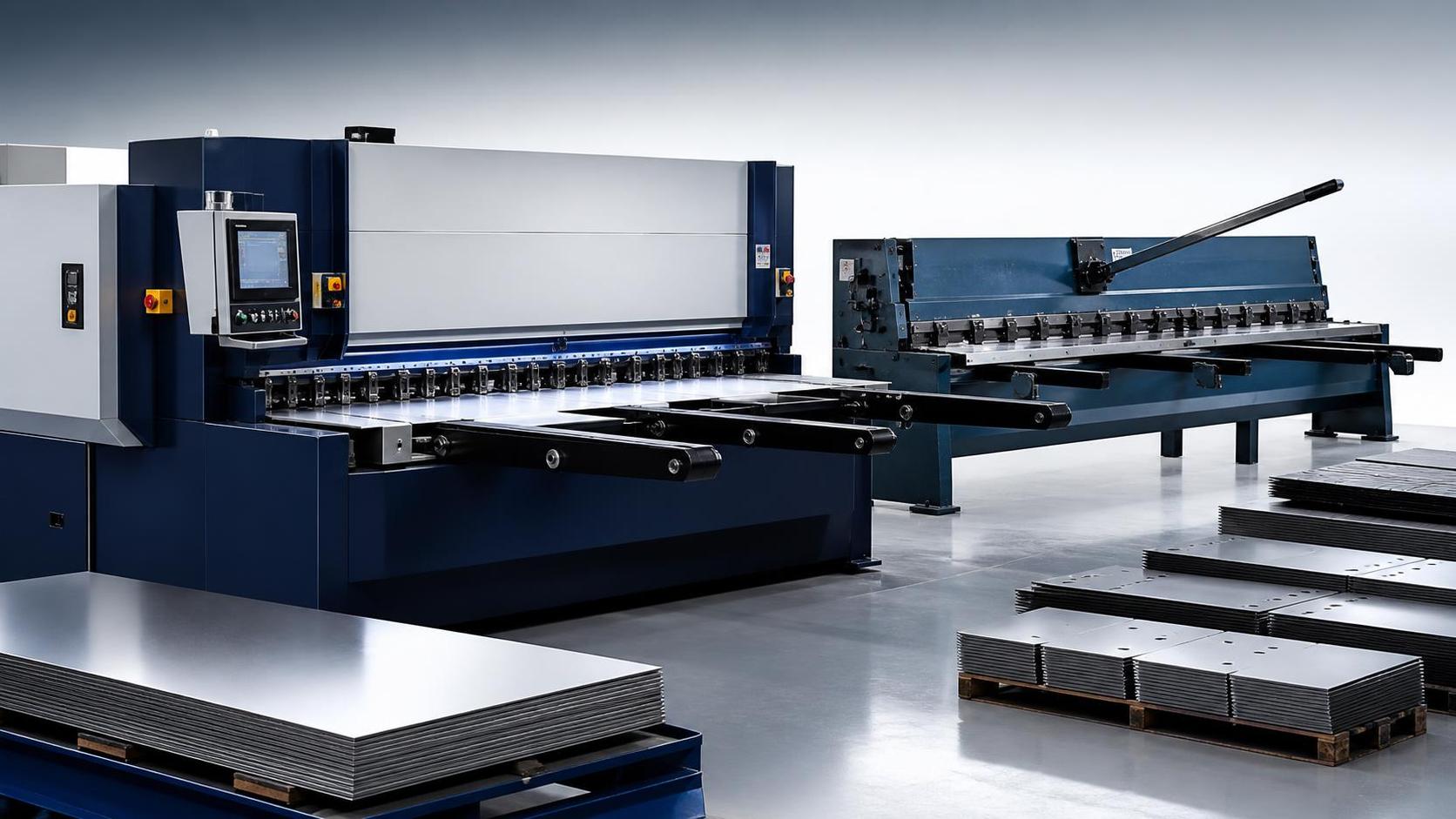
CNC vs Manual Shearing Machine for Export Steel Fabrication Projects
Choosing between a CNC vs manual shearing machine for export steel fabrication project requirements can directly affect production accuracy, labor efficiency, and delivery reliability. For global fabricators and equipment buyers, the decision is rarely just about cutting plate. It touches quoting accuracy, operator dependence, spare parts planning, compliance expectations, and the ability to keep repeat orders consistent across batches.
In export-oriented steel fabrication, shearing is often one step inside a larger workflow that may include leveling, bending, welding, edge milling, drilling, or robotic handling. A machine that looks acceptable on paper can become a bottleneck if its backgauge repeatability, blade life, or operator setup time does not match the production rhythm of the rest of the line. That is why the CNC vs manual shearing machine for export steel fabrication project question deserves a practical answer rather than a generic feature comparison.
The real difference is not only automation
A manual shearing machine is usually chosen for straightforward work: limited material variation, shorter batches, and less pressure on dimension repeatability. It can be a sensible option where operators are experienced, tolerances are not especially tight, and production schedules allow more hands-on adjustment.
A CNC shearing machine changes the discussion. The value is not just the control screen. It is the combination of programmable backgauge positioning, better repeatability for recurring part sizes, quicker changeover between jobs, and easier control over cutting consistency when different operators are involved. For export projects, where plate sizes often need to align with approved drawings and downstream assembly, that repeatability matters more than many first-time buyers expect.
Put simply, manual shearing depends more on operator judgment. CNC shearing depends more on machine setup and parameter control. Neither is automatically “better” in every plant.
Where manual shearing still makes sense
Manual equipment is sometimes dismissed too quickly, especially by buyers comparing brochures rather than workflows. In reality, it still fits certain export fabrication environments quite well.
If the project mix is simple, part dimensions are not constantly changing, and the workshop mainly cuts carbon steel sheets in moderate volumes, a manual shearing machine can remain economical. It is also easier to understand from a maintenance perspective. Fewer electronic control elements may mean fewer concerns about controller replacement, operator training depth, or diagnostics support in remote markets.
This is particularly relevant in regions where service engineers are not readily available, or where the buyer prefers robust, familiar systems over programmable ones. For some workshops, a manual machine is not a compromise. It is a deliberate choice to keep operation simple and capital cost controlled.
The limitation appears when order structures change. If a fabricator begins taking on more customized work, tighter tolerances, or repeated export orders with formal inspection records, the same manual setup may become harder to scale without adding labor and rework risk.
Why CNC shearing is often preferred for export projects
Export steel fabrication usually brings a different level of discipline. Parts may need to match nested cutting plans, container loading calculations, assembly sequences, or customer-issued material lists. In that context, CNC shearing offers advantages that go beyond production speed.
One advantage is repeatability across batches. If the same job is cut today and again two months later, stored programs and controlled backgauge movement reduce the chance of size drift. Another is setup efficiency. When multiple dimensions are required in the same shift, the time saved between jobs can be meaningful even if the total tonnage is not extremely high.
CNC machines also tend to support better process discipline. When quality teams want more predictable outputs, and production managers need less dependence on one highly experienced operator, programmable controls help standardize the result. That does not eliminate the need for skilled workers, but it changes where the skill is applied.
For buyers serving Europe, North America, Oceania, or regulated industrial sectors in Southeast Asia, machine selection is often reviewed together with documentation, electrical configuration, guarding, and conformity expectations. A supplier familiar with ISO9001-based production organization and EU CE-oriented design practice can usually support these discussions more effectively, especially when the shearing machine is only one part of a broader fabrication equipment package.
A practical comparison
The table is a starting point, not a final answer. Two companies with the same plate thickness range can reach different conclusions if one runs stable batches and the other quotes custom jobs every week.
What export buyers often overlook
The machine itself gets most of the attention, but export project performance usually depends on a wider checklist.
Backgauge range is one example. Buyers may focus on maximum cutting thickness but forget to confirm whether the gauge travel suits their actual part lengths and production style. Blade material and adjustment method are another. A machine can appear competitively priced while creating unnecessary downtime if blade maintenance is awkward or replacement support is unclear.
Electrical standards also matter. Export destinations may require specific voltage arrangements, safety components, manuals, or marking conventions. In some markets, the question is not only whether a CE-marked configuration is available, but whether the supplied documentation and guarding concept align with the buyer’s internal compliance review. That should be settled before production, not after the machine reaches port.
Shipping and installation deserve the same attention. Large shearing machines are not difficult to export in principle, but buyers should still confirm packing method, rust prevention, lifting points, foundation expectations, and whether commissioning support will be remote or on-site. Those details influence real ownership cost more than brochure comparisons do.
How to choose based on project type
If the project is driven by price-sensitive structural steel work, with predictable dimensions and moderate daily output, a manual shearing machine may be entirely adequate. The key is to verify that operator skill, quality checks, and downstream tolerances are all compatible with that choice.
If the project involves repeat export contracts, frequent size changes, or closer integration with CNC bending, automated cutting, or welding stations, CNC shearing usually becomes easier to justify. Not because it is more advanced in theory, but because it reduces workflow friction.
For buyers building or upgrading a broader metal fabrication line, the shearing decision should not be isolated from the rest of the equipment plan. Companies such as Wuxi Samgins International Trade Co., Ltd., based in Wuxi near Shanghai and active in mechanical equipment supply since 2012, tend to see this from a system perspective because shearing machines are only one category within a larger portfolio that includes CNC cutting machines, bending machines, plate rolling machines, leveling machines, welding equipment, robotic systems, and H-beam production line equipment. That kind of cross-process view is useful when the buyer needs compatibility rather than a standalone machine discussion.
It also helps when equipment is being prepared for diverse markets. Suppliers with export experience to Southeast Asia, Europe, North and South America, and Oceania are generally more aware that machine selection is tied to documentation, standards expectations, and after-sales practicality, not just the main technical specification sheet.
Questions worth settling before placing an order
A serious comparison becomes easier when the buyer can answer a few specific points:
- What materials and thickness range will actually be cut most often, not just occasionally?
- How many part-size changes happen in a normal shift?
- How much dimensional repeatability is needed for downstream bending, welding, or assembly?
- Will the machine operate in a workshop with strong maintenance capability, or in a location where simplicity is safer?
- Are there destination-specific electrical, guarding, or documentation requirements?
- Is this a standalone purchase, or part of a future automated fabrication line?
These questions often reveal the answer faster than a long comparison of optional features.
The better choice is the one that fits the workflow
The CNC vs manual shearing machine for export steel fabrication project decision is really a decision about process control. Manual shearing remains viable where production is straightforward and the workshop values lower complexity. CNC shearing becomes more attractive when consistency, quicker setup, and export-grade repeatability start to shape profitability.
For most buyers, the safest approach is to compare not just cutting capacity, but also job mix, operator availability, compliance expectations, and how the shearing step connects with the rest of the line. If those points are clear, the machine choice usually becomes much less confusing. If they are still uncertain, it is worth reviewing drawings, material lists, target markets, and required standards before locking in the specification.
search
Products Navigation
Send Us A Message