




Servo Plate Drilling Machine ROI: Can Automation Lower Labor and Scrap Costs?
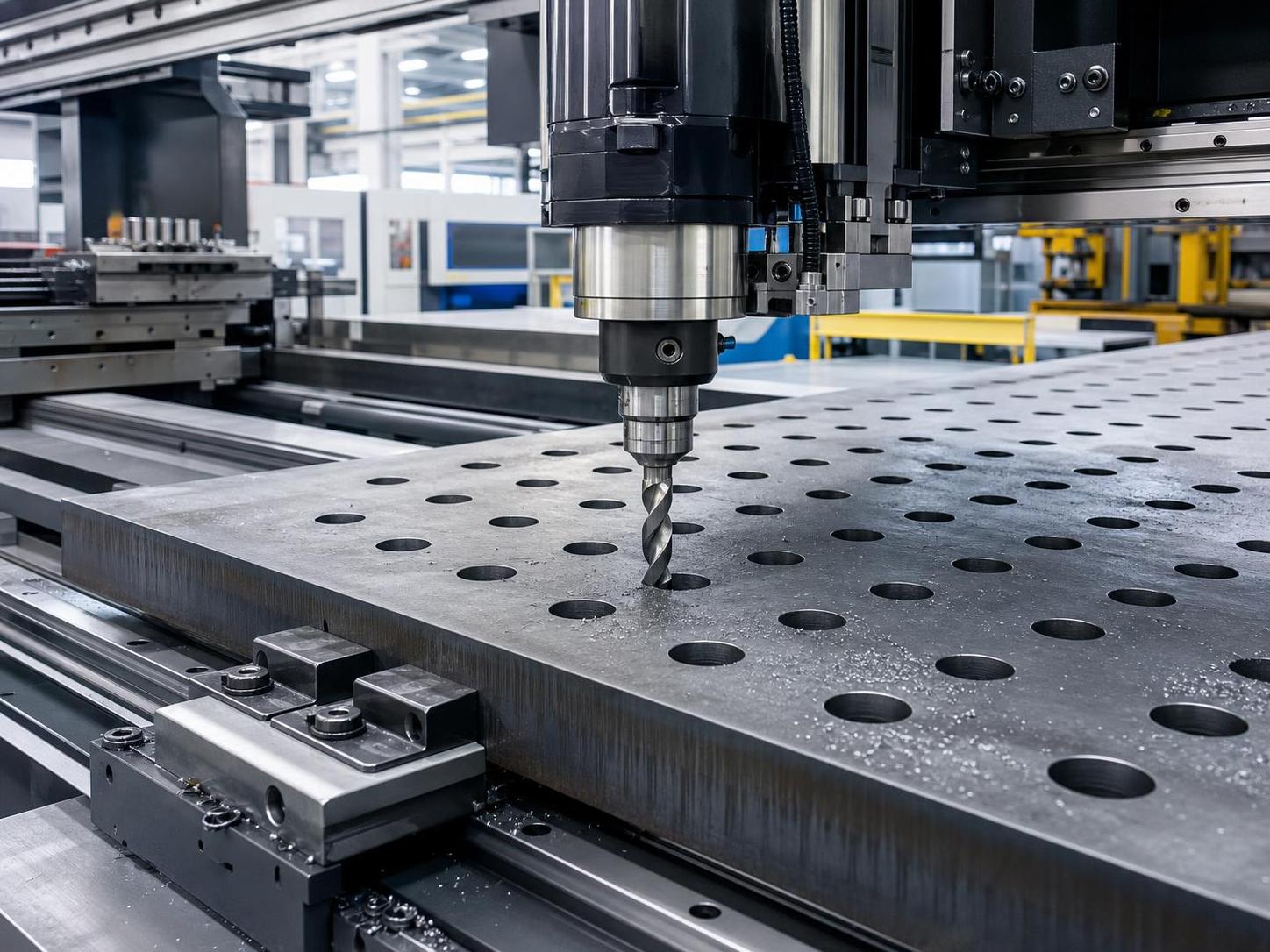
For finance decision-makers, a servo plate drilling machine is usually justified when drilling volume is high, labor costs are rising, scrap from hole-position errors is meaningful, or downstream assembly delays are expensive. In most metal fabrication environments, the strongest ROI does not come from speed alone. It comes from a combination of lower direct labor, fewer rejected parts, more predictable throughput, and better use of material and machine capacity.
That is the real answer behind the search for servo plate drilling machine ROI. Financial buyers are not looking for automation in the abstract. They want to know whether replacing manual or semi-manual drilling can reduce total cost per finished part, how quickly the investment can pay back, and what operating conditions make the purchase financially sound.
What Finance Decision-Makers Are Really Evaluating
When a buyer with budget authority reviews a drilling automation project, the key question is simple: will this machine improve margins in a measurable and reliable way? Capital equipment is rarely approved because it is technically advanced. It is approved because it improves cash flow, capacity, or cost structure.
A servo plate drilling machine matters financially because drilling affects more than one cost line. It influences operator hours, rework, consumables, scrap, setup consistency, delivery reliability, and in some shops, even customer claims. If the equipment can reduce variation while raising usable output, the economic case becomes much stronger.
This is especially relevant in structural steel, plate processing, heavy fabrication, and multi-step production lines where hole accuracy directly affects fit-up, welding efficiency, and final assembly. In these environments, a small drilling error often creates a larger downstream cost than the original operation itself.
How a Servo Plate Drilling Machine Lowers Labor Cost
The most visible return usually comes from labor reduction. Manual drilling or older positioning methods often require repeated measuring, marking, clamping checks, hole verification, and operator intervention. A servo-controlled system reduces those manual touches by automating positioning and maintaining repeatable movement.
That does not always mean headcount is removed immediately. In many factories, the more practical benefit is labor reallocation. One operator may supervise a process that previously demanded multiple workers or more constant attention. Finance teams should count both outcomes: direct labor savings and the value of redeploying skilled employees to higher-value work.
Another cost advantage is shorter setup time. If part programs are reused frequently, the machine reduces dependence on operator judgment for each batch. Less setup variability means more stable cycle times, easier scheduling, and fewer hidden labor hours that tend to disappear into overhead accounts.
Training costs may also fall over time. Shops relying heavily on manual layout and experienced operators often face a skills bottleneck. A servo plate drilling machine can standardize the process so output quality depends less on individual craftsmanship. For finance leaders, that reduces labor risk as well as labor cost.
Can Automation Really Reduce Scrap and Rework?
Yes, and this is often the most underestimated source of ROI. Scrap is not limited to plates thrown away entirely. It also includes misdrilled holes, oversized tolerance deviations, mismatched bolt patterns, and the extra welding, plugging, recutting, or secondary machining needed to correct errors.
Servo-driven motion improves positional accuracy and repeatability, which helps prevent those losses. When hole locations remain consistent from part to part, downstream fit-up improves. Assemblers spend less time forcing alignment, and fewer parts are delayed because one feature was drilled incorrectly at an earlier stage.
Finance teams should also consider material value. If the plant processes thicker or larger plates, one drilling error can destroy a high-cost workpiece or tie up expensive rework capacity. The savings from even a modest scrap reduction can materially affect return on investment, especially when raw material prices are unstable.
Better process control can also improve customer-facing quality metrics. Fewer nonconforming parts mean fewer urgent remakes, fewer delivery penalties, and less reputational damage. These impacts are harder to model than labor savings, but they are often significant in contract manufacturing and export-oriented operations.
Where the ROI Usually Comes From in Practice
A realistic servo plate drilling machine ROI model should include four categories: labor savings, scrap and rework reduction, throughput gains, and indirect operating benefits. Many buyers make the mistake of focusing only on labor. In actual production, the financial return is usually a blended result.
Labor savings are straightforward: compare operator hours per shift before and after automation, including setup and inspection time. Scrap savings require a review of rejected parts, repaired parts, hole-alignment failures, and associated material and labor loss over several months.
Throughput gains should be valued carefully. More output has financial value only if the business can sell, ship, or profitably absorb the extra capacity. For some manufacturers, the real benefit is not higher volume but more dependable lead times and a reduced need for overtime or subcontracting.
Indirect benefits include better schedule adherence, lower WIP congestion, easier cost forecasting, and lower dependence on highly specialized operators. These items are often omitted from approval memos, yet they matter in facilities where production stability affects multiple departments.
How to Calculate Payback More Accurately
For financial approval, a simple payback model is usually the best starting point. Begin with the total investment: machine price, freight, installation, training, tooling, foundation work if required, and any software integration costs. Then estimate annual measurable savings conservatively.
Use current shop-floor data rather than vendor averages where possible. Count actual loaded labor rates, not only base wages. Include the true cost of scrap, including material, handling, rework, and schedule disruption. If drilling delays create bottlenecks for welding or assembly, assign a reasonable operational value to that improvement too.
A useful formula is: annual net benefit equals labor savings plus scrap reduction plus avoided outsourcing plus overtime reduction plus incremental gross profit from added usable capacity, minus added maintenance, consumables, and financing cost. Payback period is total investment divided by annual net benefit.
Finance teams should also run best-case, expected-case, and conservative-case scenarios. If the purchase only works in an optimistic model, it is not a strong investment. A good automation project still makes sense under realistic utilization assumptions and normal production variability.
Questions That Prevent Overstated ROI Assumptions
Before approving a servo plate drilling machine, finance buyers should challenge a few common assumptions. First, will the machine actually run at the forecast utilization rate? A high-performance asset with low scheduling discipline or inconsistent order flow may underdeliver financially.
Second, is drilling truly the bottleneck, or will another downstream step absorb the time savings? If cutting, welding, blasting, or assembly remains constrained, the plant may gain less financial value than expected. Equipment ROI should be evaluated across the process, not in isolation.
Third, what is the part mix? Shops with repeatable plate families, medium-to-high volume, and meaningful tolerance requirements typically capture ROI faster. Extremely low-volume custom work can still benefit, but the savings profile may rely more on accuracy and labor flexibility than on raw throughput.
Fourth, what support is available after installation? Maintenance response, spare parts access, programming support, and operator onboarding affect realized ROI. A machine that performs well on paper but suffers long downtime can erode the business case quickly.
Why Accuracy Has Financial Value Beyond Drilling
Finance reviewers sometimes treat accuracy as a technical feature rather than an economic variable. That is a mistake. In fabrication, hole location accuracy can influence fit-up time, fixture use, bolt installation, weld distortion management, and overall assembly speed.
When upstream operations become more precise, downstream labor becomes more predictable. That improves quoting accuracy, lowers buffer time in schedules, and reduces the need for corrective action. The result is not just better production quality, but a more controllable cost base.
This logic also applies to connected equipment in a modern plate-processing environment. For example, many manufacturers combine drilling efficiency with precise cutting systems to reduce total fabrication waste. In some operations, pairing drilling automation with an Cnc flame cutting machine helps standardize upstream plate preparation and support more stable part flow.
That kind of process-level view is important for capital planning. A single machine rarely creates maximum value by itself. ROI improves when related operations are aligned around repeatability, program control, and reduced manual intervention.
When a Servo Plate Drilling Machine Makes the Most Financial Sense
The strongest fit usually appears in manufacturers processing structural plates, connection plates, base plates, gusset plates, flanges, and similar components where drilling is frequent and dimensional consistency matters. Repetitive job patterns and moderate to high throughput make the economics clearer.
It also makes sense where labor markets are tight. If skilled operators are difficult to recruit or retain, automation protects production capacity and reduces the financial exposure of staffing shortages. This is particularly relevant for exporters and project-based fabricators with contractual delivery obligations.
Another strong use case is high scrap sensitivity. If parts are large, thick, or material-intensive, every mistake is costly. In that environment, even moderate improvements in accuracy and repeatability can justify the investment faster than many buyers expect.
Finally, a servo plate drilling machine is often attractive when management wants to formalize process control. Standardized automation supports better reporting, more consistent quality records, and stronger confidence in scaling production without proportionally increasing labor.
What to Ask Suppliers Before Making the Investment
Financial buyers should request more than a machine brochure. Ask for cycle-time estimates based on your actual plate sizes, hole patterns, and material mix. Request evidence of repeatability, maintenance intervals, spare part lead times, and the typical ramp-up period needed to reach stable production.
It is also reasonable to ask how the equipment fits into a broader fabrication line. Some suppliers with wide metal-processing portfolios can help buyers compare where drilling automation sits relative to cutting, welding, deburring, or plate preparation investments. That wider view often improves capital allocation.
Wuxi Samgins International Trade Co.,Ltd, for example, supplies a broad range of fabrication equipment including welding systems, CNC cutting machines, milling machines, lathes, laser equipment, H-beam production line equipment, deburring solutions, and plate-processing machinery. For buyers, that breadth can be useful when evaluating whether drilling automation should stand alone or support a larger productivity upgrade.
When discussing alternatives, it may also be worth reviewing adjacent cutting capacity such as a Cnc flame cutting machine, especially for carbon steel and low-carbon steel applications where process flow, thickness range, and equipment economics influence total plant efficiency rather than a single station alone.
Final Verdict: Can Automation Lower Labor and Scrap Costs?
In most qualified fabrication environments, yes. A servo plate drilling machine can lower labor and scrap costs in a measurable way, but the best ROI cases come from disciplined analysis, not general assumptions. Finance decision-makers should evaluate total production impact, not just machine speed.
If the plant has recurring drilling demand, meaningful rework or alignment loss, rising labor pressure, or a need for more predictable output, the investment is often financially justified. The return becomes even stronger when the machine supports downstream fit-up quality and reduces overtime, subcontracting, or missed deliveries.
The right conclusion is not that every shop needs drilling automation immediately. It is that a servo plate drilling machine should be judged as a cost-control and margin-protection asset. When matched to the right workload and implemented with realistic assumptions, it can deliver a clear and defensible return on investment.
search
Products Navigation
Send Us A Message