




Beam Plate Drilling Machine Trends: What Fabricators Need for Faster Mixed-Part Production
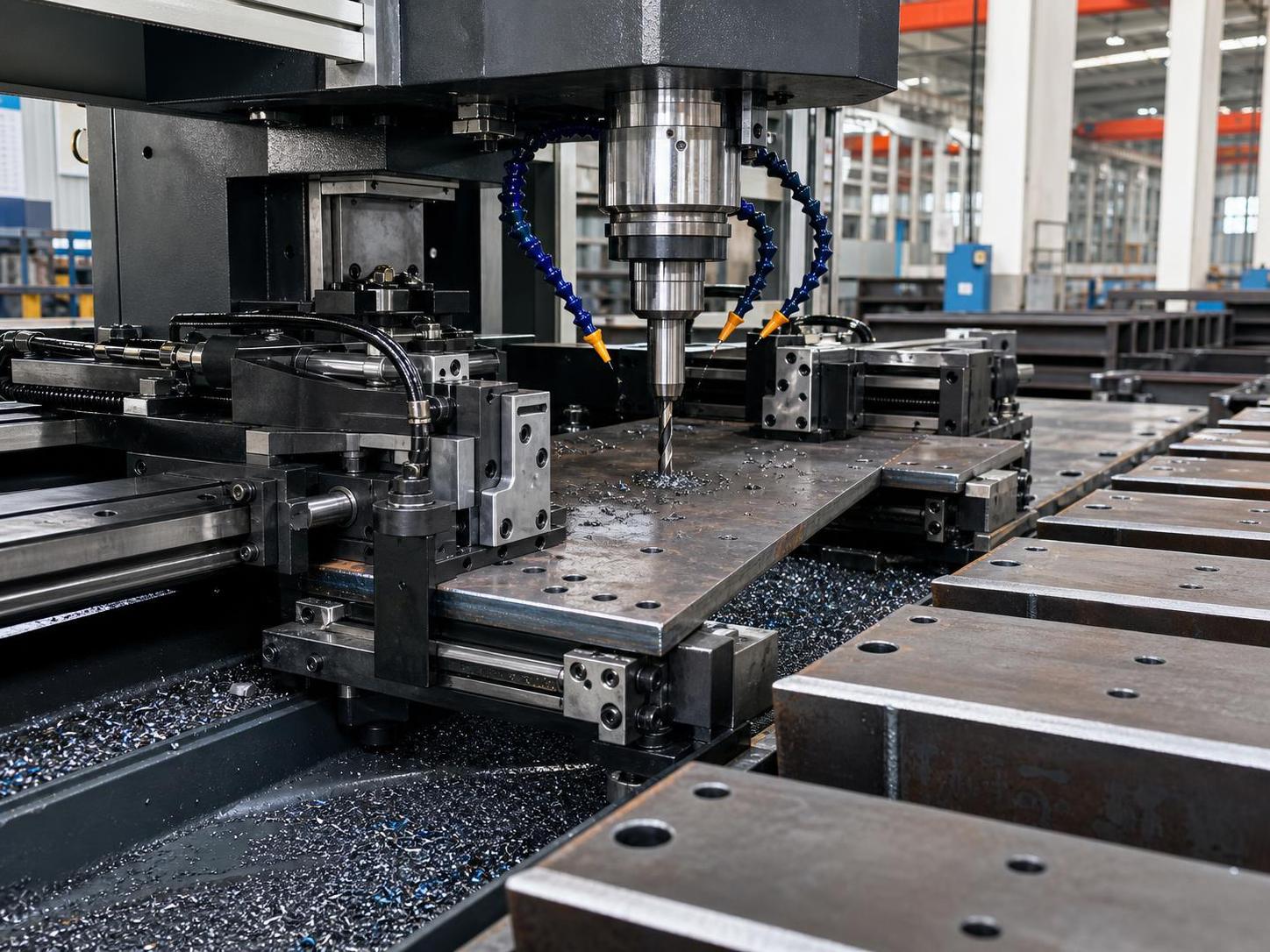
Mixed-part throughput is redefining machine expectations
Market demand around the beam plate drilling machine is moving toward flexibility before raw speed. Fabrication shops that once ran long batches of similar beam and plate components now often switch between different hole patterns, plate sizes, flange details, and downstream welding preparations within the same shift. That changes the value of a drilling machine. A high spindle speed specification alone is no longer enough if the machine loses time on positioning, tool changes, datum reset, or part identification.
In practical terms, the strongest trend is the push toward shorter setup cycles between unlike parts. Machines used for beam web plates, connection plates, stiffeners, end plates, and similar structural components are increasingly expected to read CNC programs quickly, align workpieces with less manual intervention, and maintain hole position accuracy even when part dimensions vary from one job to the next. The market is responding with more automatic referencing, servo-driven positioning, and software that handles mixed nesting logic with fewer operator inputs.
Another visible shift is that fabricators are judging drilling equipment by line balance rather than by standalone drilling capacity. A beam plate drilling machine may sit between cutting, marking, beveling, fit-up, and welding operations. If the drilling section runs faster than the cutting section but creates queues because parts need manual sorting or secondary edge preparation, overall production does not become faster. Equipment selection is therefore becoming more process-sensitive, especially where structural steel, heavy equipment, boiler, shipbuilding, or pressure-component work involves both holes and weld-ready edges on the same part family.
Automation is being judged by recovery time, not by brochure language
Automation remains a clear market direction, but the useful question is where it actually removes delay. For mixed-part production, the most valuable automation often appears in clamping, material detection, zero-point location, and automatic feed management. These functions reduce the time lost between parts and lower the chance of misalignment on plates with different thicknesses or inconsistent incoming surfaces.
Machines that can automatically detect workpiece edges or reference points are gaining attention because mixed production rarely arrives in ideal condition. Mill scale, slight plate distortion, burrs from previous cutting, and variable plate width can all affect hole placement if the machine depends too heavily on manual positioning. When a beam plate drilling machine includes more reliable sensing and stable fixturing, the benefit is usually seen in fewer interrupted cycles and less rework on mating assemblies.
There is also growing scrutiny around how quickly a machine recovers after a tool break, a clamp alarm, or an operator correction. In real workshops, interruption handling matters almost as much as the normal cycle. Systems that let the operator restart from a known line of code, preserve coordinate integrity, and confirm spindle status without a long reset process tend to fit mixed-part environments better than machines optimized mainly for uninterrupted batch output.
Hole quality is being evaluated against downstream assembly fit
The market conversation around precision is becoming more practical. Fabricators are not only asking for nominal positioning accuracy; they are asking whether the hole pattern will match beams, gussets, splice plates, and mounting interfaces without hand correction during assembly. That is a different standard. It links drilling quality to stack-up tolerance across the whole part route.
For carbon steel, stainless steel, and aluminum plate, consistent feed control and spindle rigidity remain essential, but the current trend is to look more closely at how machines perform across changing thickness ranges. A shop processing thin connection plates in one order and much thicker structural members in the next needs stable drilling behavior without constant parameter rewriting. Machines that support broad thickness capability, sensible tool library management, and dependable chip evacuation have an advantage because mixed-part production often exposes weak spots in rigidity and heat control.
One common misjudgment in equipment selection is focusing on maximum drilling diameter while ignoring surface condition and burr control. If exit burrs require frequent secondary deburring, the apparent drilling speed advantage may disappear. The same applies when spindle power looks adequate on paper but chip evacuation becomes inconsistent on thicker plates or near closely spaced hole groups. In market terms, this is why end users increasingly ask for performance details tied to actual materials and part geometry rather than generic capacity statements.
Compatibility with adjacent processes is becoming a buying filter
A beam plate drilling machine is rarely evaluated in isolation now. Fabricators dealing with welded steel structures often need the drilled part to move directly into beveling, edge milling, or assembly. That is pushing demand toward equipment that shares data formats cleanly with upstream CNC cutting and downstream weld preparation processes.
Where parts need both drilled holes and prepared welding edges, a related equipment trend can be seen in beveling and milling systems such as Non-standard Edge Milling Machine Without Pressure Beam. In applications involving carbon steel, stainless steel, or aluminum plates, edge preparation equipment with effective milling lengths from 4000 mm up to 18000 mm, plate thickness handling around 8-100 mm, and bevel ranges from 0° to 90° may fit into the same production stream as plate drilling. That matters because mixed-part production often rewards process continuity more than isolated machine output.
When line compatibility is poor, the losses show up in small but repeated delays: operators re-enter dimensions, parts are reoriented manually, edge preparation waits because pallets do not match transfer height, or hole coordinates and bevel datums are not aligned. None of these issues looks dramatic in a catalog review, yet together they can consume more time than the drilling cycle itself.
Machine structure is under closer inspection
Buyers in this segment are paying more attention to base frame stiffness, rail arrangement, spindle head stability, and clamping consistency. Mixed-part production tends to expose vibration and positioning weakness because the machine does not spend all day under one stable workload. It may drill narrow plates, wider flanges, heavier components, and parts with asymmetrical hole groups in rapid succession.
That is why structural details that once seemed secondary now influence market preference. Welded frames with stress-relief treatment, more stable guide arrangements, and feed systems with controlled acceleration can matter more than headline travel speed. In nearby edge-processing equipment, for example, designs using a welded main frame with high-temperature annealing and a rail arrangement intended to reduce vibration are valued because they support finish stability over long workpieces. The same logic increasingly shapes expectations for drilling machines handling varied structural parts.
Another trend is a greater tolerance for non-standard configuration when part mix is complex. Shops producing uncommon plate geometries or oversized members may prefer machine builders that can adapt clamping zones, support tables, workpiece transfer height, or software logic. This does not mean every operation needs a custom machine, but the market is clearly less interested in rigid standard packages that fit only one ideal workflow.
Software usability now affects output as much as spindle hardware
For mixed-part manufacturing, software friction can erase mechanical advantages. Operators need programming interfaces that make hole group edits, mirrored parts, datum changes, and batch import straightforward. If a beam plate drilling machine requires too many manual steps to convert design files into machine-ready tasks, throughput falls even when the drilling head itself is capable.
There is also a noticeable shift toward stronger traceability inside the control layer. Fabricators want clearer visibility into which program version ran, where a stop occurred, which tool was used, and whether offsets were modified. In low-volume, high-mix environments, these details help when the same part family returns later with only slight revisions. Good traceability reduces uncertainty during repeat orders and lowers the risk of running an outdated hole pattern.
Remote diagnostics are also drawing attention, though their value depends on implementation. The useful version is not a vague connectivity feature; it is the ability to identify alarm history, servo faults, spindle load anomalies, or I/O issues without spending excessive time tracing them on site. Where installation locations are geographically dispersed, easier diagnostics can shorten downtime, provided the electrical architecture and controller support are solid.
Transport, installation, and utility conditions are part of the market discussion
Larger fabrication equipment is now being compared more carefully on delivery practicality. Transport split, foundation demand, site access, and installation time matter because many plants are adding machines into operating workshops rather than building around a new line. A machine with excellent drilling performance may still be difficult to place if table length, unloading clearance, or maintenance access does not fit the available bay.
Power supply and environmental range are also receiving more attention, especially in regions where utility stability and workshop temperature vary. It is sensible to confirm not only nominal power requirements but also tolerance range, compressed air demand where applicable, lubrication points, coolant handling, and chip removal layout. Similar concerns appear in related milling equipment, where standard industrial power such as three-phase 380VAC, environmental conditions around -10°C to 45°C, and noise limits below 85 dB(A) are often part of machine acceptance. These details matter because mixed-part schedules leave little room for stoppages caused by utility mismatch or poor housekeeping around chips and coolant.
Maintenance expectations are moving toward predictability
Maintenance in this market is less about extreme service intervals and more about controlled upkeep. A beam plate drilling machine used on changing materials and part sizes sees varied spindle loads, clamp wear patterns, and sensor exposure. Predictable maintenance access therefore becomes more valuable than compact packaging that hides service points.
Users increasingly ask about spindle bearing access, lubrication route simplicity, chip conveyor cleaning, guide rail protection, and the replacement cycle for consumables such as drill bits, sleeves, seals, and filters. When these items are difficult to inspect, small condition problems can remain hidden until dimensional issues appear on finished parts. That is especially costly in mixed-part work, where troubleshooting is harder because the fault may only show up on certain geometries or thicknesses.
A related market preference is for standard or widely compatible tooling where possible. In edge preparation, machines that use standard milling cutters are often favored because supply and replacement are easier to manage. The same principle carries into drilling: tool systems with clear sourcing, stable clamping, and simple offset management are generally easier to support across varied jobs than proprietary arrangements that complicate inventory.
Procurement mistakes are getting more specific
The most frequent specification mistake is treating mixed-part production as if it were only a speed problem. In reality, bottlenecks often come from loading logic, datum consistency, software handling, or the need for secondary edge work. Another common mistake is to request maximum workpiece size without defining the true thickness distribution, hole density, material types, and proportion of one-off parts versus repeating parts. Without that context, machine comparisons can become misleading.
It is also easy to underestimate support equipment. Long plates and beam components may need better infeed support, outfeed collection, chip management, or plate positioning aids. If those details are weak, the drilling machine may spend too much time waiting for manual handling. In related edge-milling operations, support devices for long workpieces, adjustable pallet length, and stable feed systems with variable frequency control are often considered necessary rather than optional. The same thinking increasingly applies to drilling cells connected to real production flow.
Finally, many evaluations still overlook how drilled parts will be welded. If the process route includes bevel edges, U-grooves, or other weld preparation features, planning the drilling machine independently from the edge-preparation step can produce avoidable handling and datum problems. In those cases, pairing the drilling workflow with a machine such as Non-standard Edge Milling Machine Without Pressure Beam may be considered where long plates, bevel flexibility, and one-pass groove formation are relevant to the product mix.
The direction of the market is fairly clear: the preferred beam plate drilling machine is the one that stays accurate while part mix changes, connects cleanly with adjacent operations, and keeps setup losses under control. As fabrication schedules become more fragmented, the machines that hold their value are usually the ones designed for interruption, variation, and real workshop conditions rather than idealized batch production.
search
Products Navigation
Send Us A Message