




Pipe Bending Machine Factory vs Trading Company: Which Lowers Supply Risk?
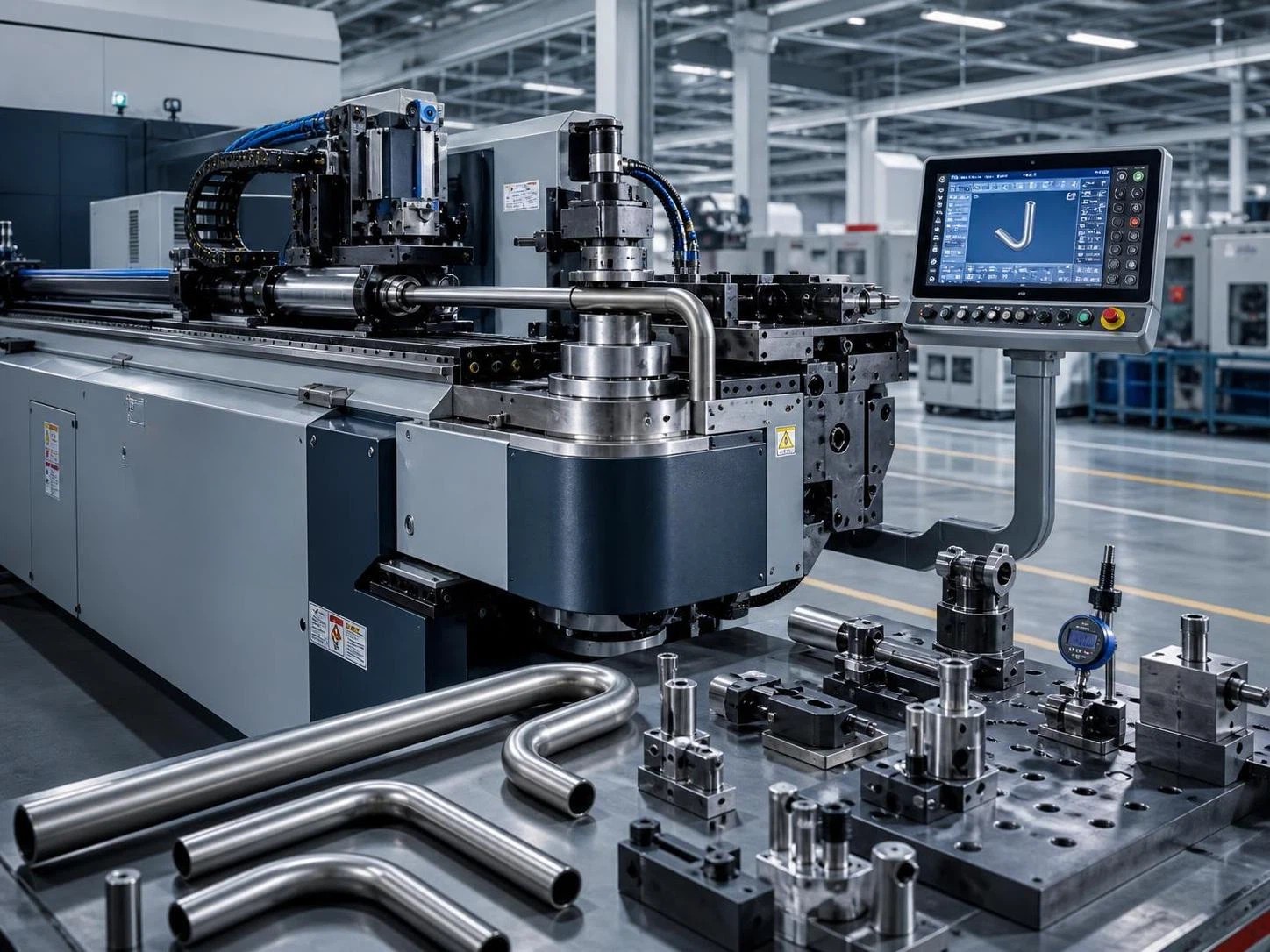
When sourcing tube and pipe equipment, choosing a reliable Pipe bending machine factory instead of a trading company can significantly reduce supply risk for procurement teams. From production control and quality consistency to lead time visibility and after-sales support, the right supplier model affects every stage of your purchasing decision. This article compares both options to help buyers identify the safer, more cost-effective path.
What Procurement Teams Are Really Trying to Avoid
Buyers searching for a Pipe bending machine factory are usually not comparing supplier labels for theoretical reasons. They are trying to reduce late deliveries, unclear accountability, unstable quality, and expensive post-purchase surprises.
In most industrial procurement projects, unit price is only one part of the decision. Supply risk matters more because one delayed or underperforming machine can disrupt production schedules, labor planning, installation timing, and customer commitments.
That is why the real question is not simply whether a factory or trading company is better. The practical question is which supplier model gives procurement teams more control, transparency, and predictable outcomes.
Short Answer: A Factory Usually Lowers Supply Risk
For most buyers, working directly with a qualified Pipe bending machine factory lowers supply risk more effectively than buying through a trading company. The reason is straightforward: factories control production, while traders usually coordinate it.
When the manufacturer owns engineering, material planning, machining, assembly, inspection, and testing, buyers can verify capability at the source. This reduces the number of handoffs where miscommunication, quality drift, and schedule uncertainty often appear.
That said, not every factory is automatically safer. A weak factory with poor export support can create as many problems as a trader. Procurement teams should compare operating control, technical depth, documentation quality, and service capacity rather than titles alone.
How a Factory Reduces Risk at the Production Stage
The biggest advantage of a factory is direct production control. If design adjustments, voltage changes, tooling modifications, or compliance requirements come up, the factory can usually respond faster because it manages the build process internally.
For procurement teams, this means fewer delays caused by message relays between sales intermediaries and workshop staff. It also means better visibility into raw material selection, machining standards, component sourcing, and final acceptance procedures.
In pipe and metal fabrication equipment, this matters even more because machine performance depends on structural rigidity, motion accuracy, control integration, and consistency across every assembled component. These are not details a non-manufacturing seller can easily control.
If your project requires special capacities, custom dies, automation interfaces, or workflow matching, a factory is usually better positioned to assess feasibility early. That reduces the risk of approving a quotation that later proves unrealistic.
Quality Consistency Is Easier to Verify at the Source
Quality risk is one of the main reasons buyers prefer direct manufacturers. A factory can usually provide clearer inspection standards, testing records, process photos, and engineering explanations than a trading company that depends on third-party updates.
When procurement teams ask technical questions, direct answers matter. You may need to confirm machine tolerance, bending repeatability, material compatibility, controller brand, electrical configuration, or spare parts standards before issuing a purchase order.
With a true factory, these answers typically come from engineers or production managers. That shortens clarification cycles and lowers the risk of buying equipment based on incomplete or inaccurate commercial descriptions.
It also improves pre-shipment confidence. Buyers can request factory acceptance tests, witness inspection, videos of live operation, and final packing confirmation. These checks are stronger when the supplier has direct authority over the machine and the production floor.
Lead Time Visibility Is Better When the Builder Owns the Schedule
Procurement teams often discover too late that the quoted lead time was based on assumptions rather than actual production planning. This happens more often with traders because they rely on a factory’s schedule without fully controlling it.
A direct manufacturer can usually give more realistic updates on material readiness, machining progress, assembly status, testing completion, and shipment preparation. That does not eliminate delays, but it makes them easier to detect and manage early.
For capital equipment purchases, schedule reliability matters beyond shipping. Installation windows, operator training, plant layout readiness, and downstream production targets all depend on accurate lead time signals.
When you work with a Pipe bending machine factory, there is generally less chance that critical information will be softened, delayed, or misunderstood between the workshop and the buyer. That is a major supply risk advantage.
After-Sales Support Is More Dependable When Technical Ownership Is Clear
After-sales support often reveals the true quality of a supplier relationship. When a machine needs remote troubleshooting, spare parts replacement, controller settings, or process optimization, buyers need fast technical ownership, not layered communication.
A factory has a structural advantage here because it knows how the machine was designed, what components were used, and how the system was tested before shipment. That usually leads to more precise diagnosis and faster corrective action.
By contrast, a trading company may need to collect your issue, forward it to the factory, interpret the reply, then relay it back. Each extra step increases response time and the possibility of technical misunderstanding.
This is especially important for machines integrated into fabrication lines or specialized workflows. For example, in container manufacturing, shipbuilding, or special vehicle production, downtime can affect an entire sequence of operations, not just one workstation.
In these environments, equipment such as the CNC Square & Pipe Beveling Machine is often evaluated not only for speed, but for whether the supplier can support setup, maintenance, and application matching with confidence.
When a Trading Company Can Still Be the Right Choice
It would be too simplistic to say that buyers should always avoid trading companies. In some situations, a strong trading company can reduce procurement workload, especially when buyers need to compare multiple machine categories from different factories.
A capable trader may also help with language coordination, export documentation, consolidated shipping, payment handling, and first-stage supplier screening. This can be useful for buyers with limited internal sourcing resources or multi-product procurement lists.
Some trading companies add real value because they understand factory capability well, maintain stable supplier relationships, and manage projects professionally. In those cases, they can act as an efficient sourcing partner rather than a passive middle layer.
However, procurement teams should still verify whether the trader has technical depth, service responsibility, and transparent factory access. If the answer is unclear, supply risk usually remains higher than in a direct factory relationship.
The Hidden Risks Buyers Face With Trading Companies
The main risk with a trading company is not that it exists as an intermediary. The main risk is that buyers may not know how much control, influence, or technical understanding that intermediary actually has.
If a specification issue appears, who has authority to confirm the solution? If a delivery slips, who can reprioritize production? If a machine underperforms on arrival, who owns the corrective action plan? Procurement teams need clear answers before ordering.
Another common issue is information filtering. Some traders simplify technical communication to make the sales process easier, but oversimplification can create costly gaps in understanding around tooling, tolerances, materials, or installation requirements.
There is also a risk of inconsistent supplier origin. In some cases, a trader may source similar-looking machines from different factories over time. That can make spare parts management, quality consistency, and long-term service more difficult for buyers.
What Buyers Should Check Before Choosing Either Supplier Model
Whether you source from a factory or a trader, the decision should be evidence-based. Procurement teams should ask for documents and proof that show how the supplier operates in real projects, not just how it presents itself in quotations.
Start with manufacturing and quality evidence. Request company background, factory photos, workshop videos, test procedures, quality certifications, and examples of shipped equipment. ISO9001-based management and CE-oriented design practices are useful signals when relevant.
Then verify technical communication quality. Ask detailed questions about machine structure, controls, component brands, tooling options, material range, and accuracy performance. Strong suppliers answer precisely and consistently, without evasive wording.
Lead time validation is also essential. Ask what stages are included in the delivery schedule, what key components are stocked or outsourced, and how progress updates will be shared. A supplier that cannot explain its schedule usually cannot control it well.
Finally, review after-sales support carefully. Confirm spare parts policy, remote service response, manuals, electrical drawings, installation guidance, and escalation contacts. A low purchase price does not offset weak service on industrial machinery.
How Product Breadth Can Influence Supply Reliability
Procurement teams often prefer suppliers that understand related fabrication equipment, not just one standalone machine. A broader equipment background can improve application advice, line compatibility, and long-term purchasing efficiency.
For example, suppliers experienced in automatic welding equipment, CNC cutting machines, milling machines, CNC machine tools, lathes, welding robots, laser cutting systems, H-beam production lines, plate rolling machines, deburring machines, and pipe benders usually understand fabrication workflows more completely.
That broader context matters when buyers need more than a single machine purchase. It helps with evaluating process fit, upstream and downstream coordination, and the practical implications of adding new equipment into existing production environments.
In some cases, adjacent equipment capability also supports better judgment on secondary processes. A beveling solution that can process square, rectangular, and round tubes without accessory changes, while delivering one-pass bevel formation and adjustable speed, may reduce both labor steps and process inconsistency.
Cost Should Be Measured Beyond the Quoted Price
Many procurement mistakes happen because buyers compare only the initial quotation. In industrial sourcing, total cost includes communication time, inspection effort, downtime exposure, rework risk, spare parts access, and service responsiveness.
A factory quote may sometimes appear higher than a trader’s offer. But if the factory provides more accurate specifications, more stable lead times, stronger testing, and faster technical support, the total risk-adjusted cost can be lower.
This is especially true for equipment that directly affects weld preparation, fit-up quality, and fabrication throughput. Machines with features such as automatic adjustment, CNC control, high-speed milling accuracy, and one-pass bevel formation can create value only when supplier support is reliable.
For procurement teams, the better question is not “Who is cheaper today?” but “Which supplier model is less likely to create hidden costs over the equipment lifecycle?” That question usually leads to a more durable decision.
A Practical Decision Framework for Procurement Teams
If your project is technically specific, schedule-sensitive, or tied to production continuity, a direct Pipe bending machine factory is usually the safer sourcing route. It offers stronger control over manufacturing, clearer technical accountability, and better long-term service potential.
If your purchase involves multiple product categories, smaller order values, or limited internal sourcing bandwidth, a competent trading company may still be useful. But it should be evaluated as a project manager, not assumed to be a low-risk option by default.
In practical terms, choose the supplier that can prove five things: real production capability, accurate technical communication, transparent schedule control, consistent quality procedures, and accountable after-sales support.
When those five elements are visible and verifiable, procurement teams can move forward with more confidence. When they are vague, the risk is higher, regardless of how attractive the quotation appears.
Conclusion
For most industrial buyers, sourcing directly from a qualified Pipe bending machine factory is the more reliable way to lower supply risk. It improves visibility, reduces communication gaps, and creates stronger accountability across production, delivery, and service.
Trading companies can still play a role, especially in multi-category sourcing or export coordination. But procurement teams should treat them carefully and verify how much real technical and operational control they have over the equipment being offered.
In the end, the safest purchasing decision comes from operational evidence, not supplier labels. If a factory can demonstrate manufacturing strength, quality discipline, and dependable support, it will usually give buyers the most secure path forward.
search
Products Navigation
Send Us A Message