




7 Axis Railway Welding Robot Explained: Applications, Working Principles, and Key Benefits
What Is A 7 Axis Railway Welding Robot?
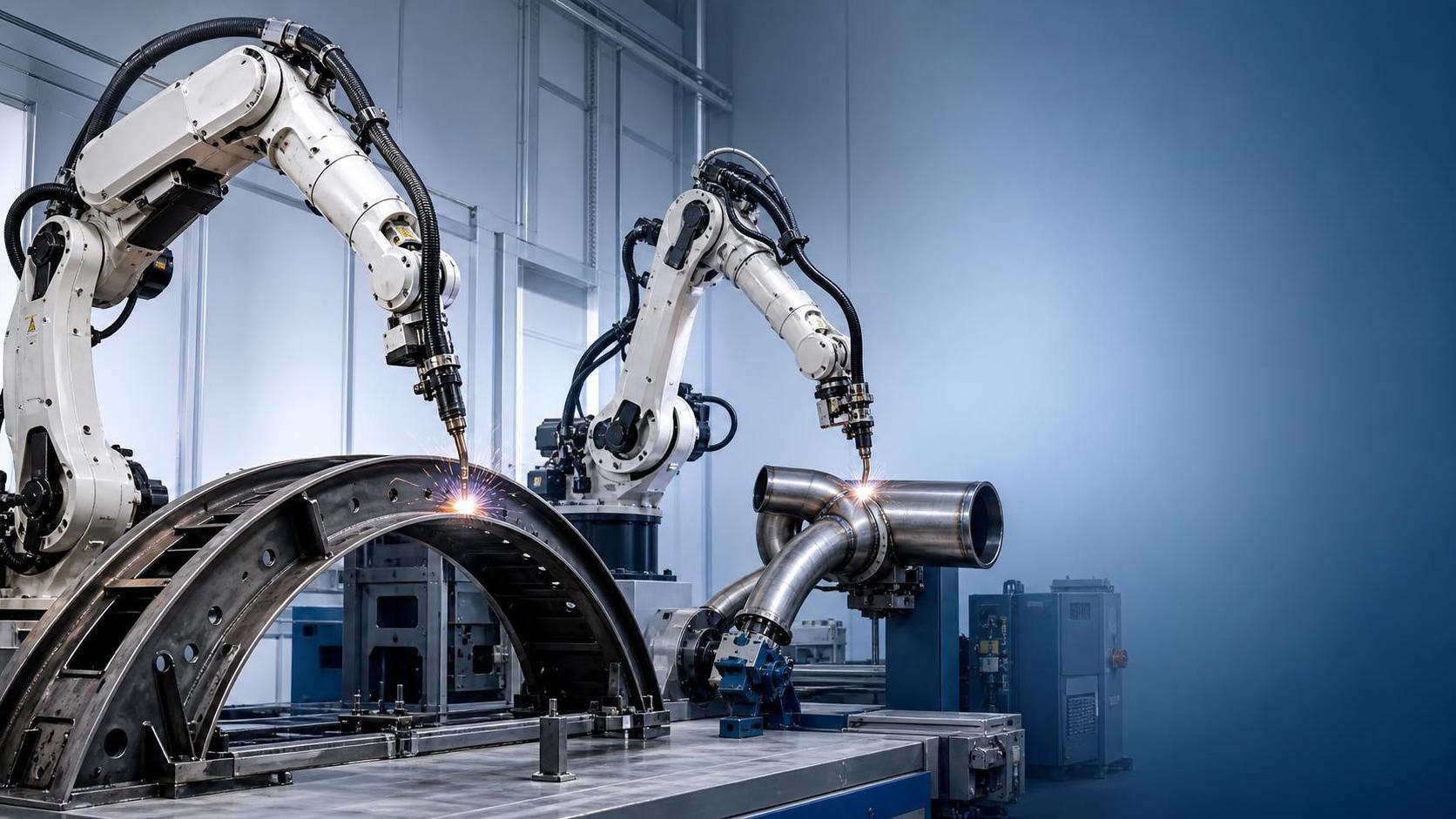
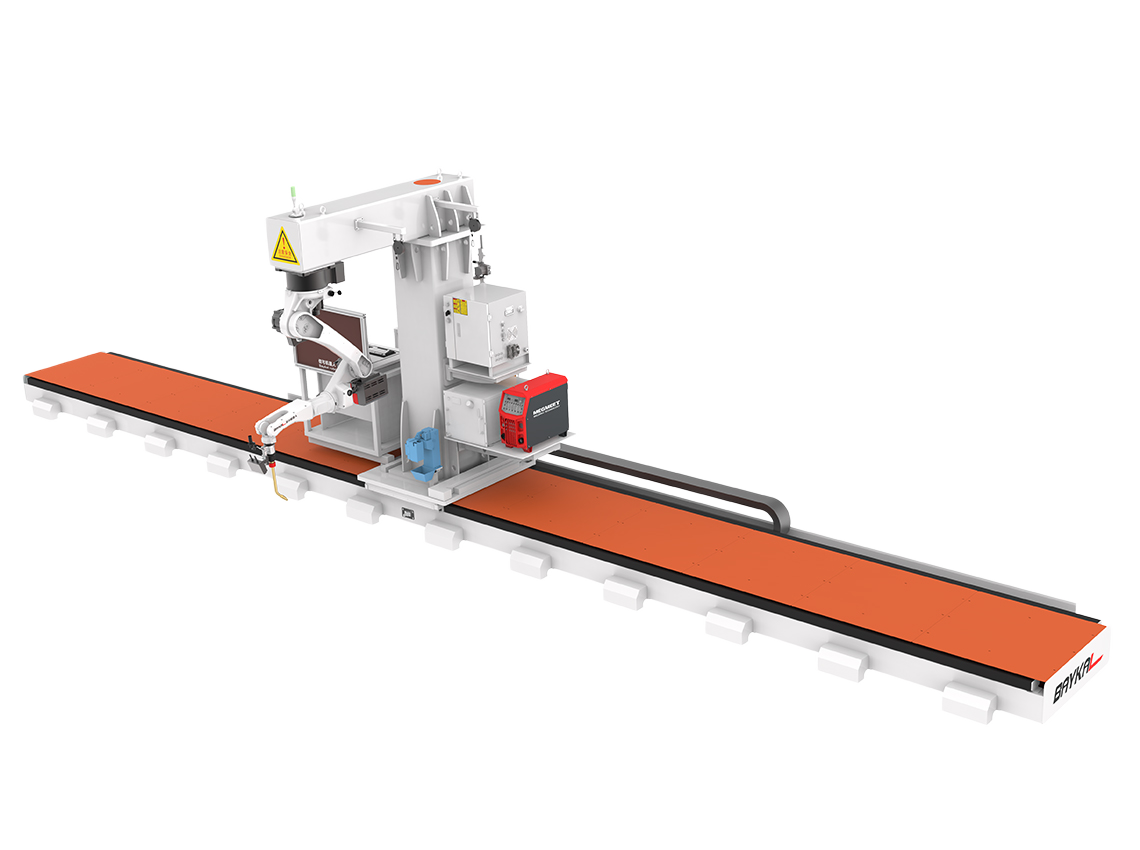
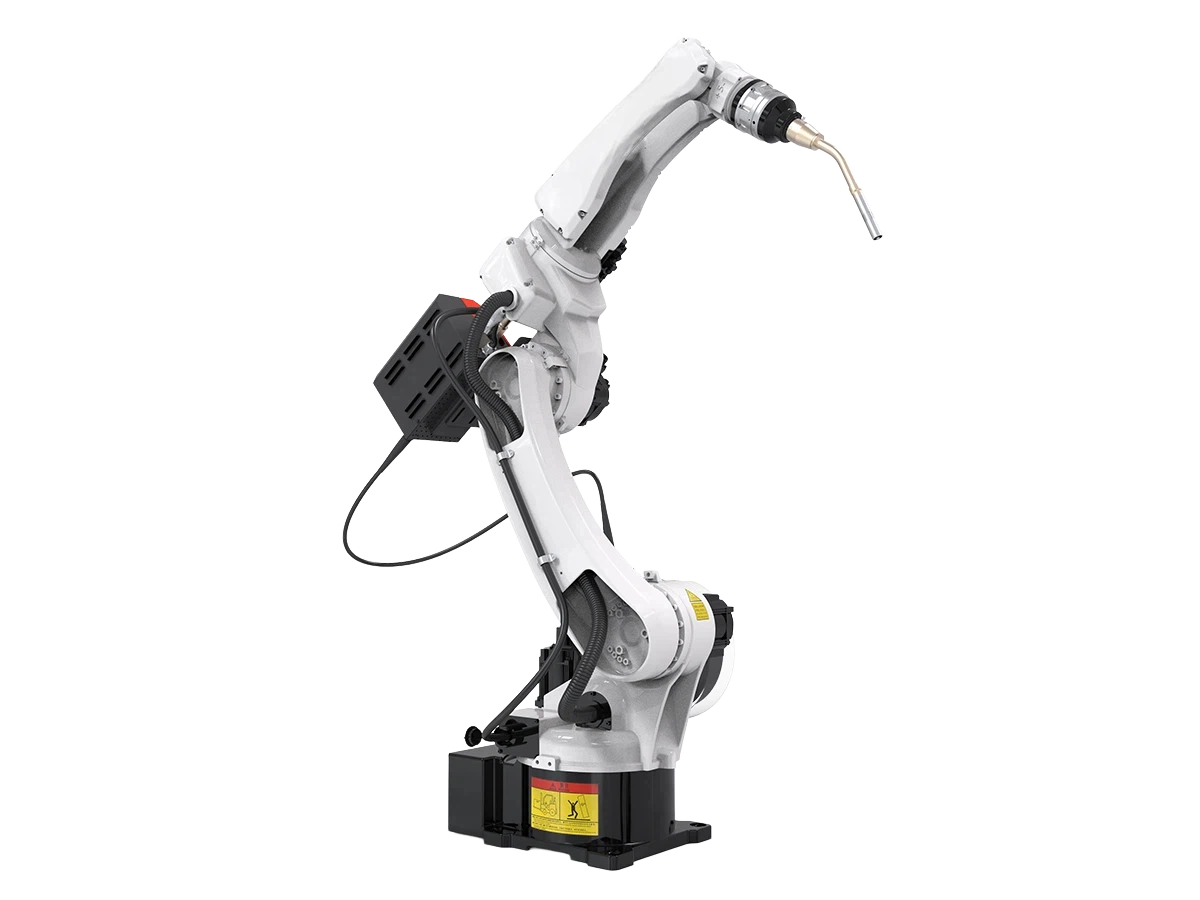
A 7 axis railway welding robot is an automated welding system in which a six-axis articulated robot is mounted on a linear travel rail that acts as the seventh controlled axis. The rail extends the robot's working envelope along one direction, allowing it to serve multiple stations, long seams, oversized fabrications, or a sequence of fixtures without repeated manual repositioning.
The system normally includes the robot arm, rail and drive system, welding power source, wire feeder, torch package, safety guarding, controller, fixtures, and programming interface. Depending on the workpiece and process, it may also include seam tracking, arc sensing, laser vision, fume extraction, workpiece positioners, welding rotators, or external axes coordinated with robot motion.
In practical procurement language, railway refers to the linear robot track rather than rail transport equipment. A 7 axis railway welding robot is commonly specified for repetitive fabrication where parts are too large, too long, or too varied in location for a fixed-base robot. Its value lies in controlled reach, repeatability, process consistency, and better use of floor space.
How The Welding System Works
Before production, the integrator defines part datum points, fixture locations, weld paths, torch angles, travel speed, wire feed settings, shielding gas requirements, and weld sequence. The robot program synchronizes the six arm joints with the rail axis, placing the torch at the correct joint while maintaining a suitable work angle, stick-out, and clearance from the workpiece.
During welding, the controller coordinates motion and welding parameters. For gas metal arc welding, the power source and wire feeder respond to programmed current, voltage, wire speed, and arc behavior. Weaving patterns can be added for wider joints or controlled bead profiles. Start and stop points, crater filling, interpass movement, and anti-collision logic are planned as part of the complete cycle.
Part variation is a critical consideration. Accurate fixtures may allow teach-point programs to run reliably, while dimensional variation can require touch sensing, arc tracking, or vision guidance. These tools do not replace sound fit-up; they help the 7 axis railway welding robot identify actual joint positions and compensate within defined limits. A stable automation cell starts with consistent incoming material and joint preparation.
Main Configurations And Welding Processes
A single-robot rail system is appropriate when one torch can complete the required welds across a long workstation. Dual-robot rail systems can increase throughput, support opposite-side welding, or divide large assemblies into zones. Buyers should assess interference zones, rail length, payload, cable management, maintenance access, and whether robots must work independently or in synchronized operation.
The robot may be configured for MIG or MAG welding, TIG welding, submerged arc-related handling applications, plasma processes, or specialized cladding tasks, subject to the selected equipment and process feasibility. MIG and MAG systems are frequently used for steel structures, tanks, frames, pipe components, and fabricated machinery because they support productive deposition rates and are readily integrated into robotic cells.
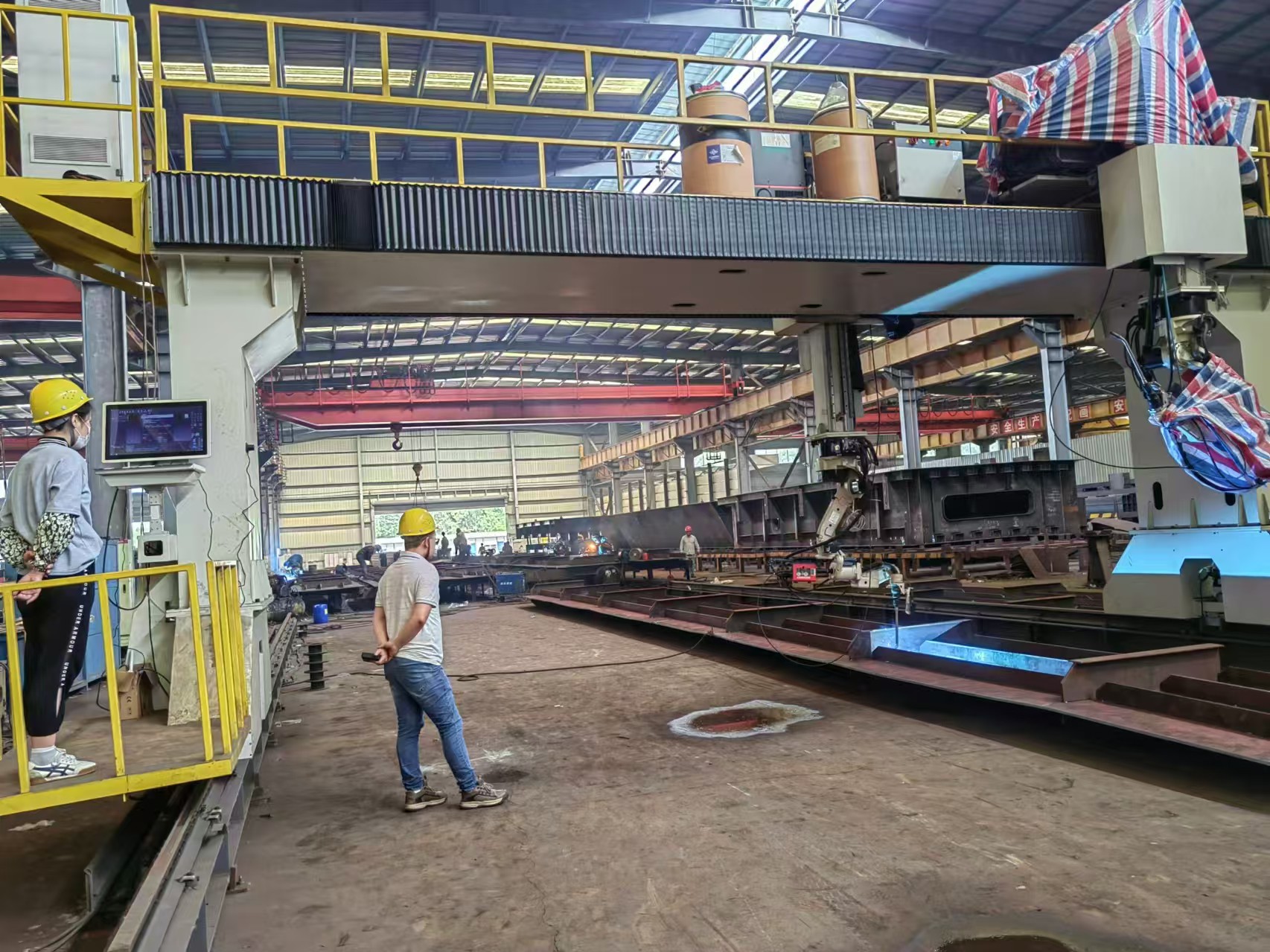
External equipment expands flexibility. Welding positioners rotate smaller assemblies into favorable welding positions, while welding rotators support cylindrical vessels and pipes. Longitudinal seam welding machines suit straight seams on shells and panels. For high-volume structural fabrication, a 7 axis railway welding robot can be combined with H-beam assembly, welding, straightening, or material handling equipment as part of a coordinated production line.
Applications, Users, And Market Requirements
Typical users include steel structure fabricators, pressure vessel and tank manufacturers, pipeline equipment producers, construction machinery factories, transport equipment suppliers, ship-related fabricators, and sheet metal operations with recurring welded assemblies. The rail is especially useful where product families share similar joints but differ in length, allowing one cell to address several fixture locations along a common production route.
Relevant applications include long fillet welds on frames, stiffener welding, vessel attachments, fabricated beam assemblies, pipe supports, agricultural machinery, chassis structures, and modular steel sections. The best candidates have sufficient annual volume, predictable part geometry, accessible joints, and a realistic fixture strategy. Very low-volume work with frequent unplanned changes may require a more flexible manual or semi-automated approach.
For export-oriented projects, buyers should align the cell with applicable customer specifications, welding procedures, safety requirements, and local electrical rules. Wuxi Samgins states that its machines comply with the ISO9001 quality system and EU CE Machinery and LVD directives, and its export team is familiar with ASME, API, and other local industry codes. Final acceptance requirements should always be agreed in the technical specification and contract.
Why Choose A Rail-Mounted Robotic Solution
Compared with manual welding, robotic welding can reduce dependence on difficult-to-replace skilled labor for repetitive seams and can make arc time more predictable. The same programmed torch orientation and parameter window can be applied across parts when preparation and fixturing are controlled. This supports more consistent bead appearance, penetration-related process control, and production documentation, although quality remains dependent on procedure qualification and inspection.
The seventh rail axis provides an economic alternative to installing several fixed robots for adjacent work zones. Instead of moving heavy assemblies repeatedly, the robot travels to the work. This can reduce non-welding handling, improve access to long parts, and help manufacturers organize workstations around material flow. The exact gain depends on cycle time, loading method, part mix, safety zoning, and required changeovers.
Wuxi Samgins offers customized 7 and 9-axis welding robots, long seam welding machines, and heavy-duty welding rotators for tanks, pipelines, steel structures, and sheet metal factories. Its wider range also includes welding manipulators, positioners, H-beam production equipment, CNC cutting systems, rolling machines, and pipe processing machinery. This breadth can simplify a project requiring upstream cutting, fit-up, welding, and downstream finishing equipment.
Selection, Installation, And Quality Control
Selection begins with the workpiece, not the robot. Document maximum and minimum part dimensions, weight, weld map, joint types, material grades, thickness range, annual volume, takt time, allowed floor area, and changeover needs. Then determine rail travel, robot reach, payload, torch access, cable routing, fixture count, and whether additional positioners or rotators are needed to keep welding in favorable positions.
A robust project normally includes sample-part review, layout approval, welding process selection, fixture design, risk assessment, factory acceptance criteria, installation planning, operator training, and site acceptance testing. The installation foundation must meet rail alignment and load requirements. Reliable power, gas supply, grounding, compressed air where applicable, ventilation, guarding, and emergency-stop circuits should be completed before final commissioning.
Quality control should cover rail straightness, axis repeatability, torch calibration, wire-feed stability, parameter verification, safety interlocks, and trial weld inspection. Wuxi Samgins reports using world-famous imported brands for key hydraulic, servo, and CNC components to support precision, stability, and service life. Buyers should request a documented bill of major components, weld samples where relevant, inspection criteria, spare-parts recommendations, and clear warranty terms.
Total Cost Of Ownership And Return On Investment
The purchase price of a 7 axis railway welding robot is only one part of total cost of ownership. Budget items include the robot and rail, welding source, safety enclosure, fixtures, positioners, sensors, installation, commissioning, programming, operator training, electrical and ventilation work, consumables, preventive maintenance, spare parts, and potential process qualification. Complex part families usually require more engineering than a single repetitive product.
Return on investment should be modeled from measurable baseline data: labor hours per part, arc-on time, rework and scrap, throughput constraints, overtime, production interruptions, and expected utilization. A cell with poor fixture utilization may not deliver the same return as one running stable, repetitive work across multiple shifts. Include realistic loading and unloading time rather than evaluating only the programmed welding cycle.
A practical procurement comparison evaluates technical scope and lifecycle support together. Wuxi Samgins provides design, manufacturing, sales, after-sales, and technical support, with more than 10 years of global export experience stated by the company. Its listed project customers include URALSTANKOIMPORT, MD Calbah Industries Pty Ltd, Ersay International Transport, Contevix comercio e servicos ltda, and Lincoln Electric-MENA. Buyers should verify the relevance of references to their own application before making a final decision.
Maintenance And Future Development Trends
Preventive maintenance protects both weld quality and uptime. Routine tasks include cleaning torch consumables, checking wire liners and drive rolls, inspecting cable dress packs, verifying shielding gas flow, lubricating and inspecting rail components according to manufacturer instructions, checking fasteners, and testing safety devices. Periodic calibration and backup of robot programs help maintain repeatable production after service events or component replacement.
Future 7 axis railway welding robot projects increasingly emphasize adaptive sensing, offline programming, production data collection, remote diagnostics, and modular cells that can accept new fixtures. These developments can shorten programming effort and provide better visibility into utilization and fault patterns. Their value depends on production discipline, trained personnel, reliable data practices, and a clear response plan for alarms and dimensional variation.
The most durable automation investment is designed around a defined product roadmap. Specify reasonable expansion capacity for rail travel, fixtures, external axes, and software functions, but avoid paying for features that cannot be supported on site. For factories planning integrated fabrication growth, Wuxi Samgins can be evaluated for a coordinated equipment scope spanning cutting, edge preparation, forming, fit-up, robotic welding, and structural steel processing, subject to detailed engineering review.
search
Recommended Products
 9 axis cantilever type welding robot9 axis cantilever type welding robot for large steel workpieces with auto tracking, 3D import, and efficient CNC welding automation.
![星星1]()
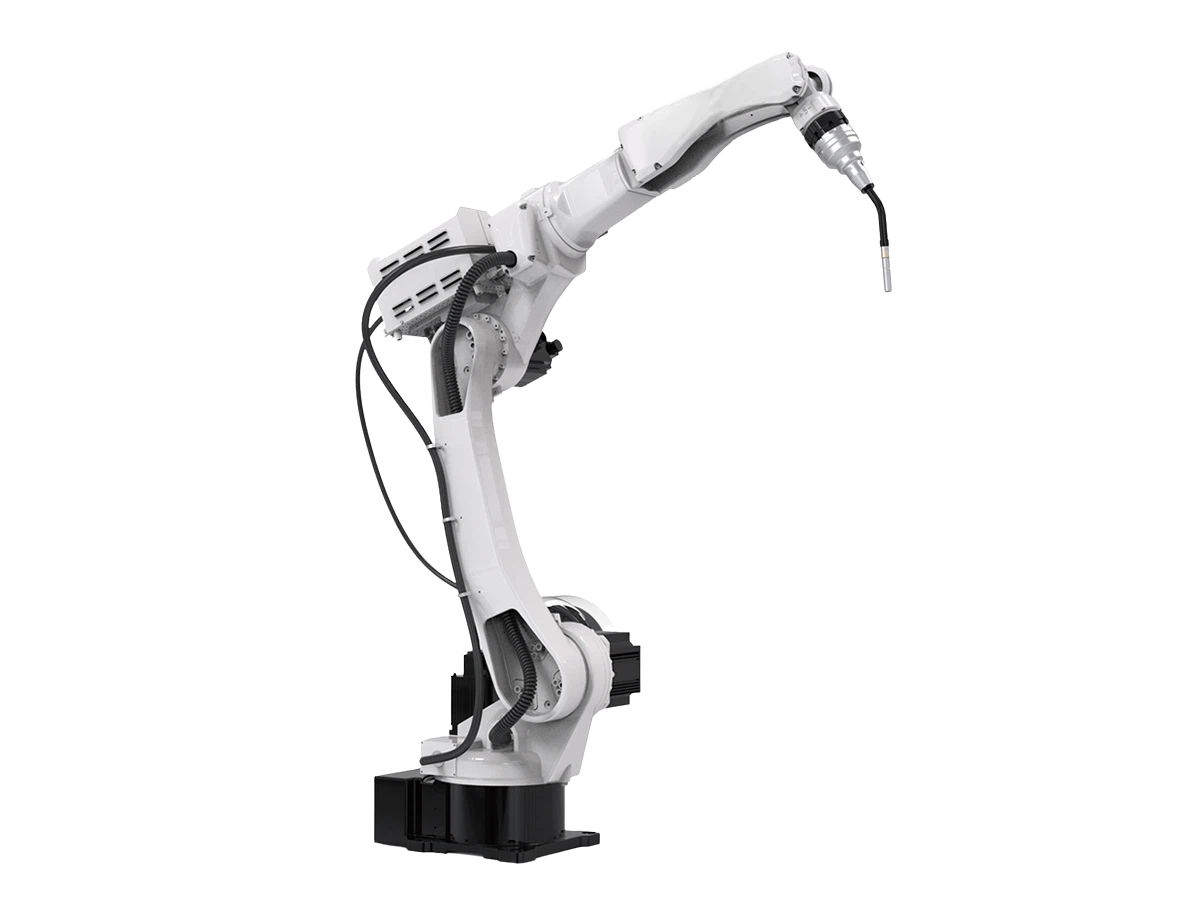
 6 Axis 2000mm ArmSpan MlG Industrial Welding RobotThis welding robot is designed for reliable arc welding in harsh production environments, featuring a long reach, stable repeatability, and flexible installation.
![星星1]()
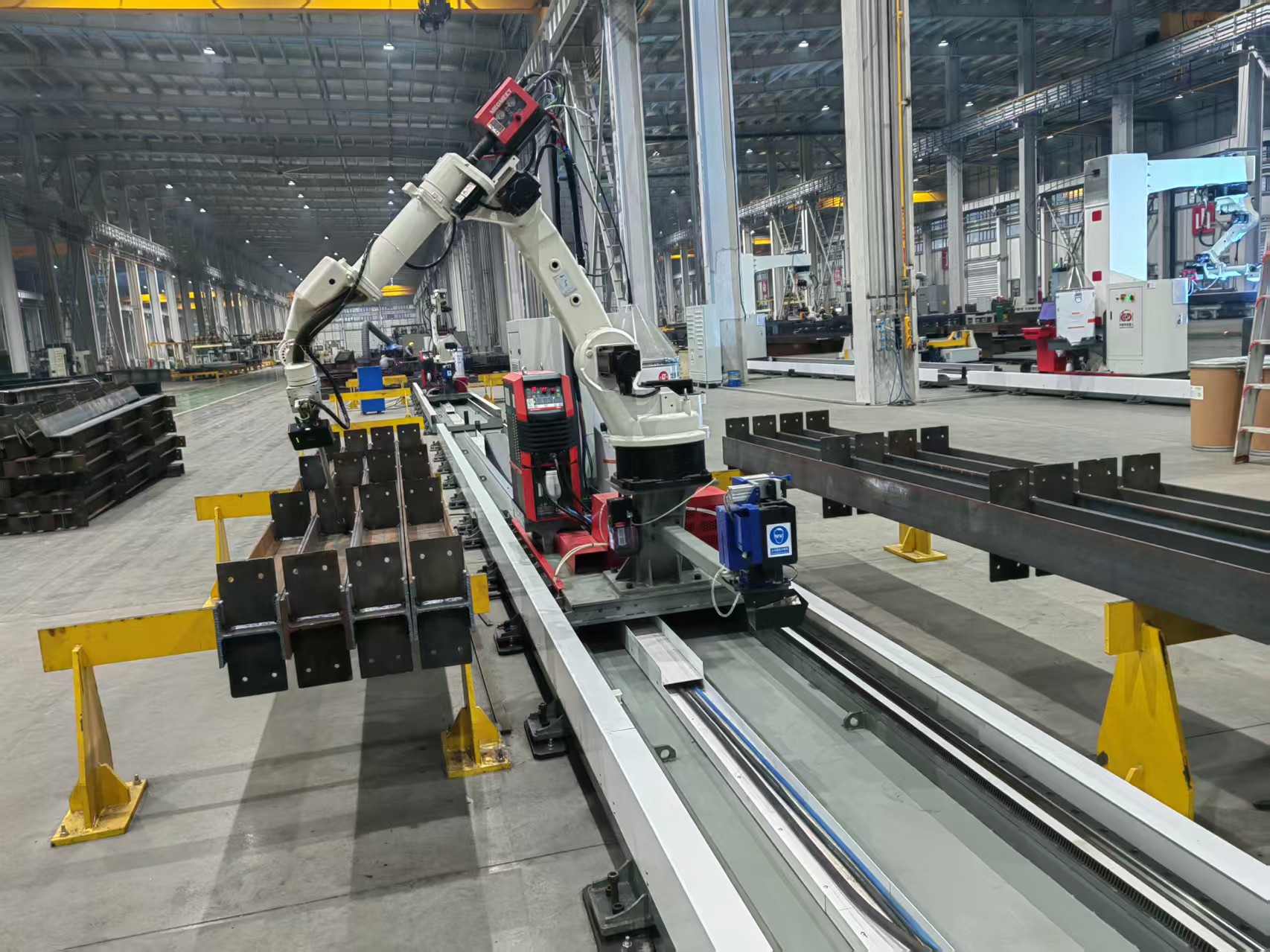
- 7 axis railway type welding robotThe planned floor space for this equipment (exclusive of operator stations, material storage areas, cutting buffer zones, etc.) is 12 meters in width and 2 meters in depth. The system primarily comprises the following components: one dedicated robot rail, one slide carriage, one 6‑axis welding robot with its control system, one welding power supply, one torch cleaning station, one welding torch, and ancillary equipment.
![星星1]()
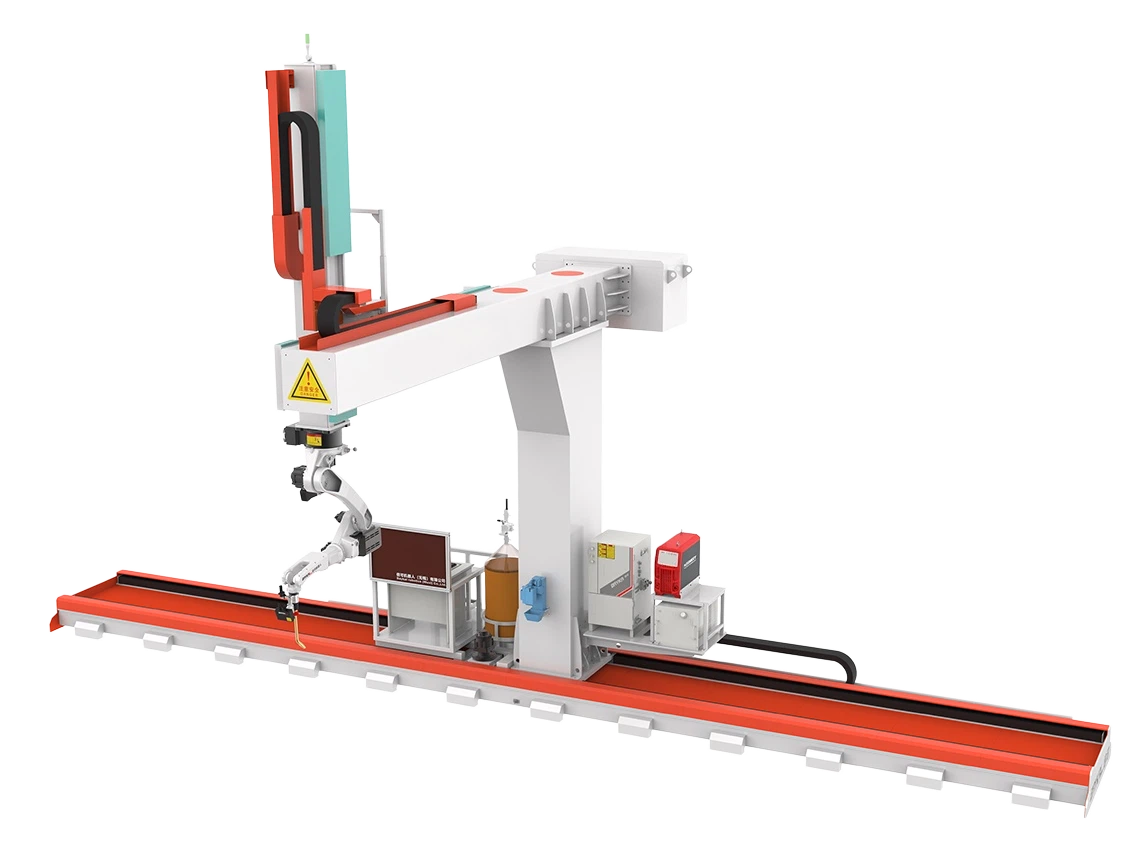
- 7 axis cantilever type welding robot7 axis cantilever type welding robot for long steel workpieces up to 12m, featuring automatic seam tracking, 7 CNC axes, and efficient zone welding.
![星星1]()
- 9 axis gantry type welding robotThis equipment mainly using robot special rail (1 set), slide (1 set), 6 axis welding robot and its control system (1 set), welding power supply (1 set), clear gun station (1 set), welding torch (1 set), etc.
The ground rail support is 12 meters long and one ground rail is welded. For the workpiece of more than 12 meters and less than 25 meters, two robots are used to conduct regional welding, which can greatly improve the welding efficiency.![星星1]()
- 6 Axis 1500mm ArmSpan Industrial Welding RobotWith a maximum reach of 1594 mm, the robot is well suited to medium-scale welding cells where coverage matters.
![星星1]()

Recommended blogs
Send Us A Message
Send us a Message
A dedicated person will follow up on your needs one-on-one and provide personalized customized solutions according
to your needs.
Get In Touch
We look forward to hearing from you for in-depth communication on how to fulfill your mixing requirements.