




CNC Punching And Marking Machine For Steel Plates
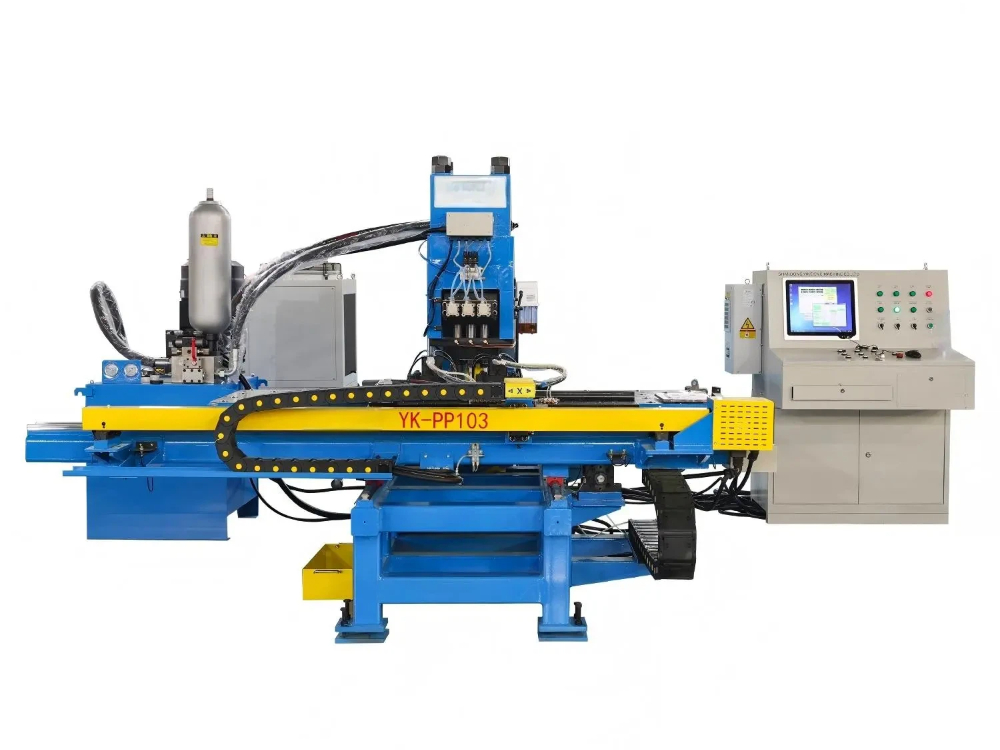
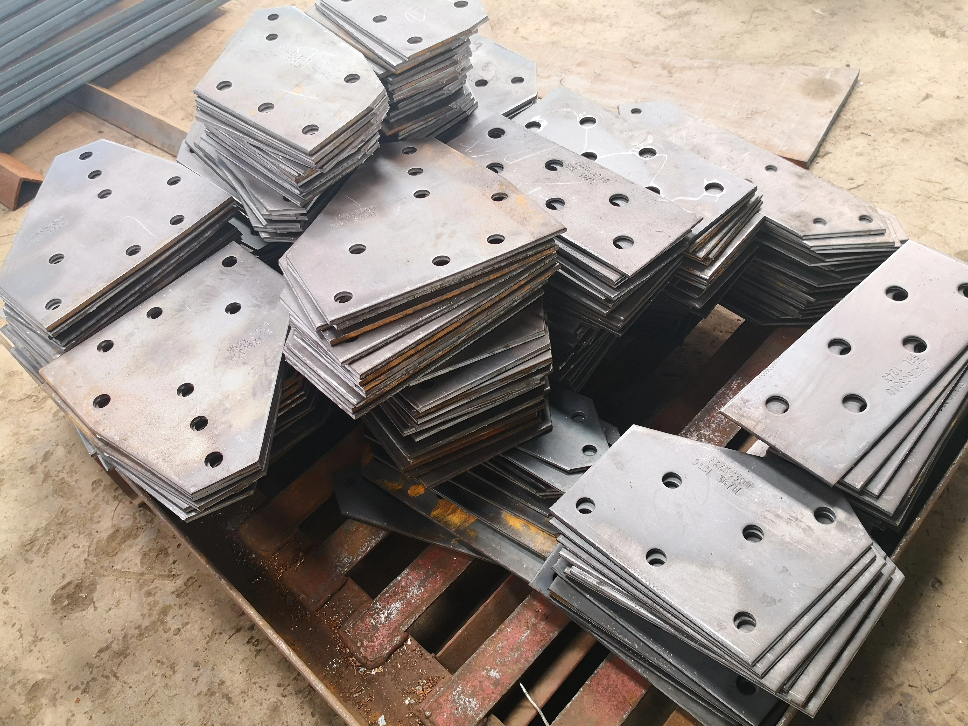
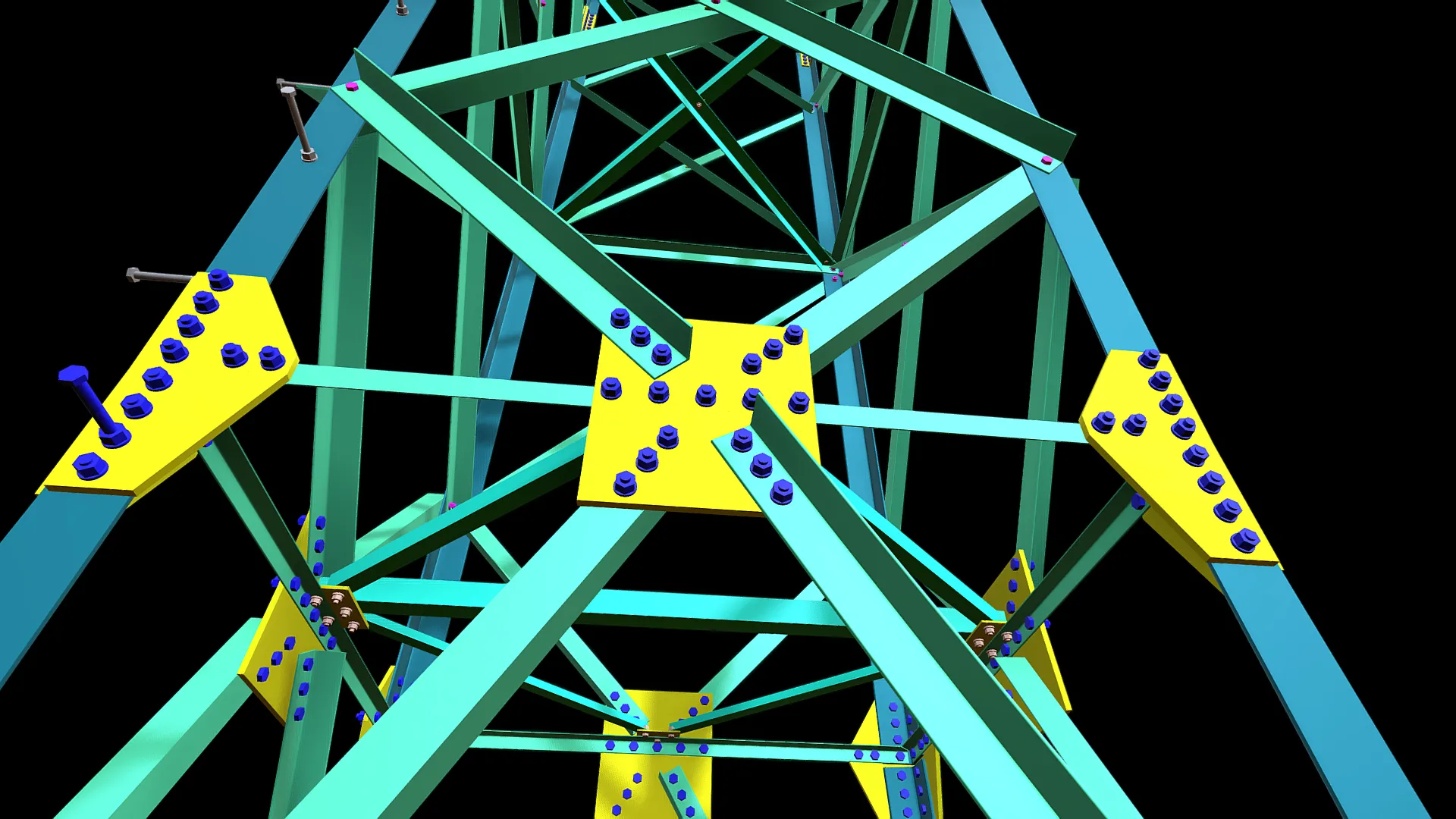
This series is a specialized CNC punching and marking machine designed primarily for steel plate processing in the steel tower industry. It is also well-suited for punching and marking applications across various other industrial sectors.
Full-range Machinery & Customized Non-standard Solutions
Authorized Certificates & Independent R&D Patents
Over 10 Years Global Export & Worldwide Project Cases
CNC Punching And Marking Machine For Steel Plates Description
1.Introduction for CNC Punching And Marking Machine For Steel Plates
Model:YK-PP103/ YK-PPR103/ YK-PP104/ YK-PPR104
This series is a specialized CNC punching and marking machine designed primarily for steel plate processing in the steel tower industry. It is also well-suited for punching and marking applications across various other industrial sectors.
2.Technical parameter for CNC Punching And Marking Machine For Steel Plates :
3.Characters for CNC Punching And Marking Machine For Steel Plates :
3.1 Robust Frame & Automated Operation
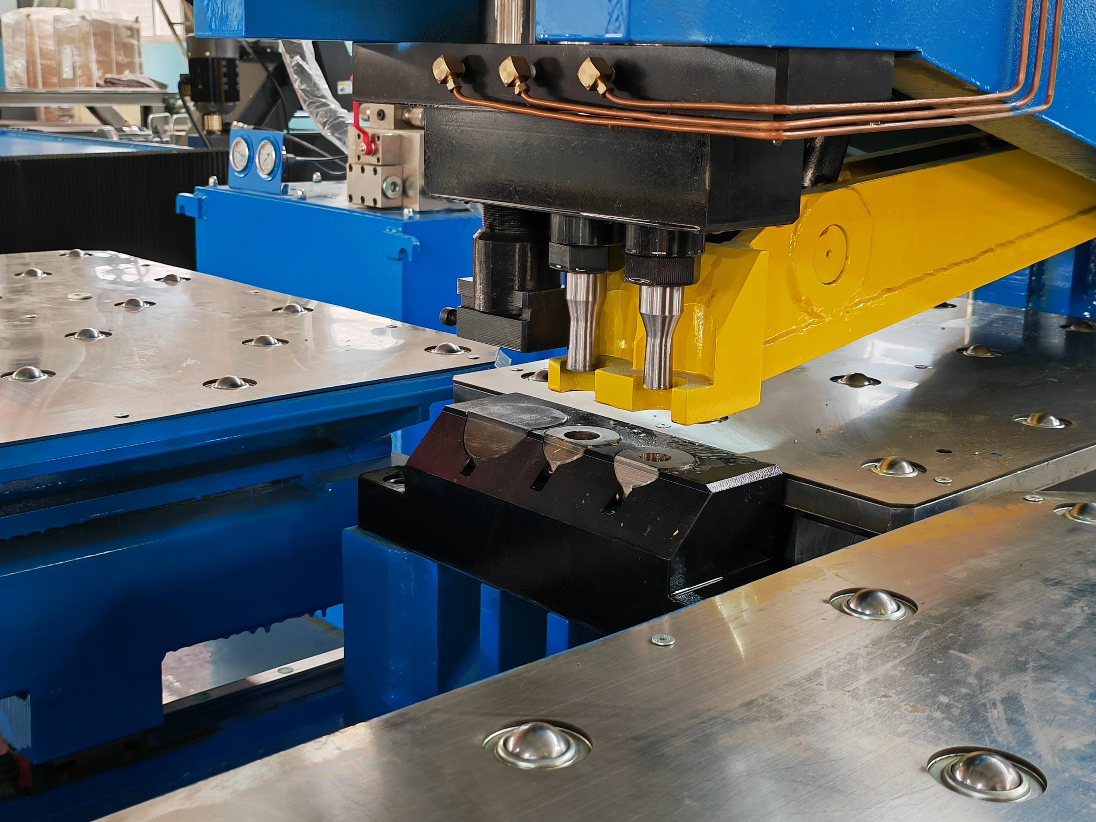
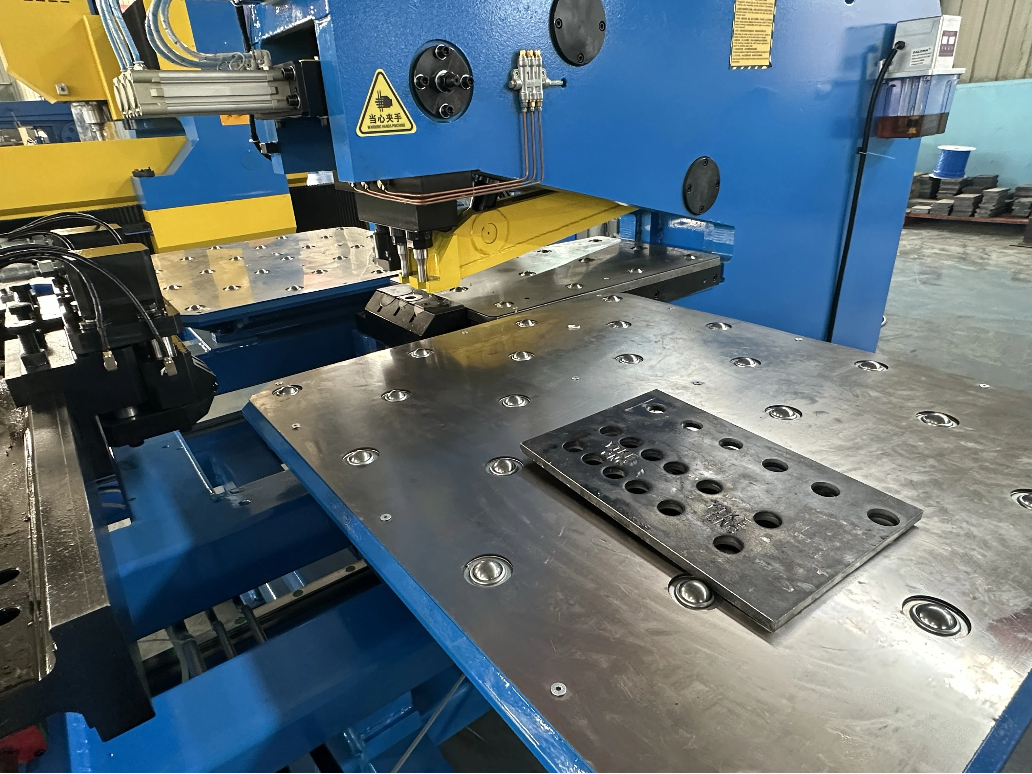
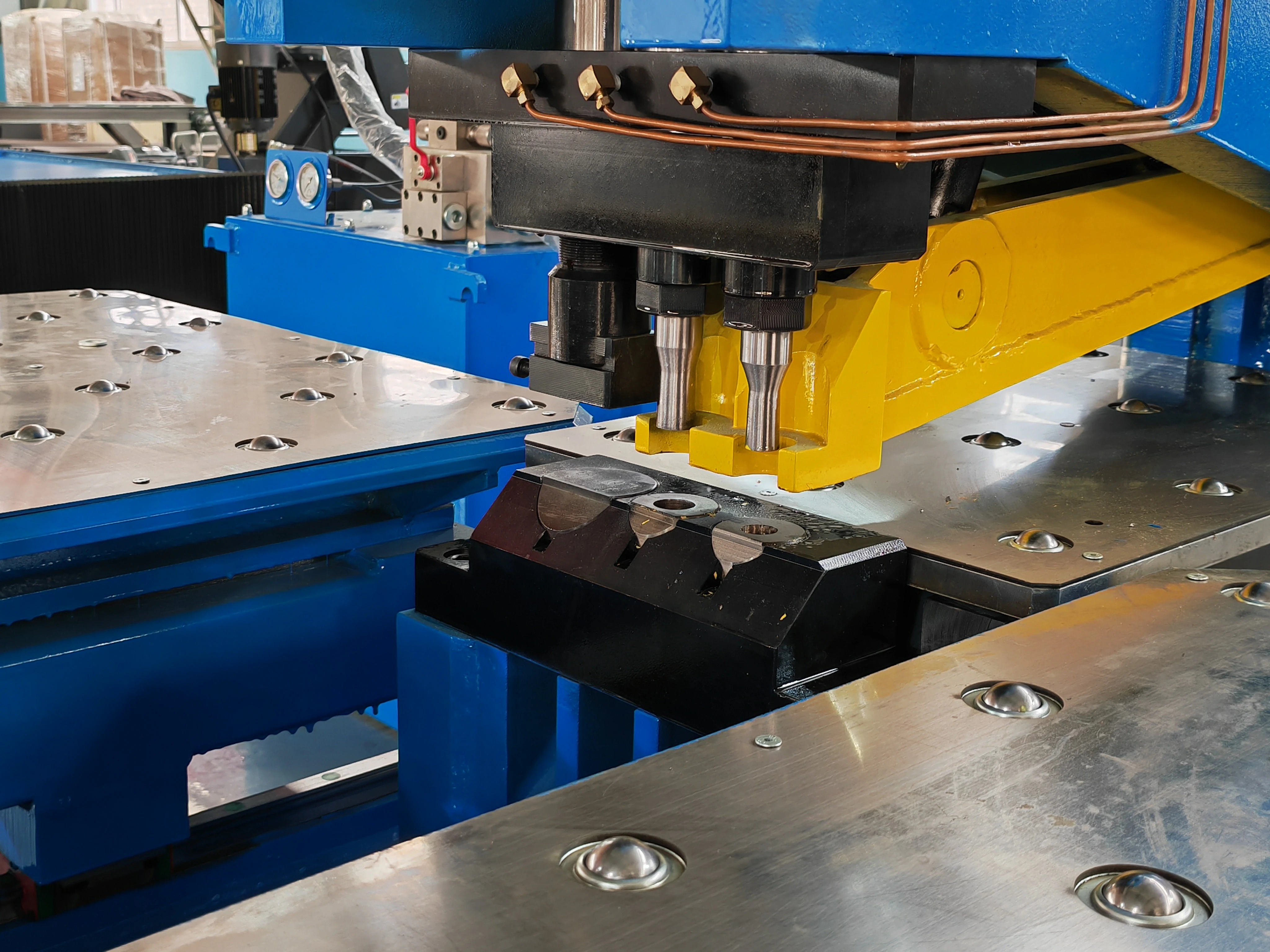
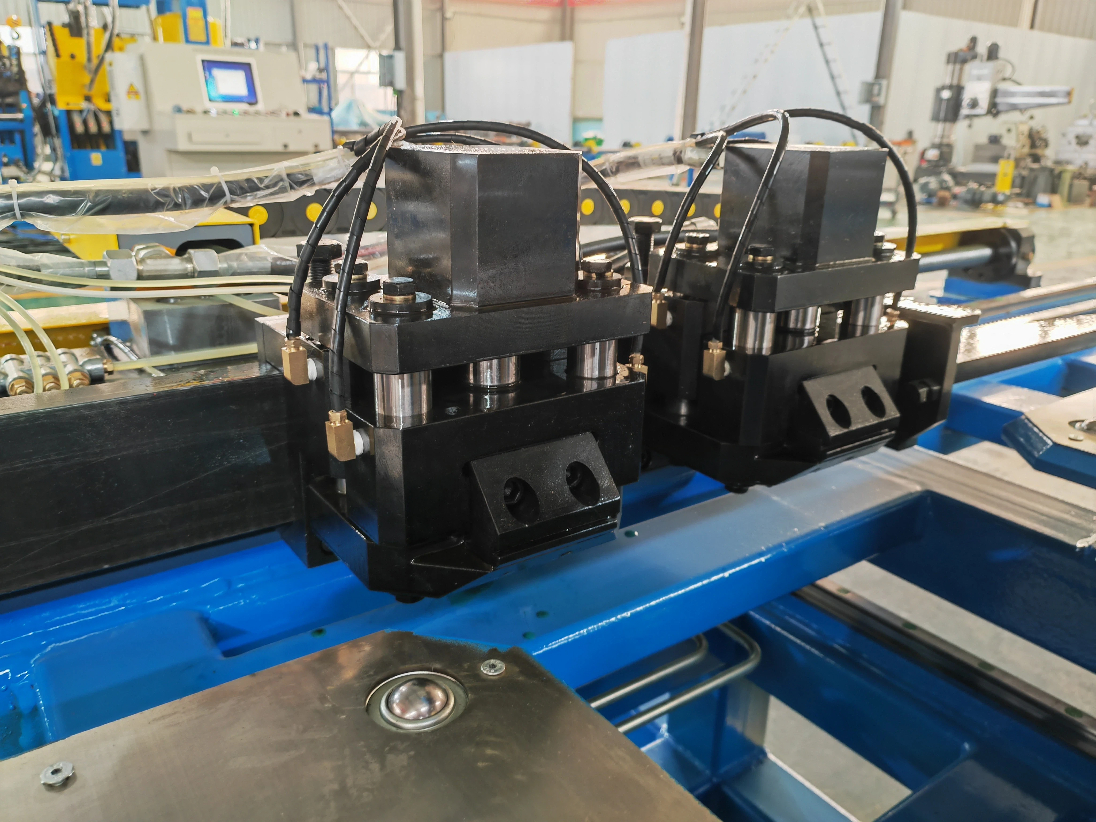
The machine features a C-type plate-welded frame structure, offering excellent rigidity and ample handling space. It is equipped with three die stations (two for punching, one for marking) with automatic station switching capability. The clamping system accommodates various workpiece sizes with reference blocks, while a rolling-ball worktable ensures smooth material movement. X and Y axis movements are precisely controlled by servo motors and ball-screw drives under PLC supervision, enabling fully automated positioning and punching cycles. Once a workpiece program is input by the operator, it can be stored and reused for repetitive tasks.
3.2 High-Efficiency CNC Technology
Adopting advanced CNC technology with servo motor infeed control, the machine delivers high production efficiency while maintaining stable and consistent workpiece precision.
3.3 Modular Design for Easy Maintenance
All major functional components are assembled in modular fashion, simplifying inspection, repair, and parts replacement to minimize downtime.
3.4 Combined Punching & Marking
The machine is capable of performing both punching and marking operations on a single steel plate in one setup, streamlining the production workflow.
3.5 Flexible Programming Options
Programming is straightforward and user-friendly. The system can directly read CAD drawings, as well as process programs generated by standard lofting software. It is fully compatible with TEKLA lofting software outputs, including NC1 format files.
3.6 Self-Diagnostic Functionality
The control system features built-in self-diagnosis capabilities, enabling rapid fault detection and troubleshooting to maximize machine uptime.
3.7 High-Precision Axis Drive System
Both X and Y axes are driven by a high-performance combination of servo motors, ball screws, and linear guides, ensuring superior positioning accuracy and repeatability.
products faq
An H Beam Production Line is a complete automated system for manufacturing H-shaped steel beams. It typically includes an uncoiler, leveling unit, assembly machine, tack welding machine, main submerged arc welding (SAW) system, straightening machine, cutting equipment, and material handling conveyors. All components work together to transform steel plates or coils into finished H-beams with high efficiency and consistent quality.
Submerged Arc Welding (SAW) is the most commonly used process for main welding in H beam production lines. It offers deep penetration, high deposition rates, excellent weld quality, and minimal spatter—making it ideal for heavy structural beams. Some lines also incorporate gas-shielded welding for tacking or light sections.
The line is adjustable to accommodate a wide range of beam sizes. Standard configurations typically handle web heights from 200mm to 1,500mm, flange widths from 100mm to 800mm, and material thicknesses from 6mm to 60mm. Custom sizes can be accommodated with tailored equipment design.
After welding, the thermal distortion caused by heat input is corrected by a straightening machine, which applies pressure to bend the beam back to the required straightness tolerance. In addition, precision assembly fixtures and automated control systems ensure accurate web-flange positioning before welding, maintaining consistent product dimensions throughout production.
Routine maintenance includes checking and replacing welding consumables (flux, wire, contact tips); inspecting conveyor chains, rollers, and bearings; monitoring hydraulic system oil levels and seals; cleaning the flux recovery system; and verifying the straightening machine's adjustment accuracy. We provide comprehensive maintenance schedules, spare parts support, and on-site technical assistance to minimize downtime.