




Are there regional differences in CE compliance requirements for automatic space frame welding machines sold in EU versus UK markets?
CE Compliance Isn’t Transferable: Why EU and UK Markets Demand Separate Conformity Paths for Automatic Space Frame Welding Machines
If you’re evaluating an automatic space frame welding machine for deployment across Europe or the UK—or both—you’re likely already aware that CE marking alone no longer clears the path into Great Britain. But the real operational impact goes deeper than a label swap. It’s about how conformity is assessed, who validates it, what documentation holds weight, and where responsibility legally resides.
Post-Brexit, the UK introduced the UKCA (UK Conformity Assessed) mark as its own regulatory gateway. While the underlying technical requirements—Machinery Directive 2006/42/EC, EMC Directive 2014/30/EU, Low Voltage Directive 2014/35/EU—remain largely aligned with their EU counterparts, the *process* of demonstrating compliance has diverged meaningfully. And for procurement and compliance officers handling high-value, safety-critical equipment like automatic space frame welding machines, those procedural differences carry real commercial and legal weight.
The Notified Body Split: Who Can Sign Off?
In the EU, CE marking requires involvement of an EU-recognized Notified Body for certain risk classes—particularly when harmonized standards are not fully applied, or when specific essential health and safety requirements (EHSRs) demand third-party verification. For complex machinery like automated welding systems used in structural steel fabrication, this often applies to aspects such as functional safety (EN ISO 13849), control system validation, and integrated robotic motion control.
The UK, however, no longer accepts EU Notified Bodies for UKCA marking. Instead, it relies on UK Approved Bodies—organizations designated by the UK government to assess conformity under UK law. As of 2024, only a limited number hold dual designation (both EU Notified and UK Approved), and even then, their scope of authorization may differ between jurisdictions. That means a CE certificate issued by a German Notified Body carries no standing for UKCA purposes—even if the test reports and technical file are identical.
Technical Documentation: Same Content, Different Custodians
Both markets require comprehensive technical documentation: risk assessments, design calculations, circuit diagrams, user manuals in local language, declarations of conformity, and evidence of harmonized standard application. But the *ownership* and *location* of that documentation matter differently.
Under EU law, the manufacturer or their authorized representative must keep the technical file available for inspection by market surveillance authorities for 10 years after placing the machine on the market. In the UK, the “UK Responsible Person” (a legal entity established in the UK) must hold the technical documentation—and must be named on the UK Declaration of Conformity. This isn’t just administrative overhead: it introduces contractual, liability, and logistical dependencies that affect supply chain design and support readiness.
Where It Hits the Shop Floor: Real Implications for Deployment
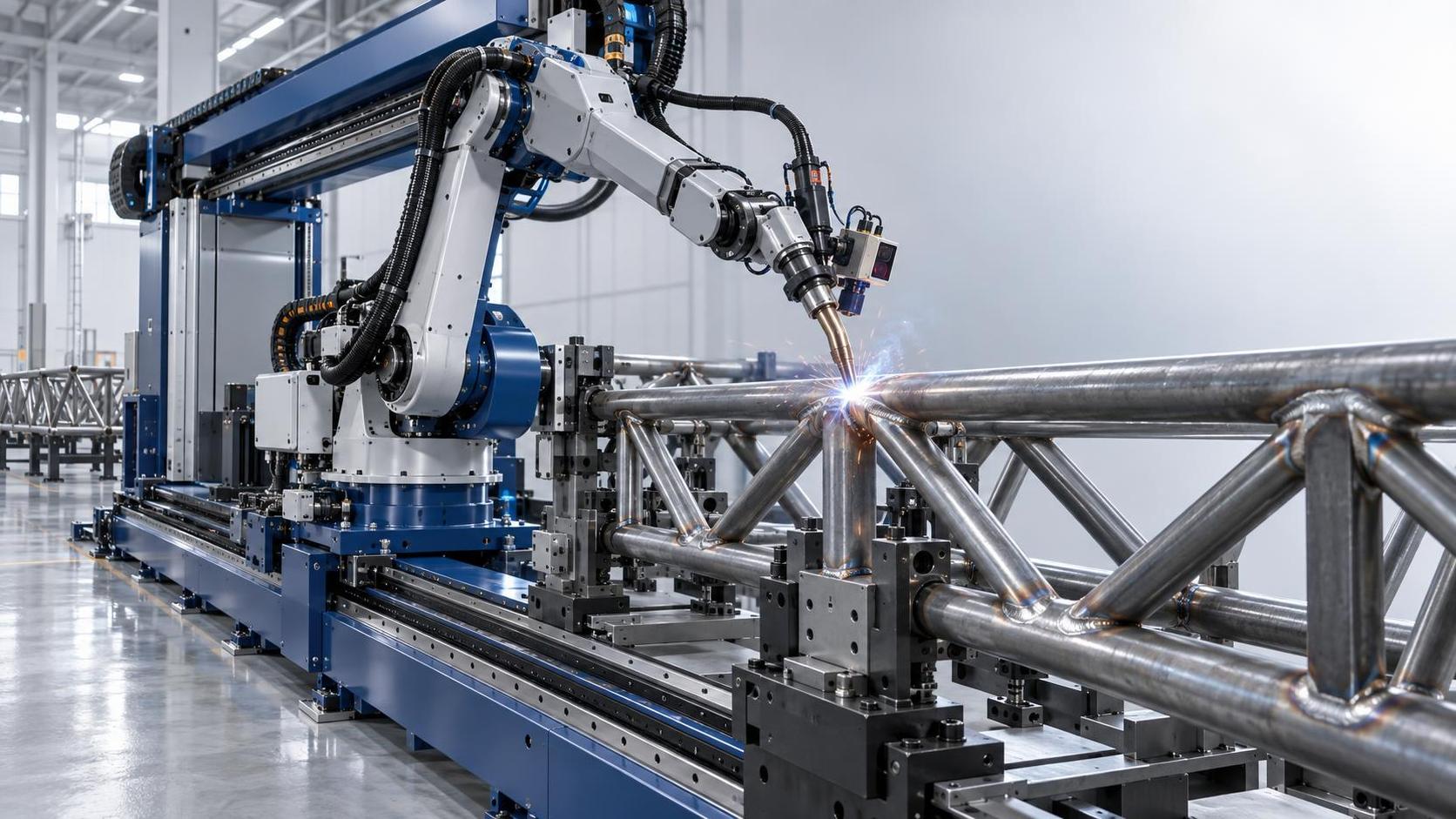
Consider a scenario where your engineering team specifies a 7-axis rail-mounted robot for long-span space frame assembly—say, for a railway infrastructure project spanning both EU member states and the UK. The 7 axis railway type welding robot you’re reviewing features zone-based welding, servo-driven carriage integration, and real-time arc tracking. Its physical footprint (12 meters in width, 12 meters ground rail length) and safety architecture—including emergency stop redundancy and color-coded status indicators (red/yellow/green)—are built to meet EN ISO 13857 and EN 60204-1.
That’s solid groundwork. But whether those design choices satisfy *both* CE and UKCA hinges on how the conformity assessment was structured—not just what was tested. If the original CE certification relied on a Notified Body whose scope didn’t cover UKCA, or if the UK Responsible Person wasn’t formally appointed before shipment, the machine cannot lawfully operate in Great Britain—even if every bolt, cable, and safety interlock meets the same technical benchmarks.
What Wuxi Samgins Does Differently
Wuxi Samgins International Trade Co., Ltd—established in 2012 and headquartered 30 minutes from Shanghai by high-speed rail—designs and manufactures automatic welding equipment against ISO 9001 and EU CE requirements as baseline practice. But we treat UK market access as a parallel, non-transferable workflow—not an afterthought.
For clients deploying automatic space frame welding machines across multiple jurisdictions, we coordinate early with UK Approved Bodies where needed, ensure UK Declarations of Conformity name a verified UK Responsible Person, and maintain separate, audit-ready technical files tailored to each regime. This isn’t about duplicating effort—it’s about aligning documentation ownership, testing scope, and legal accountability with the jurisdiction where the machine will be commissioned and operated.
A Practical Checkpoint Before Procurement
Before finalizing any purchase, ask your supplier three concrete questions:
- Is UKCA marking included in the quoted scope—or is it a post-order add-on requiring re-assessment?
- Who acts as the UK Responsible Person, and can they provide written confirmation of their appointment and documentation custody?
- Are the declared harmonized standards applied identically for both CE and UKCA, or does UKCA rely on UK-designated equivalents (e.g., BS EN ISO vs. EN ISO)?
None of these are theoretical. They directly affect lead time, liability exposure, and whether commissioning proceeds without regulatory delay.
Final Thought: Compliance Is Localized, Not Globalized
There’s no such thing as a “universal CE certificate” for the UK anymore. Treating UKCA as a simple rebranding of CE risks misalignment at installation, scrutiny during audits, or—even worse—enforcement action after deployment. For automatic space frame welding machines, where cycle time, joint integrity, and operator safety are tightly coupled, regulatory clarity isn’t bureaucratic detail. It’s part of the machine’s operational envelope.
If your next procurement involves cross-border deployment, start with the conformity pathway—not just the spec sheet.
search
Products Navigation
Send Us A Message