




Best Hydraulic Shearing Machine for Steel Fabrication: What Matters Most
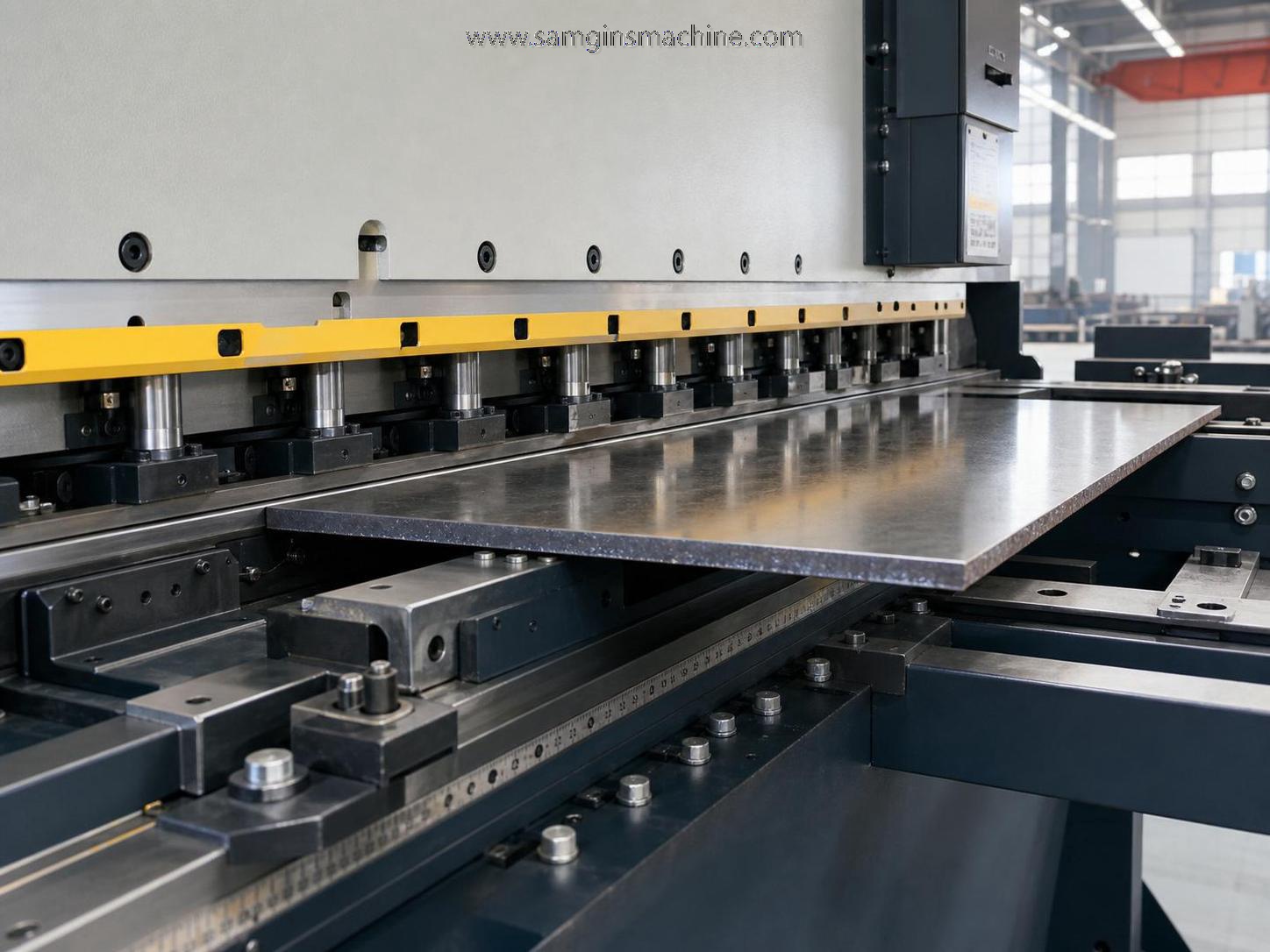
Best Hydraulic Shearing Machine for Steel Fabrication: What Matters Most
Choosing the best hydraulic shearing machine for steel fabrication requires more than comparing cutting thickness and price.
The real decision sits in cut quality, frame strength, control reliability, maintenance cost, and long-term output stability.
In steel fabrication, a poor machine rarely fails on day one.
It usually shows problems later through burrs, blade wear, repeatability drift, oil leakage, and lost production hours.
That is why a hydraulic shearing machine for steel fabrication should be judged as a production asset, not just a purchase item.
A sound evaluation helps reduce scrap, shorten downstream correction work, and improve return on investment over the full service life.
Why the Cutting Result Matters More Than the Nameplate
Many buyers start with maximum thickness, cutting length, and motor power.
Those figures matter, but they do not fully predict fabrication performance.
For steel fabrication, the actual result is what counts.
A good hydraulic shearing machine for steel fabrication should deliver straight edges, limited deformation, and stable cutting clearance across the full working width.
If edge quality varies from one side to the other, frame rigidity or blade adjustment may already be a weak point.
This becomes expensive when parts move into bending, welding, or precision fit-up.
Rework after shearing often costs more than the price gap between machine grades.
Core Factors to Evaluate Before Buying
1. Frame rigidity and structural design
Frame rigidity is one of the clearest indicators of machine quality.
A heavy welded frame with proper stress relief supports consistent cutting under repeated load.
Without that stability, blade gap changes under pressure.
That means more twist, more burr, and shorter blade life.
- Check frame plate thickness and welding quality.
- Ask whether the structure is stress-relieved after welding.
- Review machine weight against cutting capacity.
2. Blade quality and adjustment range
Blade material affects both cut finish and operating cost.
High-quality blades keep a stable edge longer when processing carbon steel or stainless sheets.
Adjustment matters just as much.
A hydraulic shearing machine for steel fabrication should allow accurate blade clearance changes for different material grades and thicknesses.
Manual adjustment can work in low-mix production.
For faster changeovers, CNC clearance control is usually the better choice.
3. Backgauge accuracy and repeatability
Repeatable part length is essential in serial production.
An unstable backgauge turns a capable shear into a bottleneck.
Look for rigid guide systems, reliable servo control, and clear positioning feedback.
Even small repeatability errors become visible when parts move into assembly lines or robotic welding stations.
4. Hydraulic and control system stability
Hydraulic performance drives stroke consistency and machine response.
Poor sealing, unstable pressure, or low-grade valves often lead to output variation over time.
The controller also deserves close attention.
A modern control system reduces operator error, speeds setup, and supports more stable processing routines.
How Material Mix Changes the Right Machine Choice
Not every steel workshop needs the same hydraulic shearing machine for steel fabrication.
The right choice depends on plate thickness range, material grade, batch size, and downstream tolerance demands.
- Thin sheet, high volume: prioritize speed, gauge repeatability, and easy programming.
- Medium plate, mixed jobs: prioritize flexible clearance adjustment and operator-friendly controls.
- Heavy plate processing: prioritize frame strength, blade durability, and stable hydraulic force.
- Stainless work: prioritize edge quality, lower distortion, and accurate hold-down action.
From a decision standpoint, mismatch is a bigger risk than underusing one extra feature.
Buying around future workload can be wise, but only if the machine stays efficient in current production.
Operating Cost Often Decides the Real Value
Purchase price is visible.
Operating cost is where the long-term decision becomes clear.
A lower-cost machine can become expensive through blade changes, oil issues, downtime, and inconsistent cut quality.
When comparing a hydraulic shearing machine for steel fabrication, calculate at least these items:
- Average blade life under your actual material mix.
- Hydraulic oil maintenance frequency.
- Expected wear part availability.
- Setup time per job change.
- Scrap and rework cost caused by edge inconsistency.
This is also where supplier capability starts to matter.
Wuxi Samgins International Trade Co., Ltd supplies metal processing equipment across multiple categories and follows ISO9001 and CE-oriented production standards.
That broader manufacturing background can help when a buyer is evaluating complete fabrication flow, not just one standalone machine.
Look Beyond Shearing in the Process Chain
A shearing decision should fit the full fabrication route.
In many workshops, cut sheets or profiles move into beveling, welding, and structural assembly right after blanking.
That means edge condition affects more than appearance.
It affects fit-up speed, weld preparation, and final dimensional control.
For plants handling containers, ship sections, or special vehicle parts, integrating shearing with bevel preparation can remove extra manual steps.
One related option is the CNC Square & Pipe Beveling Machine.
It processes square, rectangular, and round tubes without accessory changes between sizes.
It also supports carbon steel, stainless steel, and aluminum plates.
Processing speed can reach 0 to 1500 mm/min, with bevel angles typically adjustable from 0 degrees to 90 degrees.
For operations that need weld-ready edges, one-pass bevel formation and Ra3.2 to 6.3 surface finish can reduce secondary grinding time.
Questions That Expose Hidden Risk During Evaluation
A technical review should go deeper than brochures.
Ask direct questions that reveal real machine capability.
- What thickness and material were used in the latest acceptance test?
- How is blade clearance adjusted and verified?
- What repeatability tolerance is guaranteed for the backgauge?
- Which hydraulic and electrical brands are standard?
- How long does routine maintenance usually take?
- What spare parts are stocked for export customers?
- Can the supplier support installation and remote troubleshooting?
More importantly, request sample cutting results that match your own material conditions.
A hydraulic shearing machine for steel fabrication should prove itself on actual parts, not generic claims.
A Practical Selection Framework
If the decision needs a simple framework, score each machine against five weighted areas.
This method keeps the discussion practical.
It also makes it easier to compare two machines that look similar on paper.
Final Decision: What Matters Most
The best hydraulic shearing machine for steel fabrication is the one that holds quality under daily production pressure.
That usually comes down to frame rigidity, blade performance, backgauge precision, control stability, and manageable service cost.
Price still matters, but it should be the result of technical fit, not the starting point.
In actual procurement, the strongest choice is rarely the cheapest machine.
It is the machine that protects throughput, reduces corrective work, and stays predictable as production scales.
When you evaluate the next hydraulic shearing machine for steel fabrication, test it against your process, your materials, and your downstream quality target. That is where the right decision becomes clear.
search
Products Navigation
Send Us A Message