




Plate Cutting Accuracy: How Hydraulic Shearing Machines Reduce Rework
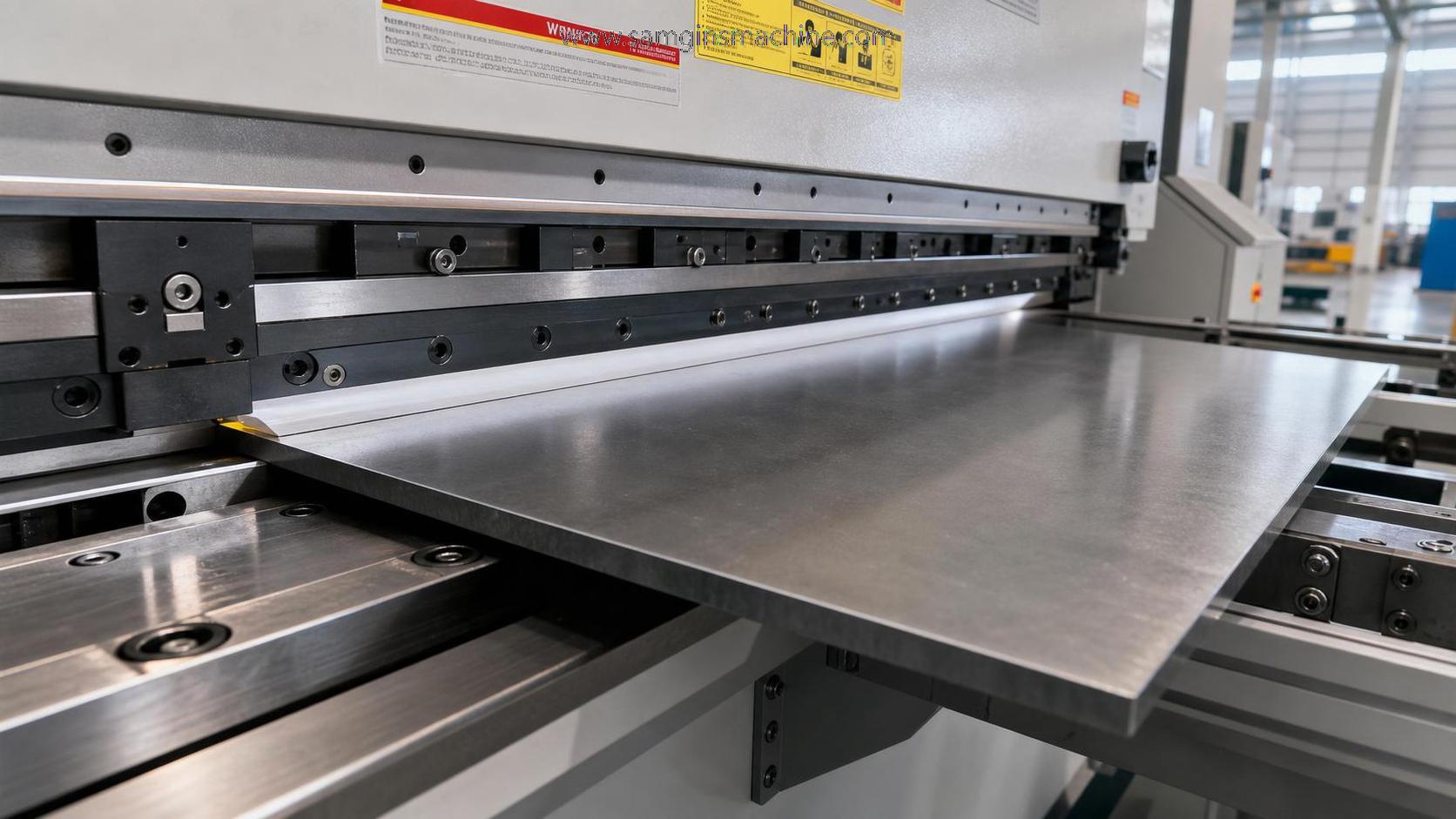
Plate Cutting Accuracy: How Hydraulic Shearing Machines Reduce Rework
For projects where steel plates move through several processes, cutting accuracy shapes everything that follows.
A small deviation at the shearing stage can trigger fit-up issues, welding delays, extra grinding, and material waste.
That is why a hydraulic shearing machine for plate cutting matters far beyond one workstation.
It supports quality control, protects schedules, and lowers the hidden cost of rework across the fabrication chain.
In practical terms, cleaner cuts mean better dimensional consistency and fewer downstream corrections.
For businesses handling structural steel, equipment selection has become a project management decision, not only a workshop decision.
Why Plate Cutting Accuracy Has a Direct Cost Impact
Rework usually begins with small inaccuracies that seem harmless at first.
A rough edge may require extra deburring.
An incorrect length may force re-cutting or part replacement.
A slight angle error may disrupt assembly alignment.
When this repeats across batches, the cost grows quickly.
- More scrap from unusable parts
- More labor for trimming, re-measuring, and sorting
- More downtime before welding, forming, or machining
- More delivery risk when bottlenecks hit final assembly
This is where a hydraulic shearing machine for plate cutting changes the equation.
Instead of relying on inconsistent manual adjustments, hydraulic force delivers stable, repeatable cutting performance.
That consistency helps fabrication teams hold tolerances with fewer surprises.
How a Hydraulic Shearing Machine for Plate Cutting Reduces Rework
The main advantage is controlled force distribution during the cut.
That helps produce smoother edges and more stable dimensions across different plate thicknesses.
In daily production, this leads to several measurable benefits.
1. Better dimensional repeatability
Repeatability matters when parts must match drawings over long production runs.
A hydraulic shearing machine for plate cutting keeps cut lengths and straightness more consistent.
That reduces mismatch at fit-up stations.
2. Cleaner edges with less secondary work
Clean edges reduce the need for grinding and edge preparation.
That shortens processing time and helps maintain part geometry.
3. Improved material utilization
Accurate cutting reduces avoidable trim loss.
When expensive plate materials are involved, that saving becomes significant.
4. More predictable downstream flow
Consistent blanks support stable bending, welding, machining, and assembly.
Production planning becomes more reliable because fewer parts need correction.
Where This Matters Most in Fabrication Projects
Not every project feels the impact in the same way.
The value of a hydraulic shearing machine for plate cutting becomes clearer in certain production environments.
- Structural steel fabrication with repeated plate dimensions
- Pressure vessel and tank component preparation
- General sheet metal processing with strict quality targets
- Production lines where welding productivity depends on accurate blanks
In these settings, cutting quality affects the whole line, not just one machine.
This is especially true in H-beam production, where plate preparation influences alignment and weld positioning later on.
Once components move into turning and welding stages, stable handling becomes equally important.
For example, an H beam Chain turnover machine can support smooth positional adjustment after cutting.
Its 360 degree workpiece rotation helps bring longitudinal weld seams into better welding positions.
That reduces manual handling and keeps weld quality more consistent across long workpieces.
What to Evaluate Before Choosing a Hydraulic Shearing Machine for Plate Cutting
Buying on tonnage alone is usually a mistake.
The right hydraulic shearing machine for plate cutting should match the real production profile.
Plate material and thickness range
Mild steel, stainless steel, and higher-strength materials behave differently during shearing.
The machine must handle the full thickness range without compromising cut quality.
Tolerance requirements
Some projects can accept wider variation.
Others need tighter dimensional control for automated welding or fixture-based assembly.
Production volume and changeover frequency
High-mix production needs fast setup and easy adjustment.
Batch production may prioritize output speed and repeatability.
Integration with the rest of the line
A good cutting solution should fit material flow, lifting methods, operator access, and later processing steps.
This is often where real productivity gains appear.
Common Rework Risks and How to Prevent Them
Even a capable machine will underperform if process control is weak.
Most rework comes from a few repeat issues.
These controls are simple, but they make the hydraulic shearing machine for plate cutting perform at its true level.
A Broader Equipment Strategy for Quality and Throughput
Cutting accuracy should be viewed as part of a connected manufacturing system.
Wuxi Samgins International Trade Co., Ltd focuses on mechanical equipment that supports this full process approach.
Its product range covers welding equipment, CNC cutting machines, machine tools, plate rolling machines, leveling machines, deburring machines, pipe benders, and shearing machines.
This matters because rework rarely comes from one isolated cause.
It often appears when several steps fail to align on accuracy, handling, and process rhythm.
With ISO9001-based production management and designs aligned with EU CE standards, equipment decisions can be tied more closely to long-term operational control.
For teams running long and heavy structural components, handling equipment also deserves careful review.
A chain turnover solution with remote operation, synchronized flipping, and load capacity up to 15,000 kg can improve safety and weld access after cutting.
That kind of coordination reduces labor intensity while keeping the line moving.
How to Turn Accuracy Into Measurable Project Results
The strongest results come from linking machine capability to daily management routines.
- Define acceptable cut tolerance by part category.
- Match the hydraulic shearing machine for plate cutting to actual material range.
- Standardize setup checks for blades, gauges, and support systems.
- Measure rework causes weekly, not only final scrap totals.
- Review how cutting accuracy affects welding time and assembly delays.
This approach turns cutting from a basic operation into a controllable source of savings.
A hydraulic shearing machine for plate cutting delivers the most value when it supports stable workflow, better quality, and fewer avoidable corrections.
When plate accuracy improves, downstream teams work faster, schedules become more reliable, and overall project cost becomes easier to control.
That is the real reason accurate shearing equipment remains a practical solution for reducing rework in modern fabrication.
search
Products Navigation
Send Us A Message