




CNC Fiber Laser Cutting Machine Trends to Watch in 2026
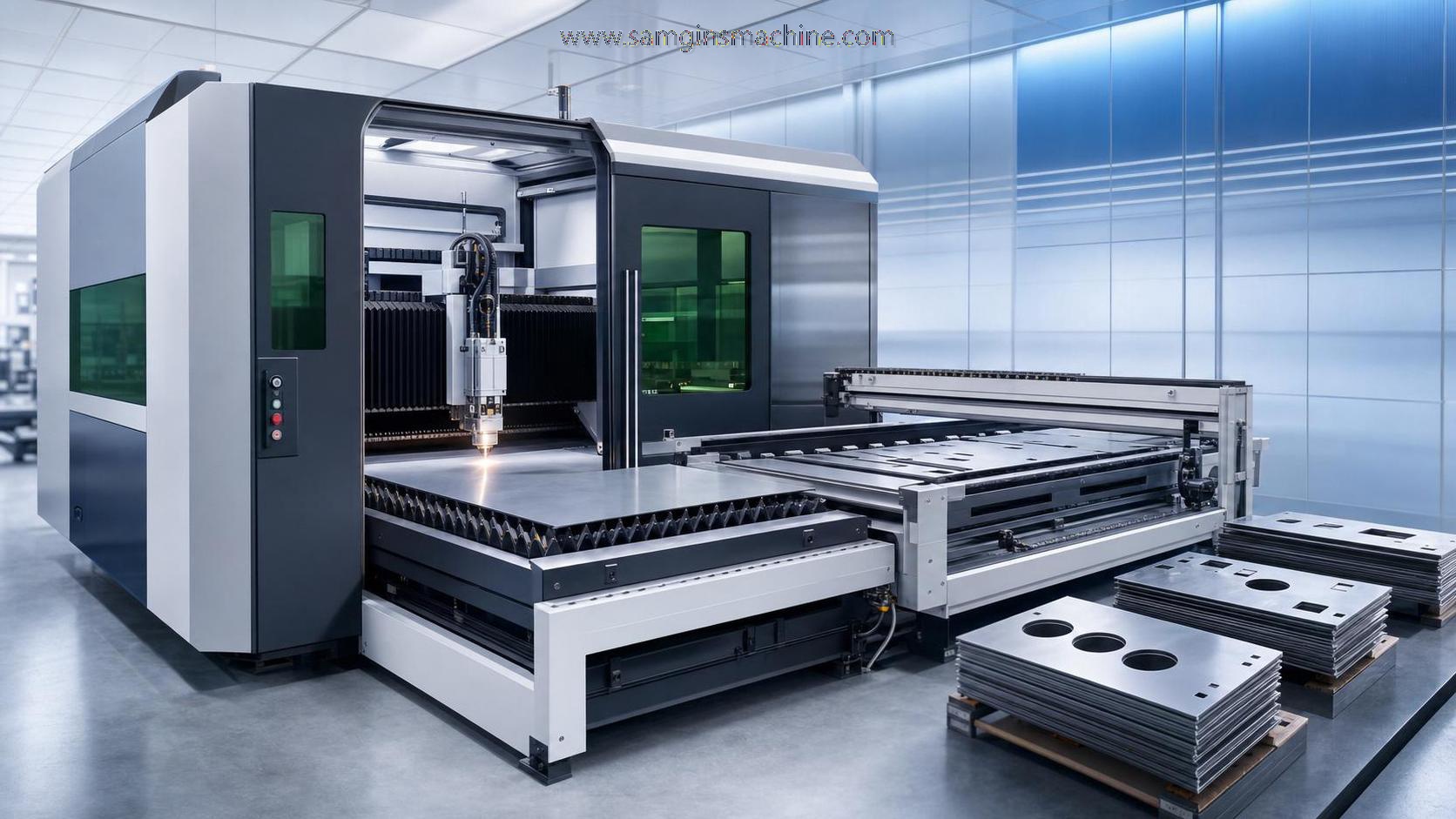
In 2026, the Cnc fiber laser cutting machine is no longer just another fabrication asset. It is becoming a decision point for product mix, regional demand, and long-term channel competitiveness.
The market is moving toward tighter tolerances, cleaner edges, lower power waste, and faster changeovers. That shift matters because buyers now compare machines by operating results, not only by wattage or headline speed.
For companies active in manufacturing and processing machinery, this creates a more technical sales environment. It also opens room for stronger portfolios built around application fit, reliability, and support capability.
Why 2026 looks different
A few years ago, many buyers treated a Cnc fiber laser cutting machine as a straightforward replacement for older CO2 systems or plasma equipment. That view is changing.
Now the purchase discussion usually includes automation readiness, software integration, energy use, parts consistency, and downstream workflow. The machine sits inside a production system, not outside it.
This is especially relevant in export-oriented markets. Fabricators serving automotive, construction steel, machinery parts, enclosures, and custom sheet metal need stable output across changing order volumes.
That is why a Cnc fiber laser cutting machine with balanced performance often has more practical value than a model optimized around one impressive specification.
The core trend is smarter productivity
The strongest trend is not simply higher power. It is smarter productivity across the full cutting cycle.
Machines entering 2026 are expected to reduce idle motion, shorten piercing time, optimize nesting, and limit operator dependency. Buyers increasingly ask how much usable output they gain per shift.
This changes how value should be presented. A Cnc fiber laser cutting machine must show benefits in throughput stability, scrap control, and easier scheduling.
In practice, software matters almost as much as mechanics. Smarter path planning, automatic parameter libraries, and remote diagnostics are becoming standard evaluation points.
What buyers increasingly compare
- Cut quality across mild steel, stainless steel, and aluminum
- Stability during long production runs
- Ease of programming and operator training
- Energy use under real shop conditions
- Availability of consumables and service parts
- Compatibility with loading, unloading, and storage automation
Automation is moving from premium to expected
In 2026, automation is no longer limited to high-volume plants. More mid-sized workshops want semi-automated or fully automated material handling.
The reason is simple. Labor costs, shift consistency, and safety management all push toward fewer manual steps around loading, sorting, and pallet exchange.
A Cnc fiber laser cutting machine that connects well with tower storage, sheet loaders, and part sorting systems becomes easier to position across different customer segments.
More importantly, automation improves quoting confidence. Shops can estimate output with less uncertainty when machine utilization is predictable.
Energy efficiency is becoming a commercial argument
Energy efficiency used to be a supporting detail. In many markets, it is now part of the main buying case.
Electricity prices, environmental compliance, and internal sustainability targets are pushing buyers to review the full operating profile of each Cnc fiber laser cutting machine.
That includes laser source efficiency, standby consumption, gas usage, chiller performance, and maintenance intervals. Shops want lower total cost without sacrificing cut quality.
This trend also favors suppliers with broader fabrication knowledge. A company with experience across cutting, welding, rolling, deburring, and machining can frame efficiency as a line-level issue, not a single-machine issue.
That broader perspective is one reason established equipment exporters from Wuxi remain relevant. With product lines spanning CNC cutting machines, welding robots, milling equipment, lathes, bending systems, and H-beam production solutions, they can align machine selection with actual plant workflows.
Precision expectations are widening
Another trend to watch is the widening precision expectation across more industries. Fine cutting quality is no longer reserved for only premium applications.
General machinery, electrical cabinets, agricultural equipment, fitness equipment, and construction components all show higher expectations for edge finish and dimensional repeatability.
That pushes the Cnc fiber laser cutting machine into a larger quality conversation. Buyers want fewer secondary operations, less burr removal, and smoother handoff to bending or welding.
From an application standpoint, this also creates opportunities for complementary equipment. For example, when fabricators compare finishing routes after laser cutting, they may also review non-chip forming options such as Z28-150 thread rolling machine for high-strength standard parts, anchor bolts, and precision external threads.
That kind of equipment supports radial cold roll forming, works with carbon steel, alloy steel, and non-ferrous metals, and can reach surface roughness around Ry 0.1–0.8 μm with GB197-63 Grade 2 precision. The point is not product substitution. It is process continuity.
Regional demand is becoming more segmented
Demand in 2026 will not move evenly across all regions. Some markets want entry-level sheet cutting systems with dependable fundamentals. Others prioritize integrated cells with software and remote monitoring.
This means a single Cnc fiber laser cutting machine strategy is rarely enough. Product selection should reflect local power conditions, common materials, preferred sheet sizes, operator skill levels, and after-sales expectations.
Export experience matters here. Suppliers serving Southeast Asia, Europe, North and South America, and Oceania often understand how specification priorities differ between fast-growth markets and mature industrial bases.
Standards matter too. Equipment designed and organized around ISO9001 processes and EU CE requirements tends to support smoother cross-border evaluation.
A practical view of market signals
How to judge a machine beyond headline specifications
In actual business, headline specifications can be misleading. A high-power Cnc fiber laser cutting machine may underperform if gas control, software logic, frame stability, or service readiness are weak.
A more useful evaluation combines technical fit with commercial realism.
- Check the material mix that the machine will cut most often
- Compare cut quality at common thicknesses, not only maximum thickness
- Review nesting software, maintenance access, and spare parts logic
- Assess whether operator training can be completed quickly
- Confirm whether future automation upgrades are possible
- Look at how the machine fits with bending, welding, deburring, and threading operations
That last point is often underestimated. A cutting machine creates value when the next process step stays efficient. Bottlenecks after cutting can erase the advantage of a fast laser.
Where the best opportunities may appear
The best opportunities in 2026 may come from application-focused positioning rather than generic machine selling.
Sheet metal workshops want flexibility. Structural fabrication values thickness capability and stable uptime. Precision component producers care about edge quality and process repeatability.
A Cnc fiber laser cutting machine can serve all three, but the argument changes with the use case. The more clearly that difference is understood, the easier it becomes to match inventory and market demand.
There is also growing interest in complete line thinking. Fabricators increasingly compare upstream and downstream compatibility, whether that involves deburring, bending, welding, or cold forming equipment with manual, semi-automatic, and automatic working modes.
What to watch next
The next useful step is to build a sharper comparison framework for any Cnc fiber laser cutting machine under review. That framework should include application range, software usability, service structure, energy profile, and expansion potential.
It also helps to compare machines in the context of a broader fabrication portfolio. Suppliers with proven export experience, disciplined production management, and cross-category knowledge usually offer more realistic guidance when production lines become more integrated.
In 2026, the most valuable decisions will come from reading the machine as part of a system. That is where the Cnc fiber laser cutting machine moves from equipment purchase to strategic manufacturing asset.
search
Products Navigation
Send Us A Message