




Robotic Manipulator Applications That Improve Line Flexibility
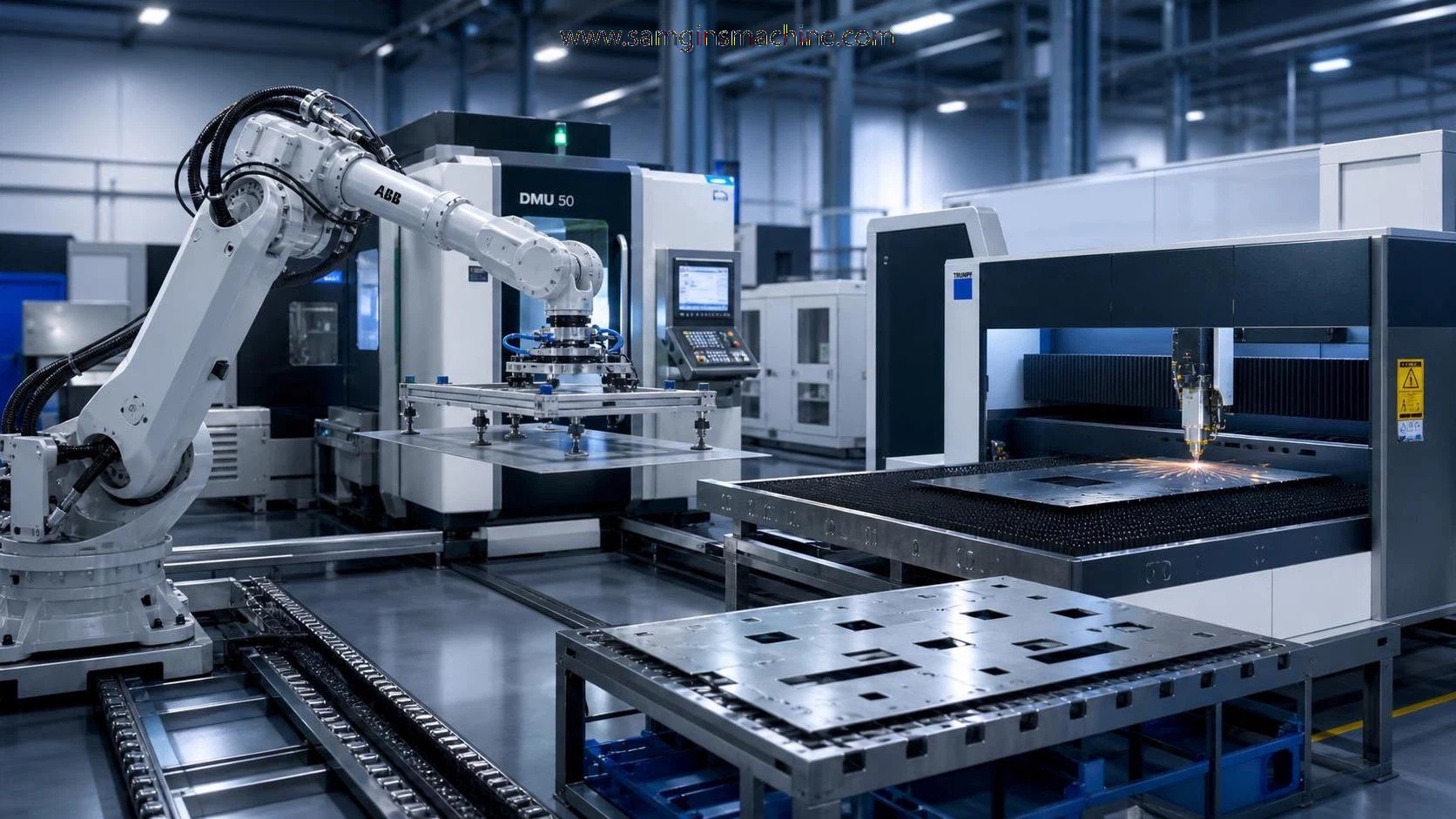
Robotic Manipulator Applications That Improve Line Flexibility
For project managers seeking faster changeovers and more adaptable production, robotic manipulator applications are becoming a practical way to improve line flexibility.
They help reduce bottlenecks, stabilize output quality, and handle shifting order mixes without rebuilding the whole line.
In manufacturing and processing machinery, that matters more than ever.
Customers want shorter lead times, smaller batches, and more product variation. A robotic manipulator makes that transition easier and more controlled.
Why Line Flexibility Has Become a Priority
Many factories were designed for stable, repetitive output.
That model works poorly when orders change every week, material types vary, and delivery windows keep shrinking.
From recent market shifts, the clearer signal is simple.
The winning line is not always the fastest line. It is the line that switches tasks with less downtime and less process drift.
This is where robotic manipulator deployment changes the economics of production.
- It reduces manual handling between machines.
- It supports repeatable motion during changeovers.
- It allows one cell to manage multiple product variants.
- It improves scheduling when labor availability is uneven.
Where a Robotic Manipulator Delivers the Most Value
A robotic manipulator is most useful where frequent movement, positioning, or orientation affects throughput and consistency.
1. Welding Cells
In welding, part placement errors quickly create scrap, rework, and unstable cycle times.
A robotic manipulator can feed, rotate, and present parts at repeatable angles for robotic or automated welding equipment.
That keeps weld quality more stable during model changes and reduces dependence on highly variable manual loading.
2. Cutting and Blank Preparation
Sheet and plate processing often slows down between storage, loading, cutting, and unloading.
A robotic manipulator can automate those transfers and keep upstream and downstream equipment better synchronized.
In practical projects, this is especially useful for precision manufacturing and small-batch, multi-variety production.
For example, pairing automated handling with a Steel Plate cnc fiber laser cutting machine can shorten waiting time around metal cutting processes.
3. CNC Machine Tending
Milling machines, CNC lathes, and machining centers often lose output during loading and part exchange.
A robotic manipulator keeps spindles running longer by handling repetitive loading tasks with predictable timing.
This also helps when different part families share the same equipment within one shift.
4. End-of-Line Handling and Palletizing
Finished parts still need sorting, stacking, transfer, and packaging.
A robotic manipulator at the end of the line removes labor-heavy handoffs and supports cleaner production flow.
How Robotic Manipulator Systems Improve Flexibility
Line flexibility is not just about adding automation.
It comes from reducing the time and uncertainty between one production state and the next.
A robotic manipulator helps in several practical ways.
- Faster changeovers through stored motion programs and repeatable positioning.
- Better process balance by matching handling speed to machine cycle time.
- Lower variation because parts are presented consistently.
- Safer material flow in operations involving heat, sparks, sharp edges, or heavy workpieces.
- Easier expansion because one cell can often be reprogrammed for new tasks.
This also means flexibility becomes measurable, not just theoretical.
Managers can track changeover time, idle time, scrap rate, operator intervention, and output per shift before and after installation.
What to Evaluate Before Selecting a Robotic Manipulator
Not every robotic manipulator project improves flexibility automatically.
Results depend on choosing the right application range, payload, integration method, and control logic.
- Workpiece size, weight, and shape variation.
- Cycle time targets for each connected machine.
- Fixture complexity and repositioning needs.
- Material type and surface sensitivity.
- Required accuracy, repeatability, and traceability.
- Future product mix and expected order volatility.
For lines involving laser cutting or downstream fabrication, handling accuracy becomes especially important.
A system processing carbon steel, stainless steel, aluminum alloy, or copper needs reliable positioning and clean transfer logic.
Otherwise, automation simply shifts the bottleneck from labor to alignment and recovery time.
A Practical Integration Approach for Mixed Production Lines
The best robotic manipulator projects usually start small and expand with evidence.
In actual operations, a phased approach reduces risk and keeps decisions tied to measurable outcomes.
Phase One: Map the Interruptions
Identify where people wait, where machines idle, and where part orientation causes repeated corrections.
Phase Two: Standardize the Interfaces
Before adding automation, simplify fixtures, signal exchange, and loading rules.
A robotic manipulator performs best when the surrounding process is clear and consistent.
Phase Three: Automate the Highest-Friction Task
This is often machine tending, plate loading, welding positioning, or part sorting.
Phase Four: Expand Based on Data
Once stability improves, extend the robotic manipulator to adjacent steps and connect planning with real shop-floor capacity.
This method fits mixed production environments better than a full replacement strategy.
Matching Automation with Equipment Capability
Flexibility improves further when handling automation matches machine performance.
In sheet metal and plate fabrication, equipment with CNC programming, CAD/CAM integration, and optional automatic feeding offers clear benefits.
For instance, some fiber laser systems support complex shape cutting without molds, narrow kerf control, and smooth edges.
Typical configurations may include 1500W to 6000W or higher power, with models such as CNC-3015, 4020, 6015, 6020, and 6025.
When combined with a robotic manipulator, those capabilities help maintain flow across variable jobs and plate sizes.
That combination is especially useful when frequent nesting changes, material switching, and fast dispatch schedules are part of normal production.
Common Risks and How to Avoid Them
Even a strong robotic manipulator application can underperform if the planning is weak.
- Over-automating unstable processes instead of fixing root causes first.
- Ignoring part family differences during gripper and fixture selection.
- Focusing only on machine speed while neglecting transfer, queue, and recovery logic.
- Skipping operator training and daily maintenance routines.
- Choosing a closed setup that cannot support future product changes.
A better approach is to treat flexibility as a system-level target.
That includes equipment, programming, tooling, safety, maintenance, and production planning.
When those elements align, a robotic manipulator becomes a practical production tool rather than a standalone automation showcase.
A Stronger Path to Flexible Manufacturing
For modern fabrication and machining operations, line flexibility is now a core operating requirement.
A robotic manipulator helps meet that requirement by improving transfer speed, process consistency, and changeover control.
Companies with broad equipment experience often see the best results because they understand the full line, not just one machine.
Wuxi Samgins International Trade Co.,Ltd supplies a wide range of mechanical equipment, including welding robots, CNC cutting machines, milling machines, lathes, laser cutting machines, and H-beam production line equipment.
With manufacturing experience, ISO9001-based quality organization, and production aligned with EU CE standards, the company supports practical automation planning across changing production needs.
The next useful step is to evaluate where a robotic manipulator can remove the most downtime with the least process disruption.
That is usually where line flexibility starts turning into measurable output, lower risk, and faster response to new orders.
search
Products Navigation
Send Us A Message