




Gas Cutting Machine Safety Checks Before Heavy Plate Cutting
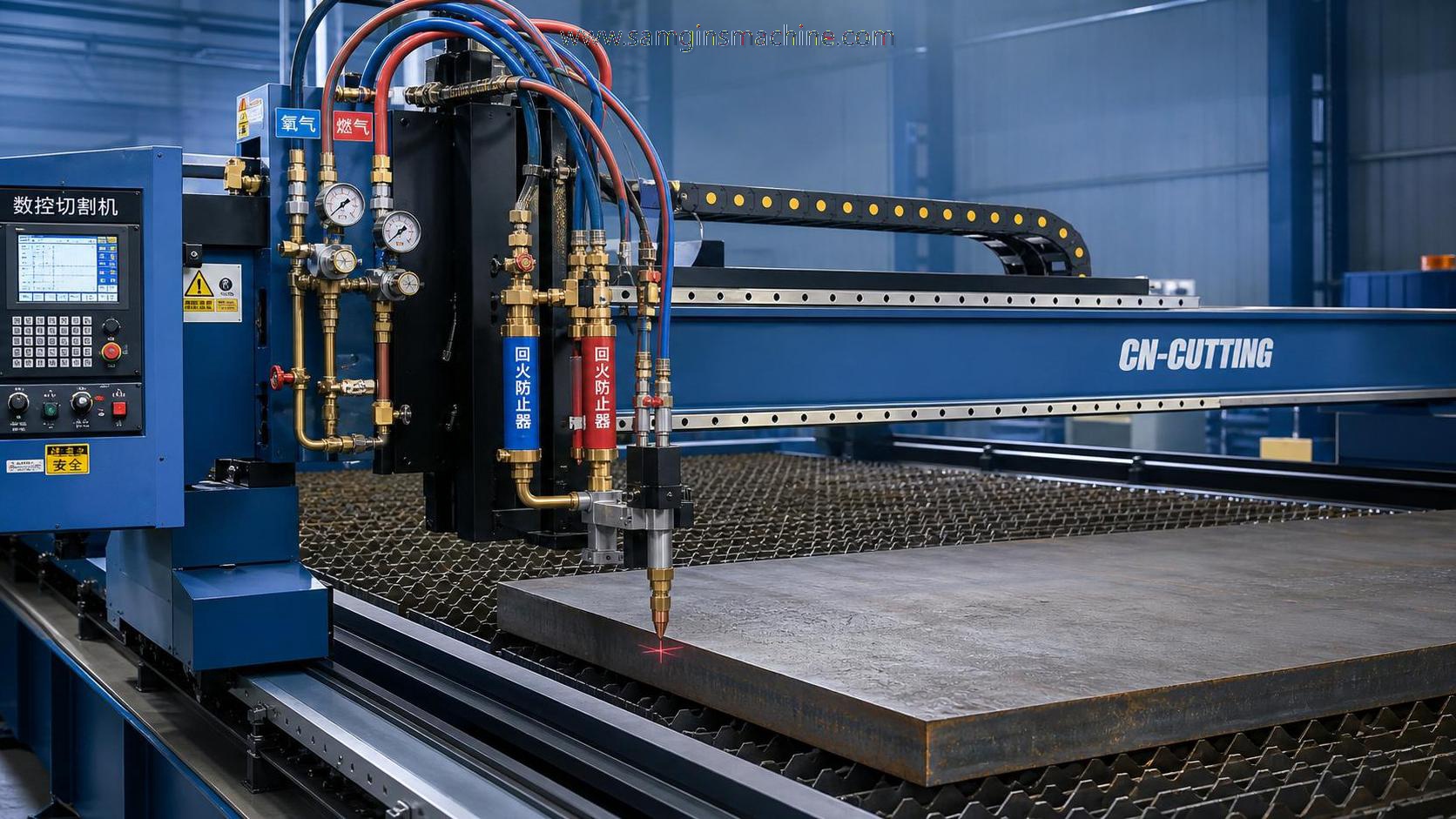
Before thick plate enters the cutting line, a Gas cutting machine should be checked as carefully as the drawing itself. In heavy plate processing, small safety omissions often become large losses, from fire and flashback incidents to uneven kerf, edge slag, rework, and unplanned stoppage.
That is why pre-cut inspection matters beyond compliance. It protects personnel, preserves plate quality, and supports steady throughput across fabrication shops handling structural steel, pressure parts, ship components, and other large metal sections.
Why safety checks deserve attention before heavy plate cutting
Heavy plate cutting places higher thermal and operational demands on equipment than light sheet work. Torch travel is slower, heat input is greater, and any instability in gas flow or machine motion becomes more visible on the finished edge.
A Gas cutting machine working on thick material also operates near combustible hoses, regulators, slag, sparks, and oxygen-rich conditions. This combination increases the consequence of leakage, poor ventilation, blocked nozzles, or careless ignition practice.
From a production perspective, one failed check can affect more than one part. It may damage consumables, waste expensive plate, interrupt downstream welding, and trigger extra grinding or deburring work.
What a pre-cut safety check really covers
A useful inspection routine is not only about visible damage. It should confirm whether the Gas cutting machine can cut safely, consistently, and within the required dimensional standard during the full cycle.
In practice, the check usually combines five areas: gas supply, torch condition, machine movement, work environment, and operator protection. These areas are linked. A stable torch means little if the rail is misaligned or the ventilation is poor.
Core inspection focus
Gas system checks that should never be rushed
The gas system is the first place to slow down. Oxygen and fuel gas must be verified before ignition, not during troubleshooting. Pressure gauges should respond normally, and hose connections should be firm, clean, and free from oil contamination.
Leak testing is still one of the most practical controls. A Gas cutting machine can appear normal at startup and still lose pressure under load. Soap solution checks on regulators, valves, and hose joints remain effective when done routinely.
Flashback arrestors also deserve close attention. If they are missing, installed incorrectly, or overdue for replacement, the machine should not move into heavy plate work. Thick plate jobs create longer exposure and more heat around the torch assembly.
Torch condition and cut quality are tightly connected
Many quality defects begin as safety defects. A worn nozzle, blocked preheat port, or loose torch head can produce irregular flames. That changes edge geometry and increases the chance of popping, backfire, or uncontrolled slag projection.
The nozzle selected for 12 mm plate is not suitable for 40 mm or thicker sections. Matching tip size, oxygen purity, and torch height to the material thickness is basic, but it is often where preventable defects begin.
A short test cut on scrap is often more valuable than a visual check alone. It shows flame stability, pierce behavior, kerf consistency, and whether the Gas cutting machine holds speed through corners and lead-ins.
Machine travel, plate condition, and surrounding environment
Heavy plate cutting is not only about the torch. Rail surfaces, rack systems, cable routing, and height control all influence safety. Jerky motion can pull hoses, disturb flame position, and turn a correct setup into a poor cut.
Plate surface condition matters too. Rust scale, oil, paint residue, and moisture can affect ignition and generate extra smoke. When flame cutting leaves heavy slag or burrs, post-process handling becomes another safety issue.
For operations that regularly move parts from flame cutting to finishing, equipment such as RNS1300 Sheet metal deburring machine can help stabilize the next stage. It is suitable for burr removal, descaling, polishing, and edge processing after flame, plasma, or laser cutting.
Its pass-through design, vacuum adsorption support, and 360 degree roller brush deburring are useful when sharp edges and slag particles must be controlled without changing part dimensions. That matters when cut quality and handling safety must be managed together.
Industry expectations are moving beyond basic compliance
In many fabrication businesses, customers now expect more than workable parts. They expect traceable process control, stable edge condition, and documented maintenance routines. Safety checks before cutting support all three expectations.
This is especially relevant for suppliers serving overseas markets. Wuxi Samgins International Trade Co.,Ltd has built its equipment offering around mechanical processing lines that support consistent production, with organization aligned to ISO9001 and EU CE requirements.
That background reflects a wider shift in manufacturing and processing machinery. Buyers and plant teams are comparing not only machine price, but also process reliability, maintenance accessibility, and how safely equipment fits into real production flow.
A practical checklist before the first cut
A short, disciplined checklist is usually better than a long document nobody follows. The goal is to catch the issues most likely to stop production or create unsafe conditions.
- Confirm oxygen and fuel gas cylinders or supply lines are correctly identified and isolated when not in use.
- Inspect hose aging, cracking, burns, and routing near hot scrap or moving machine parts.
- Verify regulator settings against plate thickness and nozzle recommendation.
- Check torch tip cleanliness and replace damaged nozzles before ignition.
- Test ignition sequence and flame stability on scrap material.
- Check machine rails, drive response, emergency stop, and travel limits.
- Remove combustible waste, pooled oil, and loose slag around the cutting table.
- Confirm ventilation and dust control are operating normally.
- Review cut path, lead-in position, and pierce points before starting thick plate.
Where post-cut finishing affects the safety conversation
Safety does not end when the flame is off. Thick plate parts often leave the table with sharp edges, oxide scale, and residual burrs. These conditions create handling risks and can interfere with fit-up, coating, and welding quality.
Where consistent edge finishing is required, the RNS1300 model offers processing up to 1300 mm width and 0.5 to 40 mm thickness, with PLC control, adjustable conveying speed, and dust removal support. Used appropriately, it helps make post-cut parts cleaner and easier to transfer downstream.
This kind of integration matters because a Gas cutting machine should be evaluated within the whole line, not as an isolated asset. Safer cutting, cleaner edges, and predictable finishing usually reinforce each other.
What to review next
If pre-cut checks are producing frequent findings, the issue may be larger than operator routine. It may point to poor maintenance intervals, unsuitable nozzle inventory, unstable gas supply, or a mismatch between machine capability and heavy plate demand.
A useful next step is to compare three records together: inspection logs, cut defect reports, and downtime events. Patterns usually appear quickly. They show whether the Gas cutting machine needs better discipline, component replacement, or a broader process upgrade.
When heavy plate work is growing, review the cutting stage together with downstream edge finishing, dust control, and material handling. That approach gives a clearer basis for equipment decisions and helps turn safety checks into a measurable production advantage.
search
Products Navigation
Send Us A Message