




Robotic Manipulator Explained: Key Types, Working Principles, and Industrial Use Cases
What A Robotic Manipulator Is In Industrial Automation
A robotic manipulator is a programmable mechanical arm designed to move a tool, gripper, torch, sensor, or workpiece through controlled paths. In industrial settings, it converts electrical, hydraulic, or pneumatic power into coordinated motion across multiple axes, allowing manufacturers to automate tasks that require repeatable positioning, stable speed, and consistent process control.
The term usually covers the arm structure, joints, drives, controller, end effector, and safety interface working together as one system. Depending on the application, a robotic manipulator may weld structural steel, transfer sheet metal, load a CNC machine, handle pipe sections, or support cutting and polishing operations where human consistency becomes difficult to maintain at scale.
In manufacturing and processing machinery, the value of a robotic manipulator comes from controlled motion under production conditions. That means payload capacity, reach, repeatability, path accuracy, duty cycle, mounting method, and compatibility with fixtures all matter more than headline specifications alone. Buyers should treat the manipulator as part of a full process cell, not as an isolated arm.
Industrial standards also shape selection. A robotic manipulator used in export-oriented production often needs documentation aligned with machine safety practice, electrical compliance, and customer-specific fabrication codes. This is why suppliers with experience in ISO9001 systems, CE-related requirements, and fabrication norms such as ASME or API are often preferred for serious B2B projects.
How A Robotic Manipulator Works
At the core of a robotic manipulator are linked joints and axes. Servo motors or other drive systems rotate or translate each joint according to instructions from the controller. The controller calculates motion based on programmed coordinates, speed limits, acceleration, tool orientation, and process parameters, then sends synchronized commands so the arm reaches the target position with controlled timing and path quality.
Feedback is essential. Encoders, limit switches, and process sensors report the real position and state of the manipulator. Closed-loop control compares commanded movement with actual movement and corrects deviations in real time. In welding or cutting, this helps maintain torch angle, travel speed, and stand-off distance, which directly affect penetration, bead quality, cut edge condition, and downstream rework rates.
The end effector defines the task. A robotic manipulator can carry a welding torch, plasma head, laser head, gripper, magnetic lifting tool, polishing spindle, or inspection sensor. Tooling selection changes not only function but also payload demand, cable routing, heat exposure, and required motion stiffness. A manipulator for pipe welding faces different engineering constraints from one used for sheet handling or deburring.
Integration with external equipment is equally important. Positioners, rotators, gantries, conveyors, seam trackers, safety fencing, and power sources often determine overall productivity. In heavy fabrication, the best results usually come from matching the robotic manipulator with coordinated workholding devices so the robot handles precise motion while the fixture or rotator presents the part in the most efficient welding or processing position.
Key Types Of Robotic Manipulator Systems
Articulated robots are the most widely recognized type. Their rotary joints provide high flexibility and make them suitable for arc welding, material handling, machine tending, and complex spatial movement around irregular workpieces. A six-axis articulated robotic manipulator is often the baseline for general industrial automation because it can control position and orientation at the same time in confined or multi-angle work zones.
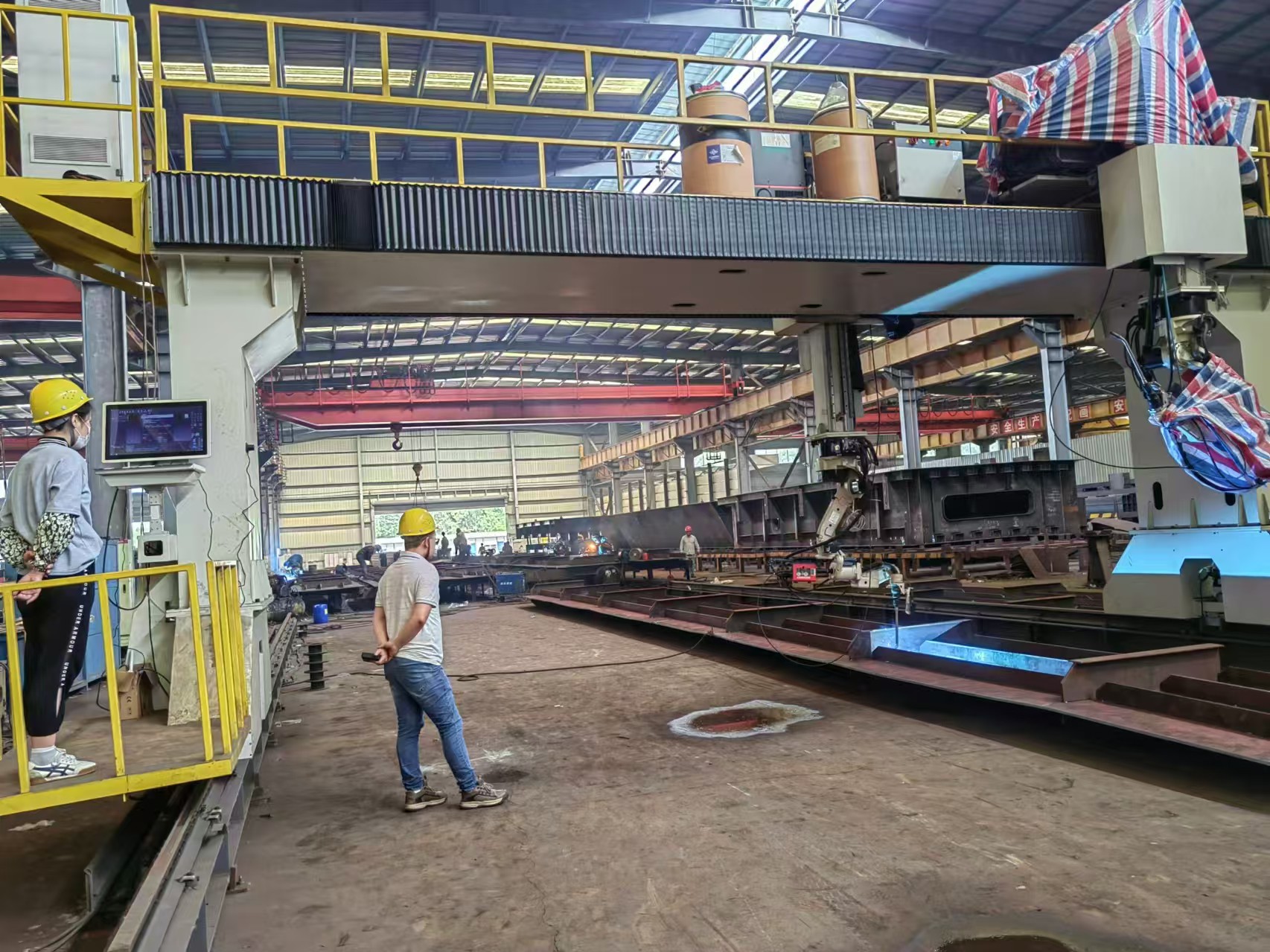
Cartesian and gantry systems move along linear axes and are favored when the process requires long travel, large work envelopes, or straightforward coordinate logic. For oversized fabrications, steel structures, tanks, and pipe assemblies, a gantry robotic manipulator can offer better coverage than a floor-mounted arm. This is where solutions such as a 9 axis gantry type welding robot become relevant for long seams and large-format welding paths.
SCARA and delta manipulators are more common in high-speed assembly or light pick-and-place applications than in heavy fabrication. They excel where speed, compact footprint, and repetitive planar motion are the priority. In contrast, cylindrical, polar, or specialized coordinate systems still appear in niche automation cells where the workpiece geometry and process path justify a less common motion architecture.
Hybrid systems combine manipulators with external axes such as rotary positioners, welding rotators, head-tail stock units, or linear tracks. In practical terms, many buyers are not purchasing only a robotic manipulator but a coordinated automation package. Wuxi Samgins addresses this pattern through welding robots, customized 7-axis and 9-axis systems, welding positioners, welding rotators, and long seam welding machines built around the process rather than the arm alone.
Why Manufacturers Use A Robotic Manipulator
The first driver is repeatability. Manual operations depend heavily on operator skill, fatigue level, shift variation, and working environment. A robotic manipulator can repeat programmed motion across long production runs, helping stabilize weld appearance, bead placement, cut consistency, handling rhythm, and part-to-part quality. For export manufacturers or contract fabricators, this consistency supports more predictable delivery and inspection outcomes.
The second driver is productivity under difficult conditions. Heavy components, long seams, repetitive loading, elevated heat, fumes, and awkward joint access can reduce manual throughput and increase ergonomic risk. A robotic manipulator allows continuous operation with less dependence on scarce specialist labor. In welding and fabrication cells, it also makes multi-shift utilization more realistic when paired with robust fixturing and parameter control.
The third driver is process integration. Manufacturers increasingly need one system to work with CNC cutting, plate preparation, H-beam lines, pipe handling, and finishing equipment. Because Wuxi Samgins supplies a broad machinery range including welding robots, H-beam production machines, CNC plasma and fiber laser cutting machines, plate rolling and leveling machines, and pipe processing equipment, buyers can align the robotic manipulator with upstream and downstream equipment from a fabrication workflow perspective.
A robotic manipulator also supports product flexibility. As order mixes change, programmable motion is easier to reconfigure than dedicated hard tooling. This is particularly useful for job shops, steel structure plants, tank manufacturers, and pipeline contractors that handle varied dimensions and batch sizes. The business case becomes stronger when customization, tooling support, and long-term technical service are available from the supplier.
Who Should Consider This Technology
A robotic manipulator is most suitable for factories where repetitive motion and quality consistency directly affect profitability. This includes steel structure workshops, pressure vessel and tank producers, pipeline fabricators, ship-related fabrication shops, sheet metal factories, machinery manufacturers, and general metalworking companies that face recurring welding, handling, positioning, cutting, or surface finishing tasks.
It is also relevant for companies facing labor constraints or quality variation between shifts. If a process depends on a small number of highly experienced operators, automation becomes attractive as a way to preserve output, reduce bottlenecks, and shorten training dependence. A robotic manipulator does not remove the need for skilled process engineering, but it can reduce variability once the process window is properly established.
Typical decision makers include factory owners, production managers, plant engineers, welding engineers, procurement teams, and project managers responsible for capacity expansion. Their concerns usually go beyond robot reach and payload. They want clarity on fixture design, software usability, maintenance support, spare parts lead time, export compliance, and whether the cell can be adapted as product lines evolve.
For buyers in international projects, supplier experience matters. Wuxi Samgins cites more than ten years of export experience and familiarity with common fabrication codes used in different markets. That matters when the robotic manipulator will be installed in environments where documentation, voltage adaptation, safety practices, and local acceptance standards influence the success of commissioning and long-term operation.
Application Scenarios And Global Project Context
A robotic manipulator is widely used where workpieces are large, heavy, or geometrically repetitive. In tank and vessel fabrication, the manipulator may support circumferential welding, longitudinal seams, nozzle-area processing, or coordinated movement with welding rotators. In structural steel, it can be deployed with H-beam assembly, welding, drilling, and straightening lines to reduce manual handling and improve production rhythm across multiple stations.
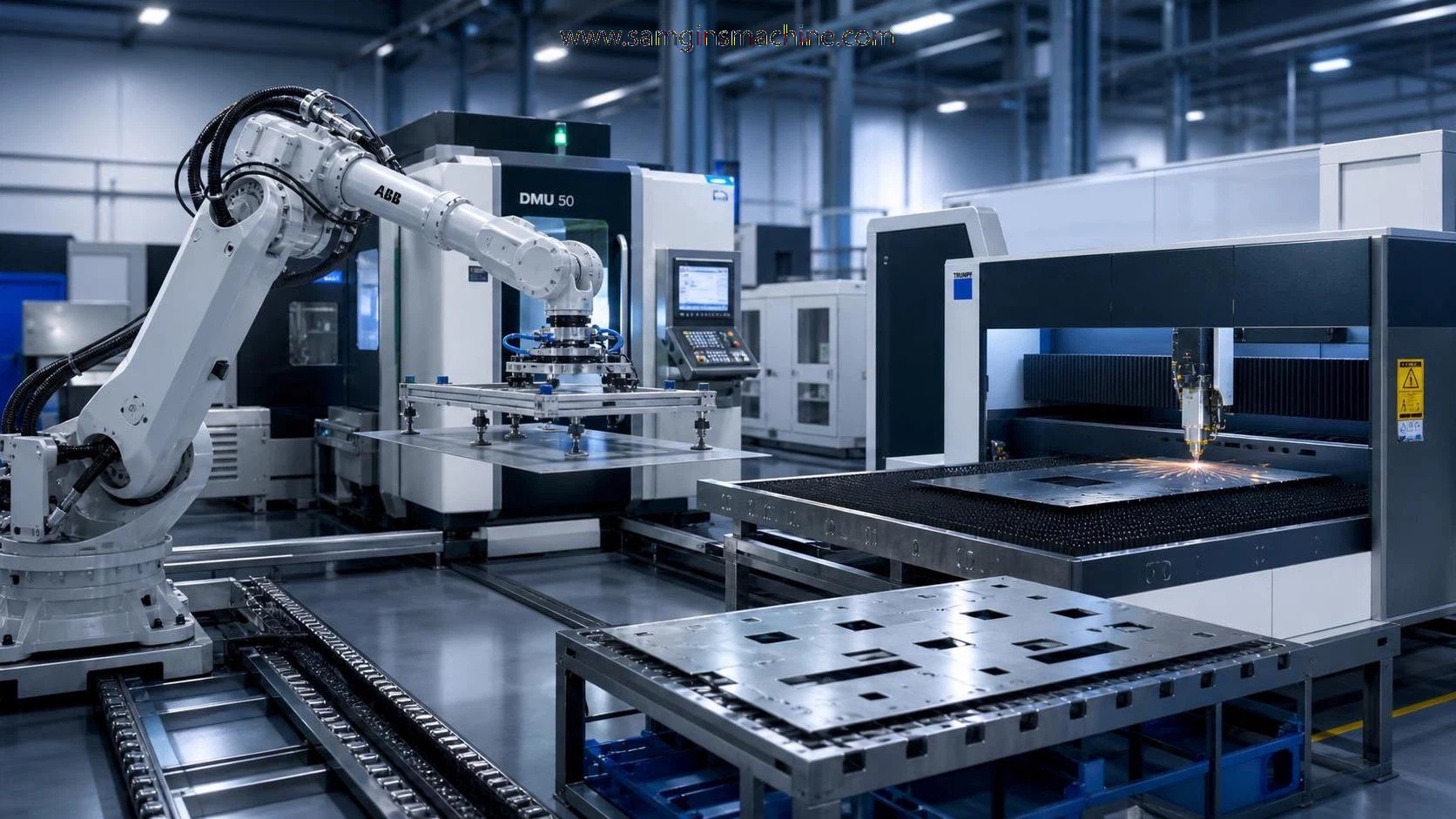
Pipe and tubular applications are another strong fit. Long pipe joints, repeated weld paths, and demanding alignment conditions make automation attractive, especially when combined with 12 m pipe welding machines, manipulators, rotators, and positioners. In sheet metal and fabricated components, a robotic manipulator may support loading, unloading, deburring, polishing, or part transfer between cutting, bending, and rolling equipment.
Real buying decisions are often shaped by prior delivery experience in similar regions or industries. Wuxi Samgins lists international customers such as URALSTANKOIMPORT, MD Calbah Industries Pty Ltd, Ersay International Transport, Contevix comercio e servicos ltda, Zein Steel Industries Co.LLC, BatysMunaiGazZhabdyktary LLP, PT.Cahaya mas Cemerlang, Estructuras Metalicas Girders Chile Limitada, and Lincoln Electric-MENA. While each project differs, this indicates practical exposure to cross-border machinery supply.
From a market access perspective, buyers should verify whether the robotic manipulator cell aligns with their required safety and documentation framework. Wuxi Samgins states compliance with ISO9001 quality systems and EU CE Machinery and LVD directives for its machines. For many importers, that is an important starting point when reviewing machine acceptance, technical files, and procurement risk before shipment and installation.
How To Select The Right Robotic Manipulator
Selection should begin with the process, not the robot catalog. Buyers should define material type, joint design, workpiece size, takt time, fixture logic, required weld or handling path, and expected annual output. A robotic manipulator that looks oversized on paper may still be correct if the application includes long-reach access, torch clearance constraints, or future product expansion.
Core technical factors include payload, reach, repeatability, axis configuration, speed profile, mounting orientation, and compatibility with external axes. The end effector and cable package should be considered early because they affect inertia, collision risk, thermal exposure, and maintenance complexity. In fabrication, it is also necessary to check whether the manipulator can maintain process stability under spatter, vibration, dust, and variable workpiece tolerances.
Cell design is often the make-or-break issue. A robotic manipulator can underperform if the positioner is weak, the workholding is unstable, or programming access is poor. Buyers should review the complete layout including operator loading, safety fencing, power source placement, consumable access, and allowance for service operations. This is where a supplier with both robot and auxiliary machinery experience can reduce integration risk.
For applications with unusual geometry or heavy-duty requirements, customization matters. Wuxi Samgins highlights customized 7-axis and 9-axis welding robots, heavy-duty welding rotators, and long seam welding machines for tanks, pipelines, steel structures, and sheet metal factories. That makes sense where standard robotic manipulator packages do not fully address travel length, part size, or positional accessibility.
Manufacturing, Installation, And Quality Control
A reliable robotic manipulator project depends on disciplined engineering before shipment. This usually includes application review, motion simulation where needed, fixture confirmation, electrical planning, and definition of interfaces with welding power sources, cutting systems, conveyors, or rotating devices. For fabricated machinery lines, coordination between the robot cell and adjacent equipment often determines whether the final line operates smoothly or develops avoidable stoppages.
Component quality has a direct effect on long-term stability. Wuxi Samgins states that key hydraulic, servo, and CNC components use world-famous imported brands to support precision, stability, and service life. In practical procurement terms, this matters because axis response, controller reliability, and consistent electrical performance influence not only production quality but also troubleshooting time and spare parts planning.
Installation should follow a structured sequence: foundation and anchoring, electrical connection, safety verification, dry-run motion checks, tool center point calibration, fixture validation, process parameter tuning, and operator training. A robotic manipulator cannot deliver expected quality if commissioning stops at basic motion confirmation. Process qualification under real workpiece conditions is necessary, especially for welding, where joint fit-up and heat input affect repeatability.
Quality control should continue after handover. Buyers should request inspection records, operating manuals, wiring drawings, wear-part lists, and maintenance guidance. Long-term service capability matters as much as the machine itself. Wuxi Samgins positions its offer around design, manufacturing, sales, after-sales, and technical support, which is relevant for importers trying to reduce quality variance, delivery friction, and service gaps over the equipment life cycle.
Total Cost Of Ownership And Return On Investment
The purchase price of a robotic manipulator is only one part of the investment. Buyers should calculate total cost of ownership across the arm, controller, tooling, fixtures, safety system, programming, installation, training, spare parts, consumables, and downtime risk. In welding applications, filler consumption, shielding gas efficiency, rework reduction, and cycle time improvement may have more financial impact than the initial robot price difference between suppliers.
ROI depends on utilization. A robotic manipulator running one short shift on highly variable low-volume parts may have a slow payback unless the cell is designed for fast changeover. By contrast, repetitive welds, heavy handling, long seams, or round-the-clock production often produce a stronger business case. Buyers should model best-case, base-case, and conservative scenarios rather than relying on optimistic output assumptions.
Maintenance planning affects cost stability. Preventive lubrication, cable inspection, torch cleaning, wear-part replacement, encoder health checks, and periodic recalibration can prevent larger failures. Importers should also ask about remote support, recommended spare packages, and local service strategy. A lower-priced robotic manipulator can become more expensive over time if documentation is weak, response times are slow, or critical parts are difficult to source.
For many B2B buyers, the best financial result comes from matching the robotic manipulator with the surrounding process equipment from the start. When the arm, positioner, rotator, cutting machine, and fabrication line are selected as a coordinated system, throughput is easier to predict and the payback calculation becomes more credible. That systems view is especially relevant for workshops expanding capacity rather than buying a single standalone machine.
Maintenance Timing And Future Industry Trends
A robotic manipulator should be maintained according to duty cycle, environment, and process intensity. High-heat welding cells, dusty steel workshops, and continuous production lines usually require more frequent inspection than light assembly applications. Buyers should establish a practical schedule for lubrication, bolt checks, cable dress inspection, sensor verification, software backup, and calibration review from the start of production rather than after issues appear.
Upgrades typically become relevant when product mix changes, output targets rise, or digital integration becomes a priority. Common improvement paths include adding linear tracks, changing end effectors, integrating seam tracking, improving offline programming, or connecting the robotic manipulator to plant data systems for utilization and maintenance monitoring. These upgrades can extend service life and improve the economics of the original investment.
The direction of the industry is clear: more flexible cells, better sensor integration, tighter process control, and stronger coordination between robots and fabrication machinery. In metalworking, buyers increasingly want automation packages that connect welding, cutting, handling, plate preparation, and structural processing. This raises the value of suppliers that understand both the manipulator itself and the surrounding production line.
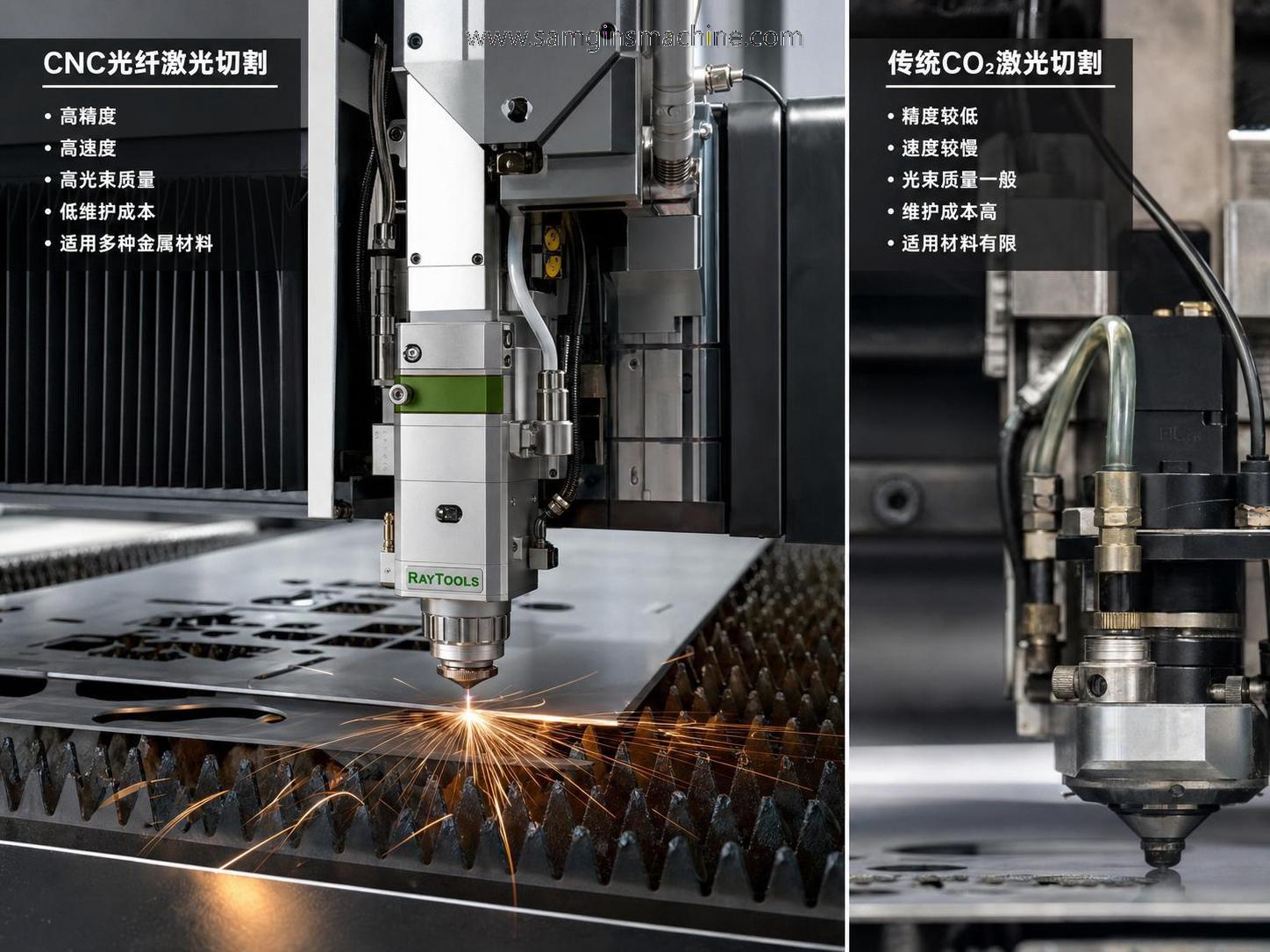
For companies evaluating next steps, related topics worth comparing include robotic manipulator applications that improve line flexibility and the difference between CNC laser cutting machines and fiber laser cutting machines when planning upstream material preparation. In that wider automation context, Wuxi Samgins fits buyers looking for a broad machinery portfolio, customization capability, and practical support for fabrication-oriented robotic manipulator projects.
search

Send Us A Message
Send us a Message
A dedicated person will follow up on your needs one-on-one and provide personalized customized solutions according
to your needs.
Get In Touch
We look forward to hearing from you for in-depth communication on how to fulfill your mixing requirements.