




Can a Shearing Machine Fit into an Existing H-Beam Production Line
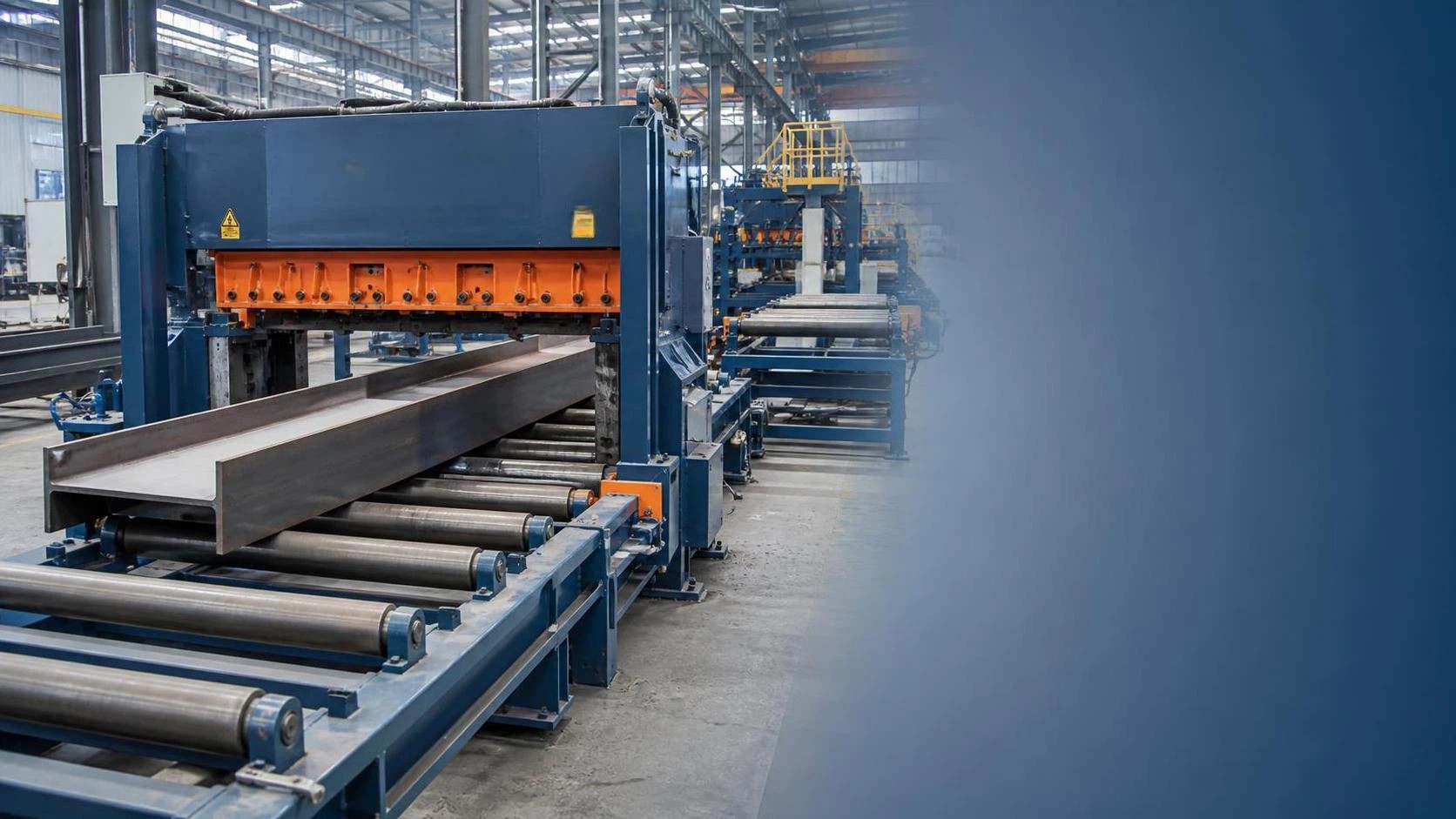
Many steel fabricators ask, Can a shearing machine be integrated into an existing H-beam production line without disrupting output or compromising precision? In many cases, yes, but only when the upgrade is evaluated as a production-system decision rather than a standalone machine purchase.
The real question is not simply whether the shearing machine can be installed. It is whether the existing line layout, material handling logic, control architecture, and production targets can support integration without creating new bottlenecks.
For plant managers, production engineers, and equipment buyers, the value of this upgrade usually comes from reducing manual transfer, improving cut consistency, and expanding processing flexibility. The risks usually involve mismatch in speed, footprint, automation logic, and downstream coordination.
This article explains how to judge compatibility, where integration creates practical value, what technical constraints matter most, and how to decide whether adding a shearing machine to an H-beam line is commercially justified.
When Does It Make Sense to Add a Shearing Machine to an H-Beam Production Line?
A shearing machine is worth considering when the current H-beam line has frequent interruptions caused by off-line trimming, secondary cutting stations, or manual preparation between core fabrication stages.
In many fabrication shops, the beam line itself may be automated, but certain cutting or edge-preparation tasks still depend on separate equipment. That disconnect often increases handling time, labor input, and the chance of dimensional inconsistency.
If operators regularly move workpieces between stations using overhead cranes or forklifts, integration may create measurable efficiency gains. The more often material leaves the main flow, the stronger the business case usually becomes.
Another good use case is product diversification. If a manufacturer processes multiple beam sizes or custom project orders, a shearing machine can improve responsiveness by supporting more controlled preparation before welding, assembly, or finishing.
However, integration is less attractive when the line already runs near-balanced output, product variety is low, and current cutting quality meets project tolerances without excessive manual correction. In that case, added complexity may outweigh the benefit.
Can a Shearing Machine Be Integrated into an Existing H-Beam Production Line in Practice?
The keyword question, Can a shearing machine be integrated into an existing H-beam production line, is usually answered through a technical survey rather than a simple yes or no statement.
Physically, integration is often possible if the plant has enough floor space, a workable material path, and suitable loading and unloading points. Mechanically, the line must also support the section sizes, thickness ranges, and handling loads involved.
Operationally, the larger issue is synchronization. A shearing machine that runs slower than upstream feeding or faster than downstream processing can create idle time, accumulation, or unsafe manual intervention.
Control compatibility matters as well. If the existing beam line uses PLC-based automation, encoder feedback, or centralized production logic, the new machine should communicate cleanly with those systems to avoid fragmented operation.
In modern workshops, successful integration usually depends on treating the shearing machine as part of a coordinated line. It should not behave like an isolated island that requires constant operator judgment to keep material flowing.
What Do Buyers and Production Managers Usually Care About Most?
Most decision-makers are not asking only about machine capability. They want to know whether integration will increase throughput, reduce labor, preserve accuracy, and fit within budget and installation constraints.
The first concern is production continuity. Managers want to avoid a situation where a line upgrade causes prolonged downtime, repeated commissioning delays, or unstable output during the transition period.
The second concern is return on investment. A shearing machine must contribute through lower labor cost, shorter cycle times, reduced crane dependency, less rework, or improved order turnaround rather than by adding equipment for its own sake.
The third concern is compatibility with real production. Beam dimensions, web and flange thickness, batch sizes, and product changeover frequency all determine whether the machine will solve an actual bottleneck.
Finally, maintenance and training matter. Even a technically capable machine can become a burden if spare parts, operator training, electrical integration, or after-sales support are not considered from the beginning.
What Should Be Checked Before Integration?
The first checkpoint is material specification. The shearing machine must be suitable for the steel grades, section profiles, thickness ranges, and dimensional tolerances required by the existing H-beam production process.
The second checkpoint is line position. Manufacturers need to decide whether the shearing function belongs before assembly, between handling stages, or near a downstream preparation zone depending on process sequence and part logic.
Space planning is equally important. Buyers should confirm not only the machine footprint, but also approach space, maintenance clearance, roller tables, transfer zones, scrap handling paths, and safe operator access.
Power supply and foundation requirements should be verified early. Some integration projects fail not because of machine mismatch, but because hydraulic demand, electrical load, or floor bearing capacity was underestimated.
Data and controls must also be reviewed. A machine that cannot exchange status signals, fault alarms, or production commands with the existing line may still run, but it will usually reduce the level of automation.
How Integration Affects Throughput, Labor, and Product Quality
One of the strongest arguments for integration is smoother material flow. When beam components move directly from one stage to another, total process time often drops even if the cutting time itself changes only slightly.
Labor reduction can also be meaningful. Fewer manual transfers usually mean fewer crane operations, fewer repositioning tasks, and less operator time spent aligning workpieces between disconnected machines.
Quality benefits tend to appear in consistency rather than in dramatic technical novelty. Stable shearing conditions can help standardize cut quality, reduce variability, and improve repeatability for downstream fit-up and welding steps.
In some plants, better process continuity also lowers the risk of surface damage. Repeated lifting and moving of large beam sections can introduce scratches, edge impact, or geometric deviation before the next operation begins.
That said, throughput gains are not automatic. If the shearing machine introduces pauses, requires frequent setup, or cannot match mixed-size production rhythms, the expected productivity improvement may not materialize.
What Risks Commonly Disrupt an Otherwise Promising Upgrade?
A common risk is buying a machine based on nominal capacity rather than actual line conditions. Rated performance on paper does not always translate into stable output when mixed profiles and real shift conditions are involved.
Another risk is neglecting upstream and downstream balance. Even if the shearing machine performs well independently, it may create congestion if conveyors, rollers, positioning devices, or welding stations cannot absorb the new pace.
Software and control mismatch is another frequent issue. If operators must manually confirm each transfer or repeatedly override automatic steps, the line loses efficiency and becomes more dependent on individual skill.
There is also a project-management risk. Installation windows, commissioning sequence, and operator training must be planned carefully. A technically correct machine can still damage production performance if implementation is rushed.
Finally, some companies overestimate the benefit when their true constraint lies elsewhere, such as welding capacity, assembly accuracy, or finishing throughput. Integration only pays when it addresses the real bottleneck.
How to Evaluate ROI Without Oversimplifying the Decision
Return on investment should be calculated from the full production effect, not just from machine price compared with direct labor savings. The broader impact often determines whether the project is truly worthwhile.
Relevant inputs include current handling time, number of material transfers, downtime caused by off-line cutting, rework from inconsistent preparation, and any delivery delays caused by internal process fragmentation.
Managers should also estimate future demand. If the workshop plans to take on larger orders, more custom beam work, or tighter delivery schedules, integrated processing may create strategic value beyond short-term cost reduction.
It is useful to compare three scenarios: keeping the current line unchanged, adding a shearing machine with limited automation, and integrating a shearing machine with coordinated controls and material handling.
This comparison usually shows that the cheapest option is not always the most economical over time. In many factories, partial integration creates recurring inefficiencies that reduce the benefit of the initial lower investment.
What Integration Approach Is Usually the Most Practical?
For most existing facilities, the most practical route is a tailored integration plan based on the current line rather than a generic machine insertion. Existing H-beam lines vary widely in sequence, age, and automation level.
A practical supplier should begin with layout review, process mapping, and production target analysis. The goal is to define where the shearing machine supports the line instead of forcing the line to adapt around it.
Modular integration is often preferable. This may include roller conveyors, transfer devices, hydraulic systems, and control interfaces designed to connect with current equipment while keeping future upgrades possible.
For plants with older equipment, a semi-automatic solution may sometimes be the best intermediate step. It can improve flow and reduce labor while avoiding a full control-system rebuild in one project phase.
For newer plants, deeper automation usually creates stronger long-term value. If the line already has centralized controls and stable process logic, the shearing machine should be integrated at the same operational level.
How an Experienced Equipment Supplier Adds Value
In projects like this, machine quality matters, but application understanding matters just as much. An experienced supplier should be able to evaluate the full process instead of only recommending a standard model.
For H-beam line upgrades, buyers benefit from working with a partner familiar with welding equipment, CNC cutting machines, milling systems, beam line equipment, and other connected fabrication machinery.
That broader perspective helps because integration decisions affect more than one station. The shearing machine may interact with feeding, conveying, welding, end-face processing, or plate preparation depending on plant configuration.
Wuxi Samgins International Trade Co., Ltd supplies mechanical equipment and related production solutions for global industrial users, including H-beam production line equipment, shearing machines, welding systems, CNC machinery, and other metalworking equipment.
For buyers evaluating an upgrade, that matters because successful integration depends on line-level coordination, compliance, manufacturing experience, and after-sales support rather than only on catalog specifications.
Final Answer: Is Integration the Right Choice?
If your current H-beam production line loses time through manual transfers, off-line cutting, inconsistent preparation, or workflow interruptions, integrating a shearing machine can be a smart and practical upgrade.
If the line is already well balanced and your true bottleneck sits elsewhere, the project may offer limited returns. The right decision depends on process data, layout realities, control compatibility, and future production goals.
So, can a shearing machine be integrated into an existing H-beam production line? In many cases, yes. But the better question is whether it can be integrated in a way that improves the entire production system.
That is the standard decision-makers should use. Focus on throughput, labor efficiency, process stability, and long-term flexibility, and the answer will usually become clear through a proper technical evaluation.
search
Products Navigation
Send Us A Message