




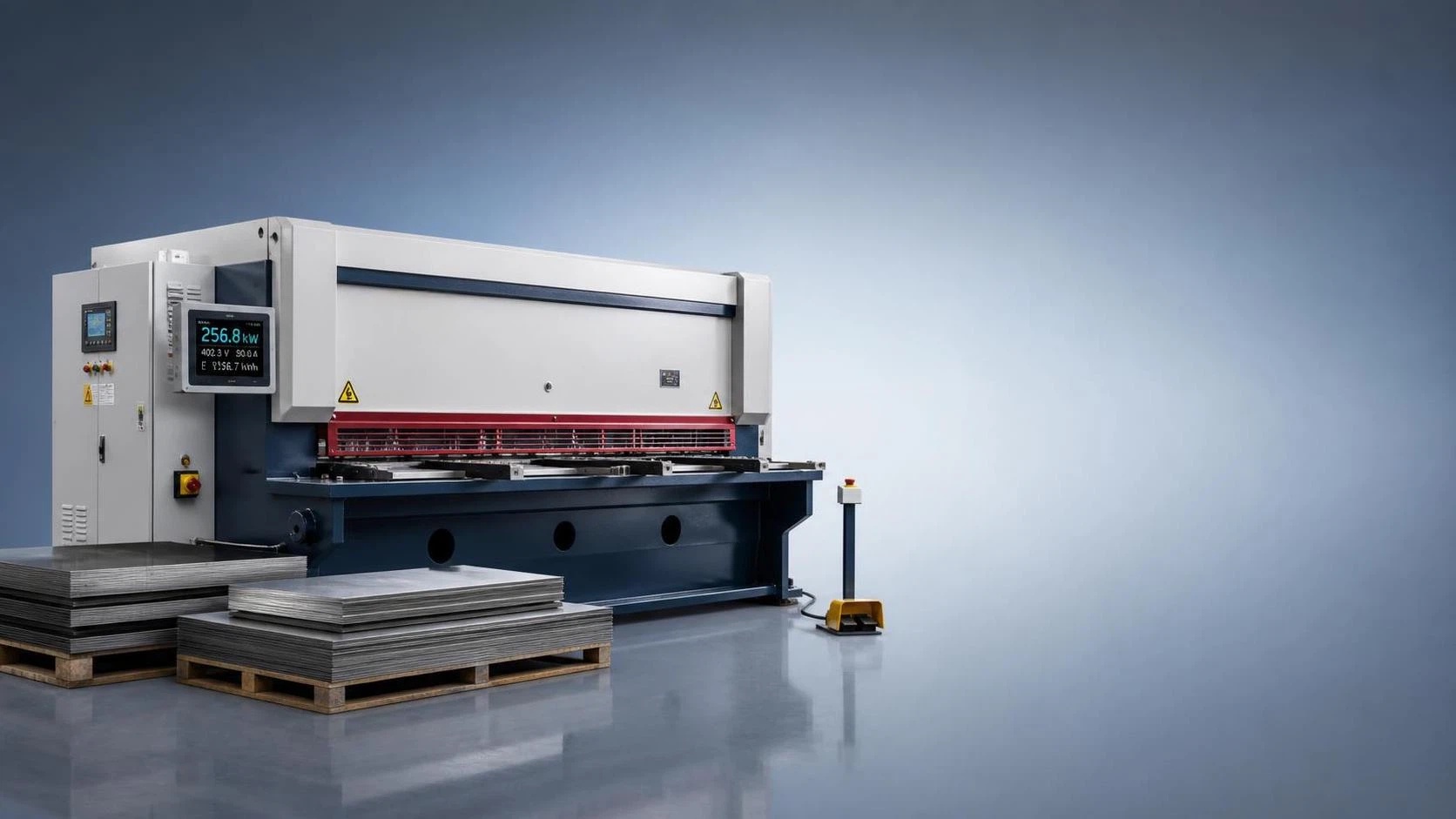
How to Estimate Plate Shearing Machine Power Consumption and Operating Cost
A common problem in sheet metal production is that a shearing machine seems affordable at first, but the actual running cost becomes hard to explain once production starts. Many workshops focus on cutting capacity, blade length, or material thickness, then realize later that electricity use, idle time, maintenance habits, and operator decisions all affect the final number more than expected.
If you are trying to build a reliable plate shearing machine power consumption and operating cost estimate, the goal is not to chase a perfect theoretical figure. The practical goal is to create a usable estimate that helps with machine selection, production planning, quotation control, and cost comparison between shifts, materials, or equipment types.
Why this estimate is often harder than it looks
Many people start with the motor nameplate and assume the calculation is simple: power multiplied by running hours. That is a useful starting point, but it rarely matches shop-floor conditions. A shearing machine does not usually operate at full load every minute. It cycles between cutting, positioning, waiting, loading, unloading, and sometimes stopping between batches. If you calculate only from rated motor power, your number may be too high. If you calculate only from actual cutting time, your number may be too low.
This matters because the cost estimate is often used for several decisions at once. Purchasing teams may compare hydraulic and mechanical models. Production teams may want to know whether thicker plate jobs should be grouped together. Finance teams may ask why energy cost per part changes between months. Without a structured method, each department ends up using a different assumption, and the estimate loses value.
Another source of confusion is that electricity is only one part of operating cost. Blade wear, hydraulic oil condition, lubrication, downtime, operator handling, scrap caused by poor setup, and maintenance interruptions all influence the real cost of using the machine. If you treat energy as the whole story, the estimate may look clean on paper but still fail in actual production planning.
Common mistakes in plate shearing machine power consumption and operating cost estimate
One common mistake is using rated motor power as if the machine continuously draws that load throughout the shift. Rated power tells you the upper design level, not the exact day-to-day draw under all conditions. In real use, the load changes with plate thickness, plate width, cutting frequency, hydraulic system behavior, and how often the machine sits ready but not actively cutting.
Another mistake is ignoring utilization rate. A machine may be powered on for eight hours but only spend a portion of that time performing active cutting cycles. If the estimate treats powered-on time and effective production time as the same thing, the result will distort both energy cost and output cost.
A third mistake is overlooking the material mix. Cutting thin mild steel in short batches is not the same as cutting thicker plate in longer production runs. Even with the same machine, the operating pattern changes. More frequent backgauge adjustments, operator handling, and partial-load operation can alter actual cost per sheet or per meter.
There is also a planning mistake that appears during procurement. Some buyers compare machines only by purchase price and maximum cutting specification. That can lead to choosing a machine that is technically capable but oversized for the daily workload. An oversized machine may still work well, but it can produce unnecessary energy use, lower efficiency under light workloads, and a higher operating cost than a machine better matched to the job.
A practical way to calculate power use before you overcomplicate it
The most useful approach is to separate the estimate into three layers: rated power, operating pattern, and non-energy running cost. This gives you a structured view and keeps the estimate realistic enough for daily business use.
- Start with the machine's main electrical data. Check motor power, hydraulic system power if applicable, and any additional electrical loads such as backgauge controls or auxiliary systems. Use the equipment documentation rather than memory or generic online values.
- Define actual operating hours. Record how long the machine is powered on during a shift and how long it is actively engaged in cutting cycles. These are not the same number, and both are useful.
- Estimate utilization rate. Decide what percentage of powered-on time is active production time. This is one of the most important corrections in a realistic calculation.
- Account for load variation. If your production includes different plate thicknesses and batch sizes, do not assume identical power draw across all jobs. Group jobs into light, medium, and heavy cutting conditions.
- Convert energy use into cost. Multiply estimated kilowatt-hours by your local electricity rate. If rates vary by time period, use the rate structure that matches your production schedule.
- Add operating items beyond electricity. Include consumables, maintenance routine, blade sharpening or replacement, lubrication, and probable downtime impact.
This method is simple enough to apply before purchase, but still detailed enough to improve after installation when you have actual production records.
What to include besides electricity
When people discuss operating cost, electricity usually gets the most attention because it is measurable and easy to convert into money. But in many workshops, the larger problem is not the power bill alone. It is the total cost of keeping the machine consistently productive.
Blade condition is a good example. A shearing machine with dull or poorly adjusted blades may require more effort to maintain cutting quality, create rough edges, increase burrs, or cause dimensional inconsistency. That does not just affect finished parts. It can also increase downstream rework, slow handling, and create avoidable waste. Even if the direct electrical difference is modest, the production cost impact can be real.
Hydraulic condition also matters on hydraulic shearing machines. Oil contamination, poor temperature control, internal leakage, or delayed response can reduce operating efficiency and make cycle behavior less stable. Over time, this influences both maintenance expense and energy use. A machine that appears to be cutting normally may still be running less efficiently than it should.
Operator routine is another hidden variable. Frequent unnecessary idling, repeated setup corrections, inconsistent feeding, and poor job sequencing can all raise cost per part. In many cases, the machine itself is not the main source of cost variation. The way the machine is used is.
How to estimate cost for different production situations
A useful plate shearing machine power consumption and operating cost estimate should reflect how the machine is actually used. The estimate for a service center, a fabrication shop, and a dedicated production line will not be built the same way.
In a mixed-job workshop, production often changes throughout the day. Different materials, small batches, and repeated setup adjustments mean the machine may spend more time in positioning and handling than in continuous cutting. In that case, utilization rate and labor coordination become important. A cost model based only on machine capacity will be too optimistic.
In a repetitive production environment, the estimate can be tighter because batch sizes are more stable and the cutting pattern is easier to predict. Here, it makes sense to calculate cost per shift, per batch, or per output unit. The machine may run more consistently, making energy use easier to estimate and compare over time.
For buyers selecting equipment for future use, the best practice is to estimate three conditions instead of one: a light-load condition, a normal production condition, and a peak-load condition. That gives a more decision-ready view than a single average number, especially when your product mix is likely to change.
How to compare machines without relying on brochure numbers alone
When comparing shearing machines, it is tempting to focus on maximum thickness, blade length, and listed motor power. These are important, but they do not automatically tell you which machine is more economical in your operation. The better comparison standard is whether the machine matches your regular workload, material range, and production rhythm.
If your shop mainly handles medium-thickness sheet in moderate volumes, a machine sized closely to that workload may produce a more sensible operating cost than a larger machine selected only for occasional heavy jobs. On the other hand, if your production regularly includes thicker plate, frequent duty cycles, or integration with other fabrication equipment, a more robust model may be justified because it supports stable output and lower interruption risk.
This is where supplier support becomes part of the decision. Companies such as Wuxi Samgins International Trade Co.,Ltd, which work with a broad range of fabrication equipment including shearing machines, bending machines, plate rolling machines, leveling machines, and related machinery, can be useful during the selection stage because the estimate should fit the whole processing workflow, not just one standalone machine. The important point is not brand language. It is whether the machine choice, technical configuration, and support information help you build a realistic operating model from the beginning.
A step-by-step checklist you can actually use
- Collect machine specifications. Confirm motor power, machine type, cutting capacity, duty expectations, and auxiliary electrical components.
- Define your material range. List the usual plate thicknesses, widths, material types, and batch sizes.
- Map the production routine. Estimate powered-on time, active cutting time, setup time, and waiting time in a normal shift.
- Group your jobs. Separate light, standard, and heavy cutting conditions instead of forcing all work into one average.
- Estimate energy use by condition. Apply a realistic operating ratio rather than assuming continuous full-load use.
- Apply electricity pricing. Use the actual tariff structure relevant to your site and working hours.
- Add maintenance and consumables. Include blades, lubrication, hydraulic care, minor wear parts, and expected service intervals.
- Review handling and scrap risk. Consider whether setup mistakes, poor blade adjustment, or process inconsistency increase effective cost.
- Recheck after production starts. Once the machine is running, compare estimate and actual shop data, then adjust your model.
This checklist is practical because it avoids false precision. It gives you a usable cost range and a repeatable method for improving accuracy later.
How to keep the estimate accurate over time
The estimate should not be treated as a one-time purchasing document. It becomes far more useful when it is updated as operating conditions change. Material mix can shift. Operators can change. Blade maintenance intervals can drift. Electricity pricing can move. Production planning can become either more efficient or more fragmented. If none of that is reflected, even a good initial estimate becomes outdated.
A practical habit is to review the estimate against actual production records at regular intervals. You do not need a complicated system to do this. Even a simple comparison between expected operating hours, actual throughput, maintenance frequency, and energy billing trends can show whether the model still reflects reality. The goal is to catch drift early, especially if the machine starts costing more to run without a clear reason.
It also helps to treat the estimate as a process tool, not just a cost tool. If operating cost rises, the answer may be better scheduling, grouped material runs, improved operator setup discipline, or earlier blade servicing. Cost control is often a result of process control.
Frequently Asked Questions
Is motor power enough to estimate shearing machine electricity cost?
No. Motor power is the starting point, but it does not reflect actual utilization, intermittent operation, material variation, or idle periods. A realistic estimate needs operating pattern data as well.
Should I calculate cost per hour or cost per part?
Both can be useful. Cost per hour helps with machine budgeting and shift planning. Cost per part or per batch is better for quoting and comparing job types. Most workshops benefit from keeping both views.
Does thicker material always mean much higher operating cost?
Usually it increases load and can affect wear, but the total cost also depends on batch size, handling time, setup frequency, and how efficiently the machine is matched to the job. Thickness alone does not explain everything.
When comparing two shearing machines, what matters most for operating cost?
The best comparison comes from matching each machine to your regular workload, not from looking at maximum cutting capacity alone. Machine size, duty pattern, maintenance needs, and workflow fit all matter.
How often should I update my operating cost estimate?
Update it whenever there is a meaningful change in material mix, production schedule, electricity pricing, maintenance condition, or machine utilization. It is also worth reviewing after the first period of actual use following installation.
Conclusion
A reliable plate shearing machine power consumption and operating cost estimate comes from combining technical data with realistic production assumptions. The useful approach is to move beyond nameplate power, include actual operating behavior, and account for maintenance and process losses that affect total running cost.
If you are evaluating a new machine or trying to understand why current operating cost feels inconsistent, start with a simple structured estimate and refine it with shop-floor data. That gives you a better basis for equipment selection, production planning, and long-term cost control.