




Is an Automatic Back Gauge Worth It for Repetitive Plate Cutting
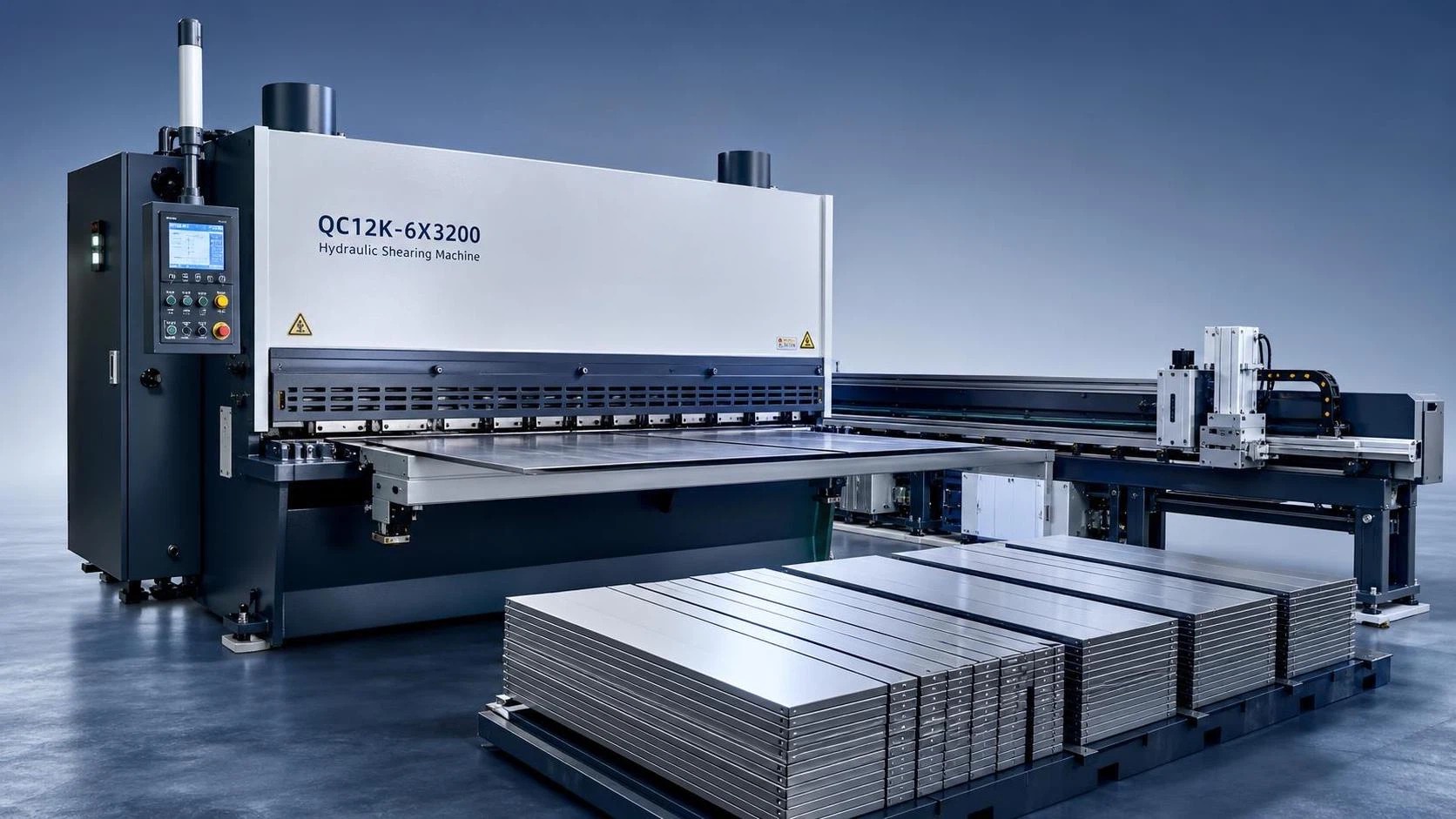
For manufacturers handling high-volume sheet metal work, choosing a shearing machine with automatic back gauge for repetitive cuts can directly affect speed, accuracy, and labor efficiency. But is the investment truly worth it? This article explores how automatic back gauge systems improve repeatability, reduce operator error, and support consistent production quality in demanding metal fabrication environments.
Is an Automatic Back Gauge Actually Worth the Investment?
In most repetitive plate cutting applications, the short answer is yes. A shearing machine with automatic back gauge for repetitive cuts usually delivers clear value when production depends on consistent dimensions, faster setup, and lower operator dependence.
The real benefit is not just automation for its own sake. It is the ability to hold repeatable cut lengths across batches, reduce manual repositioning time, and maintain throughput when operators are handling large volumes.
For buyers comparing machine configurations, the key question is not whether automatic control sounds advanced. The practical question is whether your production mix includes enough repeated dimensions to justify the time and quality gains.
What Searchers Usually Want to Know Before Buying
People searching this topic are rarely looking for a basic definition. They usually want help making a purchase decision, especially when balancing machine cost against production efficiency and quality requirements.
Most decision-makers want to know five things: how much labor can be reduced, whether accuracy improves in real production, what kind of throughput increase is realistic, how difficult the system is to operate, and when manual gauges remain sufficient.
That means useful content should focus less on generic machine descriptions and more on application fit, return on investment, operating scenarios, and the hidden costs of manual repetitive cutting.
Why Repetitive Plate Cutting Creates a Different Cost Structure
In low-volume work, manual positioning may be acceptable because setup time is a smaller share of total production time. In repetitive cutting, however, every additional adjustment becomes part of the unit cost of each finished piece.
When operators repeatedly measure, align, and reposition material by hand, several inefficiencies appear at once. Cycle times become longer, variation between parts increases, and fatigue makes errors more likely over the course of a shift.
These issues are especially visible in operations producing strips, blanks, panels, and pre-cut components in recurring sizes. Even small delays or misalignments can multiply into meaningful losses over hundreds or thousands of pieces.
That is why a shearing machine with automatic back gauge for repetitive cuts is often evaluated less as a convenience feature and more as a process control tool that affects cost, consistency, and scheduling reliability.
How an Automatic Back Gauge Improves Day-to-Day Production
The back gauge controls the distance between the blade line and the stop position that sets cut length. In a manual system, the operator adjusts this position physically and verifies it through repeated checking.
In an automatic system, the gauge moves to programmed positions through motorized control. The operator enters the required dimensions, and the machine positions the stop accurately for repeated cuts or step-by-step sequences.
This changes daily production in several practical ways. First, setup becomes faster because operators no longer need to manually dial in each repeated dimension with the same level of trial-and-error adjustment.
Second, repeatability improves because each move is controlled by the system rather than depending on individual technique. Third, production becomes easier to standardize across different shifts, operators, and order batches.
For manufacturers trying to stabilize output quality, those benefits usually matter more than the simple idea of reducing manual work. Consistent process behavior is often the bigger advantage.
Where the Return on Investment Usually Comes From
Buyers often focus first on machine price, but the return usually comes from several smaller gains that accumulate quickly in repetitive production. Faster positioning is one of the most visible savings.
If an operator saves only a few seconds per cut, the annual effect can still be significant in high-volume jobs. That time saving becomes more meaningful when orders repeat the same dimensions across many sheets or plates.
Scrap reduction is another important factor. Manual measuring errors, inconsistent stop positioning, and operator fatigue can all create off-size parts. An automatic gauge helps reduce these mistakes, especially on long runs.
Labor flexibility also matters. With a more automated setup, production quality depends less on one highly experienced operator. That lowers training pressure and makes staffing easier when workload changes or skilled labor is limited.
Finally, better consistency supports downstream processes. If cut parts feed bending, welding, assembly, or CNC operations, dimensional stability at the shearing stage reduces fit-up issues and rework later in the process.
When an Automatic Back Gauge Makes the Most Sense
Not every shop needs the same level of automation. The strongest business case usually appears in factories with repeated dimensions, medium-to-high daily output, and quality requirements that make variation expensive.
It is especially useful for metal fabrication lines producing cabinet parts, structural components, enclosure panels, base plates, and standardized blanks. In these applications, repeated cut lengths are common and process rhythm matters.
Operations serving batch manufacturing also benefit. Even if product varieties are different, many jobs involve recurring dimensions within each order. Automatic recall and positioning reduce setup delays between those repeated parts.
Companies managing multiple operators or shifts should also consider it seriously. Automated positioning helps create a more predictable process, which is important when output must remain stable regardless of who is running the machine.
When a Manual Back Gauge May Still Be Enough
There are cases where the investment is less compelling. Small workshops handling low-volume, irregular jobs may not recover the additional cost quickly if most parts are one-offs or dimensions change constantly.
If the operator only performs occasional shearing and production speed is not a constraint, a manual gauge can remain a practical choice. The same applies when tolerance demands are modest and downstream operations are forgiving.
Budget priorities also matter. Some buyers may get better short-term value by improving blade quality, machine rigidity, or hydraulic stability before adding automation features, especially if the core machine performance is not yet strong.
The point is not that automatic systems are always superior in every context. The point is that their value rises sharply when repetitive cutting is a regular production pattern rather than an occasional task.
Accuracy, Repeatability, and Operator Error: What Changes in Practice?
Many buyers assume accuracy depends only on the machine frame and blade condition. Those are important, but repetitive cut quality also depends heavily on how reliably the material is positioned before each stroke.
Manual setups can produce acceptable results at the start of a run, then drift as operators work faster, tire, or make small measurement corrections differently over time. That is where variation often enters production.
An automatic back gauge reduces these inconsistencies by controlling the stop position with programmed movement. This creates more stable repeatability across long batches, especially where the same dimension must be held again and again.
It also reduces the need for constant measuring between cuts. That means less interruption, fewer chances for human error, and a more predictable operating rhythm for production teams trying to hit daily targets.
What Features Matter Most When Comparing Machines
If you are considering a shearing machine with automatic back gauge for repetitive cuts, the specification sheet should be read through a production lens, not just a feature checklist.
Start with positioning accuracy and repeat accuracy. Those figures directly affect whether the machine can support your required tolerance over repeated cycles and across different batch sizes.
Next, look at gauge travel range, control interface, and programmability. A useful system should handle your common cut lengths efficiently and allow operators to enter or recall dimensions without unnecessary complexity.
Drive quality also matters. Servo-driven or well-controlled motorized systems usually provide more stable movement and better repeatability than lower-grade implementations, especially when used intensively.
Do not ignore machine integration. The gauge system should match the overall machine structure, hold-down performance, and blade quality. A strong gauge cannot compensate for weak shearing fundamentals elsewhere.
Questions Buyers Should Ask Before Making the Decision
A good purchase decision starts with production data. How many repetitive cuts are made per shift? How many different recurring dimensions appear in typical orders? How often do sizing errors create scrap or rework?
Buyers should also ask how much setup time is currently spent on manual adjustment and checking. In many shops, that time is treated as normal even though it represents a hidden cost repeated every day.
Another useful question is whether output consistency depends too much on a few experienced operators. If process quality drops when staffing changes, automation may provide value beyond simple cycle time reduction.
It is also wise to consider future workload. If your business is moving toward larger batch sizes, tighter delivery schedules, or more standardized production, an automatic system may become valuable sooner than expected.
The Broader Value for Fabrication Businesses
For fabrication companies, machine purchases should support both current production and future competitiveness. An automatic back gauge contributes by making shearing more predictable, scalable, and easier to manage operationally.
That matters in markets where customers expect consistent quality, reliable lead times, and cost control. Manual variability becomes harder to absorb when production planning is tight and downstream processes depend on stable inputs.
Manufacturers sourcing equipment globally often compare price first, but long-term performance comes from the combination of machine design, control reliability, and supplier support. Those factors shape real operating value more than headline features alone.
Companies working with experienced machinery suppliers can evaluate this more effectively by matching machine configuration to actual workload, material types, production targets, and quality expectations rather than buying only on nominal capacity.
Final Verdict: Is It Worth It?
For shops handling frequent repeated dimensions, an automatic back gauge is usually worth the investment. It improves repeatability, shortens setup time, reduces operator error, and supports more stable production across long runs.
It is most valuable when repetitive cutting volume is high enough for small time savings and quality gains to accumulate quickly. In those environments, the feature should be viewed as a productivity and consistency investment, not just an automation upgrade.
For low-volume or highly irregular work, a manual system may still be adequate. But where repetitive plate cutting is part of normal output, a shearing machine with automatic back gauge for repetitive cuts often delivers a practical and measurable advantage.
The best decision comes from reviewing your actual production pattern, not from comparing features in isolation. If repeated cuts are central to your workflow, the business case is usually strong.
search
Products Navigation
Send Us A Message