




What Cutting Specs Matter for a 6mm to 20mm Guillotine Shear
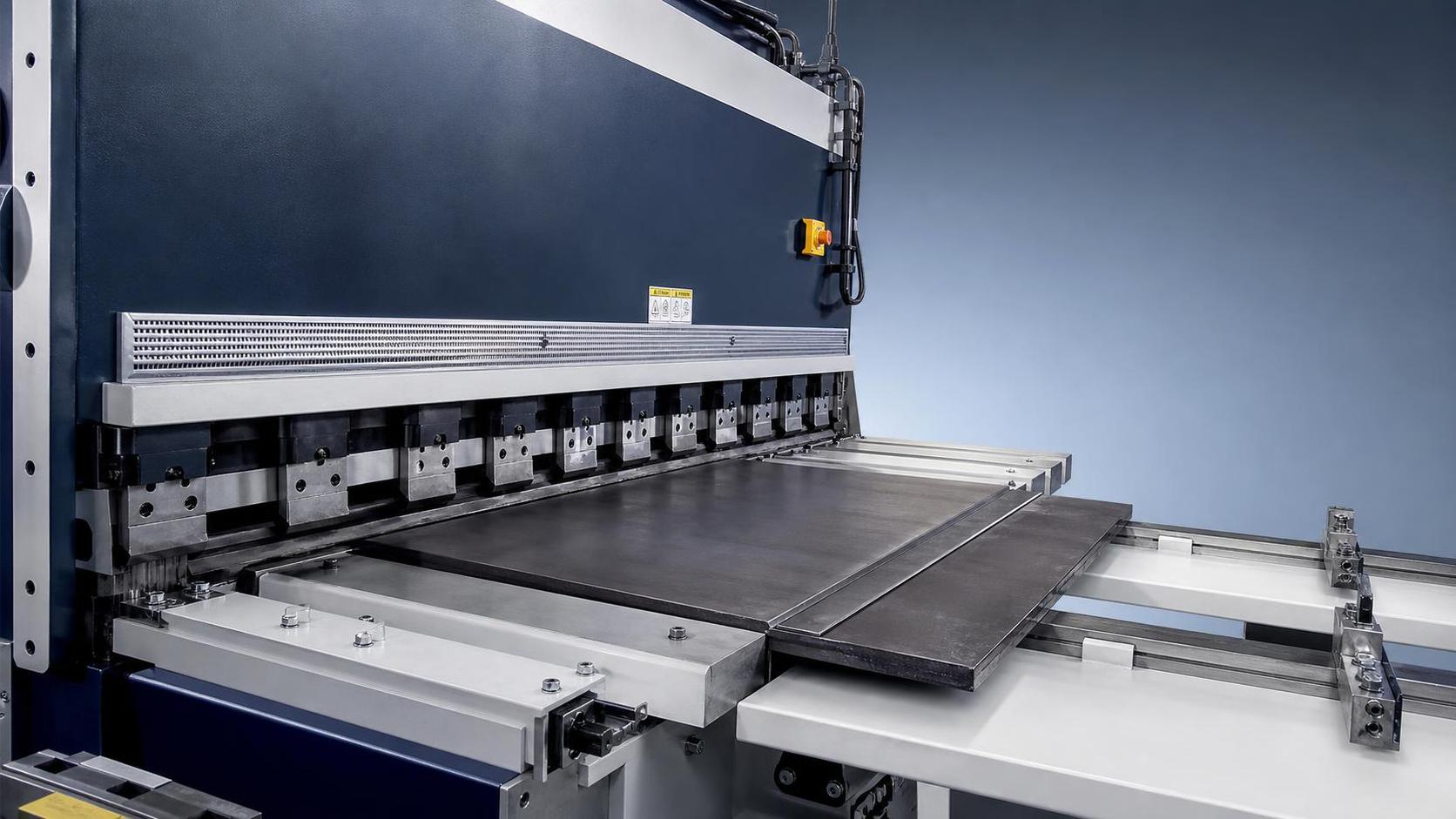
Choosing a guillotine shearing machine for 6 mm to 20 mm plate is rarely just a matter of reading the maximum thickness on a brochure. In actual fabrication work, two machines with the same nominal capacity can perform very differently once material grade, plate width, cut frequency, edge quality requirements, and operator discipline enter the picture. That is why buyers searching for guillotine shearing machine 6mm to 20mm plate cutting specs usually need more than a specification list. They need a way to judge whether a machine will remain stable, accurate, and economical in daily production.
For this thickness range, the decision sits in an important middle zone of plate processing. It is beyond light sheet-metal work, but not yet in the category of very heavy plate shearing. Many workshops use these machines for structural steel parts, base plates, enclosure panels, bracket blanks, welded assemblies, and general fabrication jobs where productivity matters, but downstream processes still depend on cut consistency. In that context, several specifications deserve closer attention than the headline tonnage or the advertised maximum thickness.
The first spec to question is rated cutting capacity
Manufacturers often state capacity as something like “20 mm × 2500 mm” or “16 mm × 3200 mm,” but that figure only becomes meaningful when tied to material tensile strength. A machine rated for 20 mm mild steel may not deliver the same result on higher-strength carbon steel, weathering steel, stainless steel, or plates with inconsistent hardness. If the specification is based on 450 N/mm² material and your shop regularly processes stronger plate, the real usable thickness may be lower.
This is one of the most common purchasing mistakes: treating nominal thickness as an absolute number. A better reading of capacity includes at least three questions:
- What material strength was used for the stated thickness rating?
- Is the full rated thickness available across the full machine length, or only over shorter cuts?
- Is the machine intended for occasional peak-load cutting, or repeated production at that thickness?
For 6 mm to 20 mm applications, duty profile matters as much as peak capability. A workshop cutting 8 mm and 10 mm mild steel all day, with only occasional 16 mm jobs, can reasonably choose a different machine from a plant running 20 mm plate as a standard product. On paper the two users may both shop for a “20 mm shear,” but the machine requirements are not the same.
Cutting length affects frame stability more than many buyers expect
Thickness and length should always be read together. A 20 mm cut over 2500 mm places a different structural demand on the machine than a shorter heavy cut. As machine length increases, maintaining beam rigidity, bed alignment, and even blade loading becomes harder. This directly influences cut straightness, burr level, blade life, and long-term wear.
In practice, many fabrication shops overestimate the cutting length they really need. Buying a longer machine “for flexibility” may sound prudent, but it can increase cost, floor space, energy use, and alignment sensitivity. If the majority of your blanks are below 2000 mm and only a small portion require longer cuts, it is worth checking whether workflow can be redesigned around a more compact and rigid machine.
For procurement teams, this means the useful specification is not only maximum cutting length, but the relationship between:
- plate thickness range actually processed most often;
- average sheet or plate format in the workshop;
- required dimensional tolerance after shearing;
- downstream welding, bending, or machining sensitivity to cut variation.
Blade gap adjustment is one of the most important practical specs
For a guillotine shear working across 6 mm to 20 mm plate, blade gap adjustment is not a minor detail. It is central to cut quality and blade protection. The correct blade clearance changes with material thickness and strength. If the gap is too small, cutting force rises, blade wear accelerates, and edge tearing may increase. If the gap is too large, burr height grows, edge distortion worsens, and dimensional quality can become unstable.
Buyers should look beyond whether blade gap is “adjustable” and ask how it is adjusted:
- Manual adjustment by operator experience
- Mechanically linked adjustment referenced to thickness
- CNC or motorized adjustment integrated with the control system
For low-mix, repetitive work, a manual system may be acceptable if operators are experienced. For export-oriented workshops, subcontract fabrication plants, or operations with frequent material changes, automated or clearly indexed adjustment has strong value. It reduces setup dependence on individual skill and improves repeatability between shifts.
This is particularly relevant in the 6 mm to 20 mm range because the machine may process a wide spread of jobs. Shops often move from medium plate to relatively heavy work on the same shift. In that environment, inaccurate blade gap settings are a hidden source of scrap and rework.
Rake angle influences force, distortion, and edge appearance
The cutting angle, often called rake angle, changes how the blade enters the plate and how cutting force is distributed. A larger rake angle reduces peak force demand, which can help the machine cut thicker material more efficiently. But there is a trade-off: larger rake angles may increase twisting or bowing on narrower strips, especially when cutting thinner material within the machine’s range.
That is why there is no universally “best” angle. A machine optimized for frequent heavy-plate work may not produce the same flatness result on 6 mm strips as a machine set up for lighter, more precision-oriented cutting. Buyers should match the angle design to their product mix rather than assume that a thicker-capacity machine is automatically better across the full range.
In practical terms:
- Heavy structural plate work may prioritize force efficiency and capacity margin.
- Parts heading directly to welding fixtures may need more predictable edge geometry.
- Narrow strips or visible parts may be more sensitive to twist and deformation.
If edge appearance and part flatness are critical, it is worth requesting actual cutting samples on representative materials instead of relying only on catalog parameters.
Hold-down system quality matters for more than safety
On a production floor, hold-down cylinders are often discussed mainly in terms of preventing plate movement during the cut. That is true, but their influence is broader. Effective hold-down design helps reduce marking, limits sheet lift, improves repeatability, and supports cleaner cuts on wider plates.
For 6 mm to 20 mm material, the hold-down system should be evaluated for:
- pressure distribution across the cutting width;
- surface protection where cosmetic marking matters;
- stability when cutting shorter blanks or narrow strips;
- reliability under continuous production cycles.
Insufficient hold-down performance often shows up as practical shop-floor complaints rather than as a formal machine fault: inconsistent cut line, plate shifting, variable burr, or operator reluctance to run certain jobs at normal speed.
Backgauge specifications should be matched to the real tolerance requirement
Many buyers focus heavily on the cutting body and pay too little attention to the backgauge. Yet in real use, repeat production quality depends heavily on gauge accuracy, stroke speed, controller usability, and support for larger plates. For 6 mm to 20 mm plate cutting, backgauge performance should be judged on more than maximum travel.
The useful questions include:
- What repeat positioning accuracy is stated?
- How stable is the gauge under vibration and repeated impact?
- Is the gauge suitable for heavy plates, or only for lighter sheet feeding?
- Does the control system allow quick programming of common cut sequences?
If the workshop mostly cuts simple blanks with modest tolerance, a basic gauge may be enough. If the machine supports downstream CNC bending, welding cell loading, or high-volume batching, poor backgauge performance becomes expensive very quickly. Lost time from manual repositioning and verification often exceeds the savings from buying a lower-spec system.
Main motor power and hydraulic system design should not be read in isolation
Buyers often compare motor power as if it were a direct indicator of cutting quality. It is not. Higher power alone does not guarantee a better machine. What matters is the relationship between hydraulic design, cylinder sizing, frame stiffness, cutting geometry, and control logic.
Still, motor power and hydraulic configuration do deserve attention because they influence cycle stability, energy use, and long-run reliability. A machine that works near its limit too often may show more heat buildup, slower response, and faster component wear. For plants operating multiple shifts, this matters far more than for occasional job-shop use.
Questions worth asking include:
- Is the hydraulic system sized for continuous duty at the intended thickness range?
- How is oil temperature managed under sustained operation?
- What are the maintenance intervals for seals, filters, and hydraulic components?
- Are standard replacement parts easily available in export markets?
For cross-border buyers, serviceability is not a secondary issue. A technically acceptable machine can become commercially risky if spare parts lead times are long or if the hydraulic and electrical systems use non-standard components in the destination market.
Blade material and blade life have direct cost implications
In the 6 mm to 20 mm segment, blade cost and blade maintenance are often underappreciated during purchase. Blade life depends on plate grade, clearance setting, operator habits, and whether the machine is routinely pushed to upper capacity. But the underlying blade material and regrind allowance still matter.
From a purchasing perspective, it is sensible to confirm:
- blade material grade and heat treatment basis;
- number of usable cutting edges;
- expected regrind practice;
- availability and cost of replacement blade sets.
Shops processing abrasive or stronger materials should be especially cautious about optimistic blade-life claims. Unless tested on your actual plate mix, such figures should be treated as indicative only.
Machine accuracy is broader than a single tolerance number
When discussing guillotine shearing machine 6mm to 20mm plate cutting specs, accuracy is often reduced to a simplified positioning tolerance. In real fabrication, acceptable performance includes several related results: straightness of cut, squareness, burr level, edge deformation, repeatability over time, and the machine’s ability to maintain those outcomes as wear accumulates.
This matters because some buyers compare only new-machine test cuts. A better evaluation includes whether the design is likely to hold alignment after months of ordinary production. Frame welding quality, stress relief practice, guideway arrangement, blade mounting precision, and assembly consistency all affect this.
For buyers who cannot inspect production facilities directly, documentation can help but does not replace validation. ISO9001-based quality management and CE-related conformity are useful signals when properly applied, but they are not a substitute for technical due diligence. Certification should support, not replace, machine-level assessment. Specific scope and applicability should always be verified.
Control system features should reflect workflow, not fashion
Not every 6 mm to 20 mm guillotine shear needs an advanced CNC package, but not every buyer should settle for a basic controller either. The right level depends on job complexity, operator turnover, production volume, and integration with other processes.
Useful control features may include:
- stored job programs for repeat batches;
- motorized blade gap setting;
- cut count management;
- diagnostic alarms;
- support for conveyor, sheet support, or front feeding arrangements.
In many workshops, the most valuable feature is not sophistication but reduction of setup variability. If one shift consistently produces better cuts than another, the issue may be less about operator talent than about too much manual dependence in machine setup.
Safety and compliance should be checked market by market
For internationally traded machinery, safety compliance is both a legal and operational issue. Buyers should confirm guarding, emergency stop logic, electrical standards, and documentation requirements based on the destination country. CE-related declarations may be relevant for certain markets, but the exact compliance obligation depends on where and how the machine will be placed into service. Requirements should be checked against current local rules and importer responsibilities. Where details are unclear, they remain 【待核实】 until confirmed against the applicable regulatory framework.
Operationally, safer machines also tend to be easier to standardize in production. Foot switches, guarding arrangement, sheet support, lighting, and accessible controls all influence whether operators can run the machine efficiently without bypassing procedures.
The best specification set is the one that fits the cut mix
There is no single ideal spec for every buyer in this segment. A fabrication business producing general structural parts from 12 mm to 20 mm carbon steel will prioritize differently from a subcontractor frequently switching between 6 mm, 8 mm, and 10 mm plate with tighter dimensional consistency expectations. The decision should come from the real job mix, not from the largest thickness ever mentioned in production meetings.
A sensible evaluation path is to compare machines against five practical questions:
- What material grades and thicknesses dominate actual monthly output?
- How often will the machine run near upper capacity?
- What edge quality is required before welding, machining, or bending?
- How much setup variation can the workshop tolerate?
- How reliable are local service, parts supply, and operator training support?
That is usually where the strongest selection logic emerges. In this market, the most expensive machine is not always the safest choice, and the cheapest machine often becomes costly through downtime, blade consumption, cut inconsistency, and lost throughput.
For anyone evaluating a machine in this category, the specification sheet should be treated as a starting point rather than a conclusion. Rated thickness, blade gap range, rake angle, cutting length, backgauge performance, hydraulic duty capability, and compliance details only become meaningful when tied to the intended plate mix and production rhythm. Buyers who make that connection early are far more likely to select a shear that performs well not just on delivery day, but through years of regular fabrication work.
search
Products Navigation
Send Us A Message