




How to Choose a Shearing Machine for Precision Stainless Steel Cutting
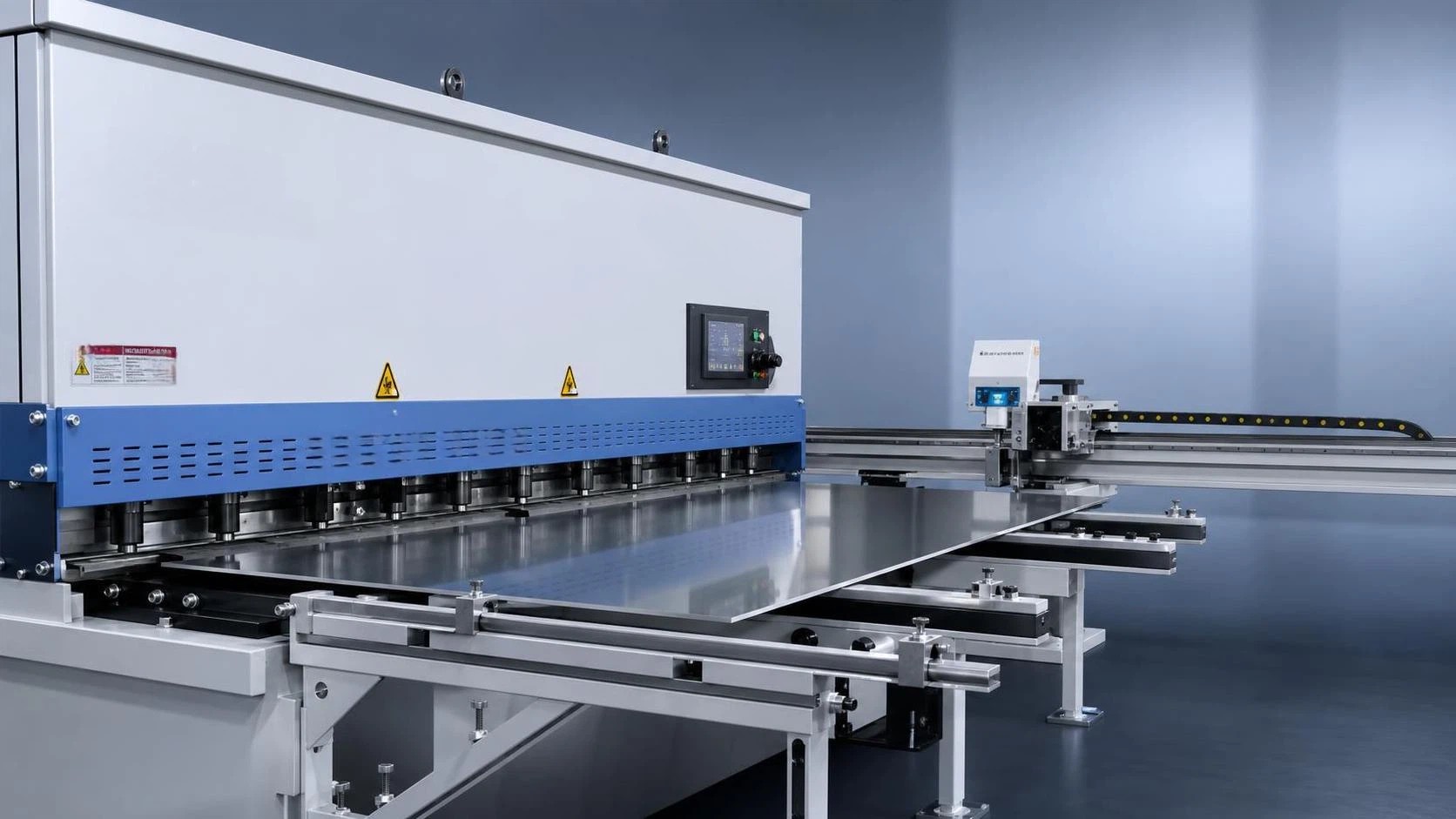
What Really Matters When Cutting Stainless on a Shearing Machine
Choosing a shearing machine for stainless steel plate precision cutting sounds simple until you start looking at actual jobs. Stainless is not mild steel with a nicer finish. It is tougher, springier, more sensitive to blade condition, and much less forgiving when edge quality matters for downstream bending, welding, polishing, or visible architectural parts.
That is why the right machine is not just the one that can “cut the thickness.” A machine may have enough nominal capacity and still leave burrs, twist the strip, mark the surface, or struggle to hold repeatable dimensions over a production shift. For workshops buying a shearing machine for stainless steel plate precision cutting, the better question is this: what combination of frame rigidity, blade quality, backgauge control, hold-down performance, and operator usability will keep the cut stable in your real production mix?
In practice, that answer depends on what you cut most often: thin decorative sheet, medium-thickness fabricated parts, narrow strips, long blanks, mirror-finish material, or plates that go straight into welding and forming. Those jobs do not place the same demands on a machine.
Start With the Material, Not the Machine Brochure
Before comparing hydraulic guillotine shears, swing beam shears, or CNC configurations, define the stainless grades and thickness range you actually process. Austenitic stainless such as 304 and 316 typically behaves differently from carbon steel during shearing. It tends to work harden, and it often requires closer control of blade clearance and sharper tooling if you want a cleaner edge.
A common buying mistake is selecting a machine based on the maximum plate thickness listed in a catalog, while ignoring the width of the sheet, acceptable edge condition, and expected daily volume. If you cut thin stainless sheets with cosmetic surface requirements, sheet support and hold-down design may matter as much as tonnage. If you cut thicker stainless plates in mixed batches, frame strength and adjustment repeatability usually become more important.
It also helps to separate “can cut” from “can cut accurately all day.” Precision in stainless usually depends on consistency, not isolated test cuts.
Hydraulic Guillotine or Swing Beam: The Difference Shows Up at the Edge
For stainless work, many buyers lean toward hydraulic guillotine shears because they generally offer better control of blade gap and cutting angle. That can be useful when tolerances are tighter or when edge quality affects the next process. A well-built guillotine design often maintains more stable cutting geometry across different plate thicknesses.
Swing beam shears are still widely used and can be a practical solution for many fabrication shops, especially when the part mix is not extremely demanding. But if your shop frequently cuts stainless where straightness, minimal distortion, and cleaner fracture zones matter, it is worth looking closely at how the machine handles clearance adjustment and whether the structure stays rigid under load.
This is one reason experienced equipment suppliers usually ask what happens after shearing. If the blank goes into a press brake for visible parts, or into automated welding where fit-up matters, the shear selection should reflect that.
Blade Material and Clearance Are Not Secondary Details
A shearing machine is only as good as its blades in daily production. Stainless steel exposes weak blade quality quickly. If the blade hardness, heat treatment, or grinding quality is poor, you will usually see more burr, higher cutting force, and edge inconsistency long before the machine itself appears to have a problem.
Ask about blade material, regrinding practice, and how clearance is adjusted. Manual adjustment may be acceptable in a shop running one thickness for long periods. It becomes much less convenient when operators switch between different stainless gauges throughout the day. CNC or motorized blade gap adjustment is not just a comfort feature in that situation; it reduces setup variation.
There is no universal clearance setting for stainless. The right value usually depends on grade, thickness, and desired edge condition. If a supplier talks about stainless cutting without discussing blade clearance at all, that is a warning sign.
Backgauge Accuracy Decides Whether “Precision” Is Real
Many shops focus on the cutting force and forget the backgauge. But for repeated blank sizes, the backgauge is where dimensional accuracy is won or lost. On stainless sheets, especially thinner formats, poor gauge stability often leads to variation that gets blamed on the material.
When reviewing a machine, check whether the backgauge system is suitable for your target length range, whether it is driven by a servo or a simpler mechanism, and whether the operator can program and repeat dimensions without trial-and-error adjustments. For precision work, smooth movement and repeatability matter more than a long feature list on the controller.
If your shop cuts narrow stainless strips or short blanks in batches, it is also worth checking finger design and support arrangement. Small details here affect how reliably the sheet sits before the cut.
Surface Protection Is a Bigger Issue Than Many Buyers Expect
Stainless is often chosen because the finished part will be seen. That changes how you should evaluate a shearing machine. Hold-downs, worktable surface condition, ball transfer support, front support arms, and contact points all matter if the material has a brushed, polished, or film-protected surface.
A machine that cuts accurately but scratches visible stainless may still be the wrong machine. Shops doing kitchen equipment, elevator panels, enclosures, or decorative fabrication usually pay much closer attention to this than heavy structural fabricators do.
If surface finish matters, discuss protective measures early: hold-down pressure control, support table treatment, and whether the machine setup suits film-coated stainless. It is easier to address these points before ordering than after installation.
Pay Attention to Distortion, Twist, and Sheet Handling
Precision stainless cutting is not only about a clean edge. Long or narrow pieces can twist, bow, or move during the cut if the machine geometry and support are not right. This becomes obvious in thinner sheet and in long blanks where even slight movement is amplified.
That is why practical buyers ask about front support arms, squaring arm stability, pneumatic or mechanical sheet support, and how the machine handles larger formats. A machine may look fine on standard sample plates and still become awkward in real production where one operator is loading a full-width stainless sheet carefully to avoid marks and misalignment.
For many workshops, the best result comes from looking at the shear as part of the process line, not as a stand-alone machine. If material comes from leveling, and the cut blanks move to deburring, bending, or welding, then consistency between those steps matters. Companies working across multiple sheet metal and fabrication machines often understand this interaction better than sellers focused on one product category alone.
Automation Should Match the Job Mix
Automation on a shearing machine can mean very different things: programmable backgauge, blade clearance adjustment, cut angle control, sheet support, front feeding, or integration with production planning. Not every shop needs all of that.
If your work is repetitive and high-volume, automation usually pays off through setup reduction and more stable output. If your shop handles mixed custom jobs in smaller batches, a simpler machine with reliable mechanical performance may be the better investment. More functions are useful only if operators will actually use them.
This is where supplier experience matters. A company involved in broader metalworking equipment, from CNC cutting and bending machines to deburring and welding systems, is often in a better position to suggest a balanced configuration because they see where the shearing step fits in the whole workflow. Wuxi Samgins International Trade Co., Ltd., established in 2012 in Wuxi, has built its business around that wider equipment perspective, and that tends to be valuable when buyers are comparing not just machine price but process suitability.
Do Not Overlook Build Quality, Standards, and Support
Shearing machines are straightforward in concept, but the difference between a stable machine and a troublesome one often comes down to manufacturing discipline. Frame welding quality, stress handling, hydraulic component selection, electrical layout, and assembly accuracy all affect how the machine behaves after months of use.
For overseas buyers, it is reasonable to ask how production is organized, what standards the machine is built to, and whether documentation and after-sales communication are practical. When a supplier states that production and design follow ISO9001 quality system requirements and EU CE standards, that is helpful, but buyers should still confirm what is included for the exact machine model and destination market. In export business, the details around electrical configuration, guarding, and documents often need to be checked case by case.
Lead time, spare parts availability, and remote troubleshooting also deserve attention. Stainless jobs usually do not tolerate long interruptions if the shear is a bottleneck process.
Questions Worth Asking Before You Place an Order
A useful discussion with a supplier usually includes questions like these:
- What stainless grades and thickness range will this machine handle well, not just theoretically?
- How is blade clearance adjusted, and how often will operators need to change it?
- What edge condition should be expected on the materials we cut most often?
- How is the backgauge configured for repeat accuracy?
- What measures protect polished or film-coated stainless surfaces?
- What support is provided for installation, training, and spare parts?
These questions sound basic, but they often reveal whether a supplier understands stainless fabrication or is simply repeating catalog language.
A Practical Way to Make the Final Choice
If you are comparing several machines, resist the urge to reduce the decision to tonnage and price. For a shearing machine for stainless steel plate precision cutting, the better comparison is overall fit: how the machine handles your usual thickness, how reliably it protects edge and surface quality, how easy it is to set up, and whether it supports the next process without creating hidden rework.
In many shops, the right machine is not the most complex one. It is the one that keeps stainless cutting predictable on ordinary production days, with ordinary operators, under ordinary time pressure. If a supplier can talk clearly about those conditions, and can relate the shear to the rest of your fabrication line, you are usually getting closer to a sound purchase decision.
That is the level at which stainless shearing decisions should be made: not on headline capacity alone, but on whether the machine will keep delivering clean, repeatable cuts when the work is real.
search
Products Navigation
Send Us A Message