




Why Tube Benders Produce Inconsistent Angles on Long Pipes
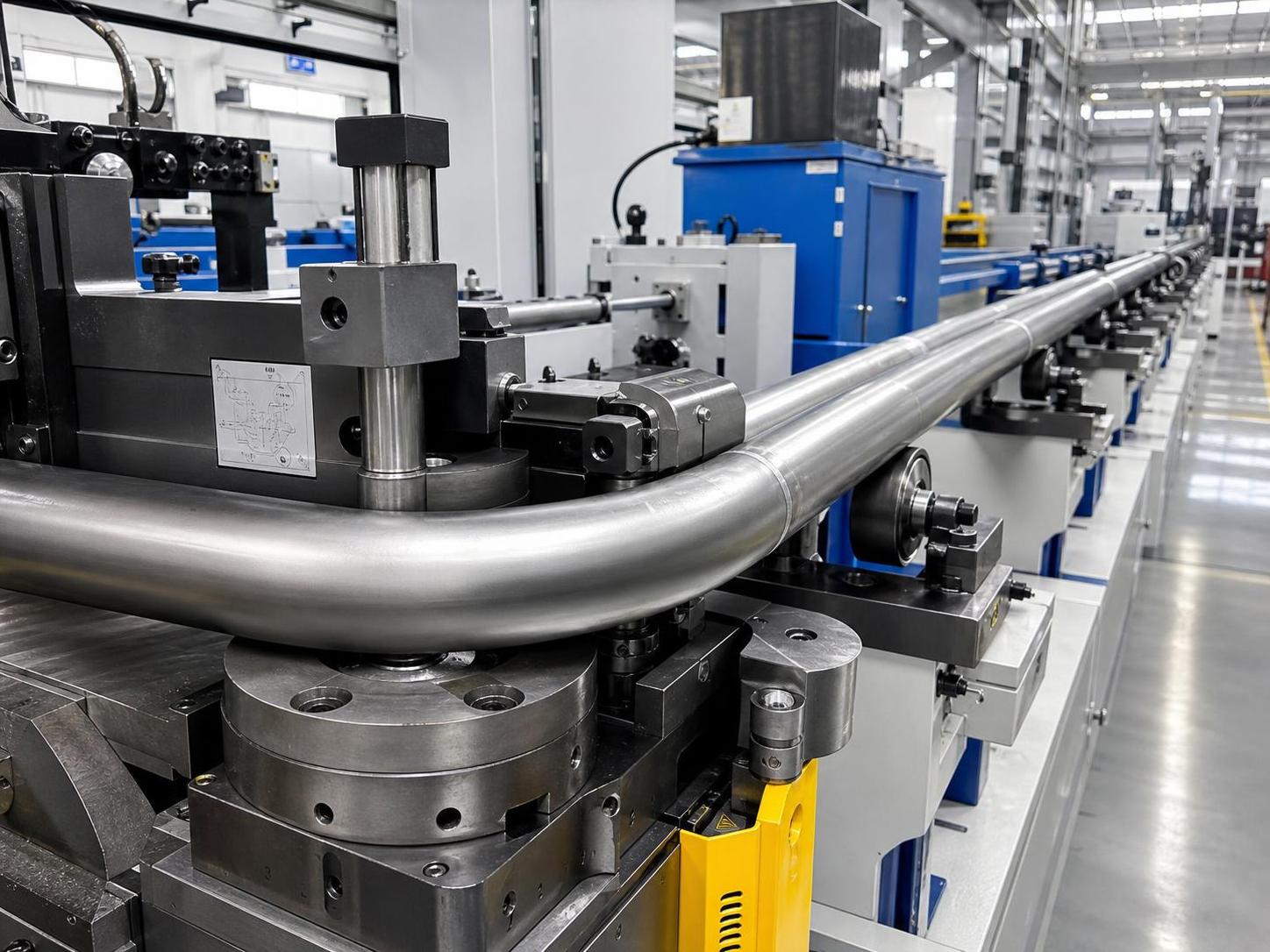
Why does a tube bender produce inconsistent bend angles on long pipes? In most cases, the problem is not caused by a single machine fault. It usually comes from a combination of material springback, wall thickness variation, poor support, weak clamping, tooling wear, and inaccurate calibration.
For fabricators handling long pipes, angle inconsistency creates more than a quality issue. It leads to assembly difficulty, scrap, rework, slower production, and unstable delivery performance. The good news is that these causes can be identified, measured, and corrected through a structured process.
This article explains why a tube bender produces inconsistent bend angles on long pipes, what operators and production managers should check first, and how manufacturers can improve repeatability without relying on trial and error alone.
Why angle inconsistency becomes more obvious on long pipes
Long pipes amplify every weakness in the bending process. A short tube may hide minor material variation or small positioning errors, but a long workpiece magnifies those issues and makes the final angle drift more visible.
The extra length increases leverage during bending. If the pipe is not properly supported, its own weight can create sagging, twisting, or movement at the clamp point. That movement changes the actual bending conditions and affects the finished angle.
Long pipes also place greater demands on feeding accuracy. Even a small alignment error at the start can lead to larger deviation by the time the bending cycle is completed, especially in multi-bend parts or tight tolerance applications.
In practice, this is why many shops ask, “Why does a tube bender produce inconsistent bend angles on long pipes?” The answer often lies in process stability rather than in the bending machine alone.
Material springback is one of the most common root causes
Springback is the natural tendency of metal to return slightly toward its original shape after bending force is removed. It happens in every bending process, but its degree changes according to material grade, hardness, wall thickness, and bending radius.
When long pipes come from different material batches, the springback level may not be identical. Even if the operator uses the same program and tooling, the final bend angle can vary from part to part.
High-strength materials usually show more springback than softer materials. Stainless steel, certain alloy tubes, and work-hardened materials often require more compensation than mild steel. If compensation values are not updated, the angle becomes inconsistent.
Material inconsistency can also exist within the same batch. If the tube has uneven mechanical properties along its length, one section may bend differently from another, causing unstable results in repeated production runs.
The practical solution is to treat springback as a measurable variable. Shops should record material grade, supplier, wall thickness, bend radius, and correction values, then build a standard compensation database instead of depending only on operator experience.
Wall thickness and tube geometry variation directly affect the bend result
Not all tubes are as uniform as their nominal dimensions suggest. Variations in outer diameter, wall thickness, ovality, and straightness can change how the material reacts inside the bending die.
If the wall thickness differs from one pipe to another, resistance to deformation changes as well. Thicker sections may spring back differently, while thinner sections may deform more easily, leading to a different final angle.
Oval tubes or pipes with poor roundness create another problem. Because the tube does not seat consistently in the tooling, contact pressure changes during the bend. That unstable contact can affect both angle accuracy and surface quality.
Straightness matters especially for long pipes. If the incoming pipe already has slight bowing or twist, the feeding position may not stay consistent. The machine may still complete the cycle, but the bend angle can shift unexpectedly.
For this reason, incoming material inspection should not be limited to checking length only. Consistent long-pipe bending requires verification of diameter tolerance, wall thickness tolerance, straightness, and surface condition before production begins.
Inadequate clamping allows the pipe to slip during bending
Clamping problems are a frequent but underestimated source of angle variation. If the clamp die does not hold the pipe firmly enough, the workpiece can slip slightly during rotation, changing the effective bend angle.
This issue becomes more severe on long pipes because the workpiece mass creates additional pulling force. A clamp setting that seems acceptable on short tubes may fail when the same machine processes longer and heavier parts.
Insufficient clamping pressure is only one part of the problem. Worn clamp surfaces, contamination from oil or scale, and poor matching between the tube and the tooling can all reduce actual gripping performance.
On some jobs, operators increase force blindly to stop slippage. That may help temporarily, but too much pressure can mark the tube surface or distort thin-wall material. The better approach is to match clamp pressure, tooling condition, and material characteristics correctly.
When inconsistent angles appear, one of the first diagnostic checks should be whether the tube position shifts between loading and bend completion. Even small movement can explain large angle differences in finished long pipes.
Tooling wear and poor die matching reduce repeatability
Tooling condition has a direct influence on bend consistency. As bend dies, clamp dies, pressure dies, and mandrel-related components wear over time, they no longer control the tube with the same precision as when they were new.
Worn tooling can change friction, contact area, and tube support. That affects how force is transferred into the material and often causes unstable bend angles, especially in longer production runs.
Another issue is die mismatch. If the tooling radius, groove size, or tube fit does not match the actual pipe specification, the bending process becomes less predictable. The machine may still run, but repeatability suffers.
Tooling wear is sometimes mistaken for a programming problem because the angle drift appears gradually. In reality, the program may be correct while the mechanical interface between the machine and the tube has deteriorated.
A disciplined maintenance routine helps prevent this. Regular inspection of die wear, lubrication condition, clamp face quality, and mandrel position can reveal problems before they produce expensive scrap or customer complaints.
Machine calibration errors create hidden angle deviation
Even high-quality tube benders cannot produce stable results if calibration is inaccurate. Servo position errors, encoder drift, axis backlash, and inconsistent hydraulic behavior can all change the true bend angle from the programmed value.
In long-pipe applications, these small errors become more noticeable because the finished geometry is harder to control. A deviation that seems minor on a short sample may cause a serious fit-up problem in a long fabricated assembly.
Calibration issues are often hidden when shops rely on repeated manual correction. If operators constantly adjust programs to “make parts pass,” the process may continue running without solving the underlying source of variation.
A proper check should include angle calibration, feed length accuracy, rotation positioning, and repeat cycle stability. The machine should also be tested under real production conditions rather than with only empty or simplified motion checks.
Manufacturers who want repeatable long-pipe bending need to treat calibration as part of process control, not as an occasional repair task. Stable machine geometry is the foundation for stable part geometry.
Support and handling matter more than many shops expect
Long pipes need controlled support before, during, and after the bend. Without it, the tube may sag under its own weight, shift off-center, or twist slightly as the machine cycles.
These movements may look small to the operator, but they can change contact conditions at the bend area. Once the tube centerline no longer follows the intended path, angle consistency becomes difficult to maintain.
Improper loading methods also contribute to variation. If operators manually feed long pipes without guides or supports, each cycle may start from a slightly different position. That variation carries directly into the finished result.
Additional support devices such as follow rests, side supports, loading tables, or guided rollers can greatly improve repeatability. This is especially important for thin-wall tubes, large-diameter pipes, or high-value parts with tight tolerances.
Good handling practice is not just an ergonomic improvement. In many long-pipe applications, it is a necessary condition for precision bending and consistent angle output.
Operator method and setup discipline still make a measurable difference
Advanced tube benders reduce dependence on operator skill, but they do not eliminate it. Setup quality still affects angle consistency, especially when different materials, pipe sizes, or production batches are involved.
If operators do not verify material identity, tooling fit, lubrication, support position, and first-piece measurements, the process can drift before anyone notices. Long pipes make that drift more expensive because each failed part consumes more material and time.
Standardized setup sheets are useful here. They help ensure that critical variables such as bend compensation, clamp pressure, mandrel position, and support settings are recorded and repeated accurately.
Training also matters. Operators should understand how springback, slippage, die wear, and alignment interact. When they recognize the physical cause behind a defect, troubleshooting becomes faster and more reliable.
For managers, this means angle consistency is not only a machine selection issue. It is also a question of whether the shop has a controlled and repeatable operating method.
How to diagnose inconsistent bend angles step by step
When a tube bender produces inconsistent bend angles on long pipes, the fastest way to solve it is to isolate variables one by one. Random adjustment usually wastes time and may hide the true cause.
Start by checking whether the variation follows material batches. If parts from one batch bend differently from another, springback or dimensional inconsistency is likely involved. Record the data before changing machine settings.
Next, inspect the tooling and clamp condition. Look for wear, poor fit, contamination, and evidence of slippage. Marking the tube before bending can help confirm whether it moves inside the clamp during the cycle.
Then verify machine calibration, including bend angle output, feed axis accuracy, and rotation repeatability. If the machine cannot repeat its motion consistently, process corrections alone will not solve the issue.
After that, review support and handling. Confirm whether the long pipe remains stable throughout loading, bending, and unloading. If not, add or reposition support devices to reduce sagging and twisting.
Finally, standardize the successful setup. Once the cause is identified, document the material data, tooling combination, correction values, and support arrangement so the result can be repeated on future jobs.
What buyers and production managers should evaluate before choosing a tube bender
For companies investing in pipe bending equipment, the key question is not simply whether the machine can bend a given diameter. The more important question is whether it can maintain repeatable accuracy on long pipes in actual production.
That means evaluating machine rigidity, control precision, clamping design, support options, tooling quality, and ease of calibration. A lower purchase price may become expensive if repeatability is poor and scrap rates remain high.
Buyers should also ask suppliers about material range, compensation capability, service support, and documentation. A capable machine backed by weak setup guidance may still create production instability.
Testing with real workpieces is strongly recommended. Trial bending using the customer’s pipe specification, wall thickness, radius, and target angle provides much more useful evidence than generic sample parts.
For manufacturers processing long pipes at scale, consistent bend angles are a business issue as much as a technical one. Better repeatability improves assembly fit, reduces waste, protects delivery schedules, and strengthens customer confidence.
Conclusion
If you are asking, “Why does a tube bender produce inconsistent bend angles on long pipes?” the answer is usually a combination of factors rather than a single failure point. Material springback, wall variation, weak clamping, tooling wear, calibration error, and insufficient support are the main causes.
The most effective response is a systematic one. Check the material first, confirm tooling and clamping condition, verify calibration, improve long-pipe support, and standardize the setup process. This approach delivers more stable angles than repeated guesswork at the machine.
For fabrication businesses, solving bend inconsistency is not only about producing better parts. It also means lower scrap, better efficiency, more predictable quality, and stronger competitiveness in demanding manufacturing projects.
With the right machine configuration, disciplined process control, and reliable technical support, long-pipe bending can achieve the accuracy and repeatability required for modern industrial production.
search
Products Navigation
Send Us A Message