




When Does It Make Sense to Combine Shearing, Laser Cutting, and Bending
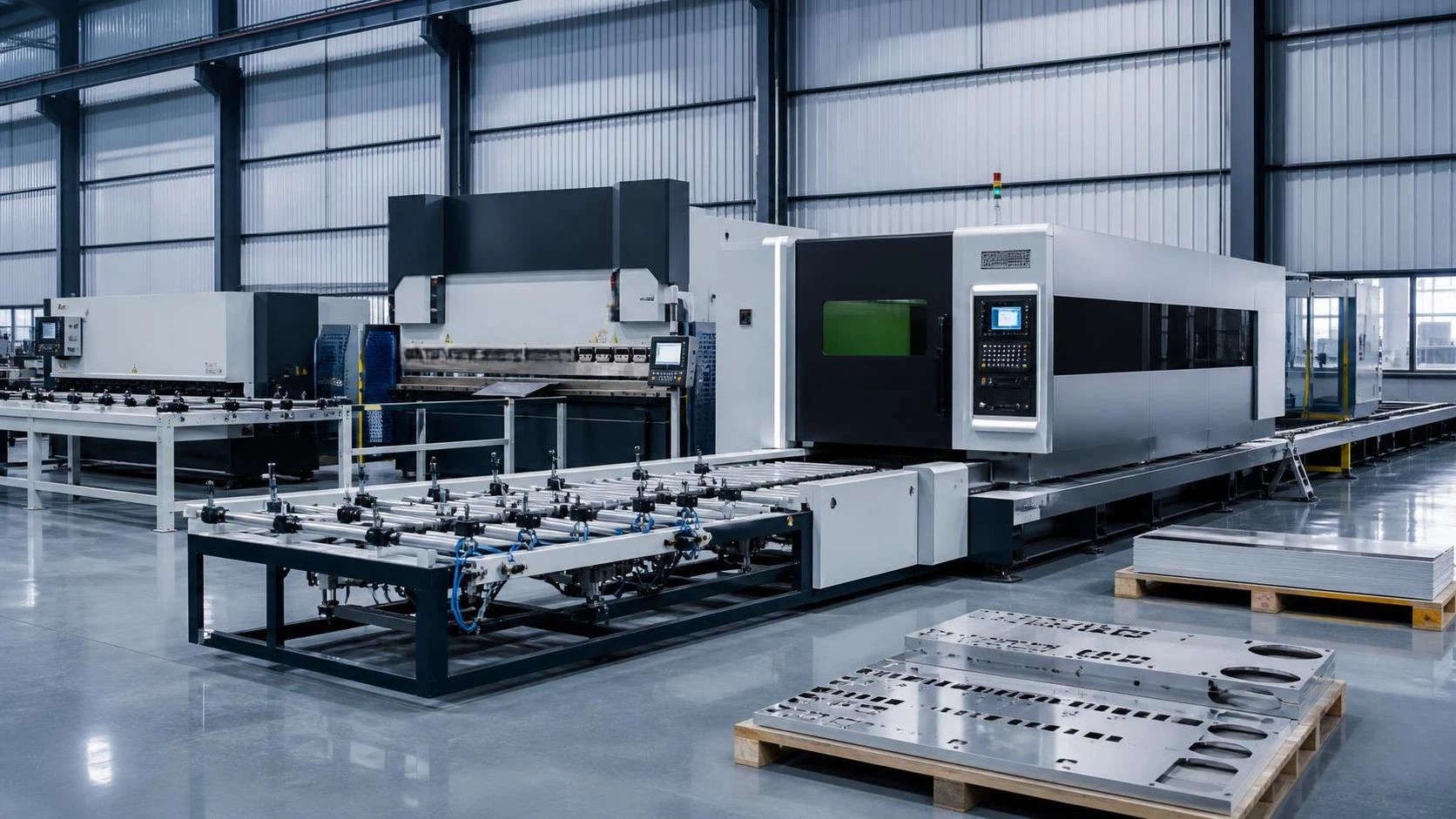
In sheet metal fabrication, combining processes sounds efficient on paper. In practice, it only makes sense when the part mix, material flow, labor setup, and quality expectations all point in the same direction. That is why the question is not whether integration is “advanced,” but whether a shearing machine with laser cutting and bending in one production line actually fits the way a factory works.
For some manufacturers, the answer is clearly yes. For others, forcing shearing, laser cutting, and bending into one linked process can create more bottlenecks than it removes. The difference usually comes down to job type, batch size, tolerance demands, and how often production plans change during the week.
The combination works best when material flow is the real problem
A lot of workshops do not lose time on cutting itself. They lose time between machines: moving sheets by forklift, waiting for operators, stacking semi-finished parts, and rechecking dimensions after each handoff. If that sounds familiar, integration deserves a serious look.
When shearing, laser cutting, and bending are planned as one connected line, the biggest gain is often not machine speed alone. It is the reduction of non-cutting time. Fewer transfers mean less sheet damage, less mix-up between part numbers, and fewer opportunities for bend orientation mistakes. This matters especially in factories producing cabinets, brackets, electrical enclosures, agricultural machine covers, elevator panels, light structural parts, and similar products where the volume is steady and the geometry changes from order to order.
In these environments, an integrated setup can help stabilize output even when skilled labor is tight. One operator team can oversee the sequence more consistently than several disconnected stations trying to stay synchronized.
Not every part should start with shearing
This is where many purchasing discussions become too simplistic. Shearing is fast and economical for straight cuts, edge trimming, strip preparation, and blank sizing. But once the part geometry becomes more complex, laser cutting usually takes over because it handles holes, contours, slots, and tighter nesting logic in one step.
So when does it make sense to combine them? Usually when the factory processes a mix of simple rectangular blanks and more complex profiles, rather than only one or the other. For example, if part of the daily production is made from standard strips or repeat-size blanks, shearing can prepare those quickly. Then laser cutting can focus on the jobs that actually require contour flexibility. Bending follows with fewer delays because incoming parts are already organized by program and batch.
That is a much more practical use case than assuming every sheet should go through all three steps in exactly the same way.
You should think in families of parts, not individual machines
The strongest reason to build a combined line is repeatability across part families. If a business produces many parts from similar material grades and thickness ranges, integration becomes easier to justify. Programming, tool selection, feeding logic, and bend sequences can be standardized. Scrap handling also becomes more predictable.
On the other hand, if production swings constantly between very thin stainless sheet, thick carbon steel plate, cosmetic exposed surfaces, and highly customized one-off jobs, a fully linked line may be too rigid unless it is designed with enough flexibility. This is one of those points that sales brochures rarely stress. Integration is not automatically the same as flexibility. Sometimes separate machines are more forgiving when the job mix is chaotic.
A useful internal check is simple: look at one month of orders and group them by thickness, material, bend count, and edge quality requirement. If a large share clusters into repeatable families, then combining processes deserves real engineering review.
Where integrated lines usually pay off faster
There are several operating conditions where a shearing machine with laser cutting and bending in one production line tends to make more sense:
- The factory runs medium to high volumes of sheet metal parts with recurring dimensions.
- Labor cost or labor availability makes repeated manual loading and transfer a problem.
- Quality complaints are often linked to handling marks, batch confusion, or bend mismatch rather than raw machine capability.
- Floor space is limited, and current workflow creates unnecessary back-and-forth movement.
- Production planning is mature enough to keep upstream and downstream processes balanced.
That last point matters more than many buyers expect. A connected line only performs well if scheduling is disciplined. If urgent jobs are inserted every few hours without planning rules, integration can become frustrating because one disruption affects the whole chain.
Quality improves, but only if the line is engineered around the real tolerances
There is a common assumption that combining machines automatically improves precision. That is not always true. It can improve consistency, especially by reducing manual repositioning and cumulative handling error. But final part quality still depends on material condition, bend allowance control, tool wear, nesting strategy, edge condition, and operator discipline.
For example, a sheared edge may be perfectly acceptable for one bent component, but another part may require laser-cut edges because the downstream fit-up is more sensitive or the appearance standard is higher. Likewise, if the sheet arrives with residual stress or flatness issues, no amount of line integration will fully solve bend variation. In those cases, leveling, deburring, or edge preparation may be just as important as the main machines themselves.
This is why experienced suppliers usually discuss the full process chain rather than only the headline equipment. Companies working across broader fabrication equipment categories often see this earlier. Wuxi Samgins International Trade Co., Ltd, established in 2012 in Wuxi, has been involved with a wide range of metalworking equipment including CNC cutting machines, bending machines, shearing machines, plate rolling machines, leveling machines, deburring machines, pipe benders, milling machines, welding equipment, and H-beam production line equipment. That kind of product range matters because integrated sheet processing decisions are rarely isolated; they connect to preparation, finishing, and even later assembly steps.
When separate machines are still the smarter choice
There are also plenty of situations where keeping shearing, laser cutting, and bending semi-independent is the better decision.
If your order book is dominated by prototype work, highly variable short runs, or frequent engineering revisions, operators may need the freedom to reroute parts quickly. A tightly linked line can slow that down. The same applies when laser cutting capacity is already the main bottleneck. In that case, adding shearing and bending integration may not solve the actual constraint.
Another caution: some buyers underestimate maintenance planning. A combined line reduces handling, but it also increases dependency. If one key section stops, the impact can spread. That does not mean integrated lines are risky by definition, only that spare parts planning, service response, and operator training become more important. For export-oriented manufacturers or overseas buyers, this point should be discussed early, especially across different power standards, local safety requirements, and service availability.
Questions worth answering before you commit
Before choosing a combined setup, it helps to get specific. Not with generic ROI promises, but with production facts from your own floor.
- How many times is a sheet or part handled between blanking and final bending?
- Which jobs truly need laser flexibility, and which could be prepared faster by shearing?
- Are quality issues mainly dimensional, cosmetic, or caused by poor sequencing?
- Does the current team have the programming and maintenance discipline to run a linked line efficiently?
- Can upstream material flatness and downstream deburring needs be controlled well enough to protect bend accuracy?
If those answers are still vague, the safest path is usually to map the workflow first, then define the equipment architecture. Too many factories do it in reverse.
Why supplier perspective matters more than machine labels
An integrated line is never just a laser, a shear, and a press brake placed next to each other. It involves control logic, loading method, blank flow, tooling decisions, scrap removal, operator access, and compliance details. Manufacturers that organize design and production under recognized systems such as ISO9001 and build to EU CE-related requirements often have a more structured way of handling those details, though buyers should still verify the exact scope for the specific project and destination market.
For companies sourcing from China, location and coordination can also matter in practical terms. Wuxi, for example, has long been a strong industrial base for fabrication machinery, and proximity to Shanghai can simplify logistics and factory visits. That does not guarantee suitability, but it can make project communication, inspection, and shipment planning smoother when the equipment package includes more than one process.
A realistic way to judge the decision
Combine shearing, laser cutting, and bending when your production suffers more from fragmentation than from pure machine speed limits. That is usually the tipping point. If parts move too much, queues build up between stations, and quality drifts because each handoff introduces variation, a connected line can be a very rational investment.
But if your business depends on frequent changeovers, irregular part families, or highly unpredictable scheduling, integration should be designed carefully, or only partially adopted. In metal fabrication, the best line is not the one with the most functions linked together. It is the one that fits the actual workload without creating new constraints that the sales presentation never mentioned.
That is the practical answer: combine these processes when workflow stability, repeat part families, labor efficiency, and handling-related quality issues all justify it. If those conditions are not there yet, the wiser move may be to improve process layout and job classification first, then decide how much integration your shop really needs.
search
Products Navigation
Send Us A Message