




How Long Does It Take to Install and Commission a Welding Robot On Site?
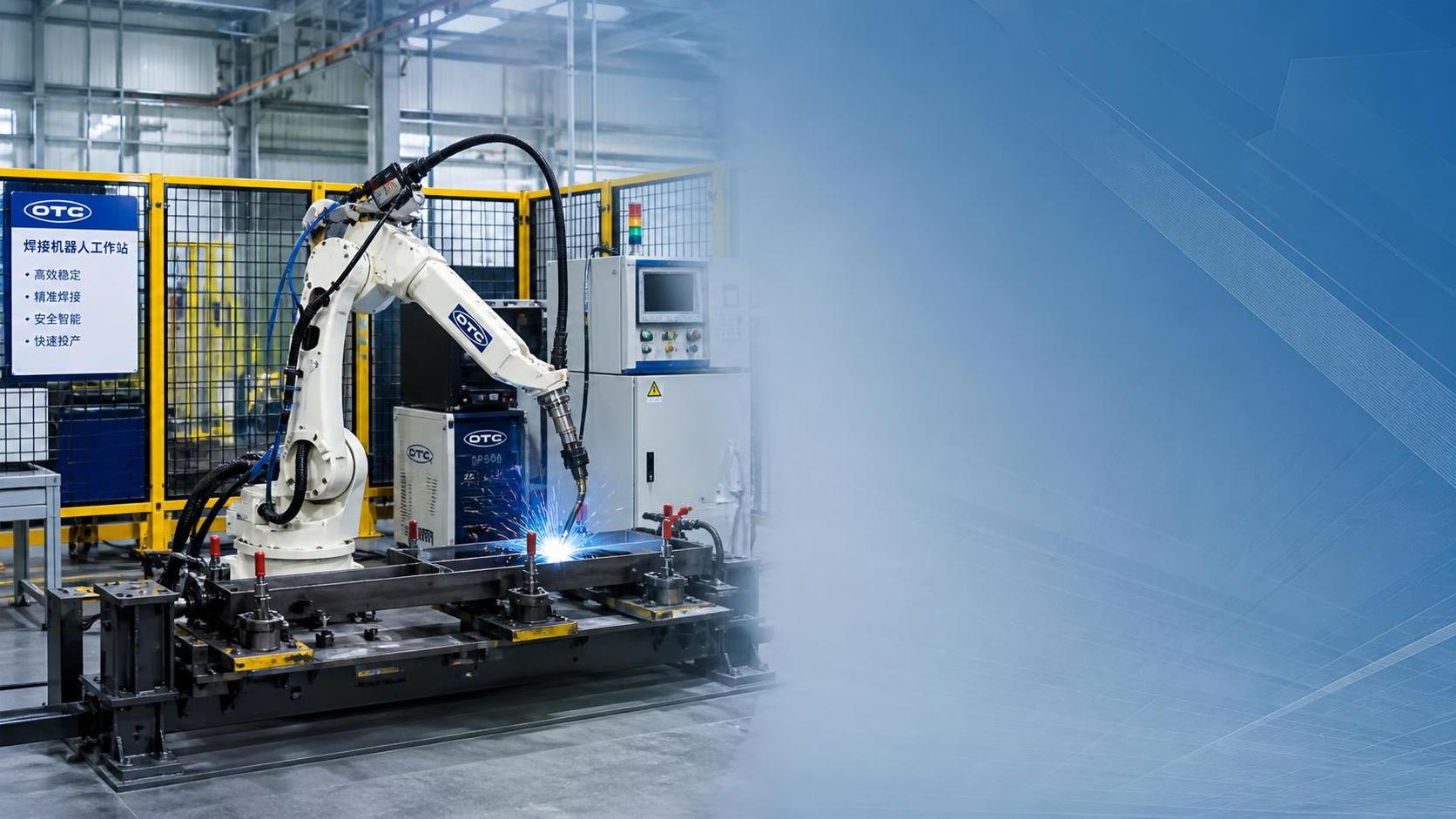
How long does it typically take to install and commission a welding robot on site? In most manufacturing projects, a standard welding robot cell can be installed and commissioned in about 3 to 10 working days.
For larger or more customized systems, the timeline may extend to 2 to 4 weeks. The real answer depends on cell complexity, factory readiness, fixture design, utility connections, and operator training.
For manufacturers planning automation upgrades, this timing matters because every extra day affects production scheduling, labor allocation, and return on investment. A realistic plan helps reduce disruption and bring stable output online faster.
With extensive experience in welding robots and metalworking machinery, Wuxi Samgins International Trade Co.,Ltd helps customers streamline installation, reduce downtime, and achieve stable production faster through reliable equipment, practical solutions, and professional service.
What Is the Typical On-Site Timeline for a Welding Robot?
When buyers ask, “How long does it typically take to install and commission a welding robot on site?”, they usually want a practical range, not a vague technical answer.
For a basic robot welding workstation with standard fixtures and a proven welding process, on-site installation may take 1 to 3 days. Commissioning and trial production often require another 2 to 5 days.
That means many straightforward projects can be completed within one working week. However, this estimate assumes the equipment arrives ready, the site is prepared, and the workpieces are already validated.
If the project includes custom positioners, safety fencing, seam tracking, multi-station fixtures, or integration with existing production lines, the timeline usually becomes longer and more sensitive to coordination quality.
In those cases, it is common to plan 1 to 2 weeks for mechanical and electrical installation, followed by another 1 to 2 weeks for programming, parameter optimization, staff training, and production verification.
Why the Timeline Varies So Much from One Factory to Another
The biggest reason installation schedules vary is that a welding robot is not only a machine. It is a production system that must match the real parts, real operators, and real factory conditions.
A standard robot arm with a simple power source is faster to deploy than a complete automated welding cell. The more devices involved, the more interfaces need to be checked and synchronized.
Site conditions also matter more than many buyers expect. If power supply, gas lines, compressed air, grounding, floor space, and part flow are not ready, on-site work slows down immediately.
Another major factor is process maturity. If the customer already knows the weld joint type, material range, batch size, and expected quality standard, commissioning is usually much faster and more predictable.
When process details are still changing, engineers often spend extra time adjusting torch angles, welding sequence, travel speed, wire feed, and fixture clamping to get stable repeatable results.
What Happens During Installation and Commissioning?
Many decision-makers want to know what the on-site period actually includes. Understanding the sequence helps buyers estimate labor needs, shutdown windows, and the real point when production can begin.
The first stage is equipment positioning and assembly. This includes placing the robot, controller, welding power source, safety fence, positioner, fixtures, and cable routing in the planned layout.
Next comes electrical and utility connection. The team checks power supply, grounding, gas, compressed air, signal cables, emergency stops, and communication between all key devices in the cell.
After the hardware is connected, engineers perform system startup and functional inspection. They verify axis movement, safety interlocks, torch alignment, wire feeding, and communication logic before welding begins.
The commissioning stage then focuses on process setup. This usually includes creating robot paths, teaching points, setting welding parameters, testing sample parts, and refining the cycle for consistency.
The final stage is trial production and operator handover. At this point, the goal is no longer just movement or arc ignition, but stable output that meets quality, takt time, and routine operating requirements.
Which Factors Most Often Delay On-Site Commissioning?
Factories often assume the equipment supplier controls the entire timeline. In reality, delays frequently come from gaps between equipment delivery and site readiness rather than from the robot itself.
One common delay is incomplete fixture preparation. If the part locating method is unstable, the robot program cannot produce consistent welds, no matter how advanced the robot system is.
Another issue is variation in the workpieces. If incoming parts have inconsistent dimensions, fit-up gaps, or edge quality, commissioning takes longer because engineers must compensate for unstable welding conditions.
Utility readiness is another overlooked risk. Missing gas connections, incorrect power specifications, weak grounding, or insufficient ventilation can stop installation work or create unsafe operating conditions.
Software and interface requirements can also create delays. If the robot must communicate with conveyors, PLCs, scanners, or factory management systems, integration testing can take more time than expected.
Training gaps matter too. If operators and maintenance staff are unavailable during commissioning, the handover becomes incomplete, and production startup after the engineer leaves may be slower and riskier.
How Can Manufacturers Shorten the Installation Period?
The fastest projects are usually not the ones with the simplest equipment, but the ones with the best preparation. Good planning before shipment can remove many of the most expensive on-site delays.
First, confirm the part drawings, welding requirements, materials, joint forms, and output targets early. Commissioning becomes much more efficient when the process objective is fixed before installation starts.
Second, prepare fixtures carefully. A welding robot depends on repeatable part positioning. Investing time in stable clamping and accurate locating often saves more commissioning time than any software adjustment.
Third, complete a site readiness checklist before the equipment arrives. This should cover floor space, foundation conditions, power, gas, air, ventilation, safety zone clearance, and logistics access.
Fourth, ask the supplier to perform as much pre-assembly and pre-debugging as possible before shipment. Factory acceptance tests can identify wiring, programming, and motion issues before the system reaches your site.
Fifth, assign a clear on-site team from your factory. Production, maintenance, quality, and management should all be represented so decisions can be made quickly during setup and trial production.
How Long Does It Take Before the Robot Reaches Stable Production?
Buyers often focus on installation day count, but a better question is when the robot reaches stable production. That is the point when output, weld quality, and downtime become commercially meaningful.
For standard parts and mature welding procedures, stable production may begin almost immediately after commissioning. In many cases, the first qualified batches can be produced within the same week.
For mixed product lines or demanding weld geometries, optimization may continue for several days after initial startup. This does not mean the system failed; it is part of normal process tuning.
Stable production usually depends on three things: repeatable part loading, a validated welding program, and operators who understand routine adjustment, basic alarms, and daily maintenance responsibilities.
If any of these elements are weak, the robot may be installed on time but still underperform in actual production. That is why experienced buyers evaluate startup success beyond the mechanical completion date.
What Should Managers Ask a Supplier Before Placing an Order?
If your goal is to reduce downtime and avoid surprises, the right pre-purchase questions are just as important as the machine specification. They directly affect installation speed and commissioning success.
Ask whether the quoted timeline covers only mechanical installation or also includes programming, sample welding, training, and trial production support. Different suppliers define “commissioning” very differently.
Ask what site conditions must be ready before the engineer arrives. A serious supplier should provide a practical checklist rather than leaving the factory to discover missing requirements on installation day.
Ask whether fixture design is included, whether welding samples were tested in advance, and whether the system has already been debugged before shipment. These details strongly affect real startup time.
It is also important to ask who will train operators and maintenance staff, how long that training lasts, and what post-installation support is available if process issues appear after startup.
For export projects, buyers should also confirm documentation, electrical standards, and compliance expectations. Equipment designed according to ISO9001 processes and EU CE standards can help reduce implementation risk.
Why Experience and Preparation Matter More Than Promised Speed
Some suppliers promise very short installation periods, but fast claims alone do not guarantee faster production. What matters is whether the system is properly prepared and supported for your real application.
An experienced supplier understands that welding robots must fit the customer’s product mix, quality expectations, and workflow. That knowledge improves fixture design, process selection, and startup efficiency.
Wuxi Samgins International Trade Co.,Ltd supplies welding robots and a wide range of metalworking equipment for customers in different markets. This broader equipment background helps support practical, production-oriented solutions.
With experience in automatic welding equipment, CNC cutting machines, laser cutting machines, H-beam production line equipment, and related machinery, the company can better understand upstream and downstream production needs.
For manufacturers, that matters because robot commissioning rarely exists in isolation. The welding cell must work smoothly within the larger fabrication process, not just function as a standalone machine.
Final Answer: How Long Does It Typically Take to Install and Commission a Welding Robot On Site?
The most practical answer is this: a standard welding robot system usually takes around 3 to 10 working days for on-site installation and commissioning, while more complex custom projects may require 2 to 4 weeks.
The final schedule depends on equipment scope, fixture quality, utility readiness, product consistency, integration requirements, and the quality of operator training during startup.
For manufacturers, the key decision is not simply choosing the supplier with the shortest promise. It is choosing a solution that arrives well prepared, fits the production task, and reaches stable output with minimal disruption.
If you are evaluating a welding robot project, focus on readiness, process clarity, and supplier support. Those factors do more to shorten commissioning time than optimistic scheduling alone.
When planned correctly, a welding robot can move from delivery to reliable production quickly, helping manufacturers improve weld consistency, reduce labor pressure, and strengthen long-term operational efficiency.
search
Products Navigation
Send Us A Message