How Often Should Welding Robot Consumables Like Nozzles and Wire Feeders Be Replaced?
In automated welding, one of the most frustrating situations is when weld quality starts to drift even though the robot program has not changed. Spatter increases, arc stability gets worse, wire feeding becomes less smooth, and production staff may spend more time adjusting than actually welding. In many cases, the issue is not the robot itself but the condition of consumables such as nozzles and wire feeder components.
That is why the question, how often should welding robot consumables like nozzles and wire feeders be replaced, matters so much on the shop floor. There is no single calendar-based answer that fits every line. Replacement timing depends on weld volume, material type, wire quality, torch setup, and daily maintenance habits. A better approach is to understand wear patterns, set practical inspection points, and replace parts before they start affecting consistency.
Why this problem is harder than it first looks
Many operators and production managers expect consumables to fail in an obvious way. In reality, wear is often gradual. A nozzle can slowly collect spatter until shielding gas coverage becomes less reliable. A wire feeder can keep running while liners, drive rolls, or contact-related feed parts begin adding drag, which shows up as unstable feeding only under certain conditions. Because the symptoms build up over time, teams sometimes accept poor performance as normal process variation.
The practical impact is wider than a single rough weld bead. Consumables that stay in service too long can lead to inconsistent arc starts, porosity risk, excess rework, unplanned stoppages, and extra stress on the torch and feeding system. If the line runs robot welding for repeated batches, even a small decline in consumable condition can spread into a larger production issue.
This is also where replacement planning often goes wrong. Some shops replace everything too early and drive up operating cost. Others wait until visible failure, which usually means downtime has already arrived. The more useful question is not simply how many days a nozzle or wire feeder part lasts, but what inspection standard tells you that replacement is now the better choice.
Common mistake: treating all welding robot consumables the same
A common misunderstanding is to group nozzles, contact tips, liners, drive rolls, and feeder wear parts into one replacement rule. That usually causes trouble because these parts do not wear for the same reasons. Nozzles mainly suffer from spatter buildup, heat exposure, and distortion. Wire feeding components wear from friction, contamination, wire quality issues, tension settings, and long-term mechanical contact.
Another mistake is assuming that robotic welding always gives predictable consumable life because the motion is automated. Automation improves repeatability, but it also means the torch and feed system repeat the same heat cycle and same contact pattern continuously. If the setup is slightly off, wear can become consistent in the wrong direction. That is why robot cells need disciplined inspection even when the weld program itself is stable.
If you are deciding how often should welding robot consumables like nozzles and wire feeders be replaced, start by separating the discussion into two categories: visible welding-end consumables and internal feed-path consumables. They need different inspection routines and different replacement triggers.
How to judge nozzle replacement in a practical way
Nozzles are often replaced either too late or too casually. The right timing depends less on age and more on whether the nozzle is still protecting the arc environment the way it should. A nozzle should be replaced when its condition begins to interfere with gas flow, torch clearance, or cleaning efficiency.
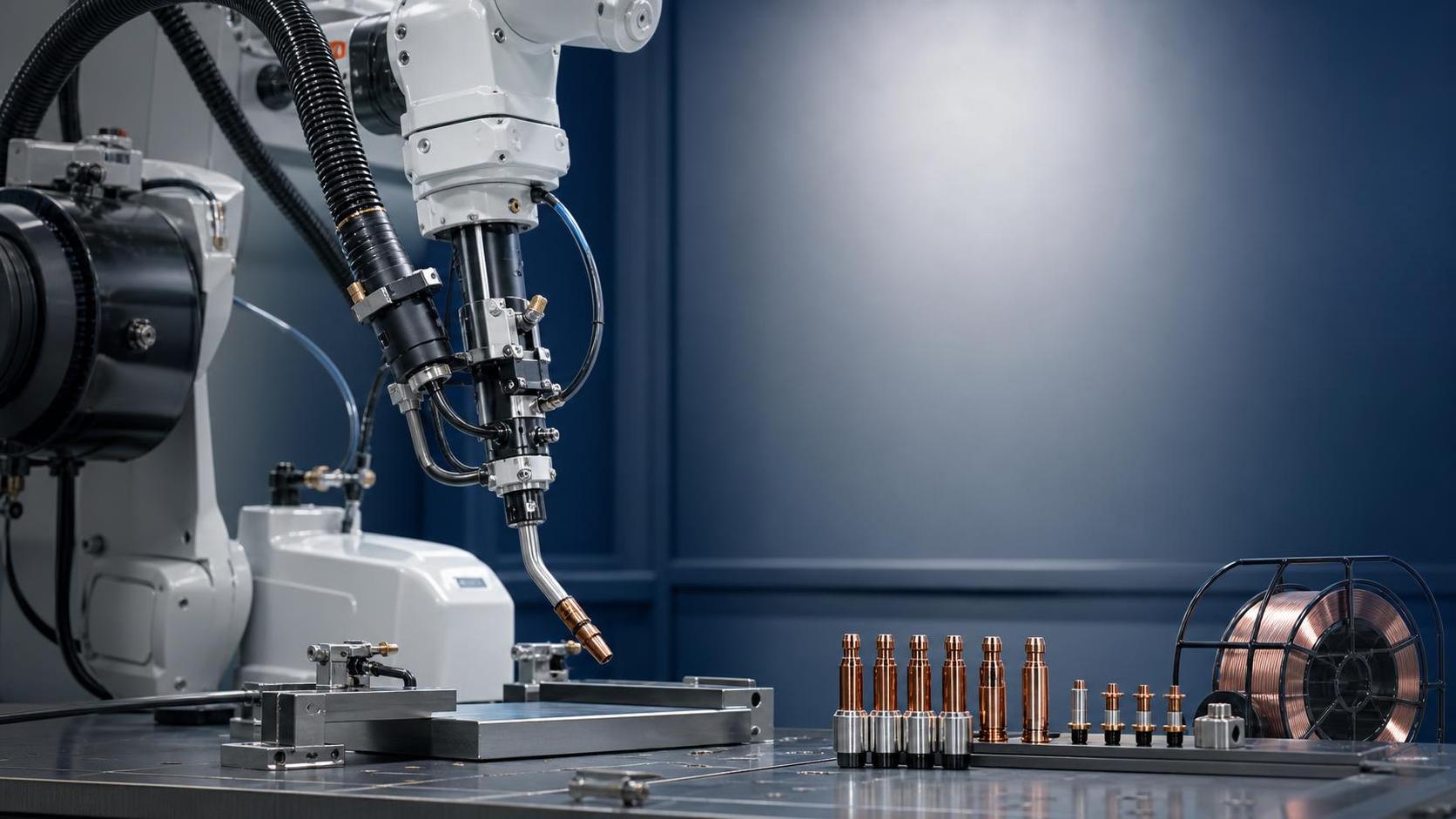
Signs that a welding robot nozzle is approaching replacement include heavy spatter that cannot be cleaned effectively, visible deformation from heat, damage to the inner bore, and gas flow becoming less uniform because the nozzle opening is partly blocked. In robotic applications, even slight distortion matters because the torch is following a fixed path. A nozzle that has changed shape can alter access to tight joints or increase collision risk near fixtures.
For high-spatter applications, inspection may need to happen every shift. For cleaner processes with stable gas shielding and anti-spatter practice, replacement intervals may be longer. The useful rule is this: clean routinely, inspect visually at planned intervals, and replace when buildup or distortion starts affecting process stability rather than waiting for complete failure.
It also helps to track whether frequent nozzle replacement is actually a symptom of another issue. Excessive spatter may point to parameter mismatch, poor wire quality, incorrect stick-out, weak grounding, or gas problems. If nozzles are wearing out unusually fast, replacing them more often may keep production going, but it does not solve the root cause.
How to judge wire feeder replacement and wear inside the feed path
The phrase "wire feeder replacement" can mean different things in daily work. Usually, the full feeder assembly is not replaced on a frequent basis. What gets replaced are the wear-related parts inside the feeding system, such as liners, drive rolls, inlet guides, outlet guides, and sometimes pressure-related components depending on the equipment design. These parts should be checked whenever feeding becomes inconsistent, but they should also be inspected preventively before feeding problems appear during production.
The main signs of wear are usually operational rather than visual. You may notice uneven wire speed, burnback, birdnesting, increased resistance when feeding wire manually, or arc behavior that becomes erratic despite stable power settings. In many cases, a worn liner or contaminated guide path adds enough resistance to disrupt consistency without fully stopping the process.
Drive rolls need attention when they lose grip, show visible groove wear, or start deforming the wire. Liners need replacement when debris buildup, friction, or wire shaving begins affecting feed smoothness. If the wire path includes dust, rust, copper flakes, or shop contamination, liner life will drop significantly. That is especially relevant when wire storage, spool handling, or environmental cleanliness is inconsistent.
So, how often should welding robot consumables like nozzles and wire feeders be replaced on the feeding side? A realistic answer is to inspect feed-path wear parts on a schedule tied to production hours or wire consumption, then replace them based on resistance, contamination, and feed consistency. Waiting for a full feeding jam is too late for automated production.
A workable inspection routine for most robot welding cells
If a team wants fewer interruptions without replacing parts blindly, the most effective method is a simple layered inspection routine. This makes decisions more objective and reduces the habit of guessing.
- At the start of each shift: check nozzle cleanliness, visible deformation, contact area condition, and whether spatter buildup is affecting gas coverage or torch access.
- During routine line checks: listen for irregular feeding sounds, watch for unstable arc starts, and note any increase in burnback or spatter compared with the usual process condition.
- At planned maintenance intervals: inspect liners, drive rolls, guides, and wire path contamination. Replace parts that show wear or drag before they trigger stoppage.
- After process changes: review consumable condition sooner if the material, wire diameter, welding parameters, or duty cycle has changed.
- After collision or overheating events: inspect the nozzle and feed path immediately, even if the robot appears to resume normal motion.
This approach works better than relying on memory. It also helps identify whether poor consumable life is normal wear or the result of setup problems that need correction.
What usually shortens consumable life faster than expected
When nozzles and wire feeder parts seem to wear out too quickly, the cause is often upstream. Spatter-heavy settings are one obvious factor, but there are several others that are easy to miss in production.
Improper wire tension is a common one. Too much pressure on drive rolls can deform the wire and increase liner wear. Too little pressure can cause slipping, which creates unstable feeding and unnecessary roll wear. Poor wire quality or dirty wire surfaces also accelerate contamination through the entire feed path. In robotic welding, long cable routing, sharp bends, and inconsistent torch angles can add friction that slowly shortens liner life.
On the nozzle side, inadequate cleaning routines are a frequent issue. If anti-spatter compounds are used incorrectly, or if reamer settings are not adjusted properly, spatter can accumulate faster than expected. Heat management matters too. Applications with high duty cycle or difficult joint access often expose the nozzle to more thermal stress, which can distort shape over time.
The point is that replacement intervals are not independent from process conditions. If you improve wire handling, torch cleaning, and parameter stability, nozzle and feeder wear often becomes more predictable.
When scheduled replacement makes more sense than waiting for symptoms
Not every production environment can wait for clear warning signs. In high-volume automated welding, a short stoppage can disrupt multiple downstream steps. In those cases, many teams prefer scheduled replacement for selected consumables, especially nozzles, contact-related wear parts, and liners that are known to degrade gradually.
Scheduled replacement is useful when the process is repetitive, production planning is tight, and the cost of an unexpected stop is higher than the cost of replacing a still-usable part a little early. This does not mean using arbitrary dates. It means building a schedule from actual operating conditions: how much wire is consumed, how many hours the robot welds, how much spatter the process creates, and how stable the current setup is.
If conditions vary widely from one product to another, a symptom-based plus inspection-based method is usually better. If the cell runs a narrow range of repeat work, scheduled replacement becomes easier to justify and maintain.
How equipment choice and support affect replacement decisions
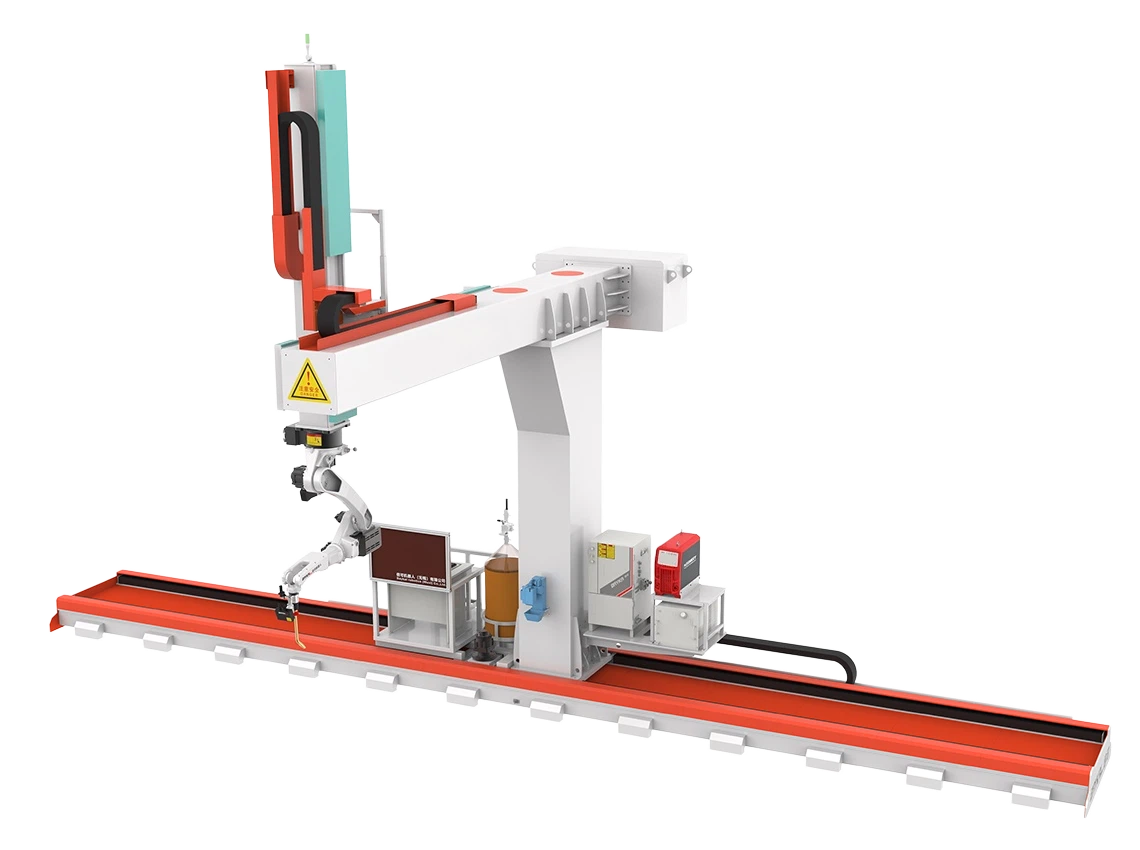
Replacement timing is easier to manage when the welding system is designed for maintenance access and stable operation. For companies working with automated welding equipment, CNC cutting machines, welding robots, and related production machinery, it helps to choose equipment and consumable arrangements that make inspection straightforward rather than hidden or awkward.
In practice, this means looking for a setup where torch maintenance, wire path inspection, and replacement of wear parts can be done without excessive downtime. Suppliers that work across automatic welding equipment and broader fabrication machinery often understand how consumable maintenance affects the full production flow, not just the torch itself. That kind of practical fit matters more than broad claims, especially when the goal is consistent operation and easier service planning.
For example, companies such as Wuxi Samgins International Trade Co.,Ltd supply automatic welding equipment, welding robots, CNC cutting machines, and other fabrication machinery used in production environments where maintenance rhythm matters. In that context, consumable replacement is part of keeping the line stable, not an isolated purchasing decision.
Frequently Asked Questions
Should welding robot nozzles be replaced on a fixed schedule?
Only if the process is stable enough that wear patterns are predictable. In many shops, it is better to combine routine cleaning with visual inspection and replace nozzles when spatter buildup, distortion, or gas-flow interference starts affecting weld quality.
How do I know if the wire feeder problem is really a liner issue?
Look for gradual feeding resistance, inconsistent wire speed, birdnesting, or arc instability that remains even after checking basic welding parameters. If the wire path is contaminated or manual feed does not feel smooth, the liner is a likely place to inspect first.
Can good wire quality really change replacement frequency?
Yes. Cleaner, more consistent wire usually reduces debris, shaving, and drag through the feed path. That can help liners, guides, and drive components last longer and keep feeding more stable.
Is frequent nozzle replacement always a sign of poor maintenance?
No. Some applications naturally generate more spatter or expose the torch to higher heat. But if replacement becomes unusually frequent, it is worth checking process settings, cleaning practice, gas coverage, and torch positioning before assuming the nozzle itself is the only issue.
What is the safest general rule for deciding how often should welding robot consumables like nozzles and wire feeders be replaced?
Replace them before wear begins to affect weld consistency or cause downtime. That means setting inspection points, tracking common warning signs, and using production conditions rather than guesswork as the basis for replacement timing.
Conclusion
There is no universal answer to how often should welding robot consumables like nozzles and wire feeders be replaced, because automated welding conditions vary too much from one cell to another. The more reliable method is to link replacement decisions to what actually affects performance: spatter level, heat load, wire condition, feed resistance, and maintenance discipline.
If you are trying to reduce downtime and keep robotic welding stable, start with a clear inspection routine, separate nozzle wear from feed-path wear, and replace parts when they begin to threaten consistency rather than after a production stop. That approach is usually more practical than either replacing everything too early or waiting until the problem becomes visible in finished welds.