




What Is the Typical Maintenance Schedule for an Industrial Welding Robot?
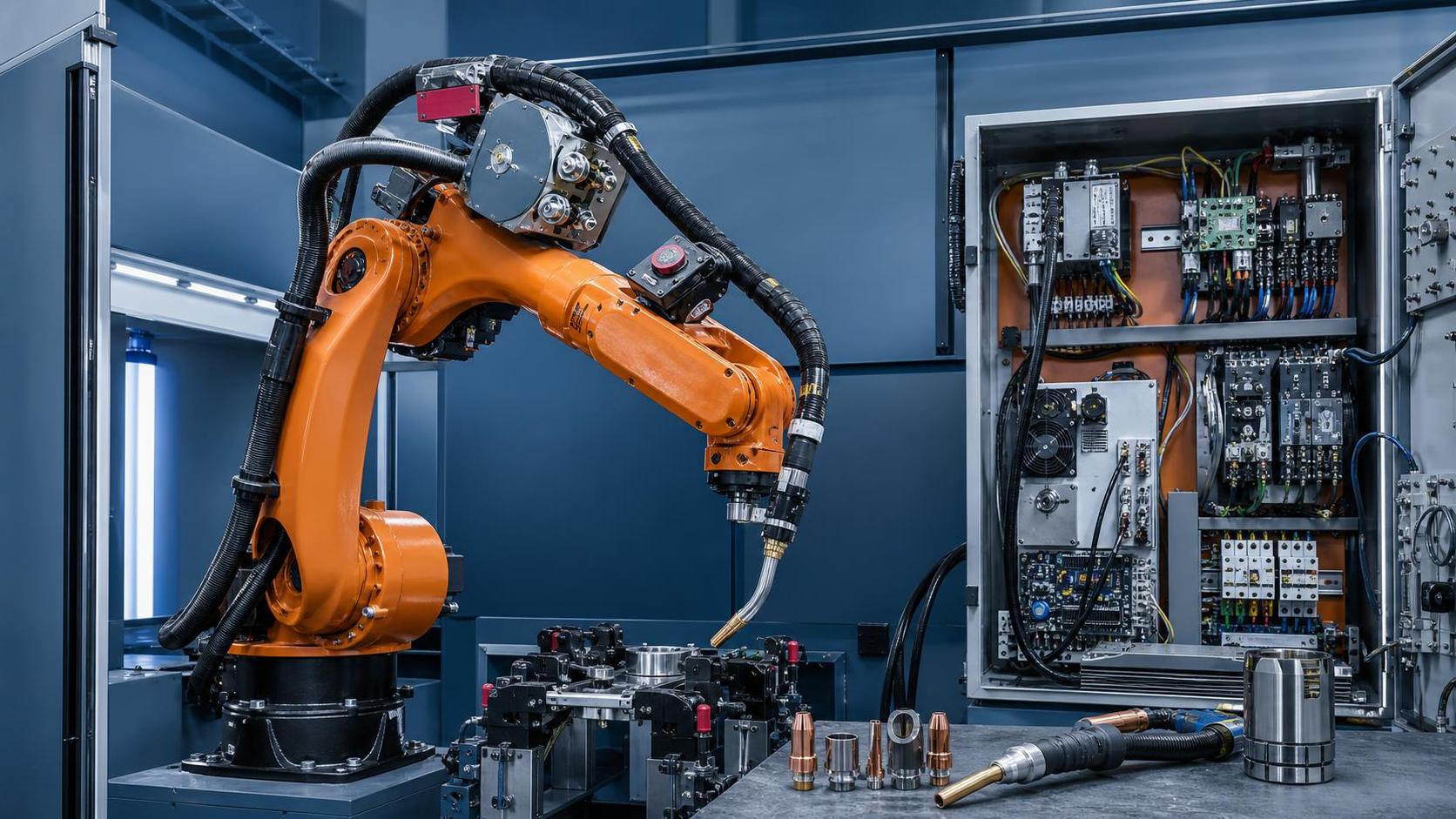
What is the typical maintenance schedule for an industrial welding robot? In most factories, the right answer is not a single interval but a layered routine that includes daily checks, weekly cleaning, monthly inspection, quarterly calibration, and annual preventive service. A well-maintained robot can deliver stable weld quality, lower unplanned downtime, and a longer service life, while poor maintenance often shows up first as inconsistent seams, torch crashes, wire feeding issues, and costly production interruptions.
For plant managers, production engineers, and maintenance teams, the practical question is not whether maintenance matters, but how often each task should be done and which items deserve the most attention. The most effective schedule depends on duty cycle, welding process, shop environment, and the robot brand, yet there are clear industry patterns that can be used as a reliable starting point.
What Buyers and Users Usually Need to Know First
When people search for “What is the typical maintenance schedule for an industrial welding robot?”, they are usually looking for a practical benchmark. They want to know what routine is normal, what tasks are essential, and how to avoid premature wear or line stoppages without over-servicing the machine.
Most target readers also care about three business questions. First, how maintenance affects weld consistency and throughput. Second, which neglected parts are most likely to cause failure. Third, how to build a realistic schedule that operators and technicians can actually follow on a busy production line.
That means the most useful article is not a generic explanation of robotics. It should focus on maintenance frequency, the parts that wear fastest, warning signs of trouble, and how to match service intervals to real production conditions. Broad promotional claims and vague descriptions add little value here and should remain secondary.
A Typical Maintenance Schedule for an Industrial Welding Robot
A standard industrial welding robot maintenance plan usually follows five levels: daily, weekly, monthly, quarterly, and annual. This structure helps teams catch contamination, wear, misalignment, and electrical issues before they affect weld quality or create an unexpected shutdown.
Daily maintenance is largely visual and operational. Operators should inspect the torch, nozzle, contact tip, cables, wire feeder, gas flow, and safety devices. They should also listen for abnormal sounds, confirm stable arc performance, and check whether the robot moves smoothly without vibration or collision marks.
Weekly maintenance normally focuses on cleaning and fastening. This includes removing spatter buildup from the torch area, checking cable routing, inspecting air lines and connectors, tightening exposed fasteners where needed, and verifying that fixtures and workpiece positioning remain consistent.
Monthly service usually goes deeper. Technicians often inspect dress packs, wire feed rollers, liners, grounding connections, cooling systems, lubrication points if required by the model, and backup battery condition. System alarms and error history should also be reviewed for early signs of recurring faults.
Quarterly maintenance often includes calibration checks, more detailed electrical inspection, and confirmation that motion accuracy remains within acceptable tolerance. If the robot works in a high-duty environment, this is also a common time to replace selected consumables before they fail during production.
Annual preventive maintenance is the major checkpoint. It may include full mechanical inspection, servo and encoder review, cable and hose replacement based on wear, controller cabinet cleaning, fan inspection, software backup, and verification of overall welding performance against production standards.
Daily Checks That Prevent the Most Common Failures
If a factory wants the highest return from maintenance effort, daily inspection is the best place to start. Many welding robot problems begin with small issues such as spatter accumulation, worn contact tips, unstable wire feeding, damaged cables, or poor grounding.
Operators should check the torch neck, nozzle, tip, and diffuser for blockage or wear before the shift starts. In MIG and MAG robotic welding, heavy spatter can distort gas coverage and create porosity, undercut, or inconsistent bead appearance long before the robot itself shows any major fault.
Wire feeding components deserve close attention as well. A partially worn liner or contaminated roller may not stop production immediately, but it can cause arc instability, bird-nesting, variable penetration, and frequent downtime. These are often mistaken for parameter issues when the root cause is mechanical wear.
It is also important to inspect cable dress and hose movement during robot travel. Repeated twisting, dragging, or rubbing against nearby structures can shorten cable life significantly. Catching routing problems early helps avoid sudden signal loss, water leakage, or gas supply interruption.
Daily checks should be simple enough to complete quickly and consistent enough to document. A short checklist used at the beginning and end of each shift is often more effective than an elaborate procedure that teams skip when production pressure rises.
Weekly and Monthly Tasks That Protect Weld Quality
Weekly and monthly maintenance matters because welding quality often degrades gradually. The robot may still run, but dimensional repeatability, arc stability, and bead uniformity begin to drift. This is where many factories lose quality before they experience a complete stoppage.
One weekly priority is cleaning the torch body and surrounding tooling. In robotic cells, spatter does not only affect the torch. It can build up on sensors, anti-collision devices, reamers, jigs, and locating surfaces. Once fixtures lose accuracy, the robot repeats the wrong path very consistently.
Another key task is checking the condition of the wire feeder and drive system. Feed tension, roller wear, and liner cleanliness should be reviewed regularly. If these items are ignored, the robot may continue cycling while weld quality becomes unpredictable, creating rework and scrap.
During monthly inspections, maintenance teams should review the controller cabinet, cooling fans, filters, and connectors. Dust, oil mist, and metallic particles are common in fabrication workshops, and they can reduce electrical reliability over time, especially in high-temperature environments.
Monthly review is also a good time to inspect torch TCP accuracy and general path consistency. Even small deviations can matter in multi-pass welding, narrow groove work, or components with tight fit-up tolerances. When needed, recalibration should be done before defects become routine.
How Environment and Workload Change the Maintenance Interval
There is no universal schedule that fits every welding robot. A robot running two light shifts on clean, repetitive parts will not need the same service frequency as a robot welding heavy plate, high-spatter joints, or mixed batches in a hot and dusty shop.
High-duty-cycle applications usually require shorter maintenance intervals. This is especially true when the robot runs near continuously, performs long arc-on times, or handles large parts that force extended motion ranges. Heat, vibration, and repetitive cable flexing accelerate wear across the system.
Harsh environmental conditions also matter. Dust, grinding residue, humidity, oil mist, and poor ventilation can affect sensors, connectors, cooling performance, and cabinet electronics. In these cases, a “typical” maintenance schedule should be tightened rather than followed mechanically.
The welding process itself changes the service burden. MIG and MAG robotic systems often need more frequent attention to torch consumables and spatter management, while TIG or laser-related automation may place more emphasis on cleanliness, precision, cooling, and alignment.
For that reason, the best practice is to use the manufacturer’s manual as the baseline and then adjust according to actual production history. If the same issues return between scheduled inspections, the schedule is not wrong in theory, but it is too loose for the real operating conditions.
Which Components Usually Wear First
Factories often ask which parts deserve the closest watch because not every component fails at the same rate. In an industrial welding robot cell, the fastest-wearing items are usually consumables, cable assemblies, liners, contact tips, nozzles, and moving torch accessories.
Beyond torch consumables, dress packs are one of the most important wear points. Repeated robot motion places constant stress on power cables, gas hoses, water lines, and signal wiring. Once the outer protection shows cracking, flattening, or abrasion, internal failure may not be far behind.
Wire feeding components also wear steadily. Rollers, liners, conduit sections, and guide tubes should be monitored closely, especially when using softer wire materials or working in environments where dust and metallic debris are difficult to control.
On the mechanical side, gearboxes, axes, and bearings do not usually fail as quickly as consumables, but they should never be ignored. Abnormal noise, excess backlash, positioning drift, or rising motor load can indicate developing issues that should be addressed during planned maintenance.
Safety-related components deserve equal attention. E-stops, guards, interlocks, and collision sensors are part of maintenance, not separate from it. A welding robot that produces acceptable parts but has compromised safety systems is not truly operating in a healthy condition.
Signs Your Welding Robot Needs Service Earlier Than Scheduled
Even a well-designed schedule should not be followed blindly. Real production always leaves clues when maintenance is needed sooner. The most obvious signal is a change in weld quality without a corresponding program change or material change.
If porosity, inconsistent bead shape, arc wandering, spatter increase, or poor penetration appears suddenly, maintenance should inspect torch consumables, wire feed condition, gas delivery, grounding, and TCP accuracy before changing process parameters excessively.
Unexpected alarms are another warning sign, but not the only one. Slower cycle times, unusual motor sounds, intermittent feed problems, hotter cables, unstable reamer performance, or repeated need for touch-up welding all suggest that the service interval may be too long.
Collision marks should always trigger inspection. Even a minor torch contact can affect alignment, anti-collision device positioning, or fixture accuracy. If the line resumes production without checking these points, the robot may keep repeating a slightly wrong path for many parts.
A useful rule is simple: when the same defect or stoppage appears more than once in a short period, move from reactive repair to schedule adjustment. Repetition usually means the maintenance plan no longer matches the cell’s actual wear pattern.
How to Build a Practical Maintenance Plan for Your Factory
The most effective maintenance schedule is specific, documented, and realistic. It should define who performs each task, how often it is done, which signs require escalation, and what measurements or records are kept after service. Without ownership, even a good schedule will fail.
Start by dividing tasks between operators and maintenance technicians. Operators can handle shift checks, cleaning, basic consumable inspection, and visible abnormalities. Technicians should manage calibration, electrical review, component replacement, backup procedures, and deeper mechanical inspection.
A checklist-based approach works well for most manufacturers. Short daily forms, weekly inspection sheets, and monthly service logs create traceability and make recurring issues easier to identify. This also helps managers compare maintenance effort with downtime, reject rate, and consumable cost.
It is wise to stock critical spare parts based on actual wear history. Contact tips, liners, nozzles, cables, filters, and selected electrical parts are usually worth keeping on hand. Waiting for urgent replacements can turn a small service task into a long production interruption.
Training also matters more than many companies expect. A strong preventive routine depends on operators recognizing early warning signs and technicians understanding both robot motion and welding process behavior. Maintenance and welding quality should be managed together, not as separate topics.
Why the Right Maintenance Schedule Supports ROI
For many decision-makers, the real issue behind this topic is return on investment. An industrial welding robot is purchased to improve consistency, output, and labor efficiency, but those gains erode quickly if maintenance is treated as an afterthought.
A disciplined maintenance schedule helps protect ROI in several ways. It reduces unplanned downtime, lowers scrap and rework, extends consumable and equipment life, and supports more predictable delivery performance. These benefits are often more valuable than the direct cost of the service itself.
It also improves planning. When maintenance is preventive, factories can schedule service around production needs, combine inspections with shift changes, and avoid emergency interventions during critical orders. That operational stability is especially important in high-mix or export-focused manufacturing.
For companies evaluating new welding robot suppliers, maintenance support should be part of the buying decision. Equipment reliability depends not only on the robot brand, but also on documentation quality, spare parts access, training, remote support, and the supplier’s ability to recommend suitable service intervals.
Conclusion
So, what is the typical maintenance schedule for an industrial welding robot? In practical terms, it usually means daily checks, weekly cleaning, monthly inspection, quarterly calibration review, and annual preventive maintenance, with shorter intervals for heavy-duty or harsh environments.
The most important point is that maintenance should be tied to weld quality, uptime, and actual operating conditions. Factories that monitor consumables, cable wear, feed stability, accuracy, and environmental impact can prevent most common failures before they turn into expensive downtime.
For manufacturers using robotic welding to improve productivity, a clear maintenance routine is not just a technical requirement. It is a production strategy that protects quality, safety, and long-term equipment value. When the schedule is practical and consistently followed, the robot delivers the performance the investment was meant to achieve.
search
Products Navigation
Send Us A Message