




How to Audit a 3 Roll Plate Rolling Machine Factory for Quality and Delivery Risk
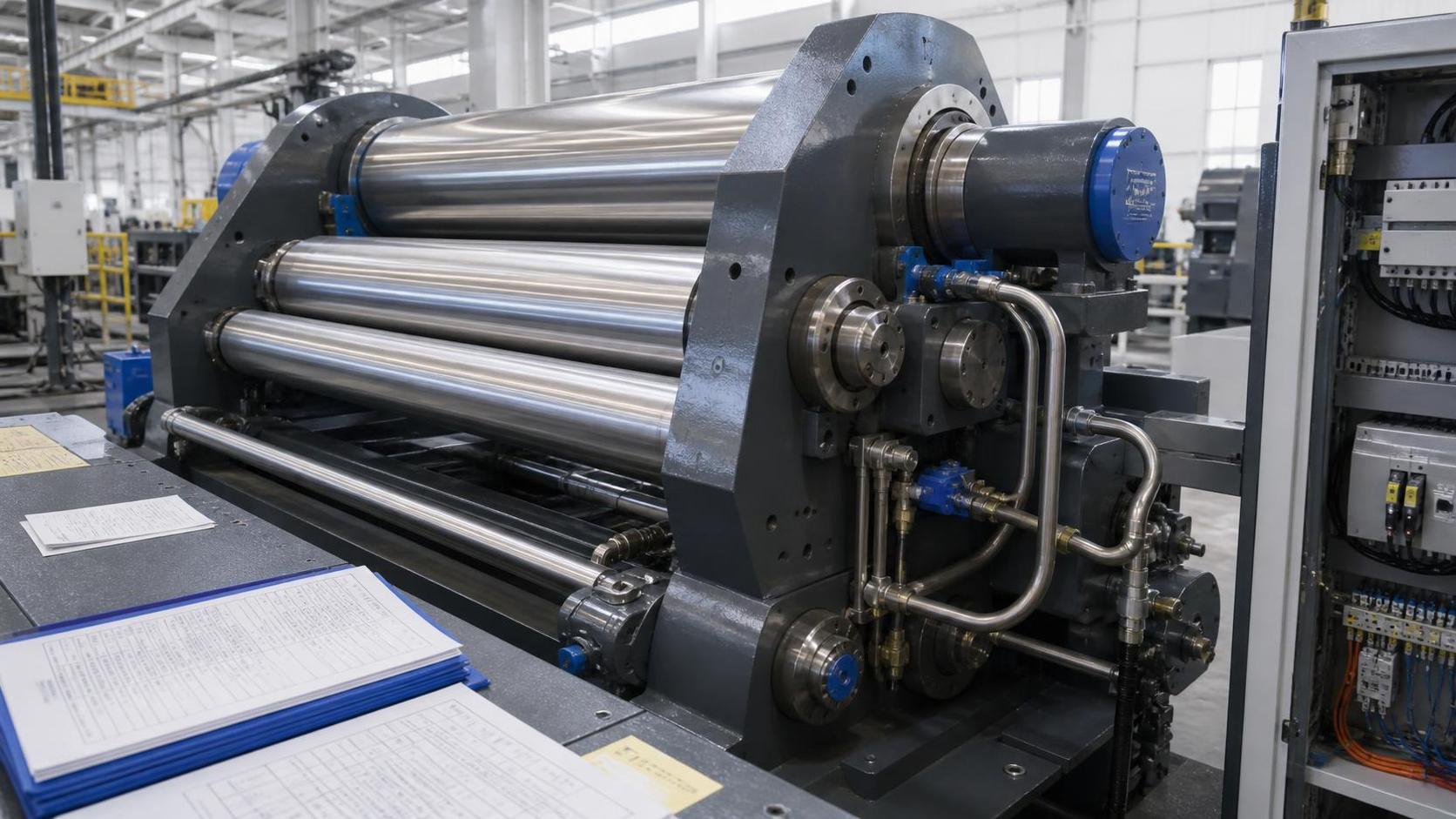
For business evaluators, auditing a plate rolling equipment supplier is rarely about confirming whether the factory can build a machine at all. The real question is whether the supplier can build the right machine repeatedly, document what it is doing, and deliver it on a schedule that matches project commitments. That is especially true when reviewing a 3 roll plate rolling machine factory, where performance on paper may look similar across quotations, but manufacturing discipline, subcontract control, and assembly capability often differ in ways that only become visible during an audit.
A proper audit matters because plate rolling machines sit in a part of the fabrication workflow where errors become expensive quickly. If rolling accuracy is unstable, if frame rigidity is weaker than claimed, or if hydraulic and electrical components are substituted late in production, the buyer inherits downstream problems: rework in fit-up, failed dimensional checks, delayed installation, and arguments over acceptance standards. For procurement teams working under cost pressure, the cheapest quote can easily become the highest total cost if delivery risk and quality drift are not screened early.
What an audit should actually answer
Most buyers do not need a factory tour for optics. They need answers to a short list of commercial and operational questions.
- Is the supplier a real manufacturer, an assembler, or mainly a trading operation coordinating external workshops?
- Can it control critical processes that affect rolling precision, machine stability, and service life?
- Are lead times based on real capacity or on optimistic sales commitments?
- How does the factory manage design changes, purchased components, testing records, and after-sales support?
- What risks are likely to appear only after deposit payment?
Those are the issues that separate a usable supplier audit from a brochure review.
Start with manufacturing scope, not showroom claims
One of the most common mistakes in evaluating a 3 roll plate rolling machine factory is to assume that a complete product catalog means deep in-house capability. In this segment, many companies sell a wide range of metalworking equipment, from cutting and welding systems to bending and rolling machines. That range may reflect genuine integration strength, but it may also mean the company combines its own assembly with outsourced machining, third-party hydraulic packages, or external control cabinet production.
That is not automatically a problem. In fact, many competent suppliers rely on specialized subcontractors for castings, large machining, or electrical integration. The issue is visibility and control. During the audit, confirm which steps are performed internally and which are outsourced:
- frame welding and stress handling
- machining of side frames, roller housings, and bearing seats
- roller material procurement and heat treatment
- hydraulic station assembly
- electrical cabinet wiring and PLC integration
- painting, final assembly, and no-load or load testing
If the supplier cannot clearly map this process, or if the answers change between sales, engineering, and workshop staff, that is usually a stronger warning sign than an imperfect workshop floor.
Look closely at the parts of the machine that drive real performance
In plate rolling machines, buyers often focus too much on headline capacity, such as maximum plate thickness or width, and too little on the structure behind that claim. During the audit, shift attention to the design and manufacturing details that influence usable performance under production conditions.
For example, if a supplier presents a heavy-duty solution such as Mechanized bending machine with 3 roller for metal fabrication of steel plates at 50 mm or above, the audit should not stop at the stated thickness rating. You need to verify how that rating is defined. Is it based on mild steel only? Does it assume full-width rolling or narrower plates? Is pre-bending included, or handled by separate equipment? A machine may be technically capable of rolling cylinders, cones, arc-shaped sections, or elliptical workpieces, yet still underperform if the roller span, frame stiffness, or drive configuration is marginal for the buyer’s actual workload.
Check these points in person:
- roller diameter consistency and surface finish
- bearing brand, housing fit, and lubrication arrangement
- welding quality on the machine frame and side supports
- machining accuracy of key mounting faces and guide areas
- alignment control during assembly
- evidence of dimensional inspection before final installation
A useful conversation here is not “What thickness can your machine roll?” but “What material, width, yield strength, edge condition, and final diameter were assumed when defining capacity?” If the factory cannot answer that clearly, the rating may be more commercial than engineering-based.
Quality control is mostly about records and discipline
In factory audits, clean floors and painted safety lines are easy to notice, but they are weak indicators by themselves. Quality control in this category is better judged through traceability and routine. Ask to see how the factory handles inspection records from incoming material to final testing.
Useful evidence includes:
- incoming inspection records for steel plates, forgings, hydraulic components, motors, and electrical parts
- material certificates for rollers and critical structural members
- dimensional inspection sheets for machined parts
- assembly checklists
- test reports for no-load running, hydraulic pressure checks, and functional trials
- nonconformance handling records and corrective actions
Many suppliers mention ISO9001 and CE alignment, but for an evaluator, the practical question is whether those systems are alive in daily operations. A factory that claims structured quality management should be able to show who signs off each stage, what is measured, where records are stored, and how deviations are closed. If the answer is mostly verbal, system maturity is likely limited.
For exports to Europe or other regulated markets, compliance documentation deserves separate review. CE-related files, risk assessment documents, electrical schematics, emergency stop logic, guarding details, and manuals should be checked carefully, especially if the machine will be integrated into a larger production line. Some suppliers are capable mechanically but weak in formal compliance packages. That creates shipment and commissioning risk later.
Delivery risk usually starts upstream of final assembly
Late delivery in this sector is often blamed on “busy production,” but the root cause is usually more specific: long-lead purchased parts, overloaded machining resources, incomplete drawings, or weak scheduling between subcontractors and final assembly. An audit should therefore follow the production chain backward, not just inspect finished machines on the floor.
Ask what components most often determine lead time. In many cases these include forged rollers, large bearings, hydraulic valves, motors, reducers, CNC or PLC components, and external machining of oversized parts. Then verify whether the supplier keeps approved vendor lists, maintains safety stock for standard items, or buys only after deposit receipt.
A few practical indicators are more revealing than a promised lead time:
- number of machines currently in assembly versus available floor space
- actual work-in-progress visibility by order
- machine shop loading and bottlenecks
- purchase order timing for critical bought-in components
- historical schedule tracking, if the factory is willing to share it
If a supplier offers very short delivery for a nonstandard machine but has little evidence of ready material, reserved machining capacity, or stocked core components, assume the schedule carries execution risk.
Do not ignore engineering handoff
One underappreciated audit area is the transition from quotation to engineering. Many quality and delivery problems begin when the technical proposal is not translated cleanly into manufacturing drawings and bill of materials. This is common when buyers request nonstandard rolling diameters, special controls, local electrical standards, or added support equipment.
Ask how the factory controls:
- drawing approval before production
- revision management after order confirmation
- parameter changes requested by the customer
- communication between sales, design, purchasing, and workshop teams
If there is no clear workflow, the buyer faces a familiar risk: the supplier quotes one configuration, purchases another, and tries to reconcile the difference during inspection. That usually surfaces late, when correction is expensive.
Use the workshop conversation to test technical honesty
An audit is not only about documents. It is also a way to test whether the supplier speaks plainly about machine limitations. Experienced factories tend to explain tradeoffs without much prompting. They will tell you, for example, that a three-roll configuration can handle many cylindrical and conical jobs efficiently, but pre-bending quality, residual straight edge length, and achievable repeatability still depend on plate properties, operator practice, and the exact machine design. They are usually more careful when discussing thick-plate performance and special geometries.
By contrast, weak suppliers often answer every technical question with a universal yes. That may sound customer-friendly in the meeting, but it is usually a sign that the difficult engineering questions will be deferred until after order placement.
This is where a concrete example helps. If the factory recommends a heavy-duty Mechanized bending machine with 3 roller and highlights the use of fixed idler rollers beneath the lower rollers to reduce span and improve accuracy, that can be a reasonable technical argument for large-scale plate work. But the evaluator should still ask for evidence: which projects used this configuration, what plate range was processed, how was accuracy measured, and what acceptance criteria were applied? A good supplier will respond with boundaries, not just benefits.
A short audit table for procurement teams
Commercial due diligence should run alongside the factory audit
Even a technically solid factory can create procurement risk if commercial controls are weak. Business evaluators should review export experience, contract clarity, payment terms, warranty language, and spare parts commitment at the same time as workshop capability.
For suppliers with broad overseas exposure, ask practical questions rather than relying on export lists alone:
- Which countries have received similar machines?
- What voltage, documentation, and certification adaptations were required?
- How are installation and commissioning handled abroad?
- What is the process when a key component fails during warranty?
If the supplier has experience in Southeast Asia, Europe, the Americas, or Oceania, that may suggest familiarity with export packing and project communication, but it does not automatically confirm competence on your exact machine category. Category-specific references are more useful than broad geographic claims.
What usually deserves a red flag
Some audit findings should not be treated as minor imperfections.
- Capacity claims that engineering staff cannot explain
- No traceable records for key components or inspections
- Heavy dependence on undocumented outsourcing
- Lead times disconnected from actual production loading
- Electrical and safety documentation prepared only after shipment
- Different answers from sales and factory personnel on the same issue
None of these automatically means the supplier will fail, but together they point to a factory where risk is being transferred downstream to the buyer.
The best audit outcome is a clearer buying decision, not a perfect score
In practice, few factories will look flawless under close review. The goal is not to eliminate every weakness. It is to understand which weaknesses are manageable and which ones directly threaten machine performance, acceptance, or delivery. A factory with transparent outsourcing, solid records, and realistic engineering limits may be a better choice than one with polished presentations but weak process control.
For procurement teams assessing a 3 roll plate rolling machine factory, the most useful audit result is usually a decision frame: whether to proceed, what technical points need to be frozen in the contract, which milestones require witness inspection, and where delivery buffers or penalty clauses are justified. Once those points are clear, the quotation stops being just a price comparison and becomes a more reliable basis for commitment.
search
Products Navigation
Send Us A Message