




Key Parameters to Compare When Choosing a 3-Roller Plate Rolling Machine
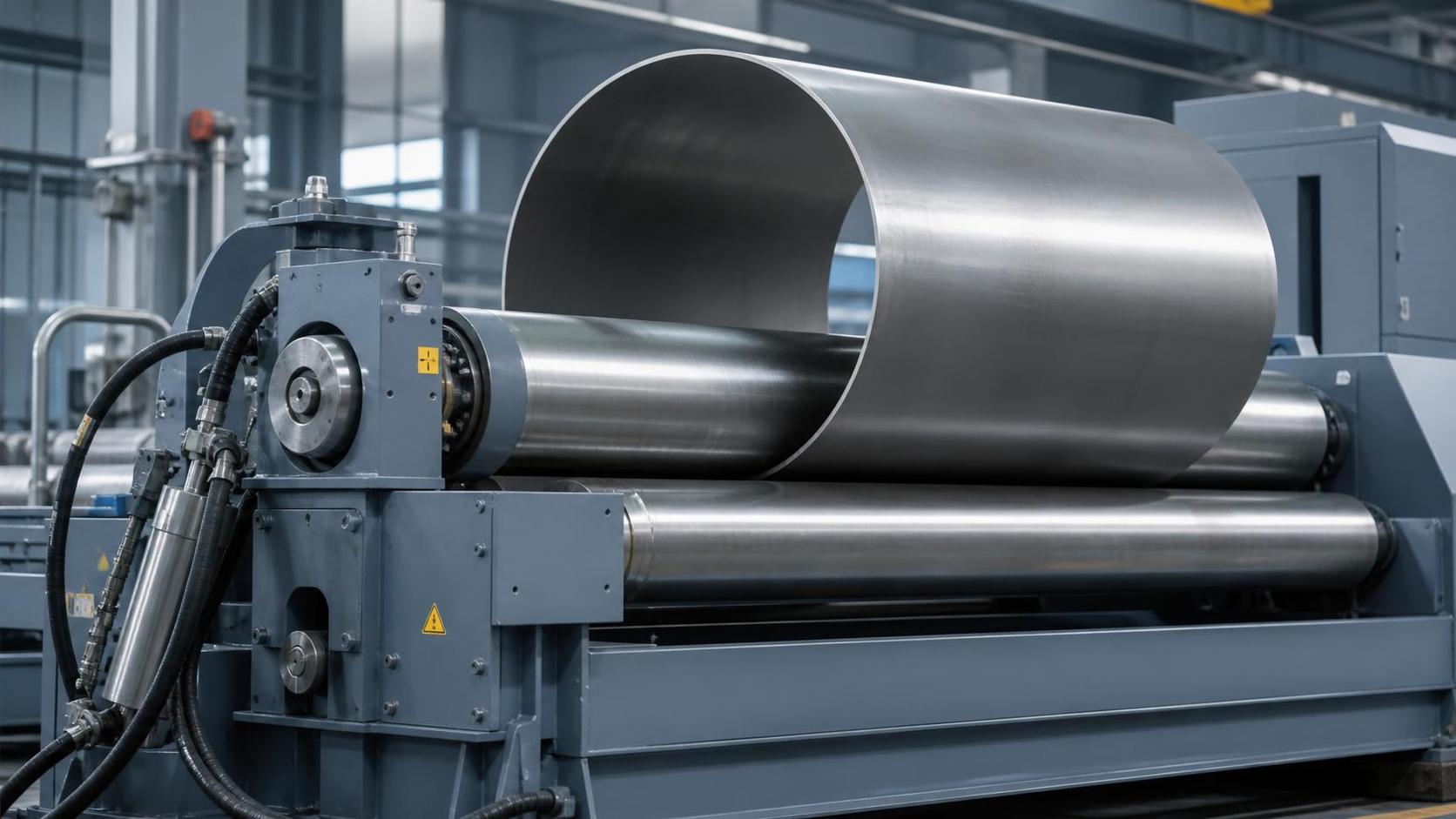
If you are comparing a 3-roller plate rolling machine, the real question is not which model looks stronger on paper. It is which machine can roll your actual plate thickness, width, diameter, and material mix with stable accuracy over time. Technical evaluations usually go wrong when buyers compare only nominal capacity and motor power, then discover later that the machine struggles with stainless steel, leaves a large flat end, or slows production with repeated correction work. A good comparison starts from the job requirements, then moves to structure, drive, controls, and service support.
In practical terms, the best machine is the one that fits your production range with enough reserve, not the one with the biggest advertised number. That sounds obvious, but many evaluations still miss it.
Start with the rolling task, not the machine brochure
Before comparing brands or configurations, define the workpieces clearly. For a technical evaluator, four values matter first: plate material, plate thickness, plate width, and minimum finished diameter. If even one of these is vague, the rest of the comparison becomes unreliable.
A 3-roll plate bending machine that performs well on mild steel may not deliver the same result on stainless steel or higher-strength material. Yield strength changes the required rolling force significantly. So when a supplier gives capacity figures, check what material they are based on. If the rating is only for carbon steel, do not assume the same machine will handle stainless at the same thickness.
One short answer that helps many buyers: compare machines using your hardest routine job, not your easiest one. If most of your production is 10 mm carbon steel but you regularly process 8 mm stainless, the stainless application may be the better benchmark.
It is also worth separating “can roll once” from “can roll daily.” A machine may complete a sample plate under ideal conditions, yet still be undersized for steady production. Continuous use, repeatability, and operator dependence matter more than a one-time demonstration.
Key parameters to compare on a 3-roller plate rolling machine
When engineers review a 3-roller plate rolling machine, these are the parameters that deserve the closest attention.
1. Maximum rolling capacity, with material basis clearly stated
This is the first number everyone checks, and also the one most often misunderstood. Capacity should be reviewed with at least three conditions in mind:
- Maximum plate thickness for pre-bending
- Maximum plate thickness for full rolling
- Maximum plate width at those conditions
Pre-bending capacity is especially important because it affects how much straight edge remains at the plate ends. Some buyers focus only on rolling thickness and forget that poor pre-bending creates extra downstream fitting and welding work.
Ask suppliers to confirm the capacity against the material grade you actually use. If needed, have them state the assumption in writing. That avoids disputes later.
2. Minimum rolling diameter
This parameter is often underestimated. A machine may have enough force for your plate, but still fail to achieve the smaller diameters you need efficiently. The minimum diameter depends on roll geometry, top roll size, machine layout, and plate properties. If your product mix includes tight cylinders, cones, or shells with small radii, this parameter should be treated as a core selection point, not a minor detail.
3. Useful working width
Do not compare nominal machine width only. Check the effective rolling width and whether that width is maintained under real operating conditions. If your parts run close to the machine limit, edge quality, alignment stability, and deflection control become more important. Wide plate jobs can expose weaknesses in frame rigidity and roll crowning much faster than narrow workpieces.
4. Roll diameter and roll material
Larger rolls usually mean greater rigidity, but they also affect minimum bending diameter. This is where evaluation becomes more nuanced. A bigger roll is not automatically better. If your workload is mostly medium-thickness plate with tighter diameters, oversized rolls can reduce flexibility.
Check the roll material, heat treatment, hardness, and surface finish. For shops processing polished stainless or visible-finish parts, roll surface condition matters more than many new buyers expect. Surface marks created during rolling are expensive to remove later.
5. Machine structure and frame rigidity
The frame is not a glamorous item in the quotation, but it strongly affects long-term accuracy. A rigid welded or stress-relieved structure will usually hold alignment better under load. Machines that look similar externally can behave very differently after months of real production.
For heavy or wide plate work, ask about side frame strength, bearing arrangement, and deflection compensation if available. These details are where lower-cost machines sometimes show their limits.
6. Drive system and synchronization
Another common mistake is assuming motor power tells the whole story. It does not. A stable drive system, proper torque transmission, and smooth synchronization between rolls affect slip, surface quality, and repeatability. Hydraulic and mechanical arrangements each have their place, but what matters most is whether the system suits your production style and maintenance capability.
If your shop runs mixed batches and frequent setup changes, smooth control response and repeatable positioning can matter more than raw speed. For higher-volume production, look closely at cycle consistency and how quickly operators can return to proven settings.
7. Pre-bending performance
End preparation is where many real-world complaints begin. A machine that leaves a long unbent flat at the plate ends creates extra handling, rework, and assembly correction. If your products go into pressure vessels, tanks, ducts, or structural shells, poor end quality quickly becomes a fabrication bottleneck.
Ask for sample results on comparable material and thickness. If possible, review parts that were rolled for production, not only for exhibition.
8. Control system and operator usability
For technical evaluators, this is not just a comfort feature. It affects output quality. A basic manual control setup may be acceptable for simple jobs and experienced operators. But if part variety is high, operators change frequently, or repeatability is critical, a better control system can reduce scrap and setup time.
Look at what the interface actually helps the operator do. Can it store programs? Can it support repeat jobs? Is positioning feedback clear? Is troubleshooting straightforward? Fancy screens alone do not improve rolling results, but useful control logic often does.
This same thinking applies across the fabrication line. After rolling, edge and hole quality may still need finishing before welding or coating. In lines where laser-cut or plasma-cut blanks feed into forming, some manufacturers also review support equipment such as RNS1000 Sheet metal deburring machine. It is relevant when deburring, slag removal, or edge rounding affects downstream fit-up, especially on sheet-based components rather than heavy plate.
What many buyers overlook during evaluation
One pattern shows up often in machine selection: the evaluation team compares headline specifications but spends too little time on process stability. In production, the hidden costs usually come from correction work, operator dependency, inconsistent diameters, slow setup, and maintenance interruptions.
There are a few areas worth checking carefully.
- Roll alignment over time: initial accuracy is one thing; maintaining it under regular load is another.
- Bearing and hydraulic component quality: these directly affect uptime and service life.
- Safety and maintenance access: easy access reduces downtime and encourages proper maintenance.
- Spare parts and technical support: even a capable machine becomes a problem if support is slow.
If the supplier can explain these points clearly and with confidence, that usually says more than a polished sales presentation.
Do not evaluate the machine in isolation
A plate rolling machine sits inside a process, not outside it. That matters. The quality of upstream cutting, beveling, and plate condition will influence rolling performance. Plates with inconsistent edge condition, thermal distortion, burrs, or surface contamination can create handling and fit-up issues later.
For shops building a broader metal fabrication workflow, it often makes sense to work with suppliers that understand more than a single machine category. Wuxi Samgins International Trade Co.,Ltd, based in Wuxi near Shanghai, supplies plate rolling machines along with welding equipment, CNC cutting systems, bending machines, leveling machines, edge milling machines, deburring equipment, and related fabrication machinery. That kind of product range can be useful when your evaluation is tied to line compatibility, plant layout, and process continuity rather than a single standalone purchase. Their manufacturing and supply approach references ISO9001 quality system requirements and EU CE standards, which are points many technical teams will want to verify against project needs and destination-market compliance requirements.
This does not mean one supplier must provide every machine. It means your comparison should reflect the real production chain. A strong machine choice on paper can still be the wrong choice if it creates mismatches with your upstream or downstream process.
When a cheaper machine is not actually cheaper
Price pressure is normal, especially when several machines appear similar. But the lower purchase price can disappear quickly if the machine has limited pre-bending ability, weak repeatability, unstable hydraulics, or poor local support.
Here is the practical cost question: how much time will your team spend compensating for the machine’s limits? If operators must re-roll parts repeatedly, trim excessive straight ends, or correct inconsistent curvature before welding, the savings on the quotation may vanish within months.
This is why technical evaluators should ask for more than a parameter sheet. Ask for sample parts, real production references, commissioning scope, training details, and wearing-part availability. If export service is involved, ask how support is handled in your region.
A sensible comparison method
If you need a clean way to shortlist options, score each machine against your actual workload using these questions:
- Can it pre-bend and roll your highest-demand material reliably?
- Can it achieve your smallest required diameter without excessive correction?
- Is the useful width sufficient with stability margin?
- Does the structure look sized for continuous work, not occasional overload?
- Will the control system reduce operator variability?
- Is service support credible in your market?
That approach usually produces a better decision than comparing only thickness, width, and price.
FAQ
Is a higher rolling capacity always better?
No. Extra capacity helps only if it matches your real jobs. An oversized machine can reduce flexibility on smaller-radius work and may cost more to buy, run, and maintain.
What is the most commonly overlooked parameter?
Pre-bending performance. Many teams focus on maximum thickness and ignore the straight edge left at the plate ends, which later affects fit-up and welding efficiency.
Should I prioritize CNC controls for a 3-roll plate bending machine?
Only if your job mix requires repeatability, stored programs, or reduced operator dependence. For simple and repetitive work, a simpler control system may be enough.
How should I verify supplier claims?
Use your actual material grade, thickness, width, and target diameter as the benchmark. Sample rolling, written capacity confirmation, and reference checks are more useful than generic brochures.
Final thought
Choosing a 3-roller plate rolling machine is really about matching machine behavior to production reality. Capacity, minimum diameter, pre-bending quality, frame rigidity, drive stability, controls, and service support all deserve attention because they directly affect finished part quality and fabrication efficiency. If you compare those parameters against your real workload instead of headline numbers alone, your final decision will be much stronger and much easier to defend internally.
- Anchor text: plate rolling machine capacity guide - product category or technical guide page
- Anchor text: plate bending machine vs 4 roll machine - comparison article page
- Anchor text: how to reduce burrs after laser cutting - process advice or deburring solution page
- Anchor text: sheet metal edge finishing equipment - product listing or application page
- Anchor text: welding preparation for rolled cylinders - fabrication knowledge page
- External source direction: plate rolling machine manufacturer technical manuals
- External source direction: material property data from steel producers or recognized materials databases
- External source direction: CE compliance and machinery safety guidance from regulatory or standards bodies
search
Products Navigation
Send Us A Message